


60 to 70 Mesh Paint Strainers
In industrial coating and finishing operations, the precision of filtration directly correlates with the quality of the final surface finish and the longevity of the application equipment. Among the various specifications available to engineers, 60 to 70 mesh paint strainers represent a critical middle-ground filtration level. These strainers are designed to remove particulate matter that is large enough to cause surface defects or clog spray tips, yet they allow for the efficient flow of medium-viscosity fluids.
Understanding the technical nuances of this specific mesh range is essential for procurement teams and process engineers who must balance filtration efficiency with throughput requirements. This guide explores the engineering considerations, material selection, and application dynamics of 60 to 70 mesh filtration components within industrial environments.
Technical Specifications of 60 to 70 Mesh Filtration
To evaluate the suitability of 60 to 70 mesh paint strainers, one must first understand the physical dimensions of the mesh. The "mesh count" refers to the number of openings per linear inch. As the mesh count increases, the size of the individual openings decreases.
* 60 Mesh: Typically provides an aperture size of approximately 250 microns (0.0098 inches). This is often considered the standard for general-purpose industrial primers and heavier coatings.
* 70 Mesh: Provides a slightly finer aperture of approximately 210 microns (0.0083 inches). This increment is used when a higher degree of purity is required for intermediate coats or specific enamel applications.
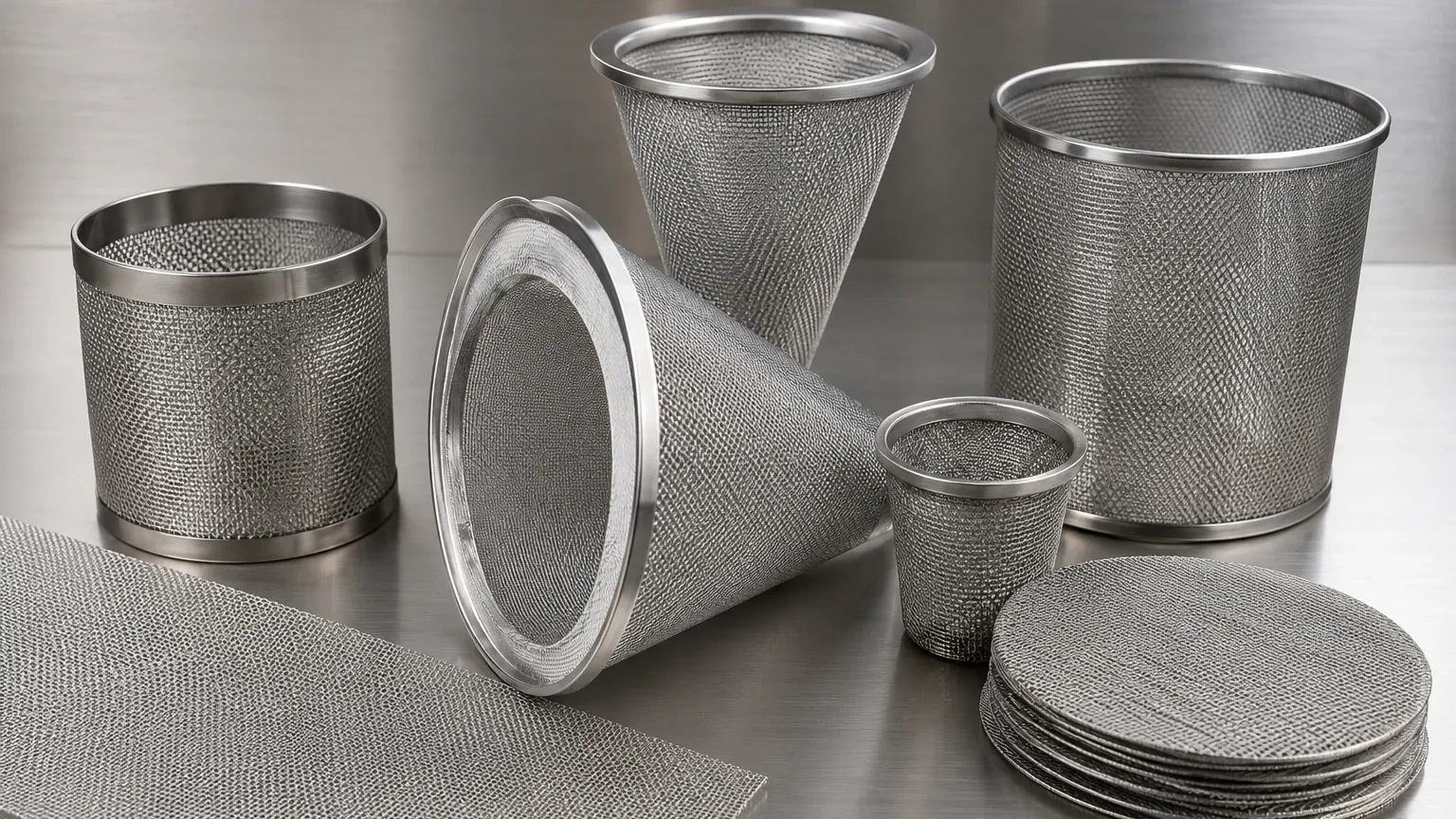
In an industrial context, the construction of these strainers often involves high-grade stainless steel wire cloth. Unlike disposable paper or nylon variants used in light commercial work, industrial Strainers & Baskets utilizing 60 to 70 mesh are engineered for durability, chemical resistance, and reusability. The wire diameter used in the weaving process significantly impacts the "open area" percentage, which in turn dictates the flow rate and pressure drop across the filter element.
The Role of 60 to 70 Mesh in Industrial Coating Systems
Industrial coatings are complex chemical mixtures containing resins, pigments, solvents, and additives. During storage, transport, or mixing, these fluids can develop skins, clumps of undissolved pigment, or collect environmental contaminants.
Protection of Application Equipment
60 to 70 mesh paint strainers serve as a primary line of defense for airless and air-assisted spray systems. Most standard spray tips have orifices that can be easily obstructed by particles exceeding 200 microns. By implementing a 70-mesh strainer upstream, operators can prevent tip fouling, which reduces downtime and prevents the uneven spray patterns that lead to costly rework.
Surface Integrity and Aesthetics
For B2B manufacturing, such as automotive parts or heavy machinery, surface defects like "seeds" or "nibs" are unacceptable. A 60-mesh strainer is effective at removing the majority of large contaminants that would otherwise settle in the wet film, creating visible bumps. In high-solids coatings, this mesh range allows the necessary pigments to pass through while capturing the agglomerated solids that degrade the finish.
Engineering Considerations: Flow Dynamics and Viscosity
Selecting a 60 to 70 mesh paint strainer requires a deep dive into the rheological properties of the fluid being filtered. Viscosity is the primary factor that determines how a fluid interacts with the mesh.
Pressure Drop (Delta P)
As fluid passes through the mesh, a pressure differential is created. If the mesh is too fine for the fluid's viscosity, the pressure drop will be excessive, potentially leading to pump cavitation or mesh deformation. 60 to 70 mesh is generally ideal for fluids with a viscosity range of 500 to 1,000 centipoise (cP). Engineers must calculate the total surface area of the strainer basket to ensure that the flux (flow per unit area) remains within the manufacturer’s recommended limits.
Material Compatibility
In industrial filtration, the choice of material for the mesh and the basket frame is paramount. Stainless steel (304 or 316L) is the preferred choice for 60 to 70 mesh paint strainers due to its resistance to the aggressive solvents found in lacquers, epoxies, and urethanes. Furthermore, stainless steel components can withstand high-pressure cleaning cycles, making them a more sustainable and cost-effective long-term investment compared to disposable alternatives.
Integration into Strainers & Baskets Systems
While the mesh itself performs the filtration, the mechanical housing or basket provides the structural support necessary to withstand industrial flow rates. 60 to 70 mesh media is often integrated into larger Strainers & Baskets configurations, such as:
1. Suction Strainers: Located at the intake of the pump to protect the internal components from large debris.
2. In-Line Basket Strainers: Positioned in the piping system to provide high-volume filtration with minimal maintenance frequency.
3. Conical/Hat Strainers: Used for temporary filtration during system start-up or batch transfers.
When specifying a basket for 60 to 70 mesh applications, it is important to consider the "burst pressure" of the mesh. In high-viscosity applications, the mesh may need to be reinforced with a coarser perforated metal backing to prevent the wire cloth from tearing under the force of the fluid flow.
Maintenance and Cleaning of Industrial Mesh
One of the primary advantages of utilizing stainless steel 60 to 70 mesh paint strainers in a B2B environment is their cleanability. Unlike synthetic mesh, which can trap particles within the fibers, stainless steel wire mesh features a smooth surface that allows for effective "cake" removal.
Cleaning Procedures
To maintain optimal performance, a regular cleaning schedule must be established. This typically involves:
* Solvent Soaking: Immersing the strainer in a compatible solvent to dissolve dried coating material.
* Ultrasonic Cleaning: Using high-frequency sound waves in a liquid bath to dislodge microscopic particles from the mesh intersections.
* Backwashing: Reversing the flow of fluid through the strainer to push contaminants out of the mesh openings.
Failure to clean the mesh properly leads to "blinding," where the effective open area is reduced, causing an increase in pressure drop and a decrease in filtration efficiency.
Common Risks and Mitigation Strategies
Even with the correct mesh selection, several risks can compromise the filtration process. Engineers should be aware of the following:
* Mesh Bypass: This occurs when the strainer basket is not seated correctly within its housing, allowing unfiltered fluid to flow around the edges. High-quality industrial strainers utilize precision-machined flanges or O-ring seals to prevent this.
* Mechanical Fatigue: Constant pressure fluctuations can cause the fine wires of a 70-mesh screen to fatigue and eventually break. Regular inspection for "pinholes" or wire displacement is necessary.
* Incompatible Cleaning Agents: Using highly acidic or basic cleaning solutions on certain grades of stainless steel can lead to pitting corrosion, which compromises the mesh's micron rating.
Selection Criteria for Purchasing Teams
When sourcing 60 to 70 mesh paint strainers for industrial applications, purchasing teams should confirm several key details with the manufacturer to ensure the product meets the technical requirements of the site:
1. Micron Rating vs. Mesh Count: Confirm the exact aperture size, as wire diameter variations can change the micron rating of a "60 mesh" screen between different manufacturers.
2. Effective Filtration Area (EFA): Ensure the basket size provides enough surface area to handle the required flow rate without frequent clogging.
3. Construction Method: Determine if the mesh is resistance-welded, soldered, or epoxy-bonded to the support frame. For paint applications, welded construction is generally preferred to avoid chemical contamination from solders or adhesives.
4. Certification: For specialized industries like aerospace or automotive OEM, check if the filtration components require certification for material purity or consistency of weave.
Conclusion
The 60 to 70 mesh range is a vital specification in the world of industrial coatings, providing a balance between fine particulate removal and robust flow characteristics. By integrating high-quality stainless steel mesh into well-engineered Strainers & Baskets, manufacturers can protect their equipment, reduce waste, and ensure a consistent, high-quality finish on their products. Understanding the relationship between mesh size, fluid viscosity, and mechanical durability allows engineers to optimize their filtration systems for both performance and total cost of ownership.
