


A Strainer at Walmart
In the realm of procurement and industrial engineering, the search for filtration components often begins with a clear understanding of the application's demands. While a consumer might look for a strainer at Walmart for household kitchen use, the requirements for industrial-grade filtration are fundamentally different. For engineers and facility managers, the distinction between retail-grade hardware and precision-engineered Strainers & Baskets is the difference between operational efficiency and catastrophic system failure.
Industrial filtration requires a level of durability, material certification, and precise micron control that consumer-grade products cannot provide. This article explores the technical nuances of industrial strainers, the engineering considerations behind material selection, and why professional-grade components are essential for sectors such as chemical processing, food and beverage, and pharmaceutical manufacturing.
Understanding the Gap Between Consumer and Industrial Strainers
When a maintenance team considers the immediate availability of a strainer at Walmart, they are often reacting to an urgent need. However, retail strainers are designed for atmospheric pressure, low-viscosity fluids (like water or cooking oils), and non-corrosive environments. In contrast, industrial strainers and baskets are engineered to withstand high differential pressures, extreme temperatures, and aggressive chemical reagents.
Material Composition and Traceability
Consumer strainers are frequently made from generic "stainless steel" which may lack the specific chromium or nickel content required for industrial longevity. Industrial components, such as those manufactured by Kaifil, utilize certified Grade 304 or Grade 316 stainless steel. These materials offer predictable corrosion resistance and mechanical strength. Furthermore, industrial suppliers provide material traceability, ensuring that the alloy used in the mesh and frame meets international standards (ASTM, DIN, or ISO), which is a critical requirement for pharmaceutical and food-grade applications.
Structural Integrity and Welding Standards
A retail strainer often relies on simple crimping or spot welding to hold the mesh to the frame. Under the pulsing flow of a hydraulic system or the high-velocity discharge of a chemical pump, these joints are prone to fatigue and failure. Industrial baskets utilize advanced TIG (Tungsten Inert Gas) welding or plasma welding to ensure a seamless, high-strength bond that can handle the mechanical stresses of backwashing and high-pressure filtration cycles.
Technical Specifications of Industrial Strainers & Baskets
Selecting the right filtration component requires a deep dive into technical specifications that go far beyond the simple visual mesh found on a strainer at Walmart. Engineers must evaluate several key performance indicators (KPIs) to ensure the component fits the system architecture.
Filtration Accuracy and Micron Ratings
Industrial filtration is measured in microns (μm). A standard kitchen strainer might have openings of 1mm to 2mm, which is roughly 1000 to 2000 microns. Industrial applications often require precision down to 5 microns or even sub-micron levels. The weave type of the wire mesh—whether it is plain weave, twill weave, or Dutch weave—determines the filtration accuracy and the flow capacity of the basket.
Open Area Ratio
The efficiency of a strainer is largely determined by its open area ratio. This is the ratio of the total area of the holes to the total area of the mesh. A higher open area ratio reduces the pressure drop across the filter, allowing for higher flow rates without straining the pump. Industrial designs optimize this ratio by using high-strength fine wires that maximize throughput while maintaining structural rigidity.
Pressure Drop (Delta P)
In any fluid system, the introduction of a filter creates a pressure drop. Engineers must calculate the clean pressure drop and the maximum allowable pressure drop before the basket requires cleaning or replacement. Retail-grade strainers are rarely tested for these parameters, whereas industrial Strainers & Baskets are designed with specific flow-coefficient (Cv) values in mind to ensure system stability.
Material Selection: Why Stainless Steel Matters
For industrial environments, the choice of material is not merely about aesthetics; it is about chemical compatibility and thermal stability. While a strainer at Walmart might suffice for straining pasta, it would rapidly degrade in a caustic wash or a high-temperature steam line.
Grade 304 Stainless Steel
This is the standard for many industrial applications. It offers excellent resistance to many chemicals and is widely used in the food and beverage industry due to its ease of cleaning and sanitization. It provides a cost-effective solution for non-corrosive or mildly corrosive environments.
Grade 316 Stainless Steel
For more demanding environments, such as marine applications or chemical processing involving chlorides, Grade 316 is the preferred choice. The addition of molybdenum enhances its resistance to pitting and crevice corrosion. In pharmaceutical manufacturing, where purity is paramount, 316L (low carbon) is often specified to prevent carbide precipitation during welding, ensuring the longevity of the filter basket.
Specialized Alloys
In extreme cases, even standard stainless steel may not be enough. Professional manufacturers like Kaifil can produce custom filtration components using Hastelloy, Monel, or Inconel for applications involving high-temperature acids or specialized petrochemical processes. This level of customization is unavailable in the retail market.
Engineering Considerations for Industrial Filtration Systems
Integrating a strainer into an industrial process involves more than just placing it in a pipe. Engineers must consider the entire lifecycle of the component, from installation to maintenance.
Sealing and Gasket Compatibility
Industrial strainers must be sealed within housings to prevent bypass. This requires precision-machined flanges and the selection of appropriate gasket materials (such as EPDM, Viton, or PTFE) that are compatible with the process fluid. A retail strainer lacks the standardized seating surfaces required to create a high-pressure seal.
Flow Direction and Debris Loading
Baskets are typically designed for "inside-out" flow, where debris is collected within the basket for easy removal. The design must account for the volume of solids expected in the process. If the loading is high, a larger basket with more surface area is required to prevent frequent downtime for cleaning. Industrial suppliers provide various configurations, including slanted bottoms or reinforced handles, to facilitate rapid maintenance.
Cleaning and Reusability
Unlike disposable filters, stainless steel Strainers & Baskets are designed to be cleaned and reused. This requires the mesh to be robust enough to withstand ultrasonic cleaning, high-pressure hosing, or chemical baths. The durability of the wire mesh is paramount here; thin, low-quality mesh will deform or tear during the cleaning process, leading to bypass and potential downstream damage.
When to Move Beyond Retail Solutions: Customization and OEM Needs
One of the primary limitations of looking for a strainer at Walmart is the lack of customization. Industrial systems are rarely "one size fits all." Each pump, valve, and nozzle has specific protection requirements.
Custom Geometry
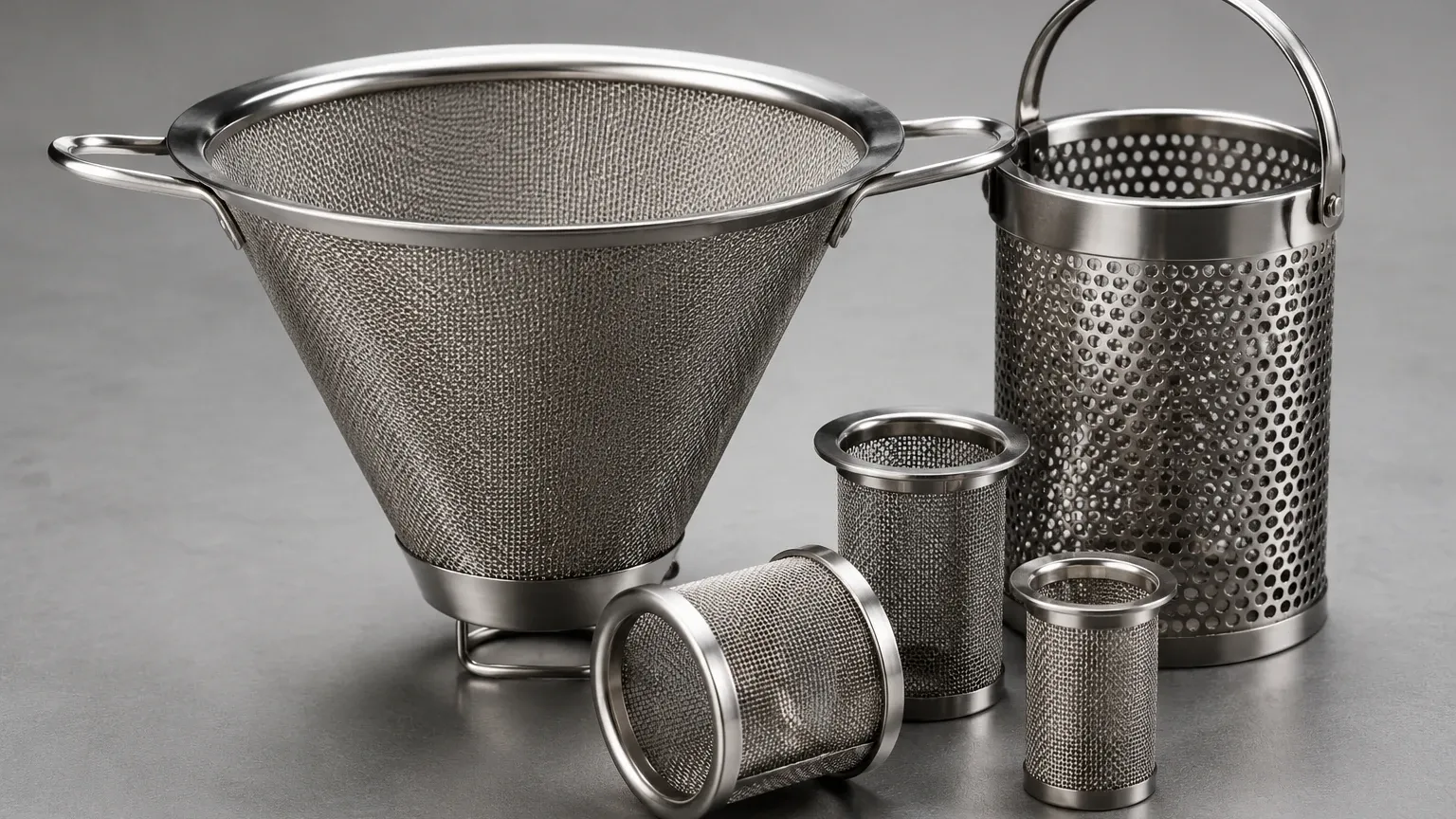
Industrial filters often need to fit into tight spaces or specific housing configurations. Custom manufacturing allows for the creation of conical strainers, pleated baskets, or multi-layered mesh cylinders. These designs can be tailored to provide maximum surface area within a limited footprint, a critical factor in compact skid-mounted systems.
OEM Partnerships
For manufacturers of industrial equipment, such as heat exchangers or cooling towers, the filtration component is a critical part of the original equipment (OEM). Partnering with a specialist like Kaifil allows OEMs to integrate bespoke filtration solutions that are optimized for their specific machine's performance. This ensures that the end-user receives a reliable product that meets the intended service life.
Quality Assurance and Certification
Industrial procurement requires documentation. Whether it is a Certificate of Conformance (CoC), a Mill Test Report (MTR), or FDA compliance for food-contact surfaces, these documents provide the legal and technical assurance that the product is fit for purpose. Retail outlets do not provide this level of technical backing, which can lead to significant liability issues in regulated industries.
Total Cost of Ownership: Retail vs. Industrial Grade
While the initial price of a strainer at Walmart might be lower than a professional-grade industrial basket, the Total Cost of Ownership (TCO) tells a different story.
1. Downtime Costs: A failed retail strainer can lead to pump cavitation or downstream contamination, resulting in hours or days of unplanned production downtime. The cost of this lost production far outweighs the savings on the component itself.
2. Replacement Frequency: Industrial-grade stainless steel baskets are built to last for years, even in harsh environments. A lower-quality retail product may need to be replaced monthly or even weekly, increasing the long-term procurement and labor costs.
3. Energy Efficiency: A poorly designed strainer with a high pressure drop forces the system's pumps to work harder, increasing energy consumption. Precision-engineered baskets with optimized open areas help maintain system efficiency and reduce utility costs.
Selecting the Right Partner for Filtration Solutions
For engineers, the goal is to find a reliable partner who understands the complexities of fluid dynamics and material science. Kaifil specializes in providing these high-performance filtration solutions. By focusing on quality manufacturing and customized designs, they ensure that every strainer and basket meets the rigorous demands of the industrial sector.
When evaluating your next filtration project, consider the long-term impact of your component choices. Moving beyond the convenience of retail options and investing in professional Strainers & Baskets is a strategic decision that protects your equipment, ensures product purity, and optimizes your operational budget. Whether you need a standard replacement or a fully customized OEM solution, technical expertise and quality materials are the foundation of successful industrial filtration.
