


Basket Strainer 150
In industrial fluid handling systems, the protection of sensitive downstream equipment—such as pumps, valves, and meters—is a critical engineering priority. The basket strainer 150 serves as a primary line of defense, utilizing a perforated or mesh-lined basket to remove unwanted solids from liquid or gas streams. The designation "150" typically refers to one of two critical specifications: the ASME/ANSI Class 150 pressure rating for the housing or the 150-mesh count of the internal filtration element.
For engineers and procurement teams, selecting the correct Strainers & Baskets requires a deep understanding of fluid dynamics, material compatibility, and the specific mechanical stresses of the application environment. As a specialist manufacturer of custom stainless steel filtration solutions, Kaifil provides the technical expertise necessary to navigate these specifications, ensuring that the chosen filtration component delivers long-term reliability and precise performance.
Understanding the Specifications of a Basket Strainer 150
When a project specification calls for a basket strainer 150, the first step is to distinguish between the pressure-temperature rating of the vessel and the filtration fineness of the internal basket.
ASME Class 150 Pressure Ratings
In most industrial piping contexts, "150" refers to the ASME B16.5 Class 150 flange rating. This standard defines the maximum allowable working pressure (MAWP) for the strainer housing based on the material and the operating temperature. For a stainless steel basket strainer (typically Group 2.2 materials like 304 or 316L), a Class 150 rating generally allows for a working pressure of approximately 275 psi (19 bar) at ambient temperatures. As the temperature of the process fluid increases, the allowable pressure decreases according to the ASME pressure-temperature tables.
150 Mesh Filtration Density
Alternatively, "150" may refer to the mesh count of the internal basket. A 150-mesh screen contains 150 openings per linear inch. In terms of particle retention, this translates to an aperture size of approximately 104 microns (0.0041 inches). This level of filtration is considered "fine" for a basket strainer and is frequently used in water treatment, chemical processing, and fuel filtration where smaller particulates must be captured to prevent clogging of downstream precision components.
Material Integrity and Engineering Considerations
The choice of material for both the housing and the internal basket is paramount, especially in corrosive or high-purity environments. Stainless steel is the industry standard for high-performance applications due to its mechanical strength and chemical resistance.
1. Type 304 Stainless Steel: Suitable for general industrial applications, water treatment, and less corrosive chemical environments. It offers excellent durability and cost-effectiveness.
2. Type 316L Stainless Steel: The preferred choice for pharmaceutical, food and beverage, and marine applications. The addition of molybdenum provides enhanced resistance to pitting and crevice corrosion, particularly in chloride-rich environments.
3. Gasket and Seal Selection: The performance of a basket strainer 150 is also dependent on its seals. Depending on the fluid, engineers must choose between EPDM, Viton (FKM), PTFE, or Buna-N to ensure chemical compatibility and prevent bypass or external leaks.
Design Variations: Simplex vs. Duplex Systems
Depending on the operational requirements of the facility, engineers must decide between a simplex or duplex configuration for their Strainers & Baskets.
Simplex Basket Strainers
A simplex basket strainer 150 is used in systems where the flow can be intermittently shut down for cleaning or maintenance. These are common in batch processing or in systems where the particulate load is low, requiring infrequent basket removal. The design is compact and cost-effective, but it lacks the redundancy needed for continuous operations.
Duplex (Twin) Basket Strainers
For critical processes that cannot afford downtime, such as cooling water systems for power plants or continuous chemical production lines, a duplex strainer is required. This design consists of two separate strainer chambers connected by a diverting valve. When one basket becomes clogged, the flow is diverted to the clean chamber, allowing the operator to clean the first basket without interrupting the process flow. This ensures 100% uptime and protects the system from pressure surges caused by clogged filters.
Evaluating Filtration Efficiency and Pressure Drop
One of the most critical engineering metrics for a basket strainer 150 is the "Clean Pressure Drop" (Delta P). Every filtration element introduces resistance to the flow. If the pressure drop is too high, it can lead to cavitation in pumps or reduced flow rates throughout the system.
The Open Area Ratio
To minimize pressure drop, the internal basket must have a significant amount of open area. A high-quality basket strainer 150 is designed with an "Open Area Ratio" (OAR) of at least 6:1 or 8:1. This means the total area of the holes in the basket is six to eight times the cross-sectional area of the inlet pipe. A higher OAR allows for longer run times between cleanings and reduces the velocity of the fluid as it passes through the mesh, which improves filtration efficiency and reduces wear on the screen.
Flow Velocity and Particle Retention
Engineers must also consider the velocity of the fluid. High velocities can force deformable particles through the mesh or cause "impingement erosion" on the basket material. For most liquid applications, a velocity of 5 to 10 feet per second (fps) is recommended to balance throughput with filtration integrity.
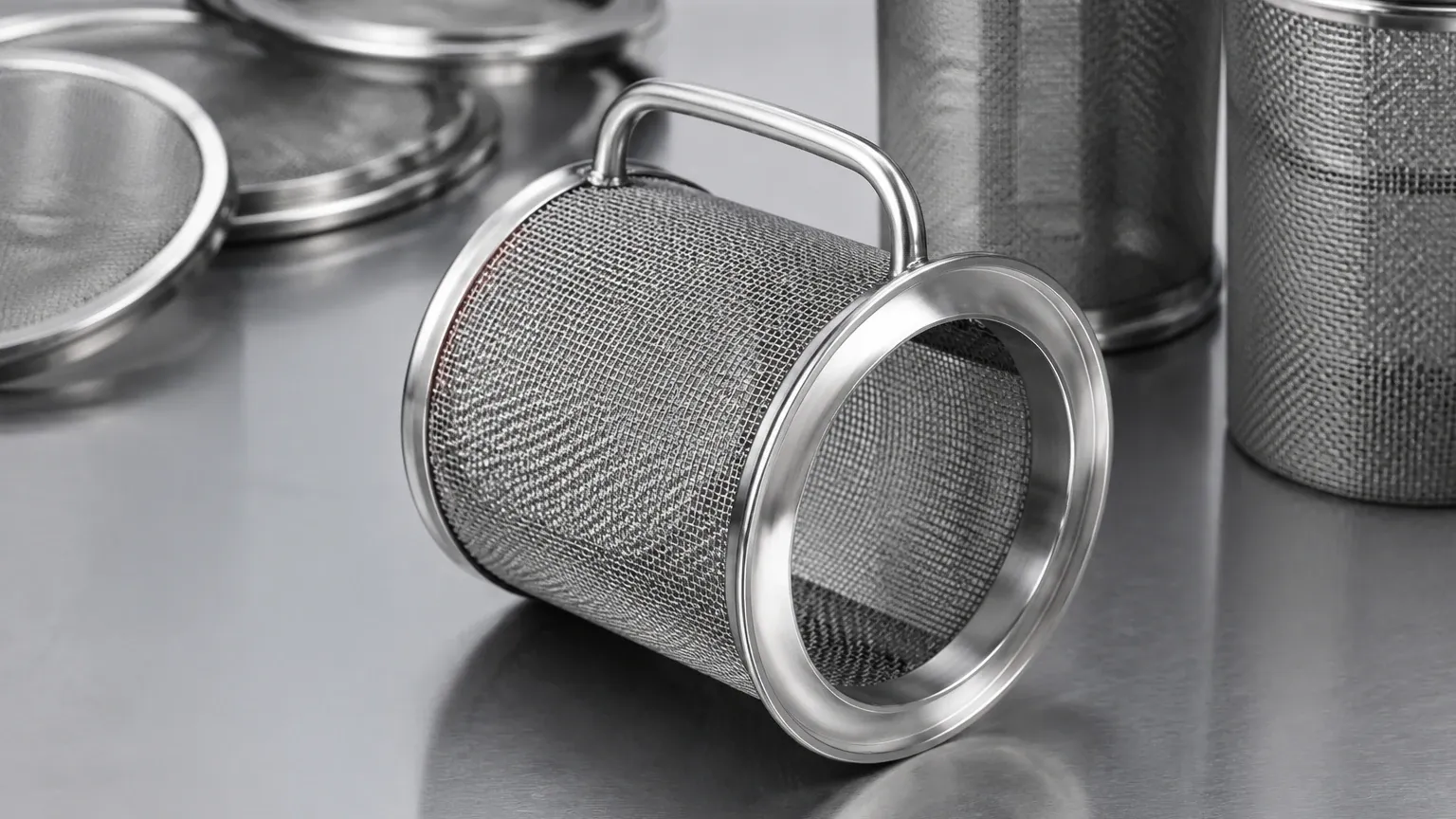
Customization and OEM Filtration Solutions
Standard off-the-shelf strainers often fail to meet the specific nuances of complex industrial systems. This is where custom manufacturing becomes essential. Kaifil specializes in developing tailored filtration components that address specific spatial constraints, unique flow characteristics, or extreme environmental conditions.
Customization options for a basket strainer 150 include:
* Reinforced Baskets: For high-pressure applications where the differential pressure might collapse a standard mesh, baskets can be reinforced with perforated metal backings or internal skeletons.
* Multi-Stage Filtration: Combining a coarse perforated metal outer layer with a fine 150-mesh inner liner to provide graduated filtration and structural rigidity.
* Custom Dimensions: Adjusting the height, diameter, or handle configuration of the basket to fit existing non-standard housings.
* Magnetic Inserts: Adding magnetic rods to the basket to capture fine ferrous particles that might otherwise pass through the mesh.
Maintenance and Operational Best Practices
The longevity of a basket strainer 150 is directly linked to the maintenance protocol. Unlike disposable cartridges, stainless steel baskets are designed to be cleaned and reused, which significantly lowers the total cost of ownership.
Monitoring Differential Pressure
Installing differential pressure gauges across the inlet and outlet of the strainer is the most effective way to monitor basket loading. A common industry standard is to clean the basket when the differential pressure reaches 5-10 psi above the clean pressure drop. Allowing the pressure to climb higher risks damaging the basket or the housing seals.
Cleaning Procedures
When cleaning a 150-mesh basket, care must be taken not to damage the fine wire cloth. High-pressure air or water should be applied from the outside-in (backwashing) to dislodge particles trapped in the mesh. In chemical or food-grade applications, ultrasonic cleaning may be required to remove microscopic residues or biological films.
Conclusion: Selecting the Right Partner for Industrial Filtration
Choosing a basket strainer 150 involves more than just matching a pipe size. It requires a comprehensive analysis of pressure ratings, mesh requirements, material compatibility, and flow dynamics. By focusing on precision engineering and high-quality stainless steel construction, facilities can ensure their equipment remains protected and their processes remain efficient.
Kaifil’s commitment to quality and custom OEM capabilities makes us a preferred partner for engineers seeking reliable filtration solutions. Whether you require a standard ASME Class 150 housing or a custom-engineered 150-mesh basket for a specialized application, our team provides the technical support and manufacturing excellence needed to meet your specific requirements. For more information on our range of industrial filtration products, explore our selection of Strainers & Baskets and consult with our engineering team to optimize your system’s performance.
