


Basket Strainer 16
In industrial fluid handling systems, the efficiency of downstream equipment—such as pumps, valves, and heat exchangers—depends heavily on the removal of particulate matter. The "basket strainer 16" designation typically refers to two critical engineering specifications: a 16-inch nominal pipe size (NPS) for large-scale flow or a 16-mesh screen used within a strainer housing to capture specific particle sizes. Both interpretations are vital for engineers and procurement teams managing high-volume industrial processes.
As a specialized manufacturer, Kaifil provides precision-engineered Strainers & Baskets designed to withstand the rigorous demands of chemical processing, water treatment, and oil and gas applications. Understanding the technical nuances of these components is essential for optimizing system uptime and reducing the total cost of ownership.
Understanding the Basket Strainer 16 Specification
When specifying a basket strainer 16, technical professionals must first clarify whether the requirement pertains to the physical dimensions of the housing or the filtration fineness of the internal basket.
16-Inch Nominal Pipe Size (NPS)
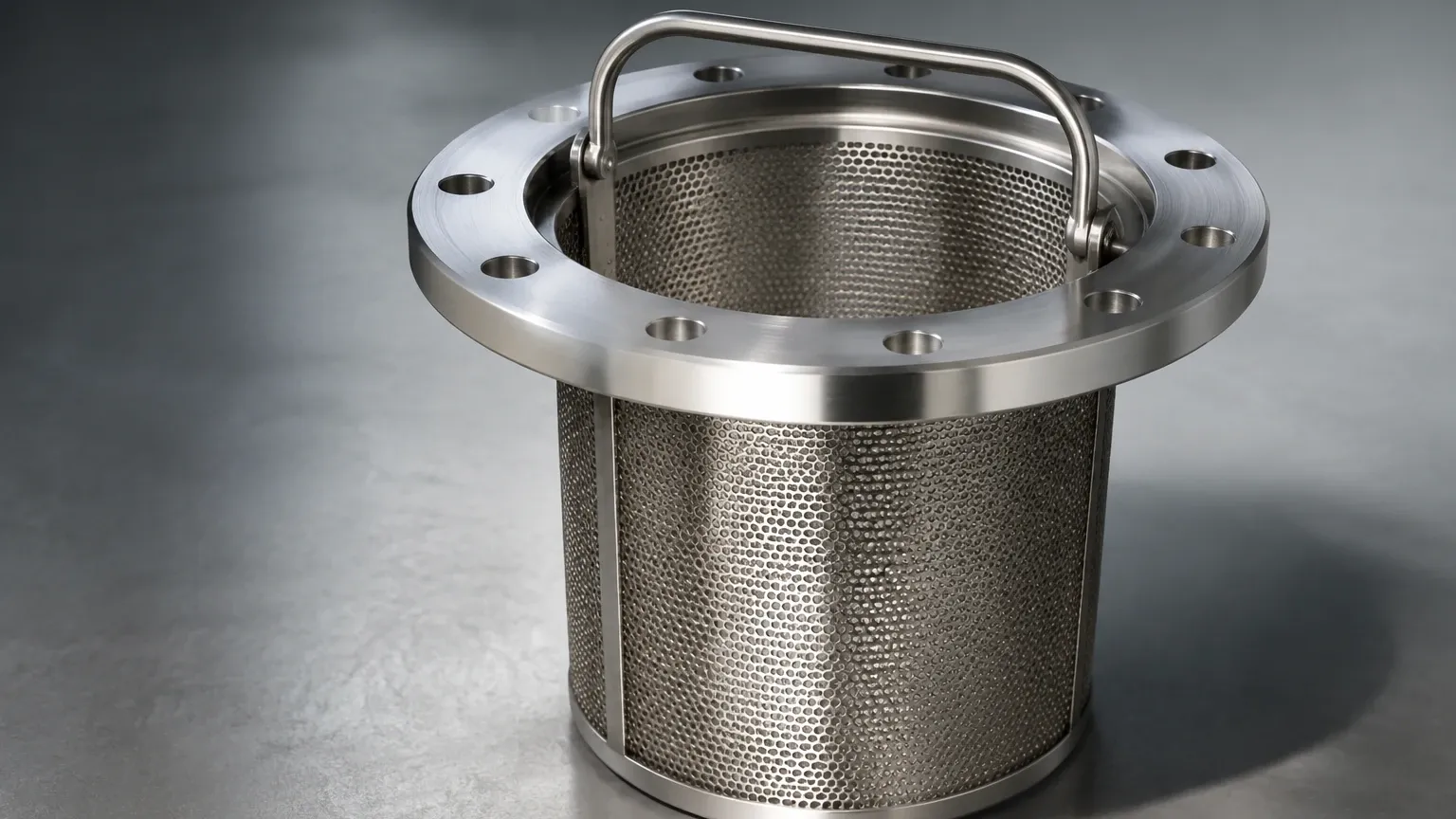
A 16-inch basket strainer is a large-scale industrial component designed for high-flow pipelines. These units are commonly utilized in cooling water systems, intake structures, and large chemical process lines. Due to their size, these strainers are engineered with heavy-duty flanged connections and reinforced housings to manage significant hydraulic forces and internal pressures.
16-Mesh Filtration Media
Alternatively, a basket strainer 16 may refer to the mesh count of the internal filter element. A 16-mesh screen contains 16 openings per linear inch. In terms of filtration accuracy, this translates to an opening size of approximately 1,190 microns (0.0469 inches). This level of filtration is ideal for removing relatively large debris, such as scale, pebbles, and weld slag, while maintaining a high open area for minimal pressure drop.
Engineering Considerations for High-Flow Applications
Designing or selecting a 16-inch basket strainer requires a deep dive into hydraulic performance. At this scale, the physical footprint and the weight of the unit become significant factors in plant layout and structural support.
Flow Velocity and Pressure Drop
The primary concern for engineers is the differential pressure (Delta P) across the strainer. For a 16-inch line, flow rates can be substantial. If the internal basket is not sized correctly, or if the open area ratio is too low, the resulting pressure drop can lead to cavitation in downstream pumps or reduced system throughput. Kaifil designs its baskets to maximize the ratio of the open area to the pipe cross-sectional area, typically aiming for a 6:1 or higher ratio to ensure longevity between cleaning cycles.
Structural Integrity and Housing Design
Large-bore strainers must handle not only the internal fluid pressure but also the mechanical stresses of the piping system. High-quality stainless steel construction (Grade 304 or 316) is standard for these applications to prevent corrosion and erosion at high velocities. The housing must be rated for the specific pressure class of the system, such as ASME Class 150, 300, or higher.
Material Selection for Industrial Durability
Material compatibility is a non-negotiable factor in industrial filtration. The "basket strainer 16" must be constructed from materials that can withstand the chemical properties of the fluid and the environmental conditions of the facility.
1. Stainless Steel 304: The most common choice for general industrial applications, offering excellent strength and basic corrosion resistance for water and mild chemical service.
2. Stainless Steel 316/316L: Preferred for pharmaceutical, food and beverage, and marine environments. The addition of molybdenum provides superior resistance to chlorides and pitting corrosion.
3. Specialty Alloys: For highly aggressive chemical processing, materials such as Duplex stainless steel or Hastelloy may be required for the internal basket to prevent premature failure.
Kaifil specializes in custom stainless steel filtration solutions, ensuring that the material grade and the wire mesh weaving pattern are optimized for the specific mechanical stresses of the application.
Performance Metrics: Mesh 16 and Particle Retention
When the focus is on the filtration media, the 16-mesh basket serves as a critical primary filter. Engineers must evaluate the performance of the basket strainer 16 based on its ability to protect downstream components without becoming a bottleneck.
Micron Rating and Open Area
A 16-mesh screen offers a balance between protection and flow. With an opening of 1,190 microns, it is often used as a "roughing" filter. In many industrial setups, a 16-mesh basket acts as the structural support for a finer mesh liner (such as 100 or 200 mesh) or as a standalone strainer for raw water intake.
Dirt Holding Capacity
The geometry of the basket—whether it is a standard slanted basket or a high-capacity deep-well design—dictates how much debris can be trapped before the pressure drop becomes critical. A well-engineered basket strainer 16 will distribute the flow evenly across the mesh surface to prevent "blinding" (premature clogging of specific areas of the mesh).
Simplex vs. Duplex Configurations
For a 16-inch system, the choice between a simplex and duplex configuration is driven by the necessity of continuous operation.
* Simplex Strainers: These are used in systems where the flow can be safely interrupted to remove and clean the basket. They are cost-effective and have a smaller footprint.
* Duplex Strainers: These consist of two separate strainer chambers connected by a diverting valve. When one basket is full, the flow is switched to the clean chamber without shutting down the system. For critical 16-inch mainlines in refineries or power plants, duplex configurations are often the standard to ensure 24/7 uptime.
Maintenance and Lifecycle Management
The total cost of ownership for a basket strainer 16 is heavily influenced by maintenance requirements. Large-scale filtration units require clear protocols to ensure safety and efficiency.
Differential Pressure Monitoring
Installing differential pressure gauges across the inlet and outlet of the strainer is the most effective way to monitor basket loading. Engineers should establish a "clean" pressure drop baseline and a "dirty" setpoint at which the basket must be cleaned or replaced. For a 16-mesh basket, a sudden spike in pressure often indicates a significant upstream process upset.
Cleaning and Replacement Cycles
Because Kaifil utilizes high-grade stainless steel wire mesh, these baskets are typically cleanable and reusable. Cleaning methods include backwashing, ultrasonic cleaning, or manual pressure washing, depending on the nature of the contaminants. However, if the mesh shows signs of wire thinning, broken weaves, or structural deformation of the basket frame, immediate replacement is necessary to prevent bypass—where unfiltered fluid escapes around the basket.
Customization and OEM Integration
Standard off-the-shelf solutions often fail to meet the specific spatial or performance requirements of complex industrial skids. Kaifil’s manufacturing capabilities allow for the customization of the basket strainer 16 in several ways:
* Custom Flange Orientations: Adjusting the inlet and outlet positions to fit existing piping constraints.
* Reinforced Baskets: Adding perforated metal backings to 16-mesh screens to handle high-pressure surges.
* Magnetic Inserts: Incorporating magnetic rods within the basket to capture fine ferrous particles that might otherwise pass through a 16-mesh screen.
* Specialized Coatings: Applying epoxy or PTFE coatings to the housing for enhanced chemical resistance.
By working closely with an OEM manufacturer, engineering teams can ensure that the filtration component is a perfect match for the hydraulic and chemical profile of their system.
Selecting the Right Partner for Filtration Solutions
Choosing a basket strainer 16 involves more than just matching a pipe size or a mesh count. It requires a partner who understands the physics of filtration and the realities of industrial maintenance. Kaifil’s experience in producing stainless steel filter cartridges and precision metal components ensures that every strainer basket is manufactured to tight tolerances, providing reliable seals and consistent filtration accuracy.
When evaluating suppliers for Strainers & Baskets, technical buyers should confirm the manufacturer’s capability to provide material certifications (MTRs), pressure test reports, and custom engineering drawings. These documents are essential for compliance with industrial safety standards and for ensuring the long-term reliability of the filtration system.
In summary, whether you are managing a 16-inch high-flow pipeline or require the specific aperture of a 16-mesh screen, the focus must remain on material quality, hydraulic efficiency, and ease of maintenance. By prioritizing these engineering fundamentals, facilities can protect their capital equipment and maintain optimal process fluid purity.
