


Basket Strainer 3d Model
In modern industrial engineering, the design and integration of fluid handling systems require a high degree of precision to ensure operational efficiency and safety. For engineers and facility designers, the availability of a basket strainer 3d model is no longer a luxury but a fundamental requirement for the Digital Twin and Building Information Modeling (BIM) processes. These digital representations allow for the seamless integration of Strainers & Baskets into complex piping layouts, ensuring that every component fits within the physical constraints of the plant while meeting hydraulic performance requirements.
Industrial filtration components, particularly those manufactured from stainless steel, serve as the primary defense for downstream equipment such as pumps, valves, and heat exchangers. By utilizing accurate 3D models during the design phase, engineering teams can simulate flow patterns, calculate pressure drops, and identify potential interference issues before a single physical component is ordered or installed.
The Importance of 3D Modeling in Industrial Piping Design
The transition from 2D schematics to 3D modeling has revolutionized how industrial plants are constructed and maintained. A basket strainer 3d model provides a comprehensive spatial understanding of how a filtration unit will reside within a larger assembly. This is critical in industries such as chemical processing and pharmaceutical manufacturing, where space is often at a premium and piping configurations are dense.
Interference Checking and Spatial Coordination
One of the primary uses of a 3D model is "clash detection." In a complex facility, piping, electrical conduits, and structural steel often compete for the same space. By using a high-fidelity model of a basket strainer, designers can ensure that there is sufficient clearance for the strainer’s lid removal and basket extraction. Without this foresight, maintenance teams may find it impossible to service the filter once the plant is operational, leading to costly modifications or extended downtime.
Flow Simulation and CFD Analysis
Advanced engineering projects often employ Computational Fluid Dynamics (CFD) to predict how fluids will behave as they pass through the system. An accurate 3D model of the internal geometry of the basket and the housing allows for precise simulation of turbulence and pressure gradients. This data is essential for selecting the correct mesh size and ensuring that the strainer does not become a bottleneck in the production line.
Technical Specifications and Material Selection for Strainers & Baskets
When selecting Strainers & Baskets, material integrity and filtration accuracy are the most significant factors. As a professional manufacturer, Kaifil emphasizes the use of high-grade materials to withstand the demanding environments of industrial applications.
Stainless Steel Grades
Most industrial strainers are fabricated from 304 or 316L stainless steel.
- 304 Stainless Steel: Suitable for general-purpose applications, including water treatment and food and beverage processing, where basic corrosion resistance is required.
- 316L Stainless Steel: Preferred for chemical processing and pharmaceutical applications due to its superior resistance to chlorides and acidic environments. The "L" denotes low carbon content, which improves weldability and reduces the risk of intergranular corrosion.
Filtration Media and Micron Ratings
The "basket" component of the strainer can be constructed using various types of media, depending on the required filtration fineness:
- Perforated Metal: Used for coarse filtration or as a support structure for finer meshes. Common hole patterns include round, square, or staggered.
- Wire Mesh: For finer filtration requirements, stainless steel wire mesh is layered over a perforated support. This allows for precise micron ratings, ranging from coarse particles down to fine sediments.
- Wedge Wire: Known for its high strength and non-clogging characteristics, wedge wire is often used in heavy-duty industrial applications where high pressure and backwashing are common.
Integrating a Basket Strainer 3D Model into Engineering Workflows
For an engineering team, the utility of a basket strainer 3d model depends on its compatibility with standard CAD software such as AutoCAD, SolidWorks, or Revit. These models typically include critical metadata, such as port sizes, flange ratings (e.g., ANSI, DIN, or JIS), and dry/wet weights.
Port Configurations and Flange Alignment
The 3D model must accurately reflect the inlet and outlet configurations. Whether the system requires a standard inline design, an offset design, or a right-angle configuration, the digital model ensures that the flanges align perfectly with the connecting pipework. This reduces the need for custom adapters and minimizes stress on the piping joints.
Dimensional Accuracy
In B2B procurement, technical professionals rely on the "envelope dimensions" provided in the 3D model. This includes the overall height, the width across the flanges, and the "swing clearance" required for the handle or cover bolts. Providing these dimensions in a digital format allows for rapid prototyping of the entire system layout.
Customization and OEM Capabilities in Strainer Manufacturing
While standard sizes are available, many industrial applications require customized filtration solutions. Kaifil specializes in OEM services, working closely with global customers to develop bespoke Strainers & Baskets that meet specific operational parameters.
Tailored Filtration Performance
Customization often begins with the filtration media. Depending on the viscosity of the fluid and the nature of the contaminants, the mesh count and wire diameter can be adjusted. For example, in the food and beverage industry, strainers must be designed with sanitary finishes and easy-to-clean geometries to prevent bacterial growth.
Structural Modifications
Beyond the internal basket, the housing itself can be customized. This includes adding differential pressure gauge ports, vent valves, and specialized drain connections. A custom basket strainer 3d model is typically generated for these unique builds, providing the client with a visual and technical confirmation of the design before production begins.
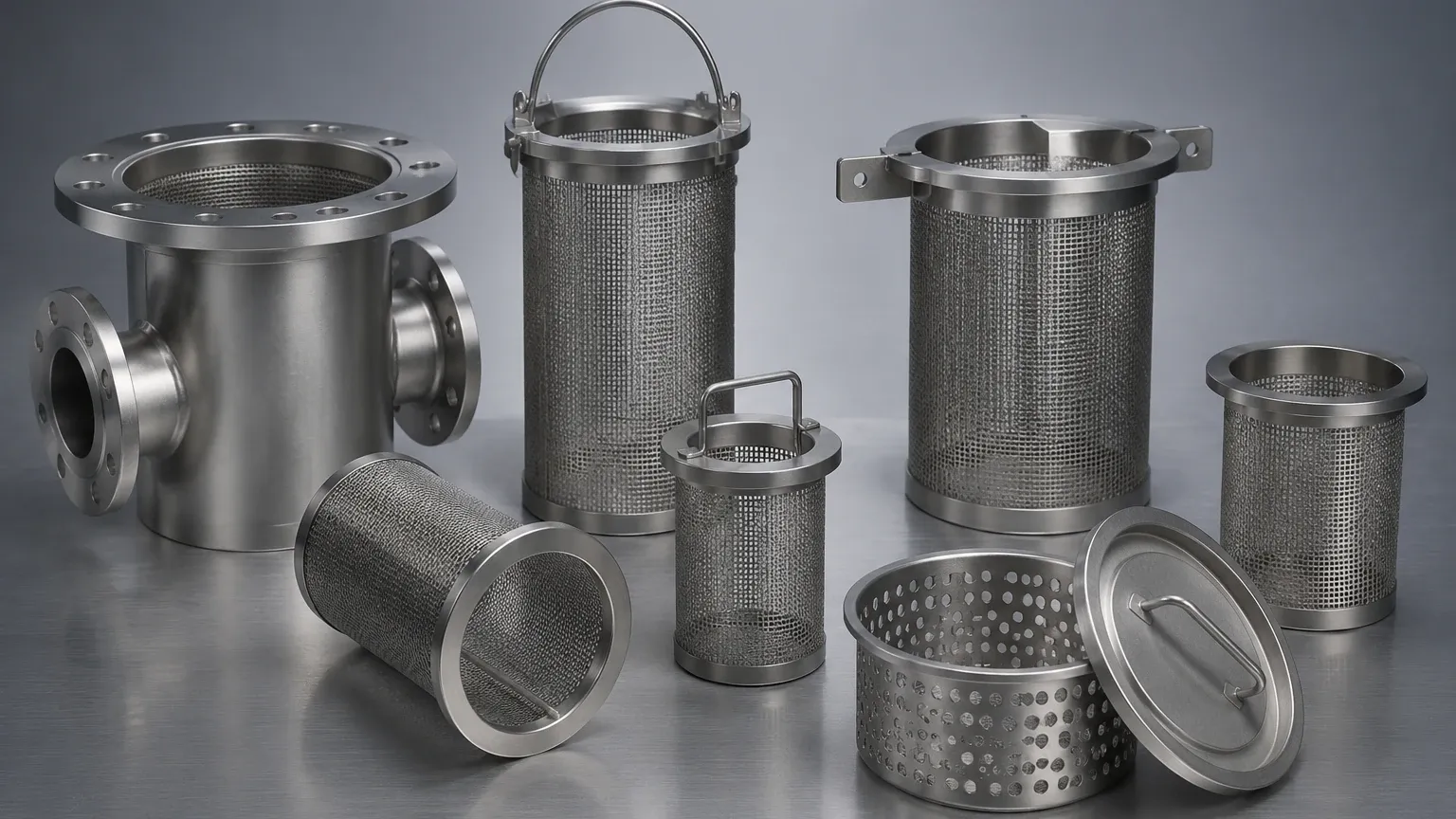
Performance Evaluation: Pressure Drop and Filtration Accuracy
An essential part of the selection process for industrial filters is evaluating the "Clean Pressure Drop." This refers to the loss in fluid pressure as it passes through a clean strainer. Excessive pressure drop can strain pumps and reduce the overall efficiency of the system.
Factors Influencing Pressure Drop
1. Open Area Ratio: This is the ratio of the total area of the holes in the basket to the cross-sectional area of the inlet pipe. A higher open area ratio generally results in a lower pressure drop and longer intervals between cleanings.
2. Fluid Viscosity: Thicker fluids require larger mesh openings or larger strainer housings to maintain acceptable flow rates.
3. Contaminant Loading: The 3D model of the basket helps engineers calculate the "dirt holding capacity," which determines how much debris the strainer can collect before the pressure drop reaches a critical level.
By analyzing these factors through the lens of a basket strainer 3d model, engineers can size the equipment correctly, avoiding the common mistake of undersizing, which leads to frequent maintenance, or oversizing, which increases the total cost of ownership unnecessarily.
Operational Maintenance and Maintenance Clearance in Design
The longevity of Strainers & Baskets is directly linked to regular maintenance. Industrial strainers are designed to be cleaned and reused, making them a cost-effective alternative to disposable cartridge filters in many high-volume applications.
Ease of Access
When reviewing a basket strainer 3d model, maintenance engineers look for the "removal clearance." This is the vertical or horizontal space required to lift the basket out of the housing. If the model shows that a structural beam or another pipe is blocking this path, the design must be altered.
Replacement Cycles and Durability
Stainless steel baskets are built for durability, but they are subject to wear, especially in abrasive environments. Regular inspection of the mesh for tears or deformation is vital. Because Kaifil manufactures these components with precision, replacement baskets can be produced to match the original 3D specifications exactly, ensuring a perfect fit every time.
Cleaning Procedures
In many sectors, such as water treatment or hydraulic systems, the ability to quickly clean a basket and return it to service is critical. Design features like quick-opening covers (e.g., swing bolts or v-band clamps) are often incorporated into the design and reflected in the 3D model to demonstrate the speed of serviceability.
Conclusion: Making Informed Purchasing Decisions
For procurement teams and engineers, the path to optimized filtration begins with accurate technical data. Utilizing a basket strainer 3d model during the planning phase mitigates risk, reduces installation errors, and ensures that the selected Strainers & Baskets are perfectly suited for the intended application.
Kaifil remains committed to providing high-performance, durable stainless steel filtration components. By combining advanced manufacturing capabilities with deep engineering expertise, Kaifil supports global industries in achieving reliable and cost-effective filtration. When evaluating potential suppliers, technical professionals should prioritize those who can provide not only the physical hardware but also the technical documentation and digital assets necessary for modern industrial design.
Whether you are designing a new chemical processing plant or upgrading a hydraulic system, understanding the nuances of strainer geometry, material compatibility, and maintenance requirements is essential for long-term success. By leveraging precise 3D models and customized engineering solutions, you can ensure that your filtration system performs reliably under the most demanding industrial conditions.
