


Basket Strainer 3 Inch
In industrial fluid handling, the protection of downstream equipment—such as pumps, valves, and heat exchangers—is a critical engineering priority. A basket strainer 3 inch is a standard yet vital component in piping systems, designed to remove large particles, debris, and contaminants from liquid or gas streams. Unlike Y-strainers, which are often used for intermittent debris removal in smaller lines, basket strainers are preferred in larger pipelines where high flow rates and low pressure drops are required, and where the volume of solids to be removed is higher.
For engineers and procurement professionals, selecting a basket strainer 3 inch involves more than just matching a pipe diameter. It requires a deep understanding of material compatibility, filtration accuracy, flow dynamics, and the specific maintenance requirements of the application. As a manufacturer specialized in custom stainless steel filtration, Kaifil provides precision-engineered Strainers & Baskets tailored to meet the rigorous demands of industrial environments.
Technical Overview of the 3-Inch Basket Strainer
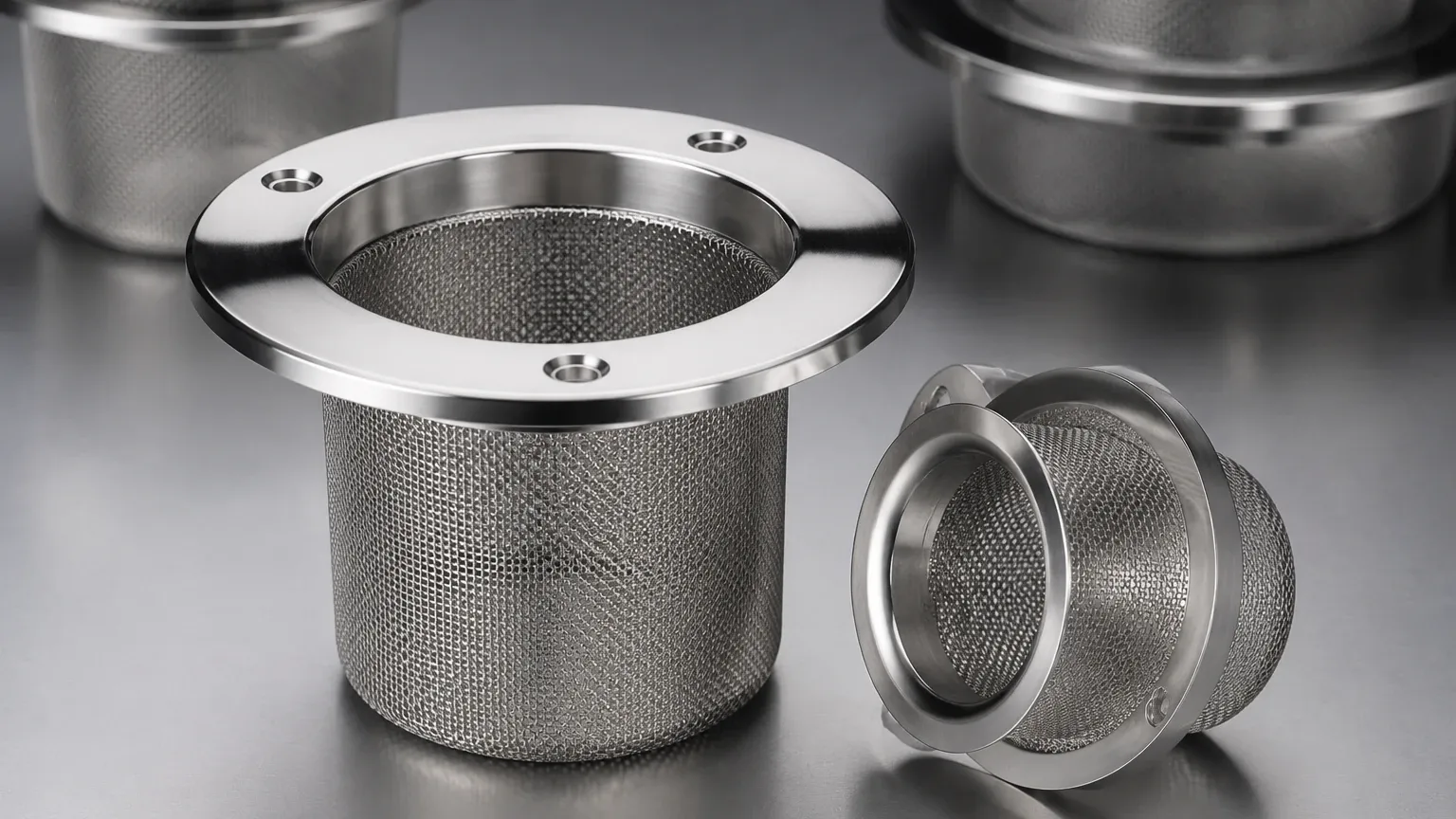
A basket strainer 3 inch typically refers to the nominal pipe size (NPS) of the inlet and outlet connections. In industrial settings, these connections are usually flanged (ANSI/ASME B16.5) or threaded (NPT/BSPT), depending on the system pressure and the ease of maintenance required. The "basket" refers to the internal straining element, which is a removable, perforated metal or wire mesh cylinder that captures solids as the fluid passes through.
Material Selection and Durability
The choice of material for both the housing and the internal basket is the first step in ensuring long-term reliability. While cast iron or carbon steel may suffice for non-corrosive water applications, stainless steel is the industry standard for chemical processing, food and beverage, and pharmaceutical sectors.
* Stainless Steel 304: Offers excellent resistance to atmospheric corrosion and many organic and inorganic chemicals. It is the most common choice for general industrial filtration.
* Stainless Steel 316/316L: Contains molybdenum, which provides superior resistance to chlorides and pitting. This is essential for marine environments, pharmaceutical production, and harsh chemical processing.
* Specialty Alloys: For highly aggressive media, alloys like Monel or Hastelloy may be used for the internal basket components to prevent premature failure due to chemical attack.
Filtration Media: Perforation vs. Mesh
The internal basket of a basket strainer 3 inch can be constructed using different types of media depending on the required filtration level:
1. Perforated Metal: This is the most robust option, typically used for coarse straining (removing particles 1/2" down to 1/32"). Perforation patterns (staggered or straight) and the percentage of open area significantly impact the flow capacity.
2. Wire Mesh Liners: For finer filtration, a stainless steel wire mesh is lined inside the perforated basket. This allows the strainer to capture particles down to the micron level (e.g., 40 mesh, 100 mesh, or even 400 mesh). The perforated metal provides the structural strength to withstand the differential pressure, while the mesh provides the filtration accuracy.
Engineering Considerations for Flow and Pressure
One of the most critical factors in sizing a basket strainer 3 inch is the pressure drop ($ΔP$). This is the difference in pressure between the inlet and the outlet of the strainer. An excessive pressure drop can lead to reduced system efficiency, cavitation in pumps, and potential damage to the internal basket.
The Importance of the Open Area Ratio
The "Open Area Ratio" (OAR) is the ratio of the total open area of the strainer basket to the internal cross-sectional area of the inlet pipe. For a basket strainer 3 inch, a high OAR (typically 6:1 or higher) is desirable. A higher OAR means the strainer can accumulate a significant amount of debris before the pressure drop reaches a critical level, thereby extending the time between cleaning cycles.
Calculating Clean Pressure Drop
Engineers must calculate the clean pressure drop based on the fluid's viscosity, specific gravity, and flow rate (GPM or m³/h). For water-like fluids, a 3-inch strainer can typically handle flow rates between 150 and 300 GPM with a minimal pressure drop, provided the basket is clean. However, as the basket becomes clogged, the effective open area decreases, and the pressure drop increases exponentially. Installing differential pressure gauges across the strainer is a standard practice to monitor this performance.
Customization and OEM Capabilities
Standard off-the-shelf strainers often fail to meet the specific needs of specialized industrial processes. This is where custom manufacturing becomes essential. When sourcing a basket strainer 3 inch, engineers often require modifications to the standard design to optimize performance.
Tailored Basket Designs
Kaifil specializes in custom basket configurations, including:
* Reinforced Baskets: For high-pressure applications where the differential pressure might cause a standard basket to collapse.
* Magnetic Inserts: Adding magnetic rods inside the basket to capture fine iron and steel particles that might otherwise pass through the mesh.
* Multi-Layer Mesh: Sintered or multi-layer wire mesh baskets for high-precision filtration and easier cleaning (backwashing).
* Custom Dimensions: Adjusting the height or diameter of the basket to fit existing housings or to increase the dirt-holding capacity.
Connection Types and Housing Features
Beyond the internal basket, the housing of a basket strainer 3 inch can be customized with various features:
* Quick-Opening Covers: Instead of bolted covers, swing-bolt or clamp-style covers allow for rapid tool-free access to the basket, reducing downtime during maintenance.
* Drain and Vent Plugs: Standard or custom-sized ports for draining the housing before cleaning or venting air during startup.
* Steam Jackets: For applications handling viscous fluids like resins or chocolate, steam jackets keep the media at a constant temperature to prevent solidification inside the strainer.
Application Scenarios for 3-Inch Strainers
The basket strainer 3 inch is a versatile size used across numerous industries. Its capacity makes it ideal for medium-scale operations where reliability is paramount.
Chemical and Petrochemical Processing
In chemical plants, strainers protect sensitive instrumentation and prevent clogging in spray nozzles and reactor feeds. The use of SS316L baskets ensures that the filtration system does not introduce contaminants into the process and can withstand aggressive solvents and acids.
Food and Beverage Industry
Sanitary basket strainers are used to remove pulp, seeds, or accidental debris from liquid food products. These units must be designed with smooth internal surfaces (low Ra finish) and specialized gaskets (EPDM or Viton) to meet FDA and 3-A standards. The ability to easily remove and sterilize the basket is a key requirement.
Water Treatment and Cooling Systems
In cooling tower loops and municipal water treatment, a 3-inch strainer effectively removes scale, sand, and biological growth. Protecting heat exchangers from fouling is essential for maintaining thermal efficiency and reducing energy costs.
Maintenance and Operational Best Practices
The performance of a basket strainer 3 inch is directly linked to its maintenance schedule. Neglecting a clogged strainer can lead to basket rupture or pump failure.
Monitoring Differential Pressure
The most effective way to manage maintenance is by monitoring the differential pressure. A common rule of thumb is to clean or replace the basket when the pressure drop increases by 5-10 psi over the clean reading. If the pressure drop exceeds the manufacturer's maximum rating (often 20-30 psi for standard baskets), the structural integrity of the basket is at risk.
Cleaning Procedures
When cleaning a basket strainer 3 inch, the system must be depressurized and drained. The basket should be removed and cleaned using a soft brush or high-pressure water/air from the outside in (reverse flow). For stubborn contaminants, ultrasonic cleaning or chemical soaking may be required. It is always recommended to keep a spare basket on hand to minimize downtime; while one is being cleaned, the other can be installed immediately.
Replacement Cycles
While stainless steel baskets are durable, they are not permanent. Fatigue from pressure fluctuations, mechanical wear from abrasive particles, and potential corrosion over years of service will eventually necessitate replacement. Inspecting the mesh for broken wires or the perforated metal for thinning during every cleaning cycle is a critical preventative maintenance step.
Key Information to Confirm Before Purchasing
When contacting a manufacturer like Kaifil for a basket strainer 3 inch or custom Strainers & Baskets, engineers should have the following data ready to ensure the correct specification:
1. Media Characteristics: What is the fluid? What is its viscosity and temperature? Is it corrosive?
2. Flow Rate: What is the normal and maximum flow rate required?
3. Filtration Level: What is the smallest particle size that must be removed? (Expressed in microns or mesh size).
4. Pressure Rating: What is the maximum operating pressure of the system?
5. Connection Type: Are ANSI 150# flanges required, or is a threaded connection preferred?
6. Space Constraints: Is there a specific footprint or height limitation for the installation?
By addressing these technical parameters, procurement teams can avoid the common pitfalls of undersized or incompatible filtration components, ensuring a lower total cost of ownership and higher system reliability.
Conclusion
The basket strainer 3 inch is a fundamental component in industrial fluid management, providing a balance between flow capacity and filtration efficiency. Whether used in water treatment, chemical processing, or food production, the effectiveness of the strainer depends on precise engineering and high-quality manufacturing. By selecting the appropriate materials, mesh sizes, and custom features, industrial operators can protect their infrastructure and maintain process continuity. Kaifil’s expertise in stainless steel filtration ensures that every basket and strainer is built to handle the most demanding industrial challenges, providing reliable performance where it matters most.
