


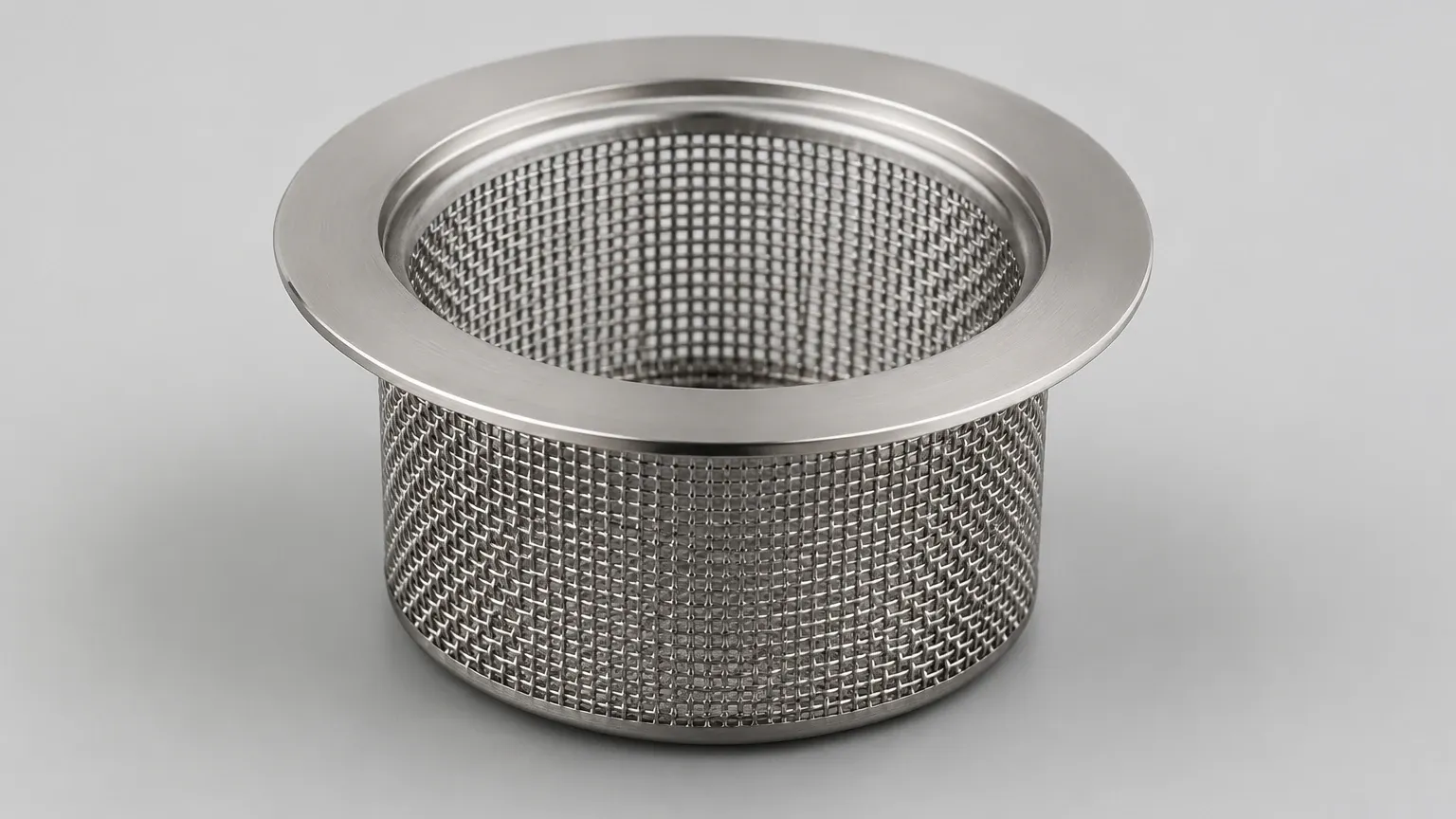
Basket Strainer 85mm
In industrial fluid handling systems, the integrity of downstream equipment such as pumps, valves, and heat exchangers depends heavily on the efficiency of primary filtration components. Among these, the basket strainer 85mm serves as a critical mechanical barrier designed to remove large-scale particulates from liquid and gas streams. Unlike temporary cone or hat strainers, basket-style components offer a higher dirt-holding capacity and are engineered for long-term integration into pressurized piping systems.
As a specialized manufacturer, Kaifil provides Strainers & Baskets that meet the rigorous demands of industrial processing. Understanding the technical specifications, material properties, and engineering considerations of an 85mm basket strainer is essential for procurement teams and system engineers who prioritize operational uptime and equipment longevity.
Technical Specifications of the Basket Strainer 85mm
The designation "85mm" typically refers to the outer diameter (OD) of the basket flange or the main body of the strainer element, depending on the specific housing architecture. In many industrial configurations, this size is optimized for compact housing units or specific manifold sections where space is a constraint but high-flow filtration is still required.
Dimensional Accuracy and Fitment
Precision in the manufacturing of a basket strainer 85mm is paramount. A discrepancy of even a few millimeters in the flange diameter or the height of the basket can lead to "bypass"—a condition where unfiltered fluid escapes around the edges of the basket rather than passing through the filtration media. To prevent this, industrial baskets are often designed with machined seats or O-ring grooves to ensure a positive seal within the strainer housing.
Construction Materials
Material selection is dictated by the chemical compatibility of the fluid and the operating temperature of the system.
* Stainless Steel 304: The industry standard for general-purpose applications, offering excellent resistance to oxidation and many organic chemicals. It is widely used in water treatment and food processing.
* Stainless Steel 316/316L: Contains molybdenum, which significantly enhances resistance to chloride-induced pitting and crevice corrosion. This is the preferred material for marine environments, pharmaceutical manufacturing, and aggressive chemical processing.
* Specialty Alloys: For highly corrosive environments involving concentrated acids or high-temperature steam, alloys such as Monel or Hastelloy may be utilized, though stainless steel remains the most common choice for the 85mm size class.
Engineering Considerations: Flow Dynamics and Pressure Drop
When specifying a basket strainer 85mm, engineers must calculate the impact the component will have on the overall system pressure. Every filtration element introduces a degree of resistance to flow, known as pressure drop ($ΔP$).
The Open Area Ratio
A critical metric in strainer design is the ratio of the open area of the basket to the cross-sectional area of the inlet pipe. A high-performance basket strainer 85mm should ideally provide an open area ratio of at least 6:1. This ensures that even as the basket begins to collect debris, the increase in pressure drop remains gradual, allowing for longer intervals between cleaning cycles. If the open area is too small, the velocity through the mesh increases, which can lead to particle breakthrough or structural deformation of the basket.
Mesh vs. Perforation
The 85mm basket can be constructed using perforated metal, wire mesh, or a combination of both.
* Perforated Metal: Provides structural rigidity and is suitable for removing large debris (e.g., 1mm to 10mm particles).
* Wire Mesh Liners: For finer filtration (down to 5 microns), a fine wire mesh is sintered or spot-welded to the interior of a perforated support basket. This "dual-layer" approach combines the strength of the perforated plate with the precision of the mesh.
Applications Across Industrial Sectors
The versatility of the basket strainer 85mm makes it a staple in various sectors where fluid purity and equipment protection are non-negotiable.
Chemical and Petrochemical Processing
In chemical plants, strainers are used to protect sensitive instrumentation and control valves from scale, rust, and weld slag. The 85mm basket is frequently found in sampling lines or small-batch processing loops where corrosive fluids require the durability of 316 stainless steel.
Food and Beverage Industry
For food-grade applications, the basket strainer 85mm must adhere to hygienic design principles. This includes smooth surface finishes (often electro-polished) to prevent bacterial growth and the use of FDA-approved sealing materials. These strainers are essential for removing pulp, seeds, or foreign particulates from liquid ingredients before they reach filling machines.
Hydraulic and Lube Oil Systems
High-pressure hydraulic systems rely on clean oil to prevent wear on precision-machined pump components. An 85mm basket strainer integrated into the suction side or the return line helps capture metallic wear particles and environmental contaminants, extending the life of the hydraulic fluid and the system components.
Performance Evaluation and Maintenance
To maintain the efficiency of Strainers & Baskets, a proactive maintenance schedule must be established based on the particulate loading of the fluid.
Monitoring Differential Pressure
The most effective way to evaluate the condition of a basket strainer 85mm is by monitoring the differential pressure across the housing. Most industrial systems utilize a DP gauge. When the pressure drop reaches a predetermined limit (typically 5-10 psi over the clean pressure drop), the basket must be removed and cleaned. Delaying this maintenance can result in the basket collapsing under the force of the fluid pressure or the "blinding" of the mesh, which halts production.
Cleaning and Reusability
One of the primary advantages of stainless steel basket strainers is their cleanability. Unlike disposable cartridge filters, a basket strainer 85mm can be cleaned using ultrasonic baths, high-pressure water jets, or chemical cleaning agents, depending on the nature of the contaminant. This reusability significantly reduces the Total Cost of Ownership (TCO) over the life of the filtration system.
Customization Options for Specific Engineering Needs
Standard off-the-shelf strainers may not always meet the unique requirements of a specialized industrial process. Kaifil specializes in the customization of the basket strainer 85mm to address specific engineering challenges:
1. Reinforced Handles: For applications where the basket becomes heavy due to high debris loading, reinforced lifting handles or bails are added to facilitate safe removal.
2. Magnetic Inserts: To capture fine ferrous particles that might otherwise pass through a standard mesh, magnetic rods can be integrated into the center of the 85mm basket.
3. Custom Micron Ratings: While 85mm refers to the physical size, the filtration rating can be customized from coarse 1/4" perforations to ultra-fine 400-mesh linings.
4. Variable Lengths: Depending on the depth of the strainer housing, the length of the basket can be adjusted to maximize the surface area without changing the 85mm diameter.
Common Risks and Mitigation Strategies
When integrating a basket strainer 85mm into a system, engineers should be aware of several common risks:
* Structural Collapse: If the differential pressure exceeds the structural limits of the basket, it may buckle. This is mitigated by using thicker gauge perforated plate or adding internal support rings.
* Gasket Failure: High temperatures or aggressive chemicals can degrade the seals between the basket and the housing. Selecting the correct elastomer (e.g., Viton, EPDM, or PTFE) is critical during the specification phase.
* Flow Turbulence: Improperly sized baskets can cause excessive turbulence, leading to vibration and mechanical fatigue. Ensuring the basket is correctly seated and matched to the flow rate minimizes this risk.
Conclusion for Purchasing and Engineering Teams
Selecting the right basket strainer 85mm requires a comprehensive understanding of the fluid dynamics, chemical environment, and maintenance capabilities of the facility. By focusing on high-quality materials like 304 or 316 stainless steel and ensuring the open area ratio is optimized for the application, organizations can significantly reduce downtime and protect their capital equipment.
Before finalizing a purchase, technical teams should confirm the exact flange dimensions, the required micron rating, and the maximum operating pressure of the system. As a dedicated provider of industrial filtration solutions, Kaifil offers the expertise necessary to develop custom Strainers & Baskets that meet these precise specifications, ensuring reliable performance in the most demanding industrial environments.
