


Basket Strainer and Overflow
In industrial fluid handling, the management of particulate matter and the maintenance of consistent flow rates are critical to operational efficiency and equipment longevity. A basket strainer serves as a primary defense mechanism, capturing solids that could otherwise damage pumps, valves, and downstream instrumentation. However, the integration of a basket strainer and overflow mechanism—often configured as a bypass or a pressure-relief system—is essential for ensuring that filtration processes do not lead to catastrophic system failure due to blockages or excessive pressure buildup.
For engineers and procurement professionals, selecting the right Strainers & Baskets requires a deep understanding of fluid dynamics, material compatibility, and the specific safety requirements of the application. This guide examines the technical nuances of basket strainers, the engineering logic behind overflow management, and the criteria necessary for optimizing industrial filtration systems.
Technical Fundamentals of Industrial Basket Strainers
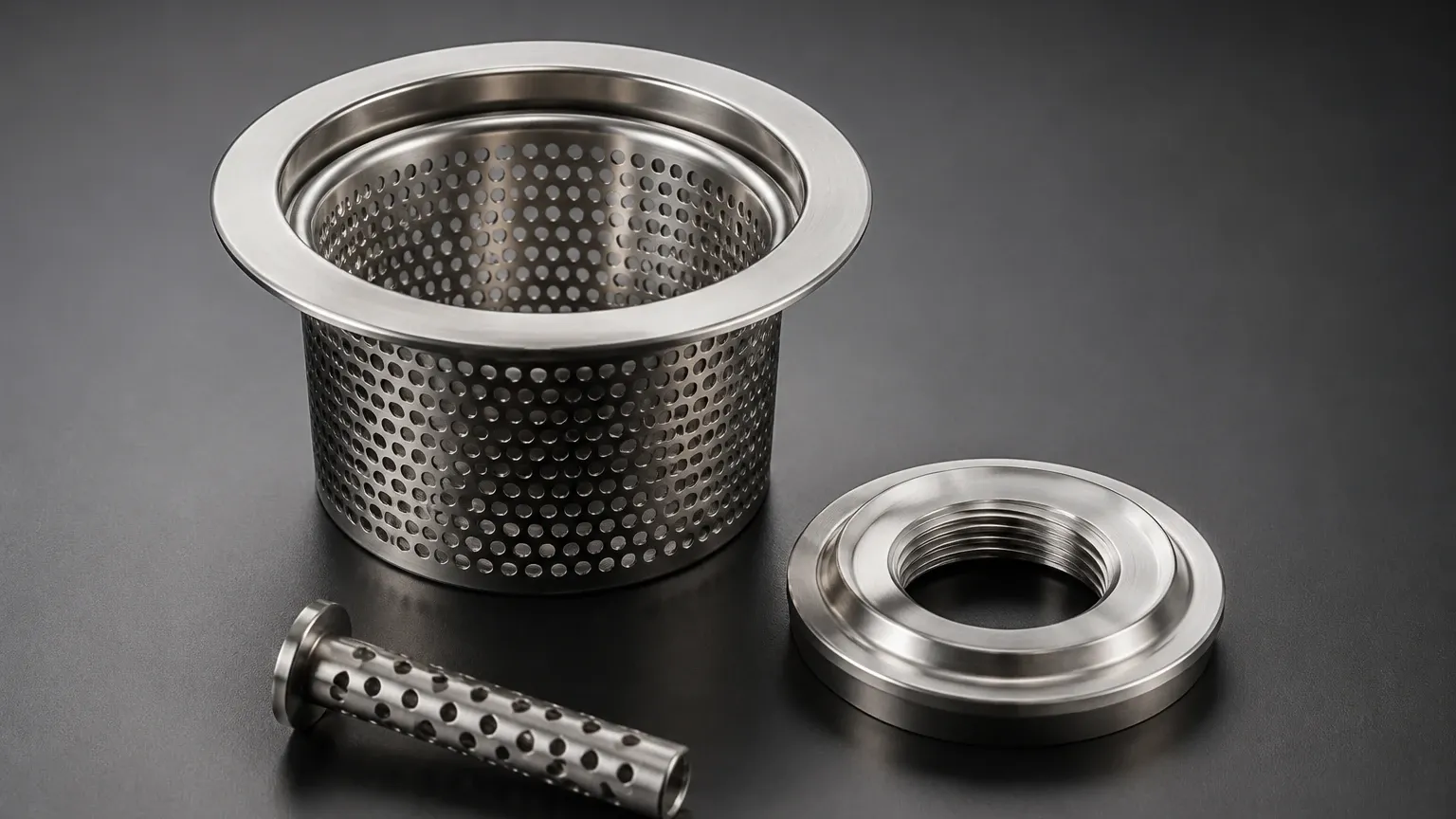
Industrial basket strainers are closed vessels with a removable screen or basket designed to remove large particles from liquid or gas streams. Unlike Y-strainers, which are often used for smaller amounts of particulate, basket strainers are engineered for systems where high solids loading is expected. The "basket" design provides a larger surface area for debris collection, which results in a lower initial pressure drop and longer intervals between cleaning cycles.
Construction and Material Selection
The performance of a basket strainer is heavily dependent on its material of construction. In industries such as chemical processing, pharmaceuticals, and food and beverage, stainless steel is the standard due to its corrosion resistance and ability to withstand high temperatures. Common materials include:
* SS304: Suitable for general-purpose applications where moderate corrosion resistance is required.
* SS316/316L: Preferred for marine environments, acidic chemical processing, and pharmaceutical applications due to superior resistance to pitting and crevice corrosion.
* Specialty Alloys: For highly aggressive media, alloys like Hastelloy or Monel may be utilized for the internal mesh or the entire housing.
Filtration Media Types
The internal basket can be fabricated using various types of media depending on the required filtration accuracy:
1. Perforated Metal: Provides structural strength and is typically used for coarse filtration (removing large stones, scale, or debris).
2. Wire Mesh: Available in various weaves (plain, twilled, or dutch), wire mesh allows for precision filtration down to several microns.
3. Wedge Wire: Known for its non-clogging characteristics and high mechanical strength, making it ideal for heavy-duty industrial applications.
The Engineering Significance of Basket Strainer and Overflow Systems
In many critical industrial processes, a total cessation of flow is unacceptable. If a basket becomes completely blinded by debris and there is no mechanism to handle the excess pressure or fluid, the resulting "deadhead" condition can destroy centrifugal pumps or rupture seals. This is where the concept of a basket strainer and overflow or bypass configuration becomes vital.
Pressure-Driven Overflow Mechanisms
An overflow system in a filtration context usually refers to a bypass line equipped with a pressure-relief valve (PRV) or a differential pressure sensor linked to an automated valve. When the pressure drop (Delta P) across the strainer basket exceeds a pre-set limit—indicating the basket is full—the overflow mechanism activates. This allows the fluid to bypass the clogged strainer, maintaining system pressure and protecting upstream hardware until maintenance can be performed.
Duplex Strainers as a Continuous Flow Solution
For applications that cannot be shut down for cleaning, a duplex basket strainer is the preferred engineering solution. A duplex system consists of two separate strainer chambers connected by a diverted valve. While one chamber is in operation, the other remains on standby. When the operating basket reaches its dirt-holding capacity, the flow is diverted to the clean chamber. This ensures continuous operation without the risk of overflow or process interruption.
Design Considerations: Flow Rates and Pressure Drop
One of the most common mistakes in filter selection is undersizing the unit, which leads to frequent cleaning and high energy costs due to excessive pressure drop. Engineers must calculate the "Clean Pressure Drop" and the "Maximum Allowable Pressure Drop" before selecting a basket strainer.
The Ratio of Open Area
A key metric in strainer design is the ratio of the open area of the basket to the cross-sectional area of the inlet pipe. For industrial applications, a ratio of 6:1 or 8:1 is often recommended. A higher ratio means the strainer can collect more debris before the pressure drop begins to impact system performance significantly. If the ratio is too low, the risk of a sudden overflow condition increases as the basket fills quickly.
Fluid Viscosity and Specific Gravity
The behavior of the fluid significantly impacts how it interacts with the strainer mesh. Highly viscous fluids (such as oils or syrups) require larger mesh openings or larger housing sizes to maintain a manageable pressure drop. If the viscosity is not accounted for, the system may trigger the overflow bypass prematurely, even if the basket is relatively clean.
Customization and OEM Capabilities
No two industrial processes are identical, and off-the-shelf filtration components often fall short of meeting specific engineering requirements. Customization is essential for integrating a basket strainer into existing piping layouts or meeting stringent regulatory standards.
Structural Customization
Customized Strainers & Baskets can be designed with specific inlet/outlet configurations, such as offset nozzles, bottom drains, or top-entry designs for easier basket removal. Furthermore, the type of connection—whether flanged (ANSI, DIN, JIS), threaded (NPT/BSP), or sanitary (Tri-clamp)—must be specified to ensure leak-proof integration.
Performance Customization
For specialized applications, baskets can be reinforced with internal supports to withstand high differential pressures without collapsing. Surface treatments, such as electropolishing or Teflon coating, can be applied to prevent particulate adhesion and improve the ease of cleaning.
Maintenance Protocols and Performance Monitoring
The reliability of a basket strainer and overflow system is only as good as its maintenance regime. Neglecting the strainer not only risks downstream contamination but also increases the total cost of ownership through energy inefficiency.
Differential Pressure Monitoring
The most effective way to manage a strainer is through differential pressure (DP) monitoring. By installing gauges at the inlet and outlet, operators can see exactly how much resistance the basket is creating. Modern systems often use DP transmitters that send a 4-20mA signal to a PLC, triggering an alarm or an automated bypass when the basket requires cleaning.
Cleaning Procedures
When cleaning a basket strainer, safety is paramount. The system must be depressurized and drained before the cover is opened. In hazardous chemical or high-temperature applications, the use of a "quick-opening" cover with a safety interlock can prevent accidental exposure. Once removed, the basket should be cleaned using a soft brush or ultrasonic bath to avoid damaging the precision wire mesh.
Industry-Specific Application Requirements
Different sectors have unique demands that dictate the design of the strainer and the necessity of overflow protection.
Chemical Processing
In chemical plants, the primary concern is material compatibility. The strainer must resist aggressive solvents and acids. Overflow systems here are often piped back to a holding tank to prevent hazardous spills in the event of a blockage.
Food and Beverage
Sanitary strainers must be designed with "dead-leg" free zones to prevent bacterial growth. The mesh must be smooth and easy to sterilize. In these applications, overflow mechanisms are rare due to contamination risks; instead, duplex systems or redundant filtration stages are used to maintain hygiene.
Hydraulic Systems
Hydraulic oils must be kept extremely clean to protect sensitive servo valves. Basket strainers in hydraulic return lines often feature an internal bypass valve. If the filter element clogs during a cold start (when oil is thick), the bypass allows the oil to flow, preventing the filter element from bursting.
Evaluating Total Cost of Ownership (TCO)
When purchasing industrial filtration components, the initial price is only a fraction of the total cost. Engineers should evaluate:
* Durability: How long will the basket last before the mesh fatigues or the housing corrodes?
* Downtime: How much does it cost the facility every time the process stops for strainer cleaning?
* Energy Consumption: A high pressure drop across a clogged or undersized strainer forces pumps to work harder, significantly increasing electricity usage over time.
By investing in a high-quality, properly sized basket strainer and overflow system, facilities can reduce maintenance frequency and extend the life of their most expensive mechanical assets.
Conclusion
The integration of a basket strainer and overflow mechanism is a fundamental requirement for safe and efficient industrial fluid management. Whether through a bypass line, a duplex configuration, or sophisticated differential pressure monitoring, ensuring that flow remains consistent while removing harmful particulates is essential for process stability. For engineers, the path to optimized filtration begins with selecting a manufacturer capable of providing precision-engineered, customized solutions that meet the specific rigors of their industry.
When evaluating your next filtration project, confirm the flow rates, fluid properties, and required micron ratings to ensure the selected hardware provides the necessary protection without compromising system throughput. High-performance Strainers & Baskets are not just components; they are critical safeguards for the entire industrial infrastructure.
