


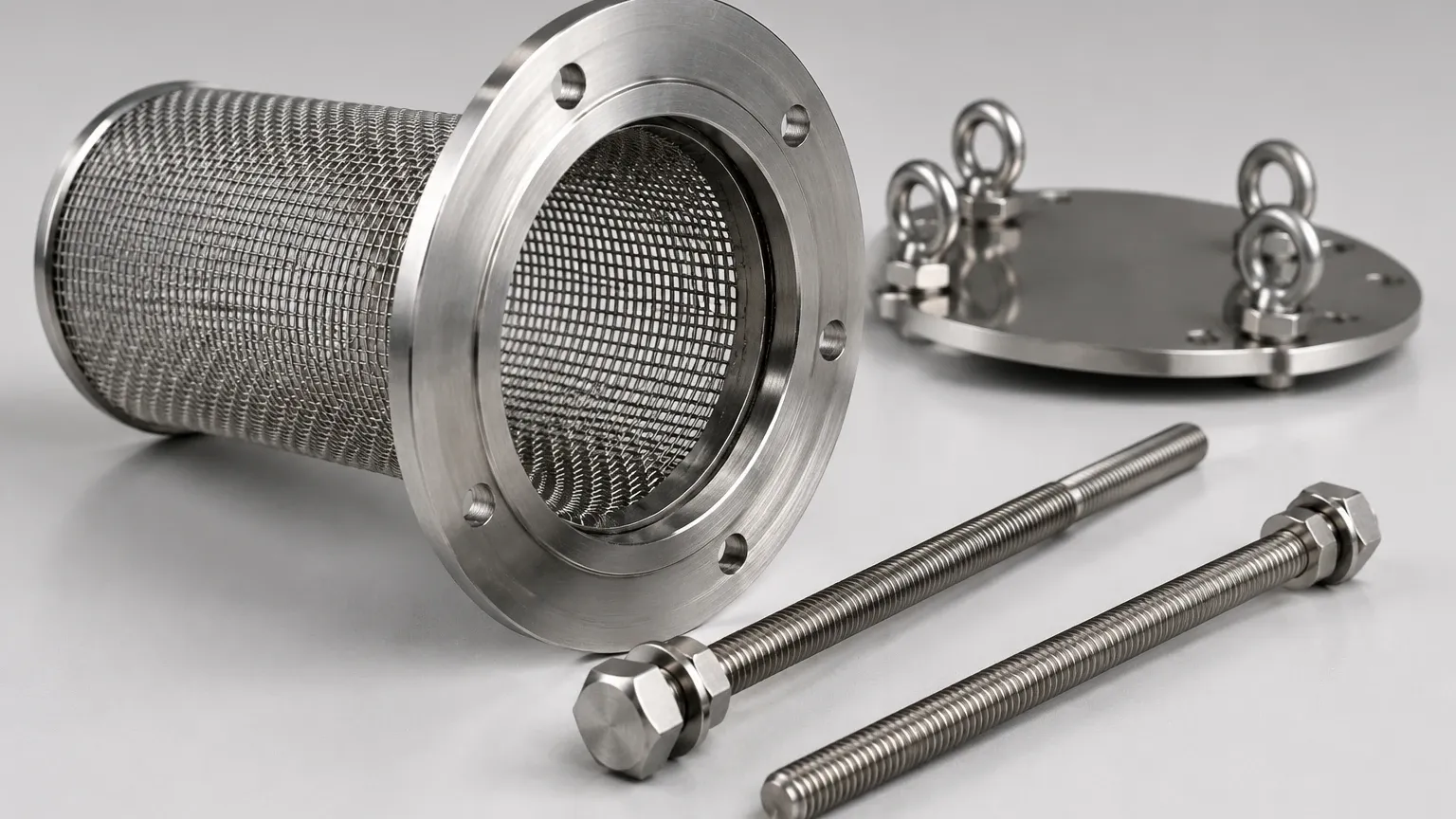
Basket Strainer Long Bolt
In the realm of industrial filtration, the mechanical integrity of a housing is as critical as the filtration media itself. While the mesh or perforated metal performs the primary task of particle separation, the hardware that secures the assembly—specifically the basket strainer long bolt—plays a vital role in maintaining system pressure, ensuring leak-proof seals, and facilitating safe maintenance. For engineers and procurement specialists, understanding the technical nuances of these fasteners is essential when specifying components for complex piping systems.
Industrial strainers are used across a wide spectrum of sectors, from chemical processing and water treatment to food and beverage production. In many of these applications, standard fasteners are insufficient due to the unique geometry of the strainer housing, the thickness of the flanges, or the need for additional clearance for insulation and bypass valves. This is where the specialized long bolt becomes a necessary engineering component.
Understanding the Role of Fasteners in Industrial Strainers & Baskets
Strainers & Baskets are designed to protect downstream equipment—such as pumps, valves, and meters—from damage caused by debris. The housing of a basket strainer typically consists of a body and a removable cover. The cover must be secured with enough force to compress the internal gasket or O-ring, creating a seal that can withstand the system’s operating pressure.
A basket strainer long bolt is often required in high-capacity or high-pressure designs. Unlike standard hex bolts used in general construction, these fasteners are engineered to accommodate the specific stack-up height of industrial strainer flanges. In many heavy-duty applications, the flange thickness is increased to prevent deformation under pressure, necessitating a bolt with a longer shank and thread length to ensure full engagement with the nut or the tapped holes in the housing body.
Furthermore, the "long bolt" configuration is frequently seen in "quick-opening" or "swing-bolt" cover designs. These designs allow operators to loosen the nuts and swing the bolts out of the way without completely removing them, significantly reducing the downtime required for cleaning the internal basket. The length of the bolt is calculated to provide enough clearance for the nut to clear the flange shoulder during the swing operation.
Technical Specifications and Dimensional Accuracy
When specifying a basket strainer long bolt, dimensional accuracy is paramount. An incorrect length can lead to two primary failure modes: bottoming out (if the bolt is too long for a blind hole) or insufficient thread engagement (if the bolt is too short). For industrial filtration systems, the rule of thumb is that the bolt should extend at least two full threads beyond the nut to ensure the full strength of the fastener is utilized.
Thread Pitch and Tolerance
In the United States, Unified National Coarse (UNC) threads are standard for most industrial strainers because they are less susceptible to cross-threading and are easier to assemble in field conditions where dirt or debris might be present. However, for precision applications or equipment manufactured to international standards, metric threads (such as M12, M16, or M20) may be required. The choice of thread pitch affects the mechanical advantage during tightening and the bolt's resistance to loosening due to vibration.
Shank Design
The shank is the unthreaded portion of the bolt. In a high-quality basket strainer long bolt, the shank diameter should be closely matched to the hole diameter in the flange to prevent lateral movement. In some specialized filtration units, the shank is reduced to allow for slight thermal expansion of the housing without putting excessive shear stress on the fastener.
Material Selection and Corrosion Resistance
Industrial filtration environments are often corrosive. Whether it is the brackish water of a cooling system or the acidic fluids in a chemical refinery, the material of the fastener must match or exceed the corrosion resistance of the strainer housing. Kaifil specializes in stainless steel solutions, and this expertise extends to the hardware used in our filtration assemblies.
Stainless Steel 304 vs. 316
* Grade 304: This is the most common grade for general-purpose industrial use. It offers excellent durability and good corrosion resistance for water treatment and food-grade applications. However, in environments containing chlorides (such as marine applications), 304 may suffer from pitting.
* Grade 316: For more demanding environments, Grade 316 stainless steel is the preferred choice. The addition of molybdenum provides superior resistance to chlorides and acetic acid. When a basket strainer long bolt is used in a chemical processing plant, 316 stainless steel ensures that the fastener will not seize or weaken over time due to chemical attack.
Specialty Alloys
In extreme cases, such as high-temperature steam filtration or highly concentrated sulfuric acid processing, standard stainless steels may not suffice. Engineers may specify Duplex stainless steel or nickel-based alloys (like Monel or Hastelloy) for the bolts. These materials provide the high tensile strength and chemical stability required to maintain the structural integrity of the strainer under extreme conditions.
Engineering Considerations for Installation and Sealing
The effectiveness of a basket strainer is only as good as its seal. The long bolts are the primary mechanism for generating the compressive force needed to energize the gasket. This process requires careful attention to torque values.
Torque and Preload
Applying the correct torque is essential to achieve the necessary "preload" in the bolt. Preload is the tension created in the fastener that holds the joint together. If the torque is too low, the gasket may leak under pressure. If the torque is too high, the bolt may exceed its yield strength and permanently deform, or the flange itself may warp. Engineers must consult the manufacturer’s specifications for the specific basket strainer long bolt and gasket material being used, as different lubricants on the threads can significantly alter the torque-to-tension relationship.
Tightening Patterns
To ensure an even seal, bolts should always be tightened in a star or crisscross pattern. This prevents the cover from tilting, which could cause uneven gasket compression and lead to a "blowout" during operation. In systems using long bolts, the risk of misalignment is slightly higher because of the increased distance between the nut and the flange base, making a disciplined tightening sequence even more critical.
Common Challenges: Galling and Fatigue
One of the most frequent issues encountered with stainless steel fasteners is "galling," also known as cold welding. This occurs when the threads of the bolt and nut rub against each other, stripping the protective oxide layer and causing the metal surfaces to fuse together. Because a basket strainer long bolt has more thread surface area than a standard bolt, the risk of galling is increased.
To prevent this, Kaifil recommends the use of high-quality anti-seize lubricants during installation. Additionally, using a nut made of a slightly different stainless steel grade or hardness than the bolt can help mitigate the risk.
Fatigue is another concern, particularly in systems with pulsating flow or frequent pressure cycles (such as hydraulic systems). The constant loading and unloading can cause microscopic cracks to form in the bolt threads. Regular inspection of the hardware during basket cleaning cycles is necessary to identify signs of stretching or cracking before a catastrophic failure occurs.
Customization and OEM Solutions for Specialized Filtration
Not every industrial application fits a standard catalog specification. Many systems require customized Strainers & Baskets to accommodate specific flow rates, space constraints, or filtration accuracies. In these instances, the hardware must be customized as well.
As a professional manufacturer, Kaifil provides OEM capabilities that allow for the production of custom-length bolts and specialized fastener configurations. This includes:
* Extended Lengths: For housings that require heavy thermal insulation jackets, we provide extra-long bolts that allow the cover to be accessed without stripping away the insulation.
* Specialized Head Types: While hex heads are standard, some applications may require heavy hex nuts, T-head bolts for quick-release mechanisms, or even eye-bolts for heavy cover lifting.
* Surface Treatments: Beyond the natural corrosion resistance of stainless steel, we can provide passivated or electropolished finishes to meet the stringent hygiene requirements of the pharmaceutical and biotech industries.
Maintenance Protocols and Replacement Cycles
Maintenance of the basket strainer long bolt should be integrated into the overall facility management plan. During every scheduled cleaning of the filter basket, the hardware should be inspected for the following:
1. Thread Integrity: Check for signs of wear, flattening, or cross-threading.
2. Corrosion: Look for tea-staining or pitting, especially in the thread roots where moisture can be trapped.
3. Straightness: Long bolts are more susceptible to bending if the cover is mishandled. A bent bolt will not distribute load evenly and must be replaced.
4. Nut Fitment: The nut should thread smoothly by hand along the entire length of the bolt before final torquing.
Replacement cycles vary based on the severity of the service. In high-pressure, high-temperature, or highly corrosive environments, it is often more cost-effective to replace the bolts every two to three years rather than risking a failure. For standard water service, the bolts may last the lifetime of the housing, provided they are properly lubricated and not over-torqued.
Conclusion: Selecting the Right Hardware for Reliable Filtration
The basket strainer long bolt is a small but indispensable component of industrial filtration infrastructure. By selecting the correct material, ensuring precise dimensions, and following rigorous installation and maintenance protocols, engineers can ensure the long-term reliability of their Strainers & Baskets.
At Kaifil, we understand that industrial filtration is about more than just the mesh; it is about the entire assembly’s performance in demanding environments. Our commitment to quality manufacturing and engineering expertise ensures that every component, down to the last bolt, meets the highest standards of durability and precision. Whether you are designing a new chemical processing line or upgrading a water treatment facility, choosing the right filtration hardware is a critical step toward operational efficiency and safety.
