


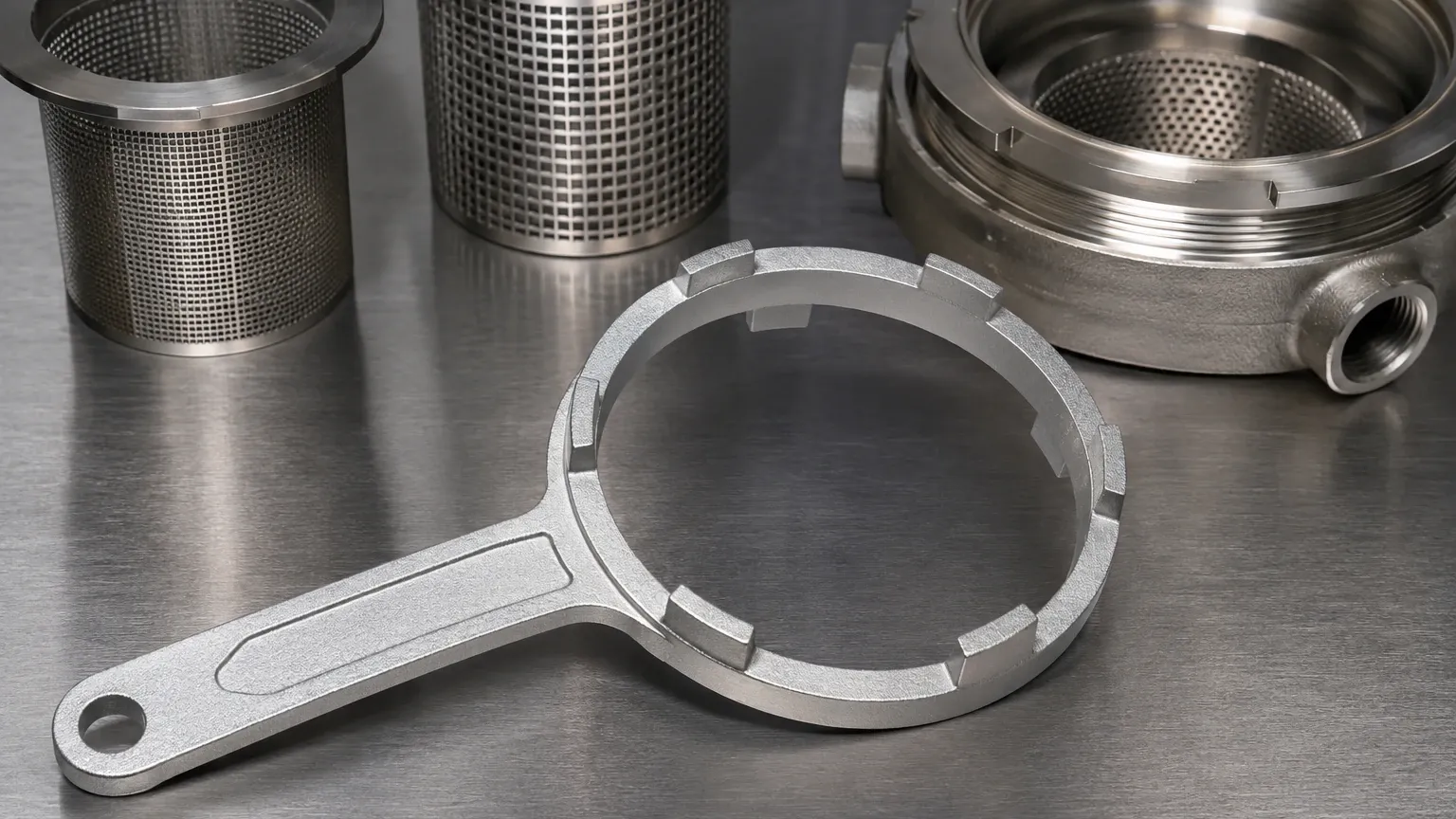
Basket Strainer Lock Nut Wrench
In industrial filtration and fluid handling systems, the integrity of the seal is the primary determinant of operational efficiency and safety. While much attention is paid to the micron rating of a filter or the chemical compatibility of the mesh, the mechanical components that secure these filters—specifically the basket strainer assembly—are equally critical. For engineers and maintenance professionals, the basket strainer lock nut wrench is an indispensable tool designed to ensure that the strainer housing remains leak-proof under pressure while allowing for rapid maintenance cycles. This article examines the technical specifications, selection criteria, and operational best practices for these tools within the context of high-performance Strainers & Baskets.
The Critical Role of Precision Tools in Industrial Filtration
Industrial basket strainers are designed to remove large particles from liquid streams to protect pumps, valves, and other downstream equipment. These systems often operate under significant pressure and handle fluids that may be corrosive, high-temperature, or hazardous. The lock nut, which secures the strainer basket or the housing cover, must be tightened to a specific torque to compress the gaskets and create a hermetic seal.
Using improvised tools or standard pipe wrenches on a basket strainer lock nut often leads to several mechanical failures. Standard wrenches may lack the necessary grip points, leading to the rounding of the nut’s lugs or flats. This not only makes future removal difficult but can also result in uneven gasket compression, leading to bypass or external leaks. A dedicated basket strainer lock nut wrench is engineered to interface perfectly with the specific geometry of the nut, ensuring that force is distributed evenly across all contact points.
In B2B environments, such as chemical processing or pharmaceutical manufacturing, downtime is a significant cost factor. The ability to quickly and safely remove a lock nut for basket cleaning or replacement is vital. A precision-engineered wrench facilitates this process, reducing the risk of workplace injuries caused by tool slippage and preventing damage to expensive stainless steel filtration components.
Anatomy of a Basket Strainer Assembly
To understand the necessity of a specialized wrench, one must first understand the assembly it services. A typical industrial basket strainer consists of a housing, a removable basket (often made of stainless steel wire mesh or perforated metal), and a securing mechanism. The lock nut is the primary component that applies the axial force required to seat the basket against the internal seals of the housing.
When evaluating Strainers & Baskets, engineers must consider the thread pitch and the diameter of the lock nut. Industrial strainers often utilize large-diameter nuts that are difficult to manage with standard hand tools. The lock nut may feature external lugs, internal notches, or a hexagonal profile. The basket strainer lock nut wrench is designed to match these specific features.
For instance, in high-pressure hydraulic applications, the lock nut must withstand significant vibration without loosening. The wrench used for these applications must allow for the application of high torque without deforming the nut. Conversely, in food and beverage applications, where stainless steel is the standard, the wrench must be made of a material that does not leave carbon deposits or scratches that could become sites for bacterial growth or localized corrosion.
Technical Specifications of the Basket Strainer Lock Nut Wrench
When procuring a basket strainer lock nut wrench, technical professionals must evaluate several key specifications to ensure compatibility with their existing filtration infrastructure. The most common designs include the spanner wrench, the lug wrench, and the socket-style wrench.
1. Geometry and Fit
The most critical specification is the interface geometry. Many industrial basket strainers utilize a "castle" style nut with four or more lugs. The wrench must have corresponding recesses or pins that engage these lugs simultaneously. This multi-point contact prevents the concentration of stress on a single lug, which is a common cause of nut failure. For hexagonal nuts, the wrench must provide a tight tolerance fit to prevent rounding the corners.
2. Leverage and Torque Capacity
Industrial lock nuts often require significant torque to achieve a proper seal, especially when using PTFE or high-durometer Viton gaskets. The length of the wrench handle must provide sufficient leverage for the operator to reach the required torque without excessive physical strain. Some wrenches are designed with a square drive opening, allowing them to be used with a torque wrench for precise application in critical systems.
3. Material Composition
The material of the wrench itself is a major engineering consideration. Common materials include:
* Ductile Iron: Offers high strength and durability for heavy-duty industrial use.
* Aluminum Bronze: Non-sparking and corrosion-resistant, ideal for volatile chemical environments.
* Stainless Steel: Used in cleanroom or sanitary applications to prevent cross-contamination.
* Hardened Tool Steel: Provides maximum wear resistance for high-frequency maintenance environments.
Material Selection and Durability in Corrosive Environments
In industries such as chemical processing and water treatment, the environment in which the basket strainer lock nut wrench operates can be highly corrosive. If a tool is made from a material that is susceptible to oxidation, it can transfer rust to the strainer housing, leading to galvanic corrosion. This is particularly problematic when working with high-grade stainless steel Strainers & Baskets.
Engineers should specify tools that are either made from compatible alloys or feature protective coatings. For example, a zinc-plated or powder-coated wrench provides a barrier against moisture and chemical fumes. However, in the most demanding applications, a solid stainless steel or aluminum bronze wrench is preferred.
Furthermore, the durability of the tool's contact surfaces is paramount. If the teeth or lugs of the wrench wear down over time, the tool will lose its precision fit. This leads to "cam-out," where the wrench slips out of the nut under load. This not only damages the nut but also poses a safety risk to the technician. Selecting a wrench with heat-treated contact points ensures a longer service life and consistent performance across hundreds of maintenance cycles.
Installation and Maintenance Protocols for Industrial Strainers
Proper use of a basket strainer lock nut wrench is as important as the quality of the tool itself. Following a standardized protocol ensures that the filtration system remains operational and that the lifespan of the components is maximized.
Step 1: Inspection and Cleaning
Before using the wrench, the lock nut and the housing threads must be inspected for debris, galling, or cross-threading. In stainless steel systems, galling is a significant risk. Applying a compatible anti-seize lubricant can prevent the threads from locking permanently, provided the lubricant is compatible with the fluid being filtered.
Step 2: Alignment
The wrench must be seated fully and squarely on the lock nut. Any misalignment will result in uneven force distribution. For wrenches with multiple pins or lugs, ensure all points of contact are engaged before applying force.
Step 3: Torque Application
Force should be applied in a smooth, continuous motion. Jerking or hammering the wrench can cause shock loads that damage the threads or the gasket. If a specific torque value is required by the manufacturer, a torque-limiting device should be used in conjunction with the wrench.
Step 4: Verification
Once the nut is tightened, the system should be pressurized slowly to check for leaks. If a leak is detected, the nut should be loosened, the gasket inspected for proper seating, and then re-tightened. Simply over-tightening a leaking nut with the wrench can lead to gasket extrusion or thread failure.
Mitigating Risks: Common Failures and Solutions
In the lifecycle of industrial Strainers & Baskets, several common issues arise that can be mitigated through the correct use of a basket strainer lock nut wrench.
1. Thread Galling: This is particularly common in stainless steel assemblies. When the lock nut is tightened too quickly or without lubrication, the friction causes the metal surfaces to weld together. Using a precision wrench allows for the slow, controlled rotation necessary to minimize heat buildup and prevent galling.
2. Gasket Deformation: If a wrench does not allow for even torque application, the gasket may be compressed more on one side than the other. This creates a path for fluid to bypass the filter basket. A wrench that engages the nut at multiple points ensures that the axial force is applied uniformly.
3. Tool Slippage: This is often the result of using the wrong size wrench or a tool with worn contact points. In an industrial setting, tool slippage can lead to broken fingers, strained backs, or damage to surrounding instrumentation. Investing in a high-quality, application-specific basket strainer lock nut wrench is a fundamental safety requirement.
Selecting the Right Tool for Your Filtration System
When purchasing filtration components, it is a best practice to acquire the corresponding maintenance tools simultaneously. For procurement managers and engineers, the following checklist can guide the selection of a basket strainer lock nut wrench:
* Compatibility: Does the wrench match the exact lug or flat configuration of the strainer's lock nut?
* Environment: Will the tool be used in a wash-down area, a hazardous zone, or a high-temperature environment?
* Frequency of Use: For systems that require daily cleaning, a heavy-duty tool with ergonomic features is necessary. For seasonal maintenance, a simpler design may suffice.
* System Pressure: Higher pressure systems require more robust lock nuts and, consequently, more substantial wrenches to achieve the necessary sealing force.
By focusing on these technical details, organizations can ensure that their Strainers & Baskets operate at peak performance with minimal risk of mechanical failure. The basket strainer lock nut wrench may seem like a simple accessory, but in the context of industrial filtration, it is a critical component of a reliable, safe, and efficient maintenance strategy. Whether you are managing a chemical plant, a food processing line, or a hydraulic system, the right tool makes the difference between a routine maintenance task and an expensive emergency repair.
