


Basket Strainer Offset
In industrial fluid handling systems, the physical layout of piping often dictates the selection of filtration components. While standard inline strainers are common, complex facility designs frequently encounter space constraints, existing pipe misalignments, or specific drainage requirements that necessitate a specialized configuration. This is where the concept of the basket strainer offset becomes a critical engineering consideration. Understanding how offset dimensions influence flow dynamics, installation efficiency, and long-term maintenance is essential for engineers and procurement teams tasked with optimizing industrial filtration processes.
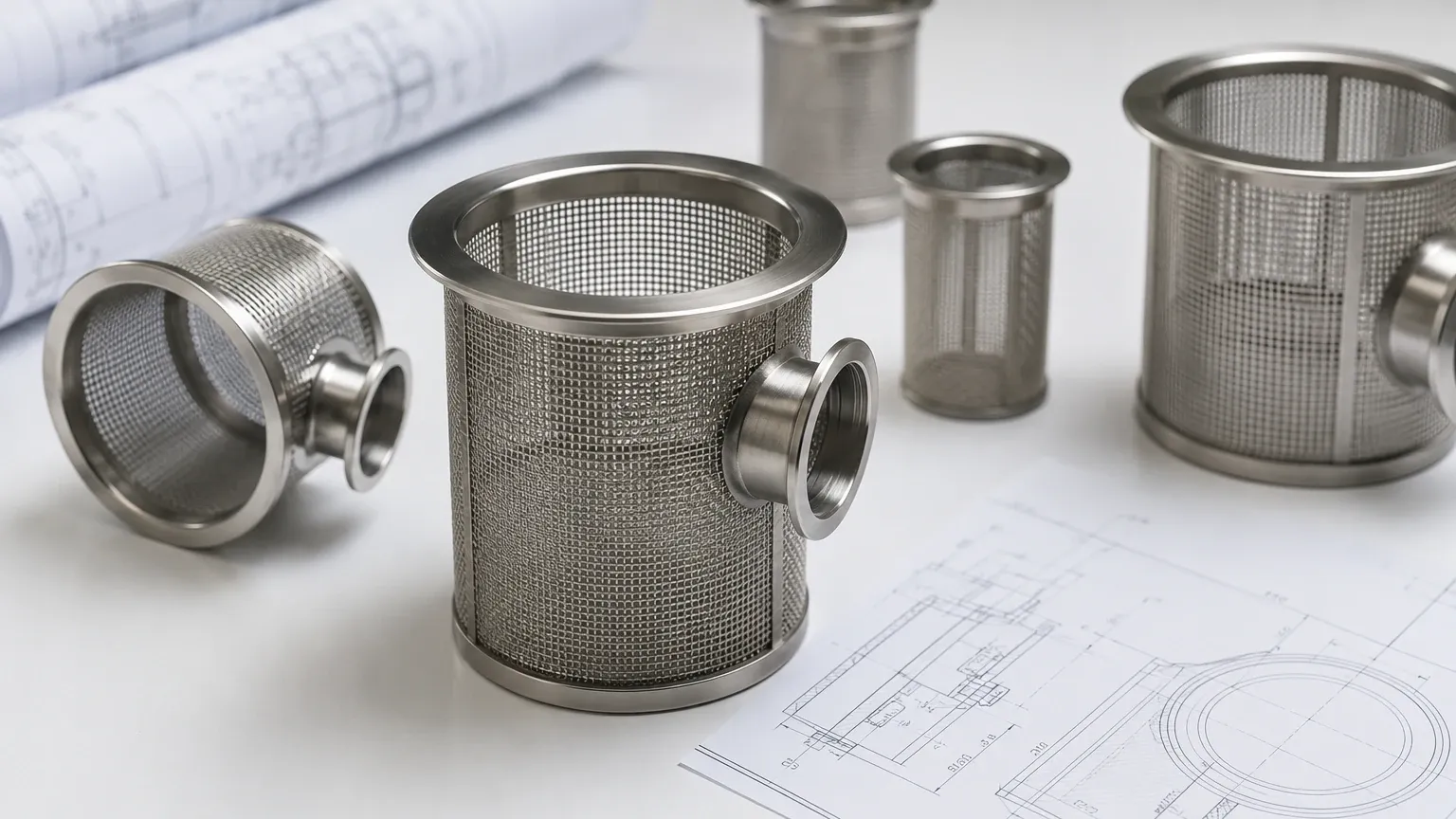
A basket strainer with an offset configuration typically refers to a design where the inlet and outlet nozzles are not on the same horizontal or vertical centerline. This geometric shift allows the strainer to bridge gaps in piping that are not perfectly aligned or to accommodate specific elevation changes required by the process flow. For manufacturers like Kaifil, providing high-quality Strainers & Baskets involves more than just standard sizing; it requires a deep understanding of how these physical offsets impact the mechanical integrity and filtration efficiency of the entire system.
The Technical Role of Offset in Industrial Filtration
The primary reason for specifying a basket strainer offset is to address the physical realities of the plant floor. In many retrofit projects, new filtration equipment must be integrated into legacy piping systems where space is at a premium. If the existing piping has a natural drop or a horizontal shift, a standard inline strainer would require additional elbows and fittings, increasing the overall footprint and the number of potential leak points.
By utilizing a custom-engineered offset, engineers can minimize the number of connections. This is particularly important in high-pressure applications or systems handling hazardous chemicals, where every additional joint represents a risk. The offset design allows for a "drop-in" fit, ensuring that the strainer body aligns perfectly with the upstream and downstream flanges. This precision is vital for maintaining the structural integrity of the piping, as forced alignment of non-offset components can introduce significant mechanical stress, leading to flange failure or gasket leaks over time.
Furthermore, the basket strainer offset can be leveraged to facilitate gravity-assisted drainage. In applications involving heavy slurries or high-viscosity fluids, an offset that places the outlet at a lower elevation than the inlet can help prevent the accumulation of stagnant fluid within the housing, making the cleaning process more efficient during maintenance cycles.
Engineering Impact on Flow Dynamics and Pressure Drop
When an offset is introduced into a strainer housing, the internal flow path of the fluid changes. In a standard symmetrical basket strainer, the fluid enters, hits the basket, and exits with a relatively predictable flow profile. In an offset configuration, the fluid may undergo additional changes in direction before and after passing through the filtration medium.
Engineers must carefully evaluate the impact of the basket strainer offset on the system's total pressure drop ($ΔP$). Any change in direction within a pressurized system introduces turbulence. If the offset is too abrupt or the internal housing volume is not properly scaled to the offset distance, the resulting turbulence can lead to a higher-than-expected pressure drop. This can decrease the efficiency of pumps and reduce the overall throughput of the system.
To mitigate these effects, high-quality industrial strainers are designed with optimized internal geometries. The transition zones between the inlet/outlet and the main basket chamber are contoured to ensure a smooth laminar flow as much as possible. When selecting an offset strainer, it is crucial to review the flow coefficient (Cv) values provided by the manufacturer. These values help engineers calculate the expected pressure drop at various flow rates, ensuring that the offset design does not compromise the performance of the process line.
Material Selection and Structural Integrity in Offset Designs
Because offset strainers often serve as the bridge between misaligned pipes, they are subject to unique mechanical loads. The housing must be robust enough to handle not only the internal process pressure but also the potential torque and bending moments exerted by the piping. This makes material selection a paramount concern.
Stainless steel, particularly grades 304 and 316L, is the industry standard for these applications due to its excellent strength-to-weight ratio and corrosion resistance. In chemical processing or pharmaceutical environments, where the fluid may be corrosive or require high levels of purity, the use of precision-welded stainless steel ensures that the basket strainer offset remains a reliable component for years.
At Kaifil, the focus on precision metal components means that every offset strainer is manufactured with rigorous attention to weld quality. In an offset configuration, the stress distribution across the housing is non-uniform. Advanced manufacturing techniques, such as TIG welding and precision machining of flanges, are employed to ensure that the housing can withstand thermal expansion and contraction without cracking or deforming. Furthermore, the internal basket must be perfectly seated within the offset housing. Even a slight misalignment in the basket seat can allow fluid to bypass the filter element, leading to downstream contamination and equipment damage.
Customization and OEM Solutions for Complex Layouts
One of the most significant advantages of working with a specialized manufacturer is the ability to customize the basket strainer offset to meet exact site requirements. Off-the-shelf strainers often fail to meet the specific "Face-to-Face" (F-F) or "Center-to-Center" (C-C) dimensions required in specialized industrial equipment.
OEM customization allows for the development of strainers that fit into highly specific envelopes. For example, in hydraulic systems or compact water treatment skids, the available space for a strainer might be restricted by other components like heat exchangers or storage tanks. A custom offset can be engineered to "snake" around these obstacles, providing the necessary filtration area without requiring a complete redesign of the system layout.
When ordering customized Strainers & Baskets, engineers should provide detailed drawings that specify the horizontal and vertical offset distances, the flange type (such as ANSI, DIN, or JIS), and the required filtration accuracy (micron rating). This level of detail allows the manufacturer to produce a component that integrates seamlessly into the existing infrastructure, reducing installation time and labor costs.
Evaluation Criteria for Engineers and Purchasing Teams
Selecting the right basket strainer offset involves a multi-faceted evaluation process. It is not enough to simply match the pipe size; the technical specifications must align with the operational demands of the application. Key criteria include:
1. Dimensional Accuracy: The most critical factor is the precision of the offset. Even a few millimeters of deviation can make installation difficult or impossible. Engineers should confirm the F-F and C-C dimensions against their piping schematics.
2. Filtration Area vs. Footprint: An offset design should not sacrifice the effective filtration area. The internal basket must be sized appropriately to ensure low cleaning frequency and high dirt-holding capacity.
3. Pressure and Temperature Ratings: The offset housing must be rated for the maximum operating pressure and temperature of the system, including potential surges. This is especially important in steam or high-temperature oil applications.
4. Ease of Maintenance: The offset should not hinder the removal of the basket. In some poorly designed offset strainers, the cover or the basket may be blocked by adjacent piping. Engineers must ensure there is sufficient "pull space" to lift the basket out for cleaning.
5. Seal Integrity: The type of gasket or O-ring used for the cover and the internal basket seat must be compatible with the process fluid. Common materials include EPDM, Viton, and PTFE.
By focusing on these criteria, purchasing teams can ensure they are acquiring a component that offers the best total cost of ownership, balancing initial acquisition cost with long-term reliability and ease of use.
Common Risks of Improper Offset Specification
Failing to accurately specify the requirements for a basket strainer offset can lead to several operational risks. The most common issue is mechanical misalignment. If the strainer is forced into place between pipes that don't quite line up, it creates constant tension on the bolts and flanges. Over time, this stress can cause the gaskets to fail, leading to leaks that can shut down an entire production line.
Another risk is increased wear due to turbulence. If the offset creates a sharp "S-bend" in the flow path, the high-velocity fluid can cause localized erosion on the internal walls of the housing or the mesh of the basket. This is particularly prevalent in systems handling abrasive particles. Proper engineering involves ensuring that the offset transitions are gradual enough to minimize these erosive forces.
Finally, there is the risk of bypass. In an offset housing, the internal support structure for the basket must be perfectly square. If the manufacturing process does not account for the asymmetrical nature of the offset, the basket might not sit flush against its seal. This allows unfiltered fluid to pass around the basket, defeating the purpose of the strainer and potentially damaging sensitive downstream equipment like pumps, nozzles, or sensors.
Installation and Maintenance Best Practices
To maximize the lifespan of a basket strainer with an offset, proper installation and maintenance are required. During installation, it is vital to ensure that the piping is properly supported. The strainer should not be used to support the weight of the pipes; instead, the pipes should be anchored such that the strainer can be removed without causing the piping to sag or shift.
Maintenance cycles for offset strainers should be determined by monitoring the differential pressure across the unit. Installing pressure gauges at the inlet and outlet allows operators to see exactly when the basket is becoming clogged. Because the basket strainer offset might be installed in a tighter space than a standard unit, maintenance personnel should be trained on the specific removal procedure for that model to avoid damaging the internal seals or the wire mesh.
Regular inspection of the stainless steel housing for signs of corrosion or stress cracking is also recommended, especially in high-cycle or high-vibration environments. By following these best practices, industrial facilities can ensure that their filtration systems remain efficient and their downtime is minimized.
Conclusion
The basket strainer offset is a vital solution for modern industrial piping challenges. By allowing for flexible installation in constrained spaces and providing a means to align disparate piping centerlines, these specialized components ensure that filtration does not become a bottleneck in system design. Whether for chemical processing, water treatment, or food and beverage production, the use of high-quality, precision-engineered Strainers & Baskets is essential for maintaining process integrity. When engineers and manufacturers collaborate to define the exact parameters of an offset, the result is a more robust, efficient, and maintainable industrial system.
