


Basket Strainer Ul Listed
In industrial fluid handling, the integrity of a system often depends on the reliability of its smallest components. For engineers and procurement specialists managing high-risk environments—such as fire protection systems, fuel handling facilities, or chemical processing plants—the requirement for a basket strainer ul listed component is a critical specification. A UL (Underwriters Laboratories) listing provides an independent verification that the strainer has been tested for safety, durability, and performance under rigorous conditions.
Selecting the right Strainers & Baskets involves more than just matching pipe sizes; it requires a deep understanding of filtration mechanics, material compatibility, and regulatory compliance. This guide explores the technical nuances of UL-listed basket strainers and the engineering considerations necessary for optimizing industrial filtration systems.
Understanding the Significance of UL Listing for Industrial Strainers
A UL listing on a basket strainer signifies that the product meets specific safety standards established by Underwriters Laboratories. In the context of industrial filtration, these standards often relate to the component's ability to withstand extreme pressures, resist mechanical failure, and maintain seal integrity during operation.
For many B2B applications, particularly in the United States and Canada, using a basket strainer ul listed model is a prerequisite for insurance coverage and municipal code compliance. For instance, in fire protection systems (governed by NFPA standards), strainers used in fire pump suction lines or sprinkler systems must be UL listed to ensure they will not fail or clog prematurely during an emergency. The testing process involves hydrostatic pressure tests (often at four times the rated working pressure), flow friction loss tests, and material analysis to ensure the housing and internal elements can survive the intended service life without degradation.
Engineering Considerations for Basket Strainer Selection
When specifying a basket strainer, engineers must look beyond the certification and evaluate the technical parameters that affect long-term performance. The primary goal of a basket strainer is to protect downstream equipment—such as pumps, valves, and flow meters—from particulate damage. Achieving this requires balancing several factors:
1. Material Compatibility and Corrosion Resistance
Industrial environments often involve aggressive fluids. Stainless steel (specifically Grades 304 and 316) is the industry standard for high-performance strainers due to its excellent corrosion resistance and mechanical strength. While carbon steel or cast iron might be suitable for water or oil, stainless steel is essential for chemical processing, food and beverage production, and pharmaceutical applications where contamination must be avoided.
2. Filtration Accuracy: Mesh vs. Perforation
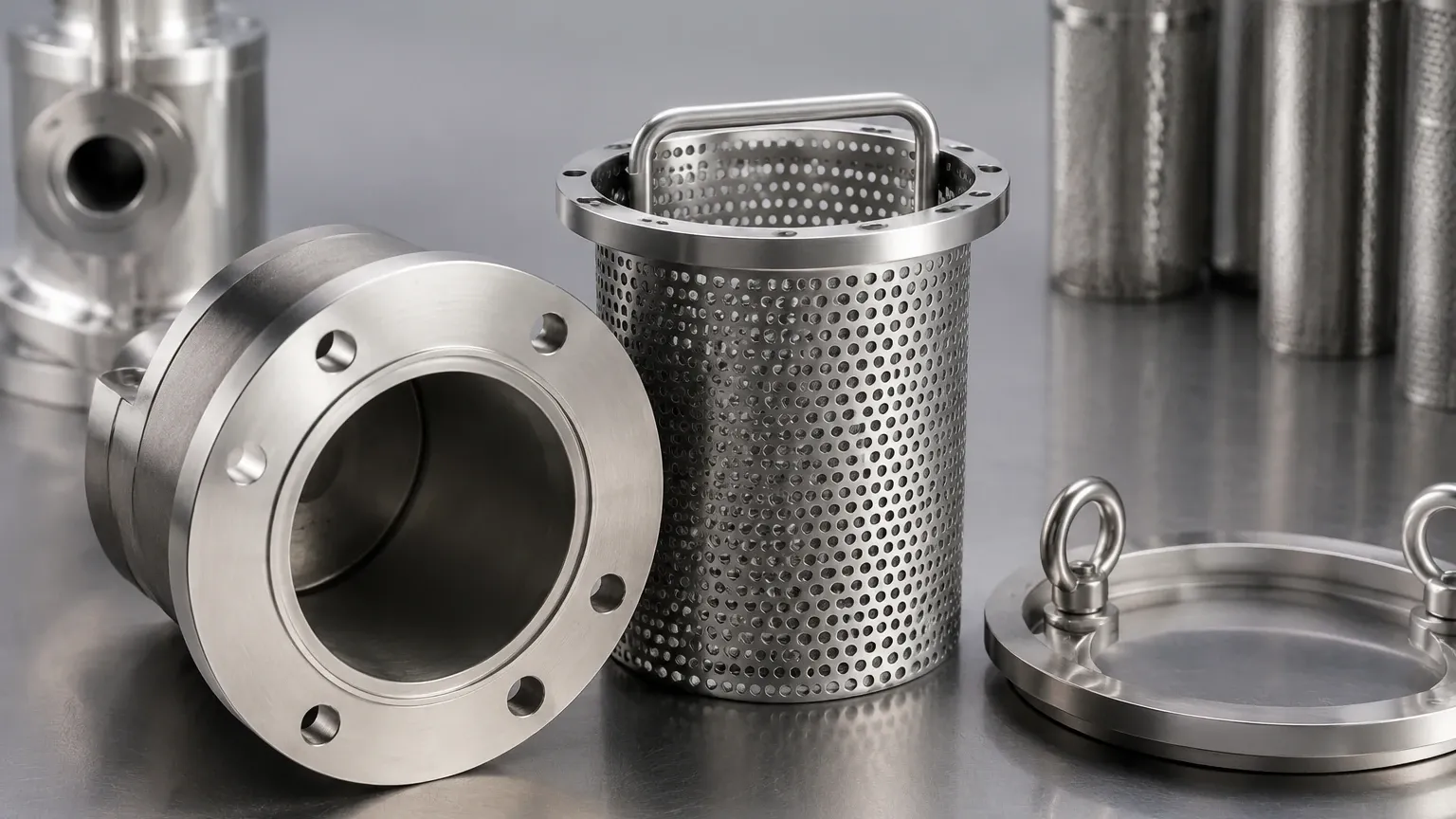
The internal basket is the heart of the strainer. It typically consists of a perforated metal sheet which may be lined with a finer wire mesh. Engineers must define the "open area ratio"—the ratio of the total area of the holes in the basket to the cross-sectional area of the inlet pipe. A higher ratio (typically 4:1 or 6:1) ensures that the strainer can collect a significant amount of debris before the pressure drop becomes excessive.
3. Pressure Drop (Delta P)
Every filtration component introduces a restriction to flow. A basket strainer ul listed for specific applications will have documented flow coefficients (Cv). Calculating the expected pressure drop at the required flow rate is vital to ensure the system's pump capacity is sufficient. Excessive pressure drop can lead to cavitation in pumps and reduced system efficiency.
Applications for UL Listed Basket Strainers
The demand for certified strainers spans multiple specialized sectors. Each industry has unique requirements for how a basket strainer should perform:
* Fire Protection Systems: As mentioned, UL 448 and related standards govern components in fire suppression. These strainers must handle high flow rates with minimal friction loss to ensure adequate water delivery to sprinklers or hydrants.
* Fuel and Oil Handling: For systems transporting flammable liquids, a basket strainer ul listed under UL 331 ensures that the materials and seals are compatible with hydrocarbons and that the housing can withstand the thermal and mechanical stresses of fuel transfer.
* Chemical Processing: In these environments, the focus is on preventing hazardous leaks. UL listing provides assurance that the strainer's pressure-containing parts are manufactured to high standards, reducing the risk of catastrophic failure in volatile environments.
* Water Treatment: Large-scale filtration systems use basket strainers as a primary stage to remove heavy solids. Certification ensures that the equipment can handle the constant cycling and hydraulic shocks common in municipal and industrial water lines.
Customization and OEM Solutions in Filtration
While standard off-the-shelf strainers meet many needs, complex industrial systems often require customized solutions. This is where manufacturing expertise in precision metal filtration becomes invaluable. Customization options for Strainers & Baskets include:
* Bespoke Dimensions: Modifying the face-to-face length or nozzle configurations to fit into existing piping layouts where space is constrained.
* Specialized Mesh Linings: Utilizing multi-layer sintered wire mesh or specific weave patterns (such as plain, twill, or dutch weave) to achieve precise micron ratings while maintaining structural integrity.
* Advanced Sealing Mechanisms: Incorporating high-temperature O-rings or specialized gaskets (PTFE, Viton, EPDM) to handle specific chemical profiles or thermal ranges.
* Reinforced Baskets: For high-pressure applications, baskets can be reinforced with external cages or internal supports to prevent collapse when the basket becomes heavily loaded with debris.
By working with a manufacturer that understands both the engineering requirements and the manufacturing process, purchasing teams can acquire components that meet the exact specifications of their project while maintaining the safety margins implied by a basket strainer ul listed requirement.
Installation and Maintenance Best Practices
The longevity of a basket strainer is heavily dependent on proper installation and a rigorous maintenance schedule. Unlike Y-strainers, basket strainers are designed for horizontal piping and offer the advantage of a larger debris-holding capacity, which allows for longer intervals between cleanings.
Installation Tips:
* Orientation: Ensure the strainer is installed with the basket housing facing downward to allow gravity to assist in debris collection and to facilitate easy removal of the basket.
* Support: Large strainers, especially when full of fluid and debris, can be heavy. Proper pipe support is necessary to prevent stress on the flanges or housing.
* Clearance: Maintain sufficient overhead or side clearance to allow the basket to be lifted out of the housing for cleaning.
Maintenance and Replacement Cycles:
Monitoring the pressure differential across the strainer is the most effective way to determine when cleaning is required. Installing pressure gauges upstream and downstream of the strainer allows operators to see the "Delta P" in real-time. A common rule of thumb is to clean the basket when the pressure drop reaches 5-10 psi above the clean-running pressure.
Over time, even the most durable stainless steel baskets can suffer from fatigue or abrasion. Regular inspection for broken wires in the mesh or thinning of the perforated plate is essential. Using high-quality replacement baskets that match the original equipment manufacturer (OEM) specifications ensures that the filtration performance remains consistent throughout the life of the system.
Evaluating Total Cost of Ownership (TCO)
For procurement professionals, the initial purchase price of a basket strainer ul listed component is only one part of the equation. The Total Cost of Ownership (TCO) includes the cost of downtime, maintenance labor, and replacement parts.
Investing in a high-quality stainless steel strainer from a reputable manufacturer can significantly reduce TCO by:
1. Reducing Maintenance Frequency: Optimized basket designs with larger surface areas require fewer cleanings.
2. Extending Equipment Life: Superior filtration protects expensive downstream pumps and valves from premature wear.
3. Ensuring Compliance: Using UL-listed components avoids the potential legal and financial liabilities associated with using uncertified parts in regulated systems.
4. Durability: High-grade materials and precision welding prevent housing cracks and basket failures that lead to emergency shutdowns.
Conclusion
Selecting a basket strainer ul listed for your facility is a decision that impacts safety, regulatory compliance, and operational efficiency. By focusing on technical specifications—such as material grade, pressure ratings, and filtration accuracy—engineers can ensure they are implementing a solution that protects their infrastructure and personnel.
Whether you are designing a new fire protection system or upgrading a chemical processing line, understanding the engineering behind Strainers & Baskets is the first step toward a reliable fluid handling system. For specialized applications, partnering with a manufacturer capable of providing custom-engineered filtration components ensures that even the most demanding operational requirements are met with precision and durability.
