


Basket Strainer Uses
In industrial fluid handling systems, the presence of unwanted solids can lead to catastrophic equipment failure, unscheduled downtime, and compromised product quality. Industrial strainers serve as the primary line of defense against these risks. Among the various configurations available, the basket-style strainer is often the preferred choice for applications requiring high flow rates, low pressure drops, and substantial debris-holding capacity. Understanding the diverse basket strainer uses across different sectors is essential for engineers and procurement teams tasked with optimizing system longevity and operational efficiency.
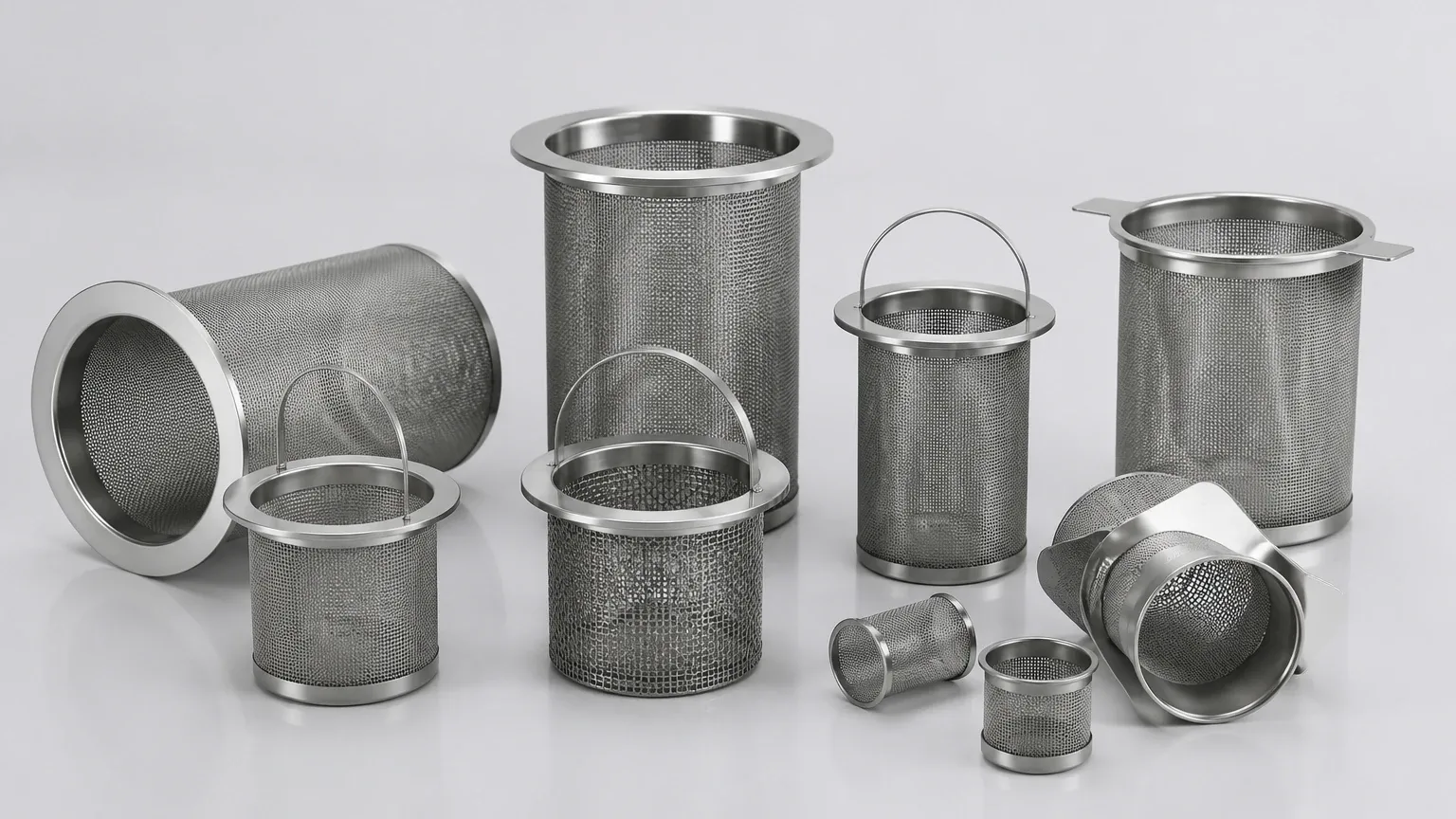
Strainers & Baskets are closed pressure vessels containing a removable screen, typically made of stainless steel wire mesh or perforated metal. As fluid enters the strainer housing, it is directed through the basket. The solids are trapped within the basket while the clean fluid passes through to the outlet. This fundamental mechanism is applied in thousands of industrial processes to protect pumps, valves, nozzles, and heat exchangers from damage caused by scale, rust, weld beads, and other foreign particulates.
Core Engineering Principles of Basket Strainers
Before examining specific applications, it is important to understand the engineering advantages that define basket strainer performance. Unlike Y-strainers, which are typically used for smaller amounts of debris in higher-pressure steam or gas lines, basket strainers are designed for liquid service where the volume of solids is higher.
Flow Dynamics and Pressure Drop
One of the most critical factors in strainer selection is the clean pressure drop ($ΔP$). Basket strainers generally offer a larger filtration area relative to the pipe size than other strainer types. This increased surface area results in a lower initial pressure drop and allows for longer intervals between cleaning cycles. In a well-designed system, the ratio of the open area of the basket to the cross-sectional area of the inlet pipe should ideally be at least 6:1 to minimize flow resistance.
Debris Capacity and Orientation
Because the basket is oriented vertically, it naturally collects debris at the bottom of the "well." This design prevents the trapped solids from being bypassed or pushed through the mesh as the basket fills. In horizontal piping runs, the top-entry design allows for easy maintenance without draining the entire system, provided the strainer is equipped with a vent and drain plug.
Key Industrial Basket Strainer Uses
The versatility of stainless steel filtration components allows them to be integrated into a wide range of environments. The following sections detail how different industries utilize these components to maintain process integrity.
1. Chemical Processing and Petrochemicals
In the chemical industry, the primary function of a basket strainer is to protect sensitive instrumentation and downstream reactors. Chemical fluids often carry suspended solids or crystallized products that can erode valve seats or clog flow meters.
* Corrosion Resistance: Using high-grade stainless steel (such as 304 or 316L) is mandatory in this sector to withstand aggressive solvents and acids.
* Catalyst Recovery: In some processes, basket strainers are used to capture expensive catalyst particles that may have escaped a reactor vessel, preventing loss of material and contamination of the final product.
2. Food and Beverage Production
Sanitary requirements dominate the food and beverage sector. Basket strainers are used to remove organic particulates, such as seeds from fruit juices, pulp from syrups, or grain fragments in brewing processes.
* Hygienic Design: For these applications, the internal surfaces of the strainer and the basket itself must be polished to specific Ra (Roughness Average) values to prevent bacterial growth.
* Batch Consistency: By ensuring that the fluid remains free of oversized particles, manufacturers can maintain consistent viscosity and texture in products like sauces and dairy items.
3. Pharmaceutical and Biotech Manufacturing
In pharmaceutical manufacturing, the stakes for filtration are exceptionally high. Basket strainers are often used in the early stages of fluid processing to protect fine membrane filters used later in the sequence.
* Pre-filtration: By removing larger contaminants early, basket strainers extend the life of expensive sub-micron filters.
* Material Traceability: Engineers in this field require documented material certifications (MTRs) to ensure that the stainless steel used in the filtration basket does not leach impurities into the process stream.
4. Water Treatment and Cooling Systems
Municipal and industrial water treatment plants utilize basket strainers to manage raw water intake from rivers, lakes, or wells.
* Pump Protection: Large-scale pumps are highly susceptible to damage from gravel, shells, and aquatic debris. Placing a basket strainer on the suction side of the pump is a standard engineering practice to prevent impeller erosion.
* Cooling Towers: In recirculating cooling water systems, strainers remove scale and environmental debris that would otherwise clog heat exchanger tubes, leading to reduced thermal efficiency and potential system overheating.
5. Oil and Hydraulic Systems
High-viscosity fluids, such as lubricating oils and hydraulic fluids, require robust filtration to prevent component wear.
* Particulate Removal: Even microscopic metal shavings can cause catastrophic failure in high-pressure hydraulic actuators. Basket strainers provide a reliable method for capturing these particles during fluid transfer or within return lines.
* Thermal Stability: Stainless steel baskets maintain their structural integrity even when exposed to high-temperature oils, where plastic or lower-grade metal alternatives might fail.
Technical Criteria for Selecting a Basket Strainer
Selecting the right strainer involves more than simply matching the pipe size. Engineers must evaluate several technical parameters to ensure the component meets the specific needs of the application.
Material Selection
While carbon steel and cast iron are available, stainless steel remains the industry standard for durability and chemical compatibility. Stainless steel 304 is suitable for most general-purpose applications, while 316/316L offers superior resistance to chlorides and pitting, making it ideal for marine or high-acid environments.
Mesh vs. Perforation
The "basket" can be constructed from perforated plate or wire mesh, or a combination of both (mesh-lined perforated baskets).
* Perforated Plate: Best for removing large, heavy debris. Typical hole sizes range from 1/32" to 1/2".
* Wire Mesh: Used for finer filtration, often measured in microns or mesh count (the number of openings per linear inch). High-performance baskets can filter down to 40 microns or less.
Simplex vs. Duplex Configurations
The decision between a simplex and a duplex strainer depends on whether the process can be stopped for cleaning.
* Simplex Strainers: Used in batch processes where the flow can be shut down periodically to remove and clean the basket.
* Duplex (Twin) Strainers: Feature two separate strainer chambers connected by a diverter valve. This allows one side to be cleaned while the other remains in operation, ensuring continuous flow. This is a critical requirement for lubrication systems on turbines or continuous chemical reactors.
Maintenance and Operational Longevity
The effectiveness of any basket strainer is directly tied to its maintenance schedule. A clogged basket increases the differential pressure across the unit, which can lead to basket collapse or "blow-by," where the pressure forces contaminants through the mesh.
Monitoring Differential Pressure
Installing pressure gauges on the inlet and outlet sides of the strainer is the most effective way to monitor performance. A common rule of thumb is to clean the basket when the differential pressure reaches 5-10 psi above the clean pressure drop. Automated systems often use differential pressure switches to trigger an alarm or switch the flow in a duplex system.
Cleaning Procedures
Stainless steel baskets are designed for reuse. Cleaning typically involves removing the basket and using a high-pressure water jet or a soft brush to dislodge trapped solids. In applications involving resins or adhesives, ultrasonic cleaning or chemical baths may be required to restore the open area of the mesh.
Customization in Industrial Filtration
Standard off-the-shelf strainers may not always meet the unique requirements of specialized industrial environments. Customization is often necessary to address specific challenges:
1. Non-Standard Dimensions: In retrofit projects, space constraints may require custom housing heights or offset inlet/outlet nozzles.
2. Specialty Coatings: For extremely abrasive slurries, baskets can be reinforced or treated with specialized coatings to extend their service life.
3. Magnetic Inserts: For applications involving fine iron or steel particles (such as in machining coolant systems), magnetic rods can be placed inside the basket to capture sub-micron ferrous debris that might pass through the mesh.
Conclusion: The Value of Precision Filtration
The various basket strainer uses highlighted above demonstrate that these components are far more than simple "buckets" in a pipe. They are precision-engineered tools that safeguard the most expensive assets in a production facility. By selecting high-quality stainless steel filtration solutions and adhering to rigorous engineering standards for flow and pressure management, operators can significantly reduce maintenance costs and improve the reliability of their systems.
When evaluating filtration needs, it is vital to work with manufacturers who understand the nuances of material selection and filtration accuracy. Whether the goal is to protect a high-pressure pump in a water treatment plant or to ensure the purity of a pharmaceutical batch, the right basket strainer is a fundamental component of industrial success.
