


Dish Strainers
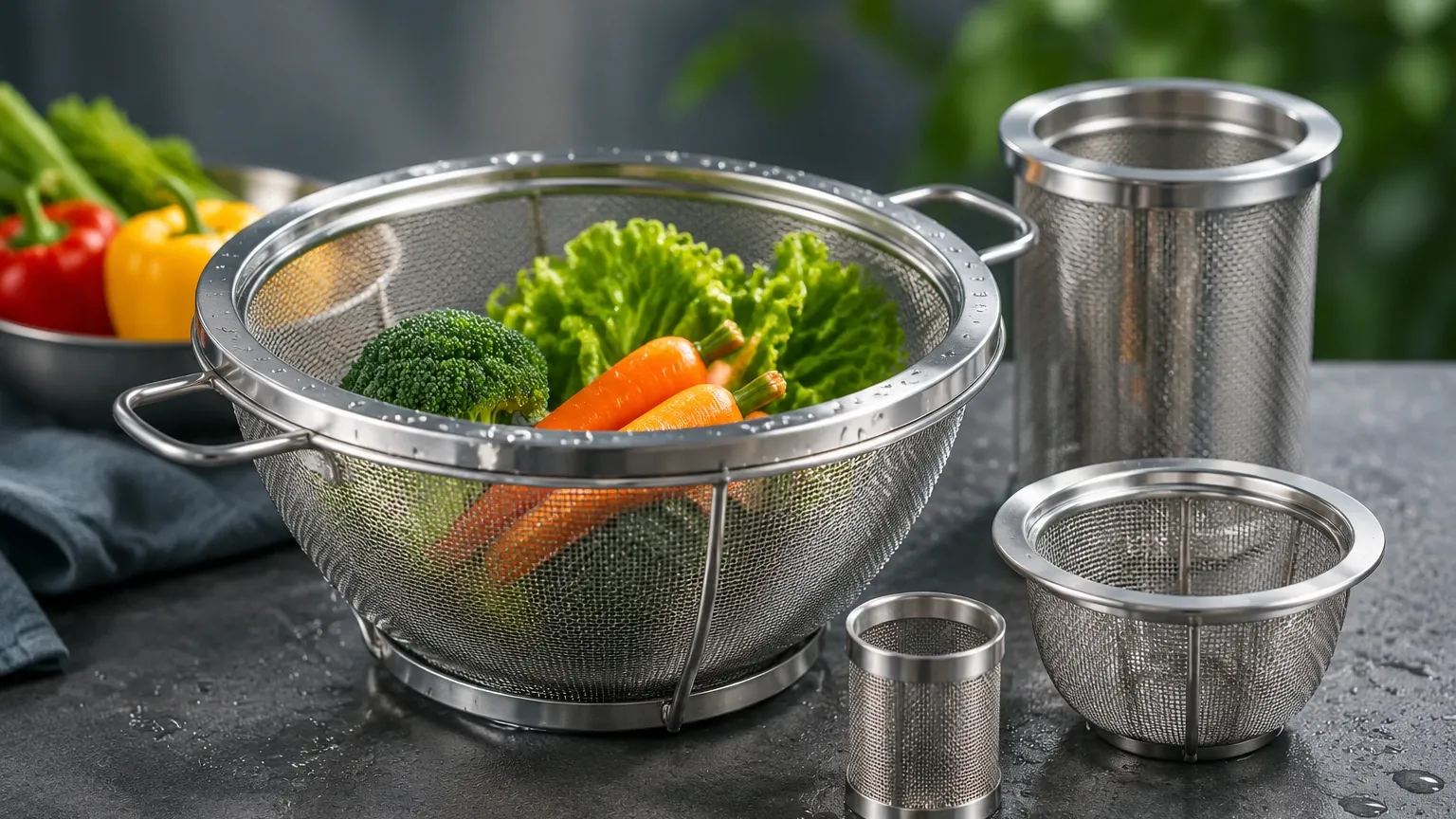
In the landscape of industrial fluid management and commercial processing, the term "dish strainers" refers to a specific geometry of filtration components designed for low-profile, high-surface-area applications. Unlike deep-well baskets, these components feature a shallow, concave, or "dish" profile that allows them to be integrated into sumps, floor drains, commercial dishwashing systems, and intake manifolds where vertical space is limited. As a critical subset of Strainers & Baskets, industrial dish strainers must meet rigorous standards for material integrity, filtration precision, and structural durability to withstand the demanding environments of chemical processing, food production, and pharmaceutical manufacturing.
For engineers and procurement professionals, selecting the correct dish strainer involves more than just matching dimensions. It requires a deep understanding of fluid dynamics, material compatibility, and the specific mechanical stresses of the application. This guide examines the technical specifications, engineering considerations, and selection criteria essential for optimizing filtration performance using dish-shaped strainer components.
Engineering Fundamentals of Dish-Shaped Strainers
The primary advantage of a dish-shaped strainer is its geometric efficiency. In many industrial systems, fluid must be filtered in a shallow reservoir or at a point of discharge where a standard cylindrical basket would be too tall. The dish profile provides a wide diameter relative to its depth, maximizing the effective filtration area (EFA) within a constrained vertical footprint.
Material Selection and Metallurgy
Industrial dish strainers are predominantly manufactured from stainless steel, specifically Grade 304 or Grade 316L.
* Grade 304 Stainless Steel: This is the standard choice for general-purpose applications, offering excellent corrosion resistance and mechanical strength. It is commonly used in commercial kitchens and general industrial water treatment.
* Grade 316L Stainless Steel: For environments involving high salinity, acidic chemicals, or stringent pharmaceutical requirements, 316L is preferred. The addition of molybdenum enhances resistance to pitting and crevice corrosion, while the "L" (low carbon) designation ensures better weldability and prevents intergranular corrosion in the heat-affected zones of the mesh-to-frame bonds.
Mesh and Perforation Dynamics
The filtration media of dish strainers can range from coarse perforated plate to fine woven wire mesh. Engineers must balance the "open area percentage" with the required particle retention. A higher open area reduces the initial pressure drop (Delta P) across the strainer but may compromise the structural rigidity of the dish if not properly reinforced with a support bridge or a heavier gauge outer frame.
Industrial Applications and Performance Requirements
While the term might suggest domestic use, industrial dish strainers are heavy-duty components engineered for continuous operation. Their application spans several high-stakes industries where debris management is vital for equipment protection.
Commercial and Industrial Washing Systems
In large-scale dishwashing and crate-washing systems used in food logistics, dish strainers serve as the primary defense for centrifugal pumps. They capture food solids, labels, and packaging debris before the water is recirculated or discharged. In these settings, the strainers must be easily removable for manual cleaning while maintaining a tight seal against the housing to prevent bypass.
Chemical and Petrochemical Processing
In chemical sumps, dish strainers are used to protect downstream valves and sensors from scale or particulate matter. Because these fluids can be volatile or corrosive, the structural integrity of the strainer’s welds is paramount. Kaifil utilizes advanced welding techniques to ensure that the mesh-to-rim interface remains intact even under the turbulent flow conditions typical of chemical discharge.
Pharmaceutical and Biotech Environments
In these sectors, dish strainers are often used in drainage systems where Clean-in-Place (CIP) protocols are standard. The strainers must feature smooth surface finishes (often electropolished) to eliminate microscopic pits where bacteria could colonize. The design must ensure there are no "dead zones" where fluid can stagnate, facilitating total drainage and effective sterilization.
Key Evaluation Criteria for Procurement
When specifying Strainers & Baskets for a new project or as replacement parts, technical teams should evaluate several performance indicators to ensure long-term reliability.
1. Filtration Accuracy and Particle Retention
The micron rating or mesh count must be precisely matched to the smallest particle size that could potentially damage downstream equipment. Over-specifying (choosing a mesh that is too fine) leads to rapid clogging and increased maintenance frequency, while under-specifying allows harmful contaminants to pass through. Engineers should request technical data sheets that detail the absolute vs. nominal filtration ratings of the mesh used in the dish strainer.
2. Flow Capacity and Pressure Drop
Every strainer introduces a degree of flow resistance. For dish strainers, the shallow depth means that as the bottom of the dish fills with debris, the available filtration area decreases more rapidly than in a deep basket. It is essential to calculate the "clean pressure drop" and determine the maximum allowable pressure drop before the system requires cleaning. This calculation helps in sizing the diameter of the dish correctly for the intended flow rate (GPM or m³/h).
3. Structural Integrity and Reinforcement
Unlike standard flat circular screens, dish strainers are subject to hoop stress and central loading. If the fluid velocity is high, the center of the dish can flex or "oil-can," leading to fatigue failure of the wire mesh. High-quality industrial dish strainers often incorporate cross-bars, perforated metal backing, or thickened center hubs to distribute mechanical loads and extend the component's service life.
Customization and OEM Integration
Off-the-shelf solutions rarely meet the exact needs of specialized industrial machinery. Customization is a core requirement for most B2B filtration projects. When partnering with a manufacturer like Kaifil, engineers can specify several variables to optimize the dish strainer for their specific housing.
* Flange and Rim Design: The rim of the dish strainer is the sealing surface. Customizations include machined rings, U-shaped gaskets, or extended flanges that allow the strainer to sit securely in a recessed housing.
* Handle and Extraction Features: For deep sumps or hard-to-reach locations, dish strainers can be equipped with fixed or folding handles, lifting eyes, or threaded center posts to facilitate safe and rapid removal during maintenance cycles.
* Multi-Layer Construction: For applications requiring both high strength and fine filtration, a multi-layer design is used. This typically involves a fine inner mesh for particle retention, a middle layer for drainage, and a heavy outer perforated plate for structural support.
Maintenance, Sanitation, and Lifecycle Management
The total cost of ownership (TCO) for dish strainers is heavily influenced by how easily they can be cleaned and how long they last before mechanical failure. A well-designed strainer should facilitate rapid turnaround during maintenance intervals.
Cleaning Protocols
In food and beverage applications, dish strainers must be compatible with caustic cleaning agents and high-temperature steam. The absence of crevices is critical. During the design phase, confirming that the strainer can be ultrasonically cleaned or backflushed can save hundreds of hours in manual labor over the life of the equipment.
Identifying Wear and Replacement Indicators
Regular inspection schedules should look for:
* Mesh Blinding: Permanent clogging of the mesh pores that cannot be removed by standard cleaning.
* Wire Fraying: Physical damage to the weave, often caused by abrasive particles or improper handling.
* Bypass Leaks: Deformation of the rim that allows fluid to flow around the strainer rather than through it.
Maintaining a stock of precision-engineered replacement Strainers & Baskets ensures that production lines do not suffer from extended downtime due to a failed filtration component.
Total Cost of Ownership (TCO) in Filtration Systems
In a B2B procurement context, the initial purchase price of a dish strainer is often a small fraction of its total impact on the operation. A low-quality strainer that fails prematurely can lead to pump cavitation, valve damage, and unscheduled facility shutdowns.
Investing in high-quality stainless steel dish strainers provides several economic advantages:
1. Reduced Downtime: Durable construction means fewer replacements and longer intervals between cleanings.
2. Protection of Downstream Assets: High-precision mesh ensures that expensive pumps and heat exchangers are protected from debris.
3. Regulatory Compliance: In the food and pharmaceutical industries, using certified materials and sanitary designs is essential for passing safety audits and maintaining product purity.
Conclusion: Selecting the Right Partner for Filtration Solutions
Industrial dish strainers are vital components that require a balance of precise engineering and rugged manufacturing. Whether you are designing a new commercial washing system or upgrading the filtration in a chemical processing plant, the choice of strainer geometry, material, and reinforcement will dictate the efficiency of your entire fluid system.
Kaifil specializes in the production of custom stainless steel filtration components, providing the technical expertise required to develop high-performance Strainers & Baskets tailored to specific industrial challenges. By focusing on material quality, advanced welding techniques, and application-specific designs, Kaifil helps engineers achieve reliable, long-term filtration performance in the most demanding environments. When evaluating your next filtration requirement, consider the structural and hydraulic advantages of a precision-engineered dish strainer to optimize your process flow.
