


Eaton Basket Strainers
In industrial fluid handling, the protection of downstream equipment—such as pumps, valves, nozzles, and heat exchangers—is a critical engineering priority. Eaton basket strainers have long served as an industry standard for removing large particulate matter from liquid streams. These mechanical components are designed to arrest solids that could otherwise cause mechanical wear, clogging, or process contamination. For engineers and procurement teams, understanding the technical nuances of these strainers, as well as the availability of high-quality Strainers & Baskets, is essential for maintaining system integrity and operational efficiency.
Industrial basket strainers are typically categorized by their housing configuration, flow capacity, and the specific mesh or perforation of the internal basket. Whether a system requires a simplex design for batch processing or a duplex design for continuous operation, the selection process must be guided by hydraulic calculations, material compatibility, and maintenance accessibility.
Engineering Principles of Basket Strainers
The primary function of a basket strainer is to provide a high-volume collection area for debris without significantly impeding flow. Unlike Y-strainers, which are often used for smaller lines or lower debris loads, basket strainers feature a larger internal volume. This design allows for a higher "open area ratio," which is the ratio of the total area of the holes in the basket to the cross-sectional area of the inlet pipe.
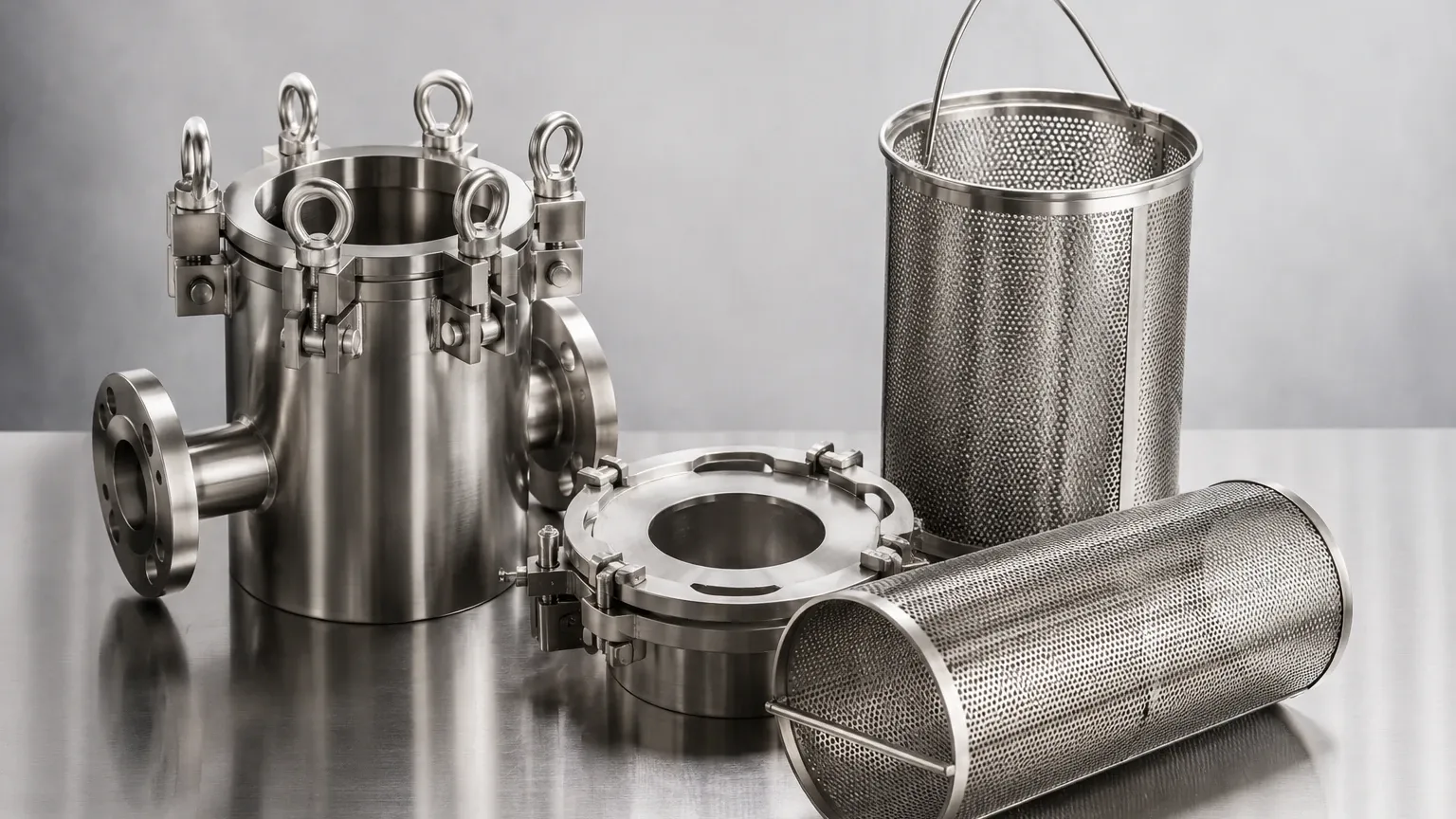
Eaton basket strainers are engineered to handle heavy-duty applications where high flow rates and high dirt-holding capacities are required. The fluid enters the strainer body and is directed into the top of the basket. As the fluid passes through the perforated metal or wire mesh, solids are trapped inside the basket. Because the debris is collected within the basket itself, it is easily removed when the strainer is opened for cleaning, preventing the contaminants from falling back into the line.
Simplex vs. Duplex Configurations
One of the first decisions an engineer must make when specifying eaton basket strainers is the choice between simplex and duplex configurations. This decision is dictated by the process requirements and the cost of downtime.
Simplex Basket Strainers
Simplex strainers are used in systems where the flow can be safely interrupted for basket cleaning. These are common in batch processing, cooling water systems that can be temporarily bypassed, or suction lines for pumps that operate intermittently. They are valued for their simplicity, lower initial capital cost, and compact footprint. However, if the basket becomes clogged, the process must be halted to depressurize the vessel and remove the debris.
Duplex Basket Strainers
In continuous flow applications—such as chemical refineries, power plants, and large-scale water treatment facilities—stopping the flow is often not an option. Duplex strainers consist of two separate strainer chambers connected by a diversion valve. When one basket reaches its dirt-holding limit, the operator (or an automated actuator) shifts the valve to direct flow through the clean chamber. This allows the clogged basket to be serviced while the process remains online. This redundancy is critical for preventing pressure surges and maintaining 24/7 operations.
Material Selection and Chemical Compatibility
The durability of a strainer housing and its internal components depends heavily on material selection. Industrial environments expose equipment to corrosive chemicals, high temperatures, and abrasive particulates. Common materials for strainer bodies and baskets include:
* Carbon Steel: Suitable for non-corrosive fluids like oil, fuel, and some water systems. It offers high strength and cost-effectiveness but requires coating or lining for corrosive service.
* Stainless Steel (304/316): The standard for chemical processing, food and beverage, and pharmaceutical applications. 316 stainless steel provides superior resistance to pitting and crevice corrosion, especially in the presence of chlorides.
* Ductile Iron: Often used in water and wastewater applications where high pressure ratings are required at a lower cost than steel.
* Specialized Alloys: For highly aggressive environments, materials like Monel, Hastelloy, or Titanium may be specified to prevent premature failure.
Beyond the housing, the sealing materials (gaskets and O-rings) must be compatible with the process fluid. Common options include Buna-N, EPDM, Viton, and PTFE. Selecting the wrong seal material can lead to leaks, which poses safety risks and environmental hazards.
Evaluating Filtration Accuracy: Mesh and Perforation
The performance of Strainers & Baskets is defined by the size of the particles they are intended to remove. This is determined by the internal basket’s media, which typically consists of a perforated metal sheet, often lined with a fine wire mesh for higher precision.
1. Perforation Size: This refers to the diameter of the holes in the metal sheet. Standard perforations range from 1/32" to 1/2". Perforated baskets are used for coarse straining of large debris like stones, scale, and wood chips.
2. Mesh Count: For finer filtration, a wire mesh is bonded or welded to the perforated support. Mesh count refers to the number of openings per linear inch. A 100-mesh screen, for example, has 100 openings per inch, capable of stopping particles as small as 150 microns.
3. Micron Rating: This is the most precise measurement, defining the smallest particle size the mesh will reliably trap. Engineers must balance the desire for fine filtration with the reality of pressure drop; the finer the mesh, the faster it will clog and the higher the resistance to flow.
Hydraulic Performance and Pressure Drop
A critical factor in the selection of eaton basket strainers is the "Clean Pressure Drop" (ΔP). Every component in a piping system introduces resistance. If the pressure drop across the strainer is too high, it can lead to cavitation in downstream pumps or insufficient flow to the process.
Engineers use flow coefficient (Cv) values to calculate the pressure drop. The Cv value represents the flow of water in gallons per minute (GPM) that will pass through the strainer with a 1 psi pressure drop. A higher Cv indicates less resistance. When sizing a strainer, it is generally recommended that the clean pressure drop does not exceed 2 psi. Furthermore, the strainer should be cleaned or the flow diverted once the pressure drop reaches approximately 5 to 10 psi above the clean baseline.
Maintenance and Operational Safety
To ensure the longevity of industrial filtration systems, a structured maintenance schedule is required. The most common failure point in strainer operation is neglecting the cleaning cycle, which can lead to basket collapse under excessive differential pressure.
* Differential Pressure Monitoring: Installing DP gauges upstream and downstream of the strainer is the most effective way to monitor basket loading. Many modern systems use DP switches to trigger an alarm or automate the valve shift in duplex units.
* Cover Design: For frequent cleaning, "Quick-Open" covers (such as swing bolts or T-bolt yokes) are preferred over standard bolted covers. These allow for tool-free access, reducing the time required for maintenance.
* Venting and Draining: Before opening a strainer, the vessel must be properly vented and drained. Failure to depressurize the unit can result in serious injury to personnel. Most high-quality strainers include NPT drain and vent ports as standard features.
Customization and OEM Replacement Solutions
While standard Eaton basket strainers meet many industrial needs, unique process requirements often necessitate customized solutions. Manufacturers like Kaifil specialize in providing custom stainless steel filtration components that serve as high-performance alternatives or direct replacements for OEM baskets.
Customization options often include:
* Reinforced Baskets: For high-pressure applications where standard baskets might deform.
* Magnetic Inserts: Designed to capture fine ferrous particles that might pass through a standard mesh.
* Multi-Stage Filtration: Baskets designed with multiple layers of varying mesh sizes to provide graduated filtration and longer service life.
* Custom Dimensions: Tailoring the basket height, diameter, and flange configuration to fit existing non-standard housings.
By working with a specialist manufacturer, engineers can optimize the filtration surface area and material specifications to match the exact demands of their specific application, often improving upon the performance of off-the-shelf components.
Conclusion
Selecting the right basket strainer involves a comprehensive evaluation of flow rates, pressure constraints, and fluid chemistry. Whether utilizing standard eaton basket strainers or seeking customized Strainers & Baskets, the goal remains the same: protecting expensive downstream equipment and ensuring process purity. By focusing on technical specifications—such as open area ratios, Cv values, and material compatibility—procurement and engineering teams can implement filtration solutions that minimize maintenance costs and maximize system uptime in demanding industrial environments.
