


Elkay Strainers
In commercial and industrial plumbing systems, the integrity of drainage and fluid management relies heavily on the quality of the primary filtration components. Elkay strainers have long been established as a standard in commercial kitchens, laboratories, and industrial wash stations. These components serve as the first line of defense, preventing debris from entering the piping system where it can cause blockages, damage downstream equipment, or lead to costly maintenance interventions. For engineers and facility managers, understanding the technical specifications, material properties, and performance limits of these strainers is essential for maintaining system efficiency.
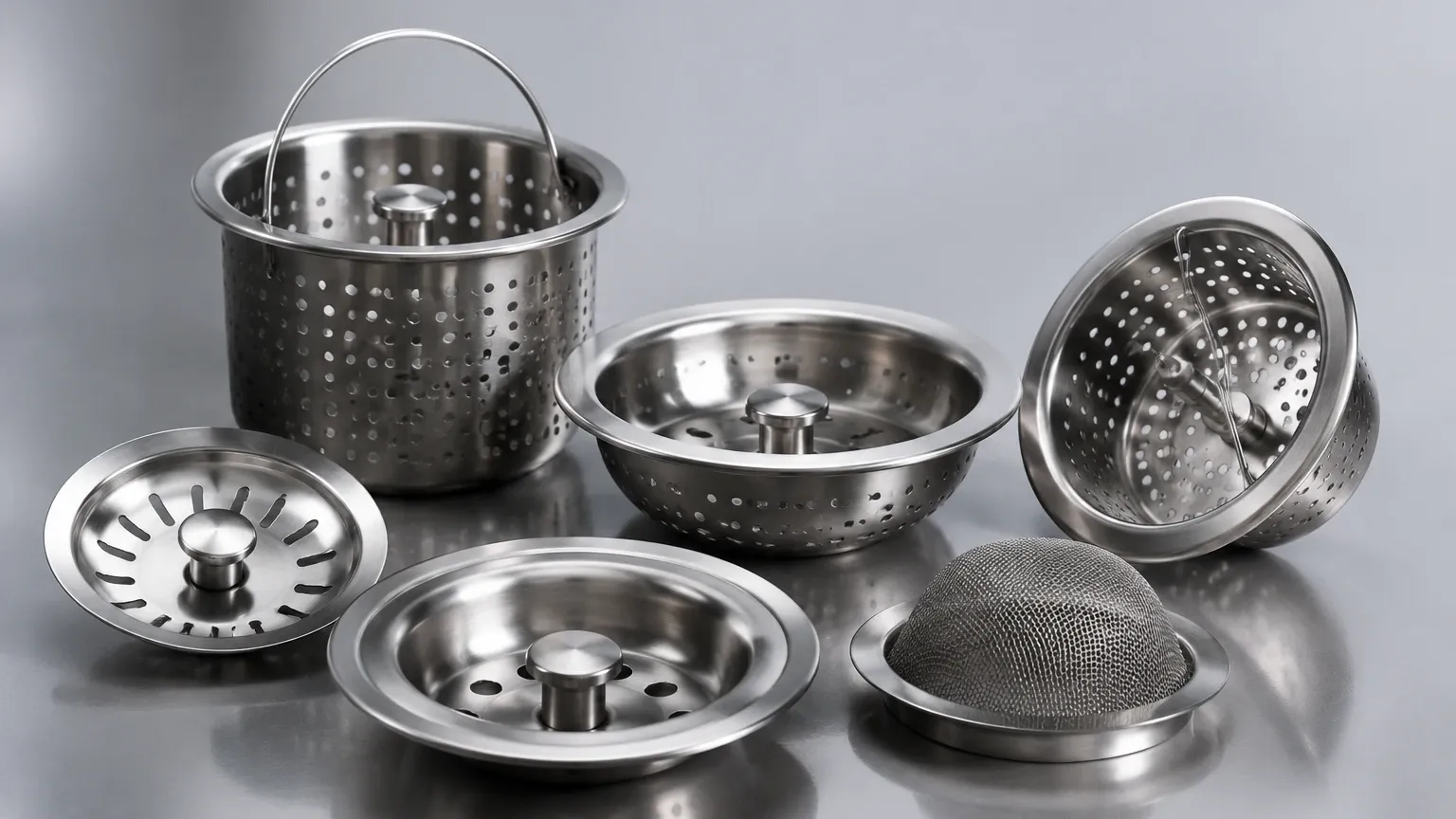
While standard off-the-shelf solutions meet many requirements, demanding industrial environments often necessitate a deeper look into the engineering behind Strainers & Baskets. This guide examines the technical aspects of elkay strainers, their application in professional settings, and the criteria used to evaluate whether a standard component or a customized industrial-grade alternative is required for specific operational needs.
Technical Fundamentals of Industrial Strainers
At its core, a strainer is a device used to mechanically remove solids from a flowing liquid. In the context of elkay strainers, this usually refers to the assembly installed at the drain point of a sink or basin. However, from an engineering perspective, the performance of these components is dictated by several key variables: fluid velocity, particle size distribution, and the chemical compatibility of the materials involved.
Material Science: Stainless Steel Grades
Most high-quality strainers are manufactured from stainless steel, typically Type 304 or Type 316.
* Type 304 Stainless Steel: This is the most common grade used in commercial environments. It offers excellent corrosion resistance to most oxidizing acids and is highly durable. It is the standard for most elkay strainers used in food service and general commercial applications.
* Type 316 Stainless Steel: For environments involving high salt concentrations, chlorides, or aggressive chemicals (such as in marine or pharmaceutical laboratories), Type 316 is preferred. The addition of molybdenum enhances its resistance to pitting and crevice corrosion.
Selecting the correct material ensures that the strainer does not become a point of failure due to chemical degradation. In industrial filtration, the choice between these grades can significantly impact the total lifecycle cost of the drainage system.
Engineering Considerations for Flow and Pressure
One of the most critical aspects of strainer selection is the impact on the hydraulic system. Every filtration component introduces a degree of resistance to flow, known as pressure drop (ΔP). In gravity-fed drainage systems, a high pressure drop can lead to slow drainage and standing water, which may pose sanitary risks in food and beverage or pharmaceutical environments.
Open Area Ratio
The efficiency of elkay strainers is often measured by their "Open Area Ratio" (OAR). This is the ratio of the total area of the holes in the strainer basket to the cross-sectional area of the drain pipe. A higher OAR allows for better flow rates and reduces the frequency of cleaning required. For industrial applications, an OAR of 4:1 or higher is often sought to ensure that even as the basket begins to collect debris, the flow remains relatively unimpeded.
Micron Rating and Mesh Selection
While standard commercial strainers use perforated metal, specialized industrial baskets may incorporate wire mesh to achieve finer filtration. The "micron rating" determines the size of the smallest particle the strainer can reliably capture. When evaluating elkay strainers for specific technical use cases, engineers must balance the need for fine filtration with the risk of rapid clogging.
Compatibility and Installation Standards
For a strainer to function effectively, it must integrate seamlessly with the existing plumbing or processing infrastructure. This involves more than just matching the diameter of the drain hole. Engineers must consider the following:
1. Connection Types: Most commercial strainers use a threaded connection (typically 1-1/2" or 2" NPS). In industrial settings, flanged or sanitary tri-clamp connections may be required to meet specific hygiene or pressure standards.
2. Sealing Mechanisms: The gaskets used in strainer assemblies are as important as the metal itself. Common materials include Buna-N, EPDM, and PTFE. EPDM is often preferred for hot water applications, while PTFE is selected for its superior chemical inertness.
3. Depth and Clearance: The physical dimensions of the basket must allow for sufficient debris accumulation without blocking the primary flow path. In shallow sinks, a low-profile elkay strainer may be necessary, whereas deep industrial basins can accommodate larger baskets that require less frequent emptying.
Customization vs. Standard Solutions
In many B2B scenarios, a standard elkay strainer provides the necessary performance for general-purpose drainage. However, there are specific industrial conditions where customized filtration components are mandatory. As a manufacturer specializing in custom filtration, Kaifil often addresses requirements that exceed standard commercial specifications.
High-Temperature Applications
Standard commercial gaskets and finishes may fail when exposed to continuous high-temperature discharge (e.g., industrial boiling processes). Custom-engineered strainers utilize high-temp alloys and specialized seals to maintain integrity at temperatures exceeding 200°F.
Heavy-Duty Structural Requirements
In facilities where heavy debris or high-velocity discharge occurs, the structural rigidity of the basket is paramount. Standard elkay strainers may deform under heavy loads. Industrial-grade baskets often feature reinforced frames, thicker gauge stainless steel, and welded rather than pressed seams to handle mechanical stress.
Specialized Filtration Media
If the application requires capturing extremely fine particulates or specific shapes of debris (such as metal shavings in a machining center), a standard perforated strainer may be insufficient. Custom solutions can incorporate multi-layer sintered mesh or wedge wire to provide precision filtration while maintaining structural strength.
Maintenance and Replacement Cycles
The longevity of elkay strainers and related Strainers & Baskets is largely dependent on the maintenance protocol. In a commercial or industrial setting, a failure to clean strainers regularly leads to more than just slow drains; it can result in anaerobic bacteria growth, foul odors, and potential backflow contamination.
Cleaning Procedures
For stainless steel components, cleaning should involve non-abrasive tools to avoid damaging the passive oxide layer that protects the metal from rust. In food-grade environments, the ability to easily remove the basket for autoclaving or chemical sanitization is a key design requirement. Many elkay strainers are designed with a removable crumb cup or basket specifically to facilitate this process.
Identifying Wear and Failure
Engineers should inspect strainers for:
* Pitting Corrosion: Small holes or dark spots on the metal surface.
* Mechanical Deformation: Bending or warping of the basket that prevents a proper seal.
* Gasket Degradation: Hardening, cracking, or thinning of the seal material.
In high-volume industrial environments, it is recommended to keep a stock of replacement baskets and gaskets to ensure that filtration is never bypassed during maintenance cycles.
Total Cost of Ownership (TCO) in Filtration
When purchasing filtration components for a facility, the initial price of elkay strainers is only one part of the financial equation. The Total Cost of Ownership (TCO) includes the purchase price, installation labor, frequency of replacement, and the labor costs associated with cleaning.
A cheaper, lower-grade strainer may save money upfront but can lead to significantly higher costs if it fails prematurely or requires daily cleaning due to a poor Open Area Ratio. Investing in high-quality stainless steel components with optimized engineering specifications reduces the long-term operational burden. Furthermore, in specialized industrial processes, the cost of a system shutdown caused by a clogged or failed drain far outweighs the cost of a premium, custom-engineered filtration solution.
Conclusion: Selecting the Right Solution
Whether you are specifying components for a new commercial facility or upgrading an existing industrial process, the choice of strainer is a technical decision that impacts the reliability of the entire fluid management system. Elkay strainers provide a reliable baseline for many commercial applications, offering a balance of durability and ease of use.
However, for applications involving aggressive chemicals, high temperatures, or specific filtration requirements, engineers must look toward specialized manufacturing capabilities. By focusing on material grade, hydraulic performance, and structural integrity, purchasing teams can ensure they select a solution that provides long-term value and operational security. For those requiring precision-engineered components or OEM support, exploring the full range of Strainers & Baskets is the most effective way to align filtration performance with specific industrial demands.
