


Groco Strainers
In industrial and marine fluid management, the reliability of raw water intake systems depends heavily on the efficiency of mechanical filtration. Groco strainers have long been recognized as a standard for protecting heat exchangers, engine cooling systems, and air conditioning units from debris such as seaweed, plastic, and particulate matter. For engineers and maintenance professionals, understanding the technical nuances of these systems—and the critical role of the internal components—is essential for ensuring long-term operational uptime.
When evaluating filtration solutions, the focus often shifts from the housing itself to the performance of the internal Strainers & Baskets. These components are the primary defense against contaminants, and their design directly impacts flow rates, pressure drops, and the frequency of maintenance cycles. This guide examines the engineering principles behind raw water strainers, the specific characteristics of Groco designs, and the technical considerations for selecting high-performance replacement filtration media.
Understanding the Role of Raw Water Strainers in Industrial Systems
Raw water strainers serve as a coarse filtration stage, designed to remove large solids before the fluid enters sensitive downstream equipment. In industrial cooling loops or marine propulsion systems, the intake water often contains a high concentration of organic and inorganic debris. If left unfiltered, this debris can clog heat exchanger tubes, erode pump impellers, and cause catastrophic system failure due to overheating.
From an engineering perspective, a strainer is more than just a mesh screen. It is a pressure vessel designed to manage fluid dynamics. The efficiency of a strainer is measured by its ability to trap debris while maintaining a low differential pressure (ΔP). As the basket fills with contaminants, the available surface area for fluid flow decreases, leading to an increase in pressure drop. If the ΔP becomes too high, it can starve the system of cooling water. Therefore, the design of the internal basket—specifically its "open area ratio"—is the most critical factor in system performance. A high-quality basket should ideally provide an open area that is several times the cross-sectional area of the inlet pipe to minimize flow resistance even when partially loaded.
Design Characteristics of Groco Strainers Series
Groco offers several series of strainers tailored to different flow requirements and installation environments. Understanding these designs is key to selecting the appropriate filtration strategy. Common configurations include the ARG, SA, and VD series, each with distinct engineering features.
The ARG Series
The ARG series is perhaps the most ubiquitous in marine and light industrial applications. It features a non-metallic, high-strength plastic or bronze base and a clear sight glass (often made of acrylic or polycarbonate). The design allows for visual inspection of the basket without opening the unit. A key technical feature of the ARG series is the "one-piece" casting of the housing in many models, which reduces potential leak points. The internal baskets are typically designed for easy removal via a top-access lid, which is secured by a threaded knob or a swing-bolt mechanism.
The SA and VD Series
The SA (Serviceable) and VD series are often utilized in larger-scale applications where higher flow rates and more robust housing materials are required. These units are typically constructed from cast bronze or stainless steel to withstand higher internal pressures and harsher chemical environments. Unlike the ARG series, these may utilize more complex internal basket geometries to maximize surface area within a compact footprint. For engineers managing large-scale cooling intakes, these series provide the durability needed for continuous industrial operation.
Evaluating Material Performance: Stainless Steel vs. Traditional Alloys
While the housing of many groco strainers is made of bronze or composite materials, the internal basket is where the most significant material stress occurs. Standard OEM baskets may be provided in various materials, but for demanding industrial applications, 316L stainless steel is often the preferred choice.
Stainless steel offers several advantages over traditional plastic or brass baskets:
1. Corrosion Resistance: 316L stainless steel contains molybdenum, which significantly enhances its resistance to pitting and crevice corrosion in chloride-rich environments, such as seawater or industrial brine.
2. Structural Integrity: Under high-flow conditions or when a basket becomes heavily loaded with debris, plastic baskets can deform or collapse. Stainless steel maintains its shape, ensuring that the seal between the basket and the housing remains intact, preventing bypass.
3. Thermal Stability: In applications involving high-temperature fluids, stainless steel outperforms composites, which may soften or become brittle over time.
When specifying Strainers & Baskets, engineers must also consider the galvanic series. While bronze housings and stainless baskets are generally compatible in many environments, the use of sacrificial anodes or specialized coatings may be necessary in specific electrochemical conditions to prevent galvanic corrosion of the housing.
Customizing Internals for Strainers & Baskets
One of the primary challenges in industrial filtration is that "standard" filtration levels are not always optimal for every application. Most groco strainers come with a standard perforated basket (often with 1/8" or 3/16" holes). However, many processes require finer filtration or specialized debris handling.
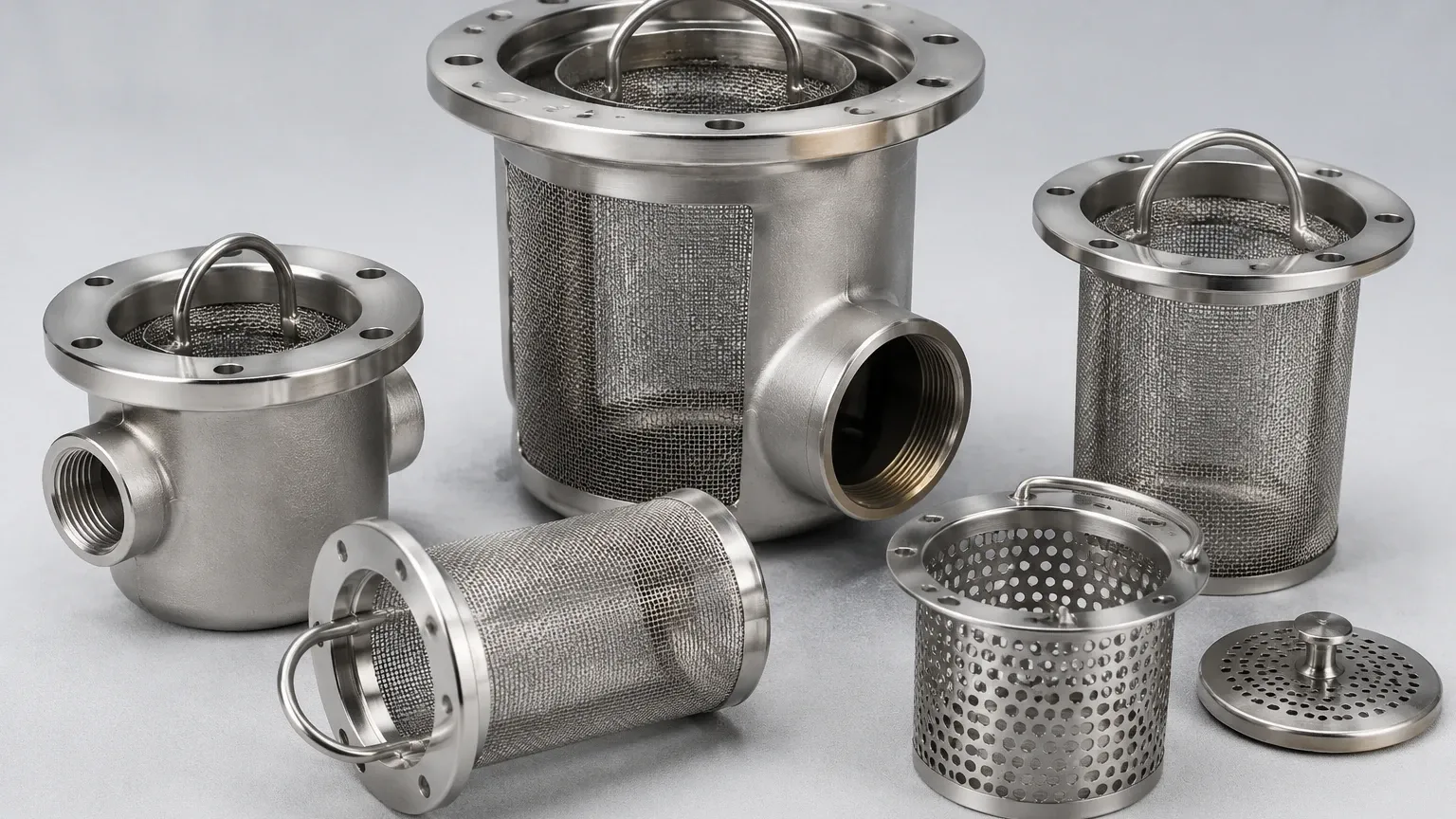
Kaifil specializes in manufacturing custom stainless steel filtration components that can be engineered to fit existing strainer housings. Customization options include:
* Micron-Level Filtration: By incorporating fine wire mesh over a perforated support structure, baskets can be customized to trap much smaller particles than standard hole patterns allow. This is critical for protecting high-pressure pumps or fine-tube heat exchangers.
* High-Flow Perforations: In systems where low pressure drop is the priority, maximizing the number of perforations per square inch (increasing the open area) can extend the time between cleaning cycles.
* Reinforced Structures: For high-pressure applications, baskets can be reinforced with internal ribs or heavier gauge metal to prevent structural failure during surge events.
By upgrading the internal components of a standard strainer, facilities can achieve higher filtration precision without the need to replace the entire housing and piping infrastructure.
Maintenance Protocols and Filtration Efficiency
A common question from maintenance engineers involves the replacement cycle and cleaning methods for groco strainers. Because these are mechanical filters, their performance is entirely dependent on the cleanliness of the basket.
Cleaning and Inspection
Baskets should be inspected regularly. In environments with high biological activity (such as coastal water intakes), biofouling can quickly block the mesh. Stainless steel baskets are particularly advantageous here, as they can be cleaned with pressurized water or mild chemical descalers that might damage plastic alternatives. During inspection, it is vital to check the basket's seating rim. If the rim is nicked or warped, fluid will bypass the filter media, allowing debris into the downstream system.
Seal Integrity
The lid seal (O-ring or gasket) is a frequent point of failure. When servicing a strainer, the seal should be inspected for compression set or cracking. Using a compatible lubricant (such as silicone-based grease) ensures a vacuum-tight seal, which is especially important for strainers located on the suction side of a pump. Air leaks at the strainer lid can lead to pump cavitation and loss of prime.
Engineering Considerations for High-Flow Applications
When designing a system around groco strainers, engineers must account for the "dirty" pressure drop. A common mistake is sizing the strainer based on the pipe diameter alone. Instead, the sizing should be based on the maximum allowable pressure drop at the required flow rate when the basket is 50% clogged.
If the calculated pressure drop is too high, there are two primary solutions:
1. Oversizing the Strainer: Using a larger strainer housing with a larger internal basket to increase the total surface area.
2. Duplex Configuration: Installing two strainers in parallel with a diverter valve. This allows one strainer to be cleaned while the other remains in operation, ensuring continuous flow for critical processes.
For custom industrial applications, the geometry of the basket can be optimized to handle specific types of debris. For example, elongated baskets can be used in deep-sump strainers to provide extra capacity for heavy sediment loading, while wide-diameter baskets are better suited for light, floating debris like eelgrass.
Selecting the Right Replacement Components
When it comes time to replace or upgrade the internals of your filtration system, choosing a manufacturer with technical expertise is paramount. While generic replacement parts may seem cost-effective, they often lack the precise tolerances required to ensure a proper bypass-free seal.
At Kaifil, we understand that industrial filtration is not a one-size-fits-all solution. We provide high-performance Strainers & Baskets engineered to meet the specific demands of your application. Whether you are looking for standard replacement baskets for groco strainers or a completely custom-engineered stainless steel filter element, our focus is on durability, filtration accuracy, and optimizing your system's total cost of ownership.
Before purchasing, engineers should confirm the following specifications:
* Housing Dimensions: Accurate measurements of the basket height, top rim diameter, and bottom taper.
* Material Compatibility: Assessment of the fluid chemistry to determine if 304, 316L, or a specialty alloy is required.
* Filtration Target: The specific micron rating or hole size needed to protect downstream components.
* Operating Pressure: The maximum internal pressure and potential for pressure spikes.
By focusing on these technical details, procurement teams can ensure they are investing in filtration solutions that provide reliable protection and long-term value. For more information on custom filtration designs and material selection, you can review product options and application support to find the ideal match for your industrial requirements.
