


Hawthorne Strainers
In the specialized field of liquid filtration and separation, the Hawthorne strainer represents a unique intersection of ergonomic design and precision wire forming. While frequently recognized in the hospitality industry, the engineering principles behind these components—specifically the use of helical springs and perforated metal disks—are deeply rooted in industrial filtration logic. For engineers and procurement professionals sourcing custom metal filtration components, understanding the technical nuances of hawthorne strainers is essential for ensuring durability, hygiene compliance, and consistent performance in high-volume environments.
As a critical component within the broader category of Strainers & Baskets, the Hawthorne design relies on the mechanical properties of stainless steel wire to provide variable filtration. Unlike fixed-mesh filters, the Hawthorne's primary filtering element is a flexible coil that can adapt to different vessel diameters, making it a versatile tool for separating solids from liquids in precision applications.
Engineering Fundamentals of the Hawthorne Design
The core functionality of a Hawthorne strainer is derived from its three primary anatomical parts: the paddle (or rim), the handle, and the spring. From a manufacturing perspective, the spring is the most complex element to produce and maintain.
The Helical Spring Mechanism
The spring serves as the filtration media. It is typically a tightly wound helical coil made from food-grade stainless steel wire. The filtration efficiency is determined by the "pitch" or the distance between the coils. When the strainer is placed inside a mixing vessel, the spring compresses against the walls, creating a perimeter seal that forces liquid through the gaps between the wire coils. This allows for the retention of ice crystals, fruit pulp, or other solid particulates while allowing the clarified liquid to pass through.
Tension and Flexibility
Engineers must calculate the optimal tension of the spring to ensure it remains seated against the vessel wall without requiring excessive manual force. If the spring tension is too low, bypass occurs—where solids escape around the edges. If the tension is too high, the strainer becomes difficult to insert and remove, increasing the risk of mechanical fatigue over repeated use cycles.
Material Selection and Metallurgical Considerations
For industrial-grade filtration components, material selection is dictated by the chemical environment and the required lifespan of the part. Most hawthorne strainers are manufactured using austenitic stainless steels, primarily Grade 304 or Grade 316.
Grade 304 Stainless Steel
This is the standard material for most filtration applications. It offers excellent formability, which is crucial for the wire-winding process of the spring, and provides sufficient corrosion resistance for most aqueous solutions and organic acids. It is the cost-effective choice for high-volume OEM production.
Grade 316 Stainless Steel
In environments where the strainer is exposed to high chloride concentrations or highly acidic fluids, Grade 316 is preferred. The addition of molybdenum enhances its resistance to pitting and crevice corrosion. For specialized industrial applications where the strainer may be used in chemical processing or high-salinity food production, 316 stainless steel ensures a longer service life and maintains the structural integrity of the fine wire coils.
Surface Finishing and Passivation
To meet hygiene standards, particularly in food and beverage or pharmaceutical applications, the surface finish must be smooth to prevent bacterial attachment. Electropolishing is often employed to remove microscopic surface irregularities. Furthermore, passivation is a critical post-manufacturing step that removes free iron from the surface, enhancing the protective chromium oxide layer and preventing premature oxidation (rust).
Technical Specifications in Custom Manufacturing
When specifying hawthorne strainers for B2B procurement or OEM integration, technical professionals must define several key parameters to ensure the component meets application-specific requirements.
1. Wire Gauge: The diameter of the wire used for the spring affects both the filtration aperture and the durability of the coil. Typical gauges range from 0.5mm to 1.2mm, depending on the required rigidity.
2. Coil Density: This refers to the number of turns per inch. A higher coil density provides finer filtration but may increase the pressure drop (resistance to flow) during pouring.
3. Aperture Size: While not as fixed as a standard wire mesh, the gap between coils under compression defines the micron-level retention capability of the strainer.
4. Paddle Geometry: The flat metal disk that holds the spring must be stamped with precision to ensure it fits the intended vessel range. The thickness of this plate (usually 1.0mm to 2.0mm) determines the overall robustness of the tool.
Comparing Hawthorne Designs with Industrial Strainers & Baskets
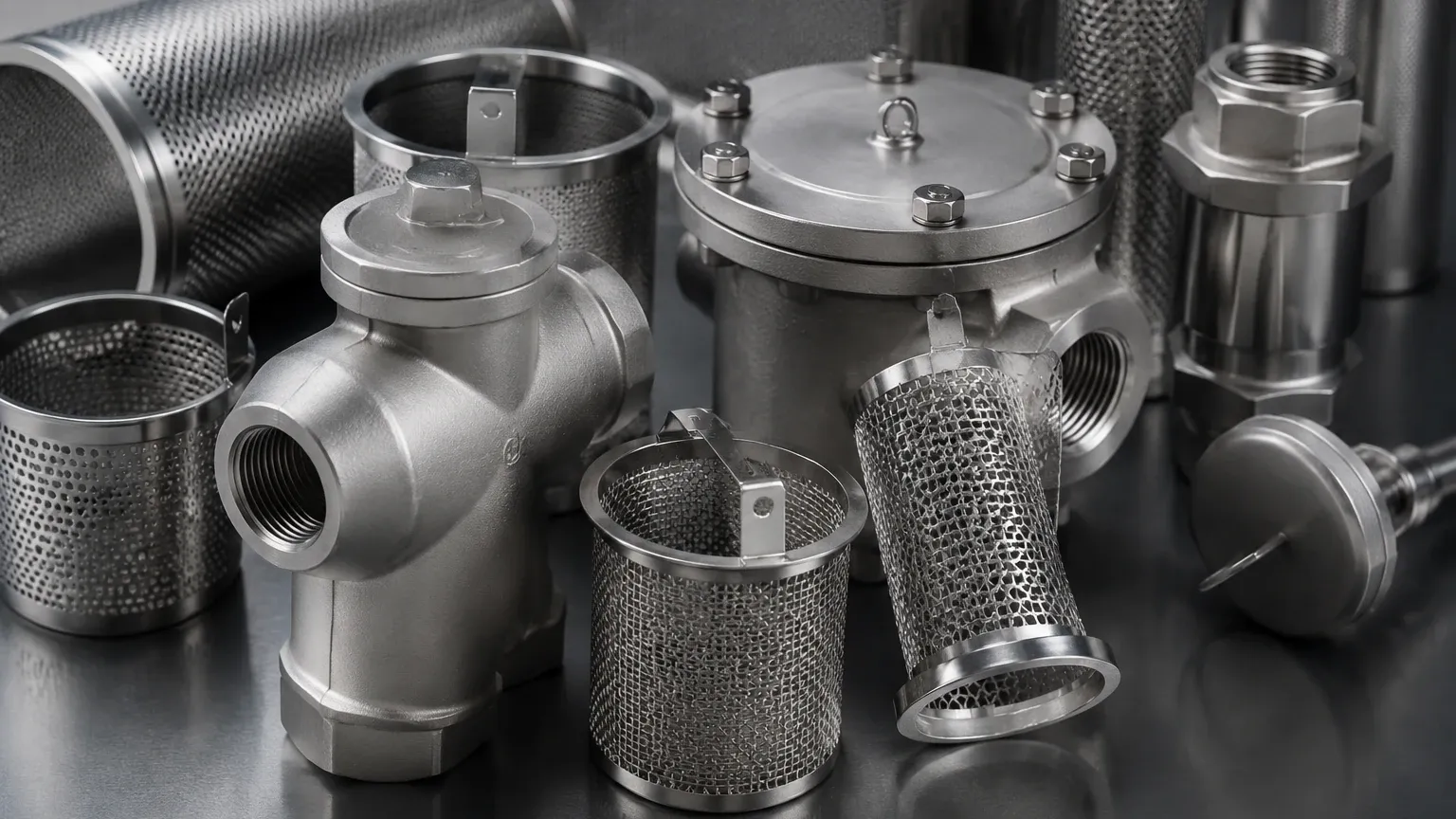
While the Hawthorne design is specialized, it shares many commonalities with industrial Strainers & Baskets used in piping systems and batch processing. Understanding these relationships helps engineers select the right filtration strategy.
Solids Loading Capacity
Unlike a deep-basket strainer which can hold a significant volume of solids before requiring cleaning, a Hawthorne strainer is designed for surface-level separation during a pour. It is a "point-of-use" filter rather than an "in-line" filter. In industrial contexts, this design is analogous to a temporary startup strainer or a debris guard where the volume of solids is relatively low compared to the liquid volume.
Ease of Cleaning and Maintenance
The open-coil design of the Hawthorne spring makes it easier to clean than multi-layered sintered mesh or fine-weave wire cloth. For industrial applications requiring frequent sterilization, the ability to remove the spring from the paddle for individual cleaning is a significant advantage. This reduces the risk of "blind spots" where material can accumulate and ferment or corrode the metal.
Versatility vs. Precision
Standard industrial baskets are often custom-sized for a specific housing. The Hawthorne strainer’s spring allows it to adapt to slight variances in vessel diameter. However, this flexibility comes at the cost of absolute filtration precision. If an application requires a guaranteed 50-micron cutoff, a fixed-mesh basket is superior; if the application requires rapid, adaptable separation of macro-solids, the Hawthorne design is more efficient.
Quality Control and Performance Testing
To ensure reliability in demanding environments, custom-manufactured strainers undergo rigorous quality control protocols. For B2B buyers, confirming these testing standards is a vital step in the procurement process.
* Fatigue Testing: The spring is subjected to repeated compression and expansion cycles to ensure it does not lose its "memory" or structural tension over time.
* Dimensional Inspection: Using calipers or automated optical inspection (AOI), manufacturers verify that the paddle diameter and spring length meet the CAD specifications within tight tolerances (often +/- 0.1mm).
* Solder and Weld Integrity: Many Hawthorne strainers utilize spot welding to attach the handle or the spring lugs to the paddle. These welds must be tested for tensile strength and inspected for any porosity that could harbor contaminants.
* Flow Rate Analysis: For OEM applications where the strainer is integrated into a larger system, flow rate testing ensures that the spring density does not create an unacceptable bottleneck in the production line.
Procurement Considerations for OEM Filtration Components
When sourcing hawthorne strainers or similar components, purchasing teams should look beyond the unit price and consider the total cost of ownership and the manufacturer's technical capabilities.
Customization Options
Standard off-the-shelf products may not meet the specific ergonomic or filtration needs of a specialized industrial process. A professional manufacturer like Kaifil can provide customization in terms of handle length, spring tension, and even the incorporation of additional fine-mesh layers within the spring assembly for dual-stage filtration.
Certifications and Compliance
In the B2B sector, documentation is as important as the physical product. Ensure the manufacturer can provide Material Test Reports (MTRs) that certify the chemical composition of the stainless steel. For food-contact applications, compliance with FDA or EU 1935/2004 standards is mandatory.
Scalability and Lead Times
For OEM partners, the ability to scale from a prototype to a production run of thousands of units is critical. Inquire about the manufacturer’s tooling capabilities and whether they perform wire forming and stamping in-house. In-house production typically leads to better quality control and more reliable lead times.
Conclusion
Hawthorne strainers are more than just simple tools; they are engineered filtration components that rely on the precise manipulation of stainless steel wire and sheet metal. By focusing on material grade, spring mechanics, and manufacturing tolerances, engineers can ensure they select a component that provides reliable separation and long-term durability. Whether used in specialized liquid processing or integrated into high-end equipment, the Hawthorne design remains a testament to the effectiveness of spring-based filtration.
For those seeking comprehensive filtration solutions, exploring the full range of Strainers & Baskets is the best way to identify the specific geometry and media type required for your unique application. By partnering with a manufacturer that understands both the physics of filtration and the requirements of industrial production, companies can optimize their processes and ensure the highest standards of product purity.
