


Inline Wire Strainers
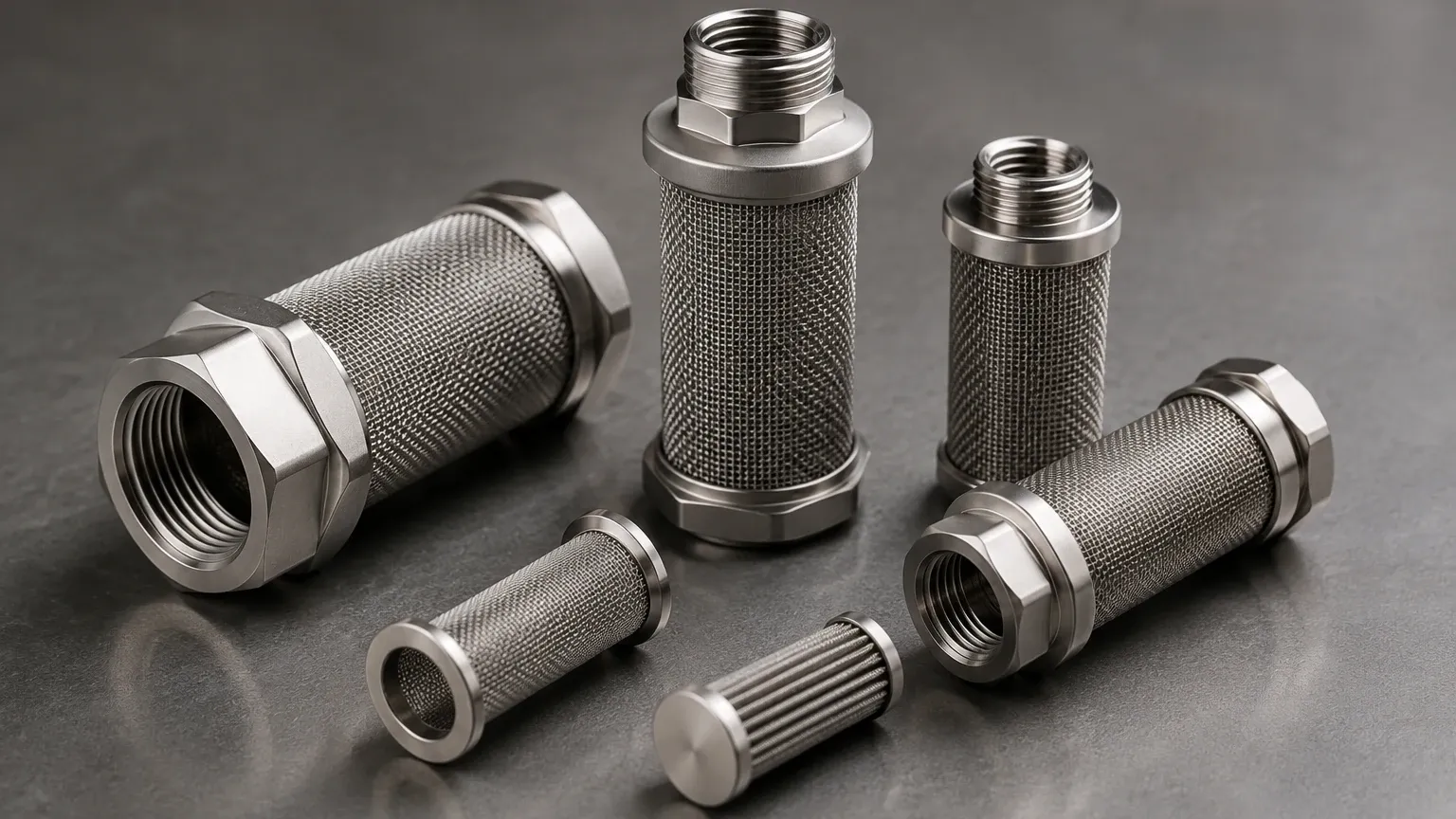
In industrial fluid handling, the integrity of downstream equipment such as pumps, flow meters, and spray nozzles depends heavily on the effective removal of particulate matter. Inline wire strainers serve as a critical line of defense in these systems. Unlike complex filtration assemblies that may require significant footprint and bypass piping, inline strainers are designed for direct integration into the process line, offering a compact and efficient solution for capturing debris, scale, and other contaminants. As a specialized manufacturer, Kaifil provides engineered Strainers & Baskets that meet the rigorous demands of chemical, pharmaceutical, and food processing environments.
The Fundamental Mechanics of Inline Wire Strainers
Inline wire strainers operate on the principle of mechanical separation. The fluid enters the strainer housing and passes through a stainless steel wire mesh or perforated metal element. The geometry of the "inline" design typically refers to a configuration where the inlet and outlet ports are aligned on the same axis, or where the strainer is housed within a pipe-like body that does not deviate the flow path significantly. This design is particularly advantageous in systems where space is limited and low pressure drop is a priority.
From an engineering perspective, the efficiency of these components is determined by the "Open Area Ratio." This ratio compares the total area of the openings in the mesh to the cross-sectional area of the inlet pipe. A high-quality inline wire strainer should ideally offer an open area ratio of at least 4:1. This ensures that even as the mesh begins to collect debris, the system does not experience an immediate and catastrophic drop in pressure. The use of high-grade stainless steel wire mesh allows for precise control over the aperture size, ranging from coarse filtration (several millimeters) to fine polishing (down to 5 microns).
Material Science in Strainers & Baskets Construction
Material selection is the most critical factor in determining the service life and compatibility of filtration components. In industrial B2B applications, stainless steel remains the gold standard due to its mechanical strength and chemical resistance. Kaifil primarily utilizes SS304 and SS316L to manufacture its filtration products.
* SS304: Suitable for general industrial applications, water treatment, and food processing where moderate corrosion resistance is required.
* SS316L: The preferred choice for pharmaceutical and chemical processing. The addition of molybdenum and a lower carbon content provides superior resistance to chloride-induced pitting and intergranular corrosion.
Beyond the housing, the wire mesh itself must be engineered to withstand the velocity of the fluid and the potential for "pressure spikes." Inline wire strainers often utilize a multi-layer construction. A fine inner mesh provides the required filtration accuracy, while a coarser outer mesh or a perforated metal cage provides the structural support necessary to prevent the element from collapsing under high differential pressure.
Engineering Selection Criteria: Flow, Pressure, and Mesh
Selecting the correct inline wire strainer requires a detailed analysis of the process parameters. Engineers must move beyond simple pipe size matching and consider the following technical variables:
1. Viscosity and Flow Rate
The viscosity of the fluid directly impacts the pressure drop across the strainer. Highly viscous fluids, such as oils or syrups, require larger surface areas and potentially coarser mesh to maintain flow rates. If the velocity is too high, it can lead to turbulence and accelerated erosion of the mesh wires.
2. Mesh Count vs. Micron Rating
It is essential to distinguish between mesh count (the number of wires per linear inch) and the micron rating (the actual size of the opening). For example, a 100-mesh screen made with thick wire will have a much smaller opening than a 100-mesh screen made with thin wire. Specifying the absolute micron rating ensures that the largest particle allowed to pass through the system is within the safety tolerances of downstream components.
3. Maximum Allowable Pressure Drop (ΔP)
Every strainer introduces a restriction. Engineers must calculate the "clean" pressure drop and establish a threshold for the "dirty" pressure drop. Once the differential pressure reaches a specific point—typically 10-15 psi in many industrial applications—the strainer must be cleaned or replaced to prevent cavitation in pumps or reduced system efficiency.
Comparative Analysis: Inline Wire Strainers vs. Y-Strainers
While both designs serve to remove solids, the choice between a standard Y-strainer and a specialized inline wire strainer often comes down to the specific application requirements and maintenance accessibility. Y-strainers are common in steam and gas lines where the volume of debris is relatively low. However, in liquid process lines with higher solids loading, inline wire strainers—particularly those with a basket-style internal element—offer a larger collection capacity.
Inline designs are often preferred in sanitary applications. The straight-through flow path reduces the number of "dead zones" where bacteria can proliferate or where product can stagnate. For industries like dairy or pharmaceuticals, the internal surfaces of the strainer are often electropolished to a Ra < 0.8 μm to ensure that the component can be effectively cleaned via CIP (Clean-In-Place) systems.
Industrial Applications and Compatibility
The versatility of inline wire strainers allows them to be deployed across a wide spectrum of industries. Each sector presents unique challenges that dictate the design of the filtration element.
* Chemical Processing: In this sector, the primary concern is chemical compatibility. Strainers must resist aggressive solvents and acids. The use of PTFE or Viton gaskets in conjunction with SS316L mesh is standard practice.
* Food and Beverage: Here, the focus is on hygiene and ease of disassembly. Inline strainers often feature Tri-clamp or union connections to allow for rapid removal and manual cleaning (COP – Clean-Out-of-Place).
* Hydraulic Systems: High-pressure environments require strainers that can withstand significant mechanical stress. The wire mesh is often pleated to increase the surface area without increasing the overall size of the component, allowing for high-efficiency filtration in a compact footprint.
* Water Treatment: Large-scale inline strainers are used to protect membrane systems (such as Reverse Osmosis) from sand and silt. These often require robust, coarse mesh that can be easily backwashed.
Maintenance Protocols for Optimizing Service Life
The total cost of ownership (TCO) of a filtration system is heavily influenced by its maintenance requirements. An inline wire strainer is not a "set and forget" component. To ensure longevity, a structured maintenance program must be implemented.
1. Differential Pressure Monitoring: Installing pressure gauges upstream and downstream of the strainer is the most effective way to determine when cleaning is required. Automated systems can trigger an alarm or a bypass valve when the ΔP exceeds the set limit.
2. Cleaning Procedures: For stainless steel wire mesh, cleaning usually involves backflushing with a compatible fluid or using ultrasonic baths for fine mesh that has become blinded by sticky particulates. It is critical to avoid using carbon steel brushes or tools, as this can embed iron particles into the stainless steel, leading to localized rusting.
3. Gasket Inspection: Every time a strainer is opened for cleaning, the seals and gaskets should be inspected for compression set, cracking, or chemical degradation. Failure to replace a worn gasket can lead to external leaks or, more critically, internal bypassing where fluid skips the filtration element entirely.
Custom Engineering and OEM Capabilities
Many industrial applications involve non-standard pipe sizes, extreme temperatures, or unique fluid characteristics that off-the-shelf strainers cannot accommodate. This is where custom manufacturing becomes essential. Kaifil specializes in providing OEM solutions tailored to specific engineering drawings and performance requirements.
Customization options include:
* Bespoke Dimensions: Modifying the length and diameter of the strainer body to fit existing piping without the need for expensive re-piping.
* Reinforced Elements: Adding internal perforated cores or external mesh shrouds to handle high-viscosity fluids or high-pressure differentials.
* Specialty Coatings: Applying coatings such as PFA or HALAR for extreme chemical resistance that exceeds the capabilities of bare stainless steel.
* Connection Versatility: Offering a range of end connections including ANSI/DIN flanges, NPT/BSP threads, and sanitary ferrules.
By working closely with a manufacturer that understands the nuances of wire mesh geometry and metal fabrication, procurement teams can ensure that their inline wire strainers are optimized for both performance and durability. Whether the goal is to protect a high-value centrifugal pump or to ensure the purity of a pharmaceutical batch, the selection of a high-quality, precision-engineered strainer is a fundamental requirement for operational success.
