


Intake Strainers
In industrial fluid handling systems, the intake point represents the first line of defense against debris that can compromise expensive downstream equipment. Intake strainers are specialized components designed to remove large particles, sediment, and organic matter from a fluid stream before it enters pumps, valves, or heat exchangers. As a critical subset of Strainers & Baskets, these components ensure the longevity of mechanical seals and the overall efficiency of the hydraulic circuit.
For engineers and procurement teams, selecting the correct intake strainer involves more than simply matching a pipe diameter. It requires a deep understanding of fluid dynamics, material compatibility, and the specific filtration requirements of the application. This guide explores the technical considerations, design variations, and performance metrics essential for optimizing industrial intake filtration.
The Role of Intake Strainers in Industrial Systems
Intake strainers, often referred to as suction strainers, are positioned at the beginning of a suction line. Their primary function is to protect pumps from cavitation and mechanical damage. When a pump draws fluid from a tank, reservoir, or open water source, it is vulnerable to any solids present in the medium. If these solids reach the impeller, they can cause erosion, clogging, or catastrophic failure.
In industries such as chemical processing, food and beverage, and water treatment, intake strainers serve as a safeguard. By capturing contaminants at the source, they reduce the load on secondary, finer filtration stages. This tiered approach to filtration extends the service life of fine filter cartridges and reduces the frequency of system-wide maintenance shutdowns.
Engineering Considerations for Strainer Selection
Selecting an intake strainer requires a balance between filtration efficiency and hydraulic performance. Engineers must evaluate several technical parameters to ensure the strainer does not become a bottleneck in the system.
1. Open Area Ratio (OAR)
One of the most critical metrics in strainer design is the Open Area Ratio. This is the ratio between the total area of the holes in the strainer element and the internal cross-sectional area of the inlet pipe. For intake applications, a common industry standard is an OAR of at least 4:1. A higher OAR ensures that even as the strainer begins to collect debris, the pressure drop across the element remains minimal, preventing pump starvation and cavitation.
2. Pressure Drop (Delta P)
Every filtration component introduces resistance to flow. In suction applications, minimizing pressure drop is vital because pumps have a Net Positive Suction Head Required (NPSHr). If the pressure drop across the intake strainer is too high, the pressure at the pump inlet may fall below the vapor pressure of the fluid, leading to the formation of vapor bubbles (cavitation) that can damage the pump internals.
3. Filtration Grade: Mesh vs. Perforation
Intake strainers are typically constructed using either perforated metal or wire mesh.
- Perforated Metal: Best for heavy-duty applications where large, heavy debris is expected. It provides high structural integrity.
- Wire Mesh: Used when finer filtration is required. In many industrial designs, a wire mesh liner is supported by a perforated metal basket to combine strength with precision.
Material Selection and Durability
The environment in which intake strainers operate dictates the material requirements. Because these components are often submerged or exposed to raw process fluids, corrosion resistance is paramount.
Stainless Steel Grades
Most industrial intake strainers are manufactured from 304 or 316L stainless steel.
- 304 Stainless Steel: Suitable for general industrial applications, including water treatment and non-corrosive chemical handling.
- 316L Stainless Steel: Preferred for marine environments, pharmaceutical production, and highly corrosive chemical processes due to its superior resistance to pitting and crevice corrosion.
Specialized Coatings and Alloys
In extreme cases involving high-salinity seawater or aggressive acids, manufacturers like Kaifil may utilize specialized alloys or coatings. However, for the majority of B2B applications, precision-engineered stainless steel provides the best balance of cost-effectiveness and durability.
Types of Intake Strainers and Their Applications
Depending on the installation site and the nature of the fluid source, different strainer configurations are employed.
Suction Baskets
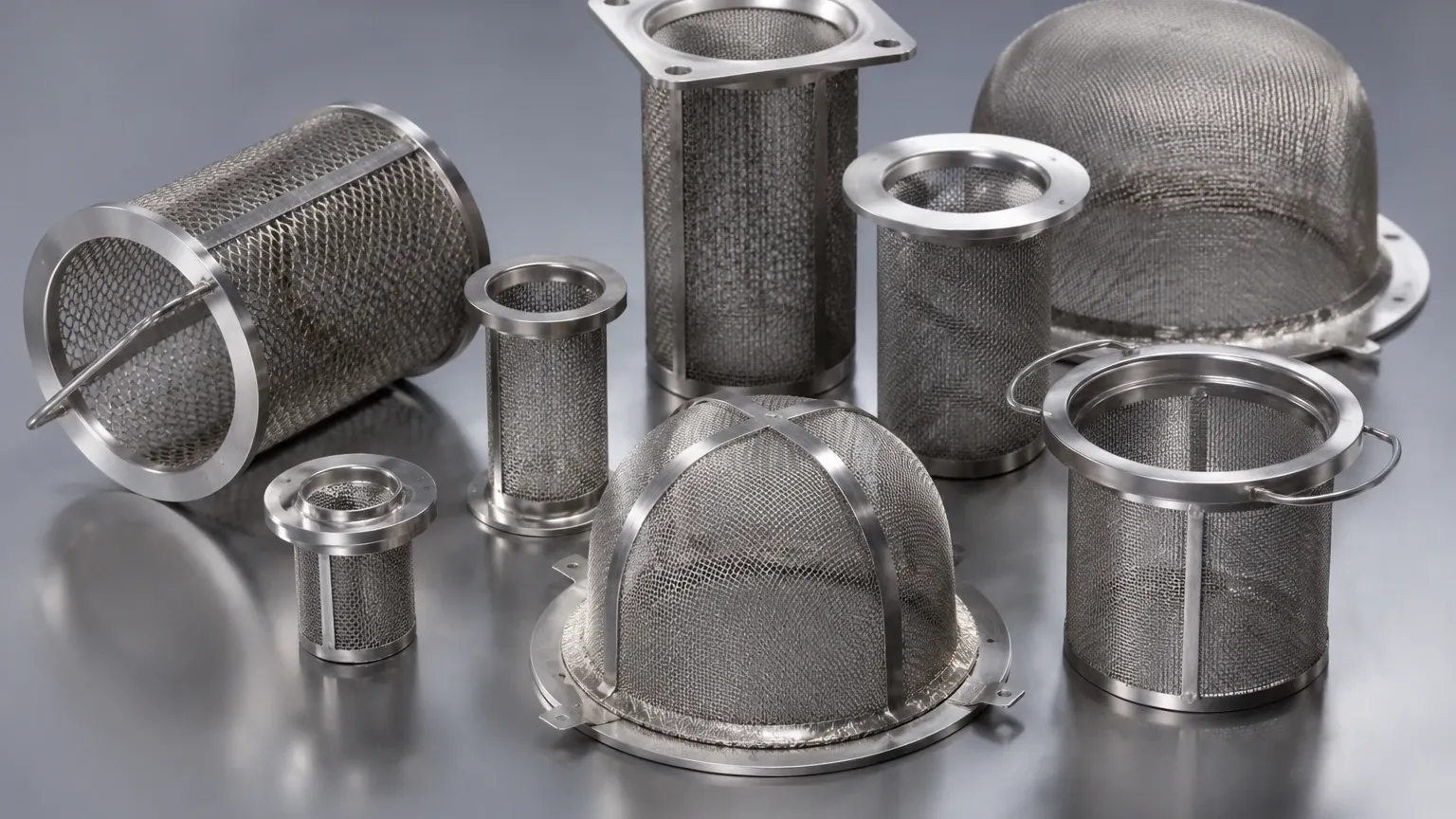
These are simple, robust strainers often used in tanks or reservoirs. They typically feature a threaded or flanged connection and a large surface area to maximize flow. Suction baskets are common in hydraulic power units and large-scale cooling towers.
Foot Valves with Integrated Strainers
In applications where the pump is located above the fluid level, a foot valve is used to maintain the pump's prime. The integrated strainer prevents debris from entering the valve mechanism, ensuring it seals correctly when the pump is turned off.
T-Type and Y-Type Intake Strainers
While often used in-line, T-type and Y-type strainers can be installed at the intake of a system where space is limited. These allow for easier maintenance as the debris can be removed without disconnecting the main piping. For more complex configurations, exploring the full range of Strainers & Baskets is recommended to find the exact geometric fit.
Performance Expectations and Maintenance Cycles
The reliability of an intake strainer is directly linked to its maintenance schedule. Unlike self-cleaning filters, most intake strainers are manual components that require periodic inspection.
Monitoring Debris Loading
In sophisticated systems, differential pressure gauges are installed across the strainer. A significant increase in the pressure differential indicates that the strainer is clogged and requires cleaning. Without monitoring, a clogged intake strainer can lead to reduced flow rates and increased energy consumption by the pump motor.
Cleaning Procedures
Industrial intake strainers should be designed for easy access. Basket-style strainers often feature quick-release covers or handles that allow personnel to remove, wash, and reinstall the element with minimal downtime. In food-grade applications, the strainers must also be compatible with Clean-in-Place (CIP) protocols, requiring smooth internal surfaces and high-grade welds to prevent bacterial growth.
Customization and OEM Solutions
Off-the-shelf intake strainers may not meet the specific requirements of unique industrial layouts. Customization is often necessary to address specific challenges such as:
- Space Constraints: Custom lengths or diameters to fit within existing tank baffles.
- Specific Connection Types: Adapting to NPT, BSP, or custom flange standards (ANSI, DIN, JIS).
- Reinforced Construction: Adding internal supports for high-viscosity fluids or high-flow environments where standard mesh might collapse.
As a professional manufacturer, Kaifil specializes in these customized filtration solutions. By working closely with engineering teams, we develop intake strainers that are tailored to the specific flow dynamics and contaminant profiles of a given process. This collaborative approach ensures that the final product provides optimal protection with the lowest possible total cost of ownership.
Total Cost of Ownership (TCO) Considerations
When evaluating intake strainers, purchasing teams should look beyond the initial acquisition cost. The TCO includes:
1. Energy Costs: A poorly designed strainer with a high pressure drop increases the workload on pumps, leading to higher electricity bills.
2. Maintenance Labor: Strainers that are difficult to clean or require frequent replacement increase labor costs.
3. Downstream Protection: The most significant cost factor is the protection of downstream assets. The price of a high-quality stainless steel intake strainer is negligible compared to the cost of replacing a damaged high-pressure pump or a precision chemical dosing valve.
Conclusion
Intake strainers are a fundamental component of any industrial fluid system, providing the essential first stage of protection. By focusing on engineering fundamentals—such as the open area ratio, material integrity, and pressure drop—engineers can ensure their systems operate reliably and efficiently. Whether you are designing a new chemical processing line or upgrading a water treatment facility, selecting the right Strainers & Baskets is a critical step in achieving long-term operational success.
For technical assistance in specifying the correct intake strainer for your application, or to discuss custom OEM manufacturing requirements, consult with a filtration specialist who understands the rigors of industrial environments.
