


Japanese Strainers Sieves
In the landscape of industrial filtration, the term "Japanese strainers sieves" refers to a category of high-precision filtration components characterized by meticulous manufacturing standards, often aligned with Japanese Industrial Standards (JIS). For engineers and procurement specialists in the chemical, pharmaceutical, and food processing sectors, these components represent a benchmark for aperture consistency and material integrity. Understanding the technical nuances of these sieves is essential for optimizing process flow and ensuring the longevity of downstream equipment.
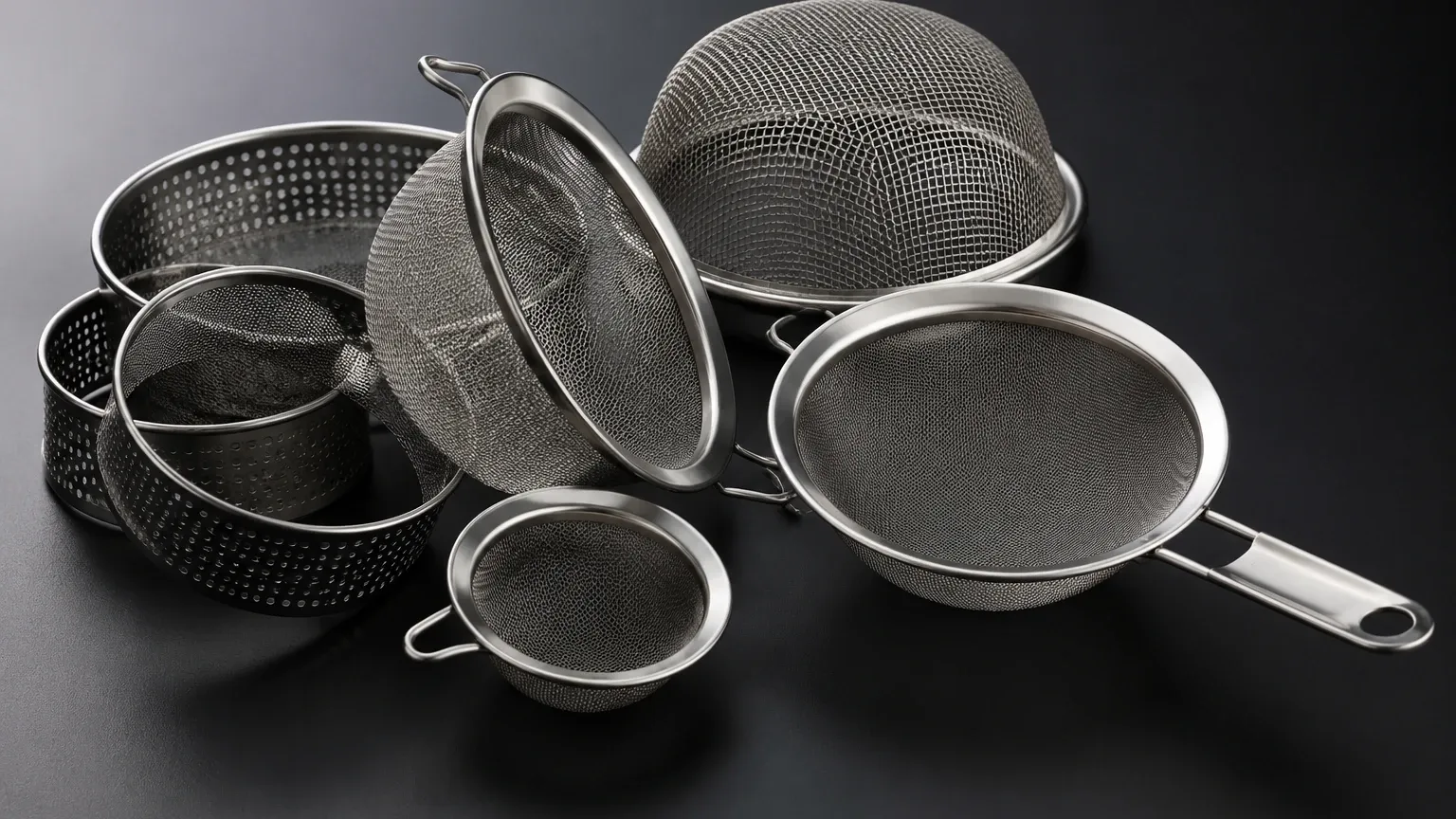
Industrial strainers and baskets are critical for removing oversized particles from liquid and gas streams. When specifically looking for the precision associated with Japanese engineering, the focus shifts toward the uniformity of the wire mesh, the quality of the stainless steel alloys used, and the structural reinforcement of the basket itself. This article examines the engineering considerations, material specifications, and selection criteria for high-performance Strainers & Baskets in demanding industrial environments.
Engineering Standards and Precision in Sieving
The reputation of Japanese strainers sieves is built upon the consistency of the mesh opening. In industrial applications, even a minor deviation in the micron rating can lead to contaminated batches or damage to high-pressure pumps. Japanese manufacturing often adheres to JIS Z 8801, which specifies the requirements for test sieves and industrial wire cloth. This standard ensures that the aperture size remains within a very tight tolerance across the entire surface area of the filter.
For B2B buyers, this precision is not merely a matter of quality but a requirement for process validation. In pharmaceutical manufacturing, for instance, the ability to verify that a sieve will consistently block particles above a specific micron threshold is vital for regulatory compliance. When selecting these components, engineers must evaluate the wire diameter relative to the aperture size to ensure the mesh provides the necessary open area without sacrificing structural rigidity.
Material Selection for Corrosive and High-Temperature Environments
The performance of any industrial strainer is fundamentally tied to its material composition. Most high-precision sieves are fabricated from stainless steel, with Grade 304 and Grade 316L being the industry standards.
Grade 304 Stainless Steel
Grade 304 is suitable for general industrial applications where basic corrosion resistance is required. It is commonly used in food and beverage processing where the environment is relatively neutral. However, it may be susceptible to pitting in high-chloride environments.
Grade 316L Stainless Steel
For chemical processing, marine applications, or pharmaceutical production, Grade 316L is preferred. The addition of molybdenum enhances resistance to chloride-induced pitting and crevice corrosion. The "L" denotes low carbon content, which is crucial for components that require extensive welding, as it prevents carbide precipitation during the welding process, thereby maintaining the corrosion resistance of the heat-affected zones.
In specialized applications involving extreme temperatures or highly aggressive chemicals, alloys such as Hastelloy or Monel may be used. However, for the majority of Japanese-style precision sieves, high-grade 316L stainless steel provides the optimal balance of durability and cost-effectiveness.
Structural Design of Industrial Strainers & Baskets
A sieve is only as effective as the housing and support structure that holds it. In heavy-duty industrial applications, a fine mesh sieve cannot withstand high differential pressures on its own. Therefore, it is typically integrated into a more robust assembly.
1. Perforated Metal Support: The fine wire mesh is often bonded to or lined within a perforated metal basket. This perforated plate provides the mechanical strength to resist collapsing under pressure, while the mesh determines the filtration accuracy.
2. Reinforced Rims and Handles: To facilitate frequent cleaning and replacement, the top of the basket is usually reinforced with a solid metal ring or flange. This ensures a tight seal within the strainer housing, preventing bypass.
3. Pleated vs. Cylindrical Designs: While cylindrical baskets are standard, pleated designs are used when a larger surface area is required within a compact footprint. Pleating the mesh increases the filtration area, which lowers the flux rate and extends the time between cleaning cycles.
When evaluating Japanese strainers sieves for industrial use, it is important to confirm the method of attachment between the mesh and the support frame. Resistance welding or specialized adhesive bonding must be executed precisely to avoid creating gaps where unfiltered fluid could pass through.
Key Performance Metrics for Selection
Engineers must look beyond the physical dimensions of the strainer and focus on the hydraulic performance metrics. The following factors are critical when specifying a filtration solution:
Micron Rating (Absolute vs. Nominal)
It is vital to distinguish between a nominal rating (where a percentage of particles of a certain size are retained) and an absolute rating (where 100% of particles above the specified size are blocked). Japanese-style precision sieves are often valued for their high absolute ratings, which are necessary for final-stage filtration.
Percentage of Open Area
The open area determines the flow capacity and the initial pressure drop across the filter. A higher open area reduces energy consumption by the pumps but may result in a more fragile mesh if the wire diameter is too thin. Balancing the open area with the mechanical strength of the wire is a core engineering challenge.
Maximum Differential Pressure (ΔP)
Every filter has a limit to how much pressure it can withstand as it becomes loaded with contaminants. Engineers must specify the maximum allowable ΔP before the basket must be removed for cleaning. Exceeding this limit risks deforming the mesh or causing a total structural failure of the basket.
Customization and OEM Considerations
Standard off-the-shelf strainers often fail to meet the specific requirements of complex industrial systems. This is where the capability for custom manufacturing becomes essential. For organizations looking to integrate Japanese-style precision into their proprietary systems, OEM customization allows for the adjustment of several variables:
* Custom Dimensions: Tailoring the height, diameter, and flange type to fit existing housings without the need for piping modifications.
* Multi-Layer Construction: Combining different mesh counts to create a graduated filtration effect, which can significantly increase the dirt-holding capacity.
* Surface Treatments: Applying electrolytic polishing to the stainless steel to create a smoother surface. This is particularly important in the food and pharmaceutical industries to prevent bacterial growth and make the cleaning process more efficient.
By working with a manufacturer that understands these technical requirements, procurement teams can secure components that are precisely calibrated to their specific fluid dynamics and chemical compatibility needs.
Maintenance and Total Cost of Ownership (TCO)
While the initial purchase price of high-precision Japanese strainers sieves may be higher than generic alternatives, the Total Cost of Ownership is often lower due to increased durability and reduced downtime. Maintenance protocols play a significant role in this calculation.
Cleaning Procedures
Stainless steel sieves are designed for reuse. Depending on the nature of the contaminants, cleaning may involve backwashing, ultrasonic baths, or chemical cleaning. It is crucial to ensure that the cleaning method does not damage the fine wire mesh. For example, high-pressure steam cleaning can sometimes distort fine mesh if not applied uniformly.
Inspection Intervals
Regular inspection of the mesh for tears, pinholes, or signs of fatigue is necessary. Even a single broken wire in a fine sieve can compromise the entire filtration process. In critical applications, integrity testing (such as a bubble point test) may be performed to verify that the sieve still meets its original micron rating.
Replacement Cycles
Despite their durability, all mechanical filters have a finite lifespan. Factors such as the abrasiveness of the particles being filtered and the frequency of pressure surges will dictate the replacement cycle. Keeping a stock of replacement baskets ensures that production is not halted during unexpected filter failures.
Conclusion for Technical Procurement
Selecting the right Japanese strainers sieves involves a deep dive into the specific demands of the application. It is not enough to simply match the pipe size; the engineer must account for the chemical nature of the fluid, the expected particle load, and the required filtration precision. High-quality Strainers & Baskets provide the reliability needed to protect expensive downstream equipment and maintain product quality.
When sourcing these components, B2B buyers should prioritize manufacturers who can provide detailed material certifications (MTRs), pressure drop curves, and evidence of adherence to precision manufacturing standards. By focusing on technical specifications rather than just price, companies can ensure their filtration systems operate at peak efficiency with minimal maintenance-related disruptions.
