


Japanese Tea Strainers
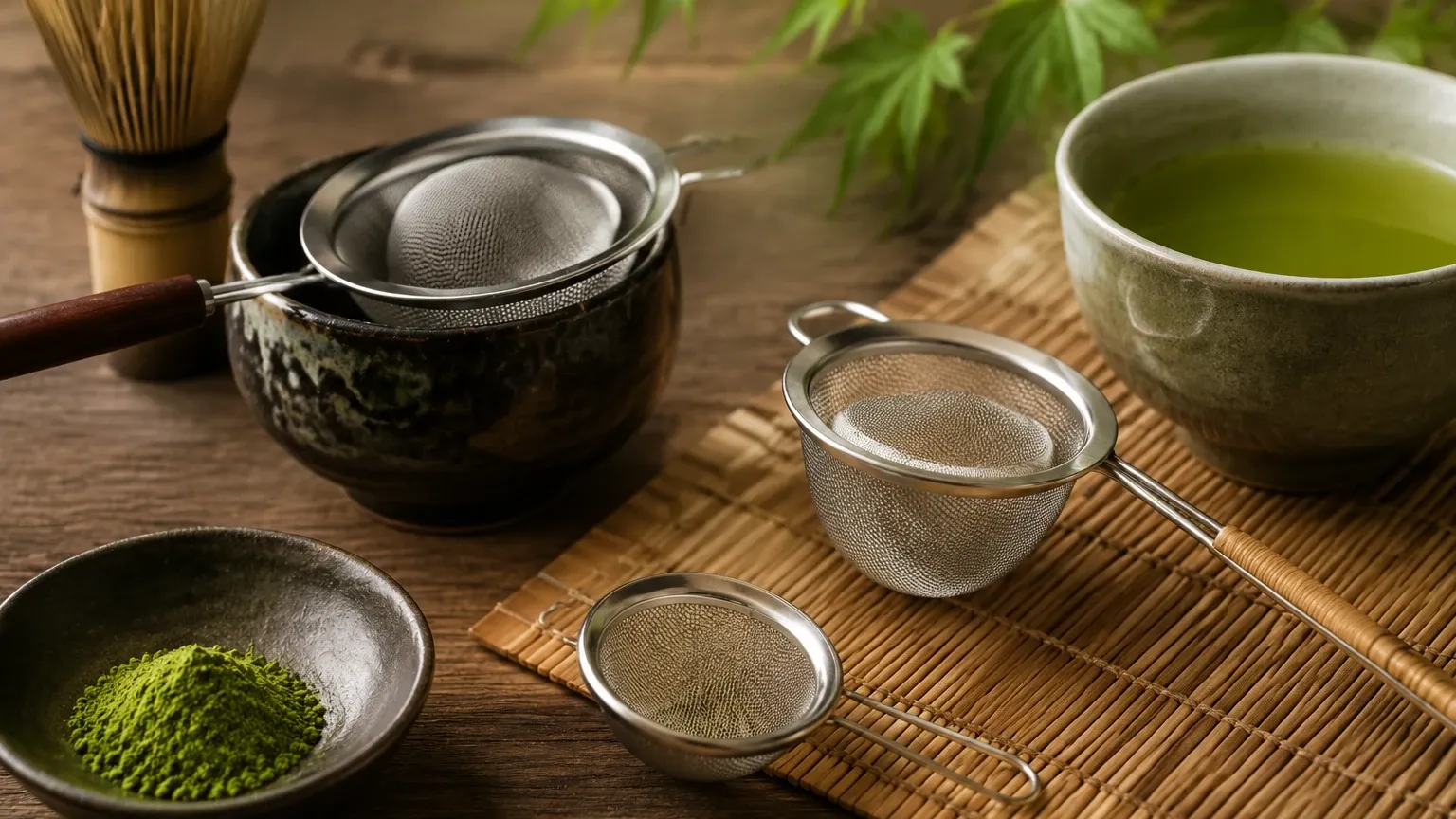
In the specialized field of liquid-solid separation, the design and material composition of filtration components determine the clarity, flavor profile, and purity of the final product. While often associated with traditional culinary arts, Japanese tea strainers represent a pinnacle of precision wire mesh engineering. For industrial beverage processors, pharmaceutical manufacturers, and chemical engineers, understanding the technical specifications of these fine-mesh tools provides critical insights into high-performance Strainers & Baskets used in large-scale production.
This guide examines the engineering principles, material requirements, and selection criteria for Japanese tea strainers from an industrial perspective, bridging the gap between traditional precision and modern manufacturing standards.
Engineering Principles of Fine-Mesh Filtration
The primary function of Japanese tea strainers is the removal of fine particulates—specifically tea dust and broken leaf fragments—while maintaining optimal flow rates. In industrial terms, this is a challenge of balancing filtration fineness with hydraulic resistance.
Mesh Weave Patterns
High-quality Japanese tea strainers typically utilize a plain weave or a twilled weave. In a plain weave, each warp wire crosses over and under each shute wire, providing a stable and consistent aperture size. For applications requiring even finer filtration (below 100 microns), a Dutch weave or "tatami" weave may be employed. This involves using a larger diameter wire for the warp and a smaller diameter wire for the shute, woven tightly together to create a dense, tortuous path for particles. This ensures that even the smallest "fannings" are captured without blinding the filter surface.
Structural Integrity
Unlike standard kitchen sieves, professional-grade strainers are engineered for structural rigidity. The mesh is often supported by a secondary, coarser frame or a reinforced rim. This prevents the mesh from deforming under the weight of saturated solids or the pressure of a pour. In industrial beverage extraction, this translates to the design of basket strainers that can withstand differential pressures without compromising the integrity of the filtration media.
Material Selection: The Role of Stainless Steel
Material compatibility is the most significant factor in the longevity and performance of filtration components. Japanese tea strainers have evolved from bamboo and copper to high-grade stainless steel, which is now the industry standard for both commercial and industrial applications.
SS304 vs. SS316L
* SS304: This is the most common material for tea filtration. It offers excellent corrosion resistance to the organic acids and tannins found in tea. It is durable, easy to clean, and maintains its shape over thousands of cycles.
* SS316L: For industrial environments where the strainer may be exposed to aggressive cleaning agents (CIP – Clean-In-Place systems) or high-salinity water, SS316L is preferred. The addition of molybdenum enhances resistance to pitting and crevice corrosion, ensuring the strainer does not introduce metallic off-flavors into the beverage.
Surface Finish and Hygiene
In the B2B sector, the surface finish of a strainer is as important as the mesh size. Japanese tea strainers intended for professional use often undergo electropolishing. This process removes microscopic burrs and smooths the surface of the wires, reducing the ability of organic matter to adhere to the mesh. This is a critical engineering consideration for preventing microbial growth and ensuring the component meets FDA or EHEDG hygiene standards.
Technical Specifications: Micron Ratings and Flow Rates
When specifying Japanese tea strainers for commercial or pilot-plant use, engineers must define the micron rating. The micron rating indicates the size of the largest particle that can pass through the mesh.
1. Coarse Filtration (300–500 Microns): Suitable for whole-leaf teas where the goal is to remove large leaves while allowing essential oils and some micro-particles to pass through for a fuller body.
2. Medium Filtration (150–250 Microns): The standard for most high-quality green teas. It effectively captures broken leaves and most dust.
3. Fine Filtration (40–100 Microns): Required for deep-steamed teas (Fukumushi) or powdered infusions where clarity is paramount. At this level, the risk of "blinding" (clogging) increases, necessitating a larger surface area to maintain flow.
In industrial Strainers & Baskets, these micron ratings are achieved through multi-layered sintered mesh or high-tensile wire cloth, ensuring that the precision of a hand-held strainer is scaled to handle hundreds of liters per minute.
Comparison: Consumer Grade vs. Industrial-Spec Strainers
For procurement teams, it is essential to distinguish between consumer-grade products and those designed for rigorous industrial or commercial use. The following table highlights the key differences:
| Feature | Consumer Grade | Industrial/Professional Grade |
| :— | :— | :— |
| Mesh Material | Low-grade SS or plated steel | Certified SS304/SS316L |
| Welding Method | Spot welding (prone to failure) | TIG or Resistance welding |
| Mesh Density | Single layer, loose weave | Precision-calibrated weave |
| Durability | Deforms under heat/pressure | Maintains geometry under load |
| Cleanability | Traps particles in seams | Seamless or polished joints |
| Compliance | Minimal | FDA, CE, and ISO compliant |
Customization Options for Beverage Processing
Every industrial application has unique requirements based on the viscosity of the fluid, the particle load, and the desired throughput. Custom-engineered Japanese tea strainers and their industrial counterparts offer several modification options:
* Flange and Handle Configurations: Custom handles or mounting flanges allow the strainer to be integrated directly into brewing vessels or piping systems.
* Reinforced Baskets: For high-volume extraction, the fine mesh can be encased in a perforated metal basket. This provides the necessary strength to support several kilograms of wet tea leaves while utilizing the precision of the fine mesh for filtration.
* Dual-Stage Filtration: Some designs incorporate two layers of mesh—a coarse outer layer to protect the fine inner layer from mechanical damage and to pre-filter larger solids.
Maintenance and Total Cost of Ownership (TCO)
In a B2B context, the initial purchase price of a strainer is only one part of the Total Cost of Ownership. High-quality stainless steel strainers offer a lower TCO due to their extended service life and reduced maintenance requirements.
Cleaning Protocols
To maintain filtration efficiency, strainers must be cleaned regularly. For stainless steel components, ultrasonic cleaning is highly effective at removing trapped particles from the intersections of the weave. In industrial settings, the ability of the material to withstand caustic or acidic cleaning cycles without degrading is a primary benefit of using high-alloy stainless steel.
Replacement Cycles
While a low-cost strainer may need replacement every few months due to mesh tearing or corrosion, a precision-engineered industrial strainer can last for years. Engineers should monitor for "wire migration"—where wires shift and change the aperture size—and signs of fatigue at the weld points. Choosing a manufacturer that specializes in custom filtration solutions ensures that the replacement parts are identical in specification, maintaining process consistency.
Selection Criteria for Procurement and Engineering Teams
Before finalizing a purchase or a custom order for filtration components, technical teams should confirm the following parameters:
1. Particle Size Distribution: What is the smallest particle that must be retained? This dictates the mesh count and wire diameter.
2. Flow Velocity: What is the required throughput? Ensure the surface area of the Strainers & Baskets is sufficient to prevent excessive pressure drop.
3. Chemical Compatibility: Will the strainer be exposed to high-temperature liquids or aggressive sanitizers? Select the appropriate grade of stainless steel (304 vs 316L).
4. Mechanical Stress: Will the strainer be subjected to vibration or mechanical scraping? Consider reinforced or sintered mesh options.
5. Regulatory Requirements: Does the application require food-grade certification or traceability of materials?
Conclusion
Japanese tea strainers serve as an excellent case study in the importance of precision mesh engineering. Whether used in a traditional tea ceremony or scaled up for a multi-national beverage production line, the principles of material science, weave geometry, and structural integrity remain the same. By focusing on high-quality stainless steel construction and precise micron ratings, engineers can ensure efficient, durable, and hygienic filtration performance. For those seeking to optimize their liquid-solid separation processes, investing in professional-grade filtration components is a critical step toward achieving consistent product quality and operational efficiency.
