


Kitchen Sink Drain Strainers
In both commercial food service and industrial processing environments, the management of wastewater and the retention of solid particulates are critical for operational efficiency. While the term "kitchen sink drain strainers" often brings to mind residential hardware, the technical requirements for these components in a B2B context—such as in large-scale commercial kitchens, food processing plants, and laboratory facilities—demand a much higher level of engineering. These systems rely on robust Strainers & Baskets to protect downstream plumbing, prevent blockages, and ensure compliance with environmental discharge regulations.
For engineers and facility managers, selecting the right drainage filtration component involves more than just matching a diameter. It requires an understanding of material science, flow dynamics, and the specific types of waste being managed. This guide explores the technical considerations of industrial-grade drainage strainers and how they differ from standard consumer products.
The Role of Strainers & Baskets in Industrial Drainage
Industrial drainage systems are the first line of defense in maintaining a facility's hygiene and functional integrity. In environments like commercial kitchens or pharmaceutical wash stations, the volume of solids entering the drain can be substantial. Without effective filtration, these solids can lead to frequent maintenance intervals, costly pipe repairs, and potential system shutdowns.
High-performance strainers and baskets serve two primary functions:
1. Debris Retention: Capturing food particles, metal shavings, or chemical precipitates that could clog pipes or damage pumps.
2. Flow Regulation: Maintaining a consistent drainage rate to prevent backup, which is essential for maintaining a sterile and safe working environment.
In industrial applications, these components must withstand high temperatures, aggressive cleaning chemicals, and physical impact. This is why manufacturers like Kaifil prioritize the use of high-grade stainless steel over the thinner, lower-quality alloys found in residential models.
Material Selection: Why Stainless Steel is Essential
When evaluating kitchen sink drain strainers for industrial or commercial use, the choice of material is the most significant factor affecting longevity and performance. Stainless steel is the industry standard due to its inherent resistance to corrosion and its ability to be easily sanitized.
SS304 vs. SS316
* Stainless Steel 304: This is the most common grade used in commercial kitchen environments. It offers excellent resistance to water and typical food acids. It is durable enough to handle the mechanical stress of heavy-duty use.
* Stainless Steel 316: For facilities dealing with high-salinity environments, corrosive chemicals, or pharmaceutical-grade requirements, SS316 is preferred. The addition of molybdenum provides superior resistance to pitting and chloride-induced corrosion.
Using low-grade materials in a professional setting often leads to rapid oxidation and structural failure. Industrial-grade strainers are typically manufactured from thicker gauge sheets, ensuring that the basket does not warp or tear under the weight of collected debris or high-pressure water flow.
Engineering Considerations: Mesh Size and Perforation Patterns
The efficiency of a strainer is determined by its filtration area and the size of its openings. Engineers must balance the need for fine particle retention with the requirement for high flow rates.
Perforated Metal vs. Wire Mesh
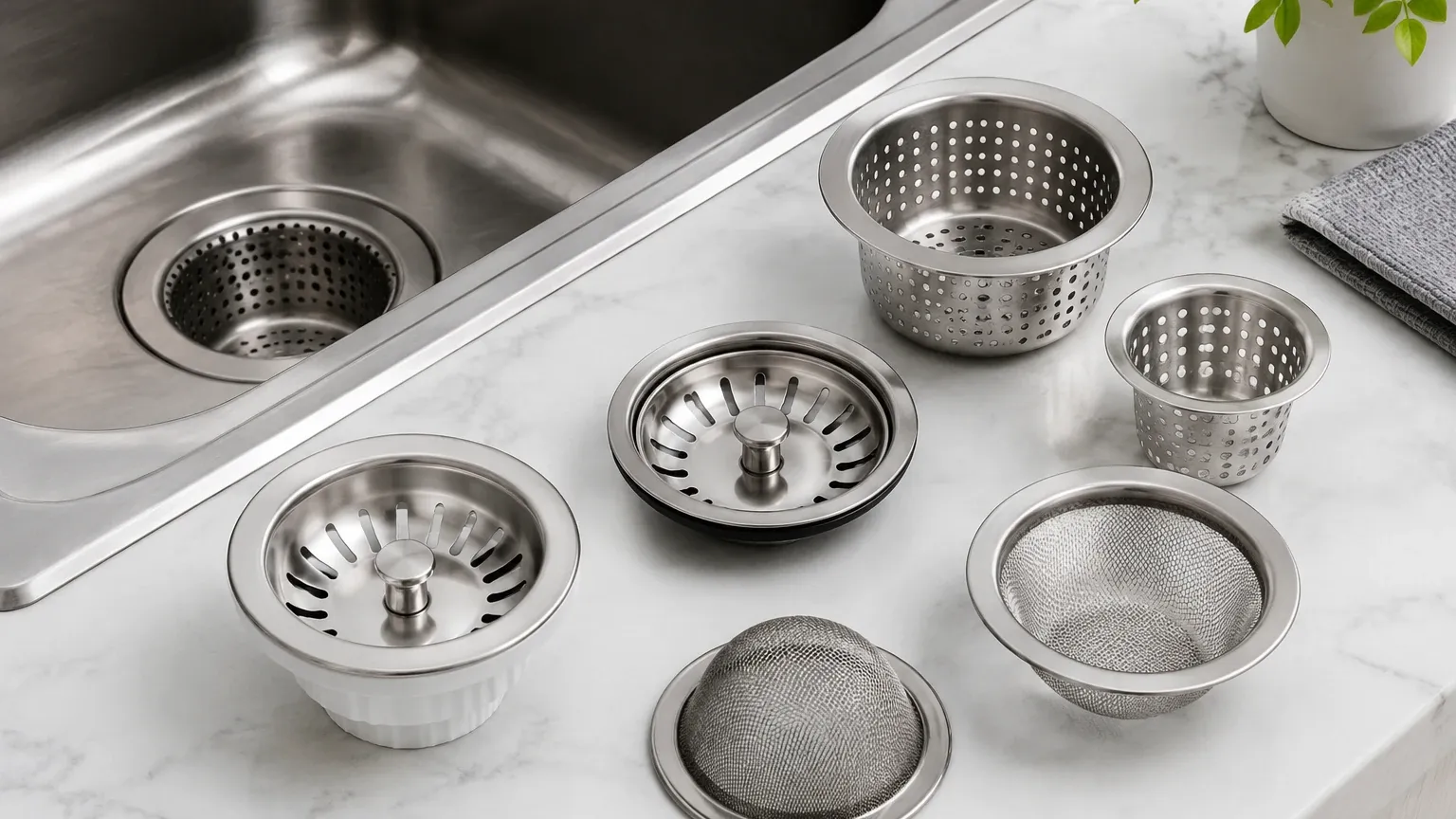
Most industrial kitchen sink drain strainers utilize either perforated metal or a combination of perforated metal and fine wire mesh.
* Perforated Metal: Provides high structural strength. The hole diameter and spacing (pitch) are calculated to ensure maximum open area without compromising the integrity of the basket. This is ideal for catching larger food scraps and debris.
* Wire Mesh Liners: For applications requiring the capture of finer particulates—such as coffee grounds in large-scale brewing or fine sediments in chemical processing—a stainless steel wire mesh liner can be integrated into the basket. This allows for precision filtration down to specific micron levels.
Calculating Open Area
The "open area" percentage is a critical metric. A higher open area reduces the pressure drop across the strainer, allowing water to drain faster. However, if the openings are too large, the strainer fails its primary purpose. Professional manufacturers provide technical data on the effective filtration area to help engineers specify the correct component for their system's hydraulic load.
Comparing Commercial and Residential Drain Strainers
It is a common mistake in facility procurement to assume that a standard retail drain strainer will suffice for a commercial sink. The differences in engineering are substantial:
1. Durability: Commercial units are designed for constant use and frequent removal for cleaning. The handles and locking mechanisms are reinforced to prevent breakage.
2. Sealing Mechanisms: In industrial settings, a leak-proof seal is often required to hold water for soaking or chemical treatment. Professional strainers use high-quality elastomers (like EPDM or Viton) that resist degradation from oils and detergents.
3. Capacity: Industrial baskets are typically deeper and have a larger volume to accommodate higher solids loading before requiring a cleaning cycle.
4. Fit and Tolerance: Precision-machined components ensure a snug fit within the drain body, preventing "bypass" where debris slips around the edges of the strainer.
Customization and OEM Solutions for Specific Applications
Standard off-the-shelf products often fail to meet the unique requirements of specialized industrial equipment. This is where custom manufacturing becomes essential. Facilities may require strainers with non-standard diameters, specific handle configurations for ergonomic lifting, or integrated secondary filters.
Kaifil specializes in providing customized Strainers & Baskets tailored to specific industrial needs. This includes:
* Bespoke Dimensions: Ensuring a perfect fit for proprietary equipment or older plumbing systems.
* Variable Mesh Counts: Customizing the filtration fineness based on the specific byproduct of the facility.
* Reinforced Structures: Adding support ribs or thicker frames for high-vibration or high-load environments.
By working with a manufacturer that understands the nuances of metal filtration, engineers can ensure that their drainage components contribute to the overall reliability of the plant rather than becoming a recurring point of failure.
Maintenance and Operational Efficiency
The total cost of ownership for kitchen sink drain strainers is heavily influenced by maintenance requirements. A poorly designed strainer is difficult to clean, leading to hygiene issues and increased labor costs.
Cleaning Protocols
In food and beverage applications, strainers must be cleaned multiple times per shift. Features such as smooth interior surfaces and electropolished finishes can significantly reduce the time required for cleaning by preventing debris from adhering to the metal.
Replacement Cycles
While a high-quality stainless steel strainer can last for years, it should be inspected regularly for signs of mechanical wear or mesh blinding. Blinding occurs when small particles become permanently lodged in the openings, reducing the flow rate. Professional-grade baskets are designed to resist blinding, but in extreme cases, ultrasonic cleaning or specialized chemical baths may be required to restore performance.
Selecting the Right Strainer: A Checklist for Engineers
When specifying or purchasing strainers for a facility, consider the following technical criteria:
* Chemical Compatibility: Does the effluent contain acids, bases, or chlorides that require SS316?
* Temperature Range: Will the strainer be exposed to boiling water or steam cleaning?
* Flow Rate Requirements: What is the maximum GPM (gallons per minute) the drain must handle?
* Particle Size: What is the smallest solid that must be retained to protect downstream equipment?
* Physical Load: How much weight will the basket need to support when full of debris?
* Ergonomics: Is the handle design suitable for workers wearing heavy gloves?
Conclusion
In the B2B sector, kitchen sink drain strainers are not merely accessories but vital components of a facility's infrastructure. Investing in high-quality, precision-engineered stainless steel strainers ensures that drainage systems remain functional, hygienic, and compliant with industrial standards. By focusing on material grade, filtration accuracy, and structural durability, technical professionals can minimize downtime and protect their broader investment in plumbing and processing equipment.
For those requiring specialized filtration performance, consulting with a manufacturer that offers custom OEM capabilities is the most effective way to address unique application challenges. High-quality Strainers & Baskets are an essential part of any robust industrial filtration strategy, providing the reliability needed for demanding commercial environments.
