


Nesting Strainers
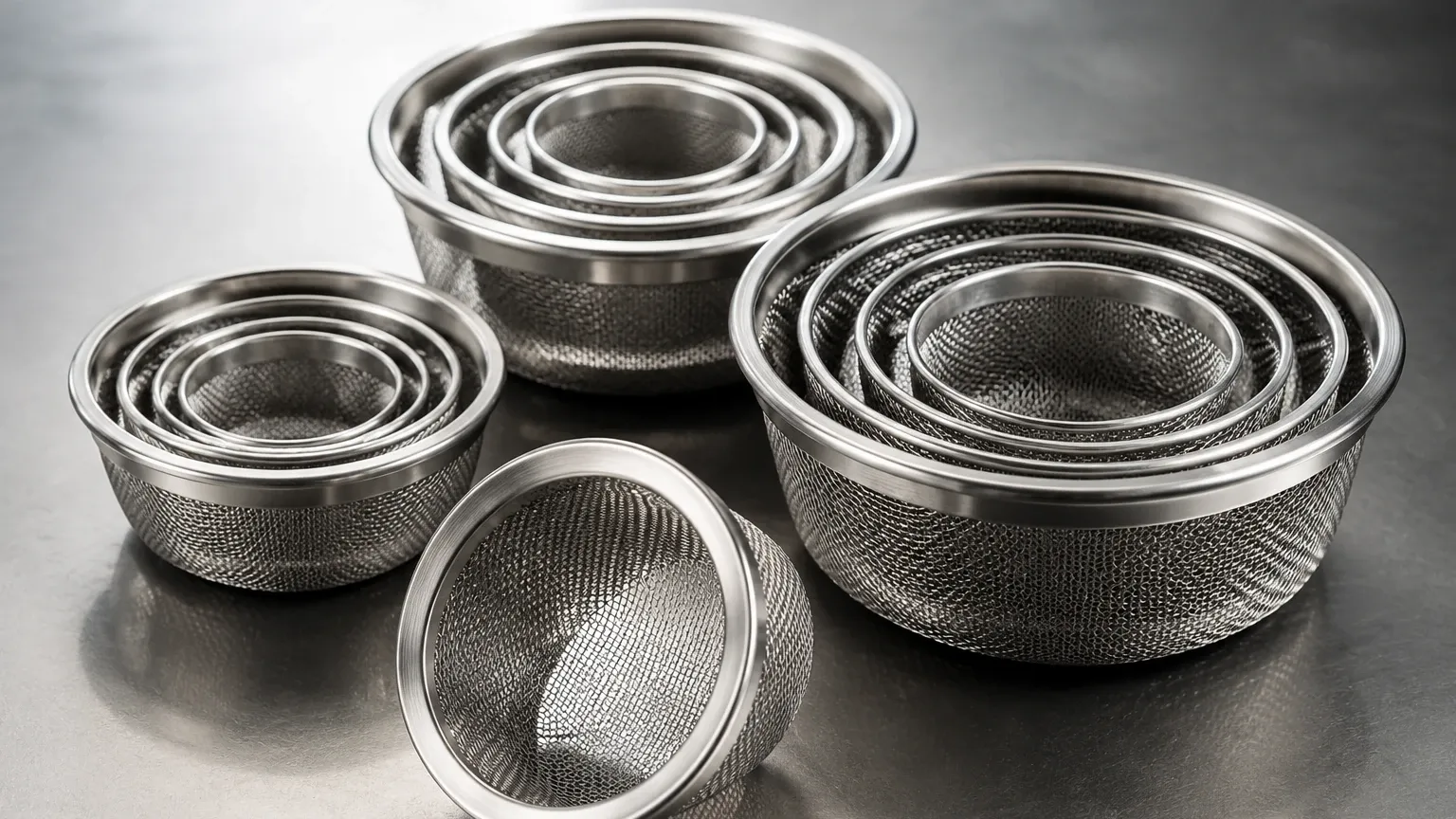
In industrial filtration, the efficiency of a system is often determined by its ability to handle varying particle sizes without premature clogging or excessive pressure drops. Nesting strainers represent a sophisticated engineering solution designed to address these challenges by utilizing multiple layers of filtration media within a single housing. By placing one filter basket inside another, engineers can achieve graduated filtration, which significantly extends the service life of the equipment and protects sensitive downstream components.
As a specialized manufacturer of stainless steel filtration solutions, Kaifil provides high-performance Strainers & Baskets tailored to the rigorous demands of chemical processing, food and beverage production, and hydraulic systems. Understanding the technical nuances of nesting strainers is essential for procurement teams and maintenance engineers who aim to optimize their filtration processes while minimizing the total cost of ownership.
Engineering Principles of Nesting Strainers
The primary objective of nesting strainers is to distribute the contaminant load across multiple stages. In a standard single-basket configuration, a fine mesh can quickly become blinded by larger debris, leading to a rapid increase in differential pressure. Nesting strainers solve this by employing a "coarse-to-fine" strategy.
Graduated Filtration Mechanics
The outer basket typically features a coarser mesh or perforated metal designed to capture large scale, debris, and macro-contaminants. The inner basket (or baskets) contains the finer filtration media. As the process fluid passes through the assembly, the larger particles are trapped first, leaving only the smaller particles to be handled by the inner, more delicate mesh. This staged approach prevents the fine inner layer from being overwhelmed, ensuring more consistent flow rates over longer periods.
Increased Surface Area and Dirt-Holding Capacity
By nesting strainers, the total effective surface area available for contaminant capture is increased without requiring a larger external housing footprint. This is particularly valuable in facilities where space is at a premium. The increased dirt-holding capacity directly translates to longer intervals between cleaning cycles, reducing labor costs and system downtime.
Material Selection and Structural Integrity
Industrial filtration environments are often characterized by high pressures, corrosive fluids, and extreme temperatures. Therefore, the choice of material for nesting strainers is a critical engineering decision. At Kaifil, we focus on high-grade stainless steel to ensure durability and chemical compatibility.
Stainless Steel Alloys (304, 316, 316L)
* Type 304: Suitable for general industrial applications where basic corrosion resistance and high strength are required.
* Type 316/316L: The preferred choice for pharmaceutical, food and beverage, and chemical industries. The addition of molybdenum provides superior resistance to chlorides and pitting, while the "L" (low carbon) version prevents carbide precipitation during welding, ensuring the structural integrity of the basket seams.
Structural Reinforcement
Because nesting strainers involve multiple layers, the mechanical stress on the inner baskets can be significant, especially during high-flow conditions. We utilize perforated metal backings to support fine wire mesh layers. This "sandwich" construction prevents the mesh from deforming or tearing under pressure, maintaining the integrity of the micron rating throughout the filter's lifecycle.
Performance Evaluation and Selection Criteria
Selecting the right nesting strainers requires a detailed analysis of the application's specific parameters. Engineers must balance filtration precision with the hydraulic performance of the system.
Differential Pressure (Delta P)
Every layer added to a nesting configuration introduces additional resistance to flow. It is vital to calculate the clean pressure drop to ensure the pump system can handle the load. A well-designed nesting strainer set will have a clean Delta P that allows for a significant margin of contaminant buildup before reaching the terminal pressure drop (the point at which cleaning is required).
Micron Rating Accuracy
When specifying nesting strainers, the micron rating of the innermost basket defines the final filtration quality. However, the rating of the outer baskets must be carefully chosen to complement the inner layer. If the outer basket is too coarse, it won't protect the inner mesh; if it is too fine, it will clog prematurely, defeating the purpose of the nested design.
Flow Velocity and Turbulence
High velocity can cause bypass if the baskets are not seated correctly. Precision-machined flanges and seals are necessary to ensure that 100% of the fluid passes through the nested media rather than around the edges. In turbulent flow conditions, the vibration of nested components can lead to mechanical wear, necessitating robust fastening mechanisms.
Customization Options for Industrial Applications
Standard off-the-shelf filters rarely meet the precise needs of complex industrial processes. Customization is a core component of effective filtration engineering. When designing nesting strainers, several variables can be adjusted to fit the application:
1. Handle and Lift Designs: For large-scale baskets, ergonomic handles or heavy-duty lifting lugs are essential for safe removal and maintenance.
2. Reinforced Bottoms: In applications with high sediment loads, the bottom of the basket may require extra reinforcement or a solid plate to prevent sagging.
3. Variable Mesh Combinations: Engineers can specify different mesh weaves (plain, twilled, or dutch weave) for each layer of the nesting assembly to optimize for specific particle shapes and fluid viscosities.
4. Magnetic Inserts: For hydraulic and machining applications, magnetic rods can be integrated into the nesting structure to capture fine ferrous particles that might otherwise pass through the mesh.
Operational Maintenance and Replacement Cycles
The longevity of nesting strainers depends heavily on proper maintenance protocols. Because these assemblies are designed for reuse, a clear cleaning and inspection schedule must be established.
Cleaning Protocols
Depending on the contaminants, cleaning may involve:
* Backwashing: Reversing the flow to dislodge particles.
* Ultrasonic Cleaning: Using high-frequency sound waves in a solvent bath to remove fine particles trapped deep within the wire mesh.
* Chemical Soaking: Utilizing specialized detergents to dissolve organic or mineral buildup without damaging the stainless steel substrate.
Monitoring and Inspection
Differential pressure gauges are the most reliable tool for determining when a nesting strainer needs attention. Beyond pressure monitoring, visual inspections should look for signs of "wire shifting" or fatigue in the mesh. Even small breaches in the inner mesh layer can compromise the entire downstream process.
Total Cost of Ownership (TCO)
While nesting strainers may have a higher initial acquisition cost compared to single-layer baskets, the TCO is often much lower. This is due to the protection they offer to expensive equipment like pumps, spray nozzles, and heat exchangers. By preventing frequent replacements of these downstream components and reducing the frequency of filter cleaning, nesting strainers provide a high return on investment.
Technical Confirmation Checklist for Engineers
Before finalizing a purchase order for nesting strainers, technical professionals should confirm the following data points with their manufacturer:
* Fluid Properties: Viscosity, density, and chemical composition (including pH levels).
* Operating Conditions: Maximum operating pressure, design pressure, and temperature fluctuations.
* Particle Profile: The expected size distribution and concentration of solids in the process fluid.
* Flow Rate: Minimum, normal, and maximum flow rates (GPM or m³/h).
* Housing Dimensions: Internal clearance to ensure the nested assembly fits without restricting flow paths.
By addressing these factors, engineers can ensure they receive a filtration solution that is not only functional but optimized for their specific industrial environment. Kaifil remains committed to providing the technical expertise and manufacturing precision required to produce high-quality Strainers & Baskets that stand up to the most demanding challenges.
