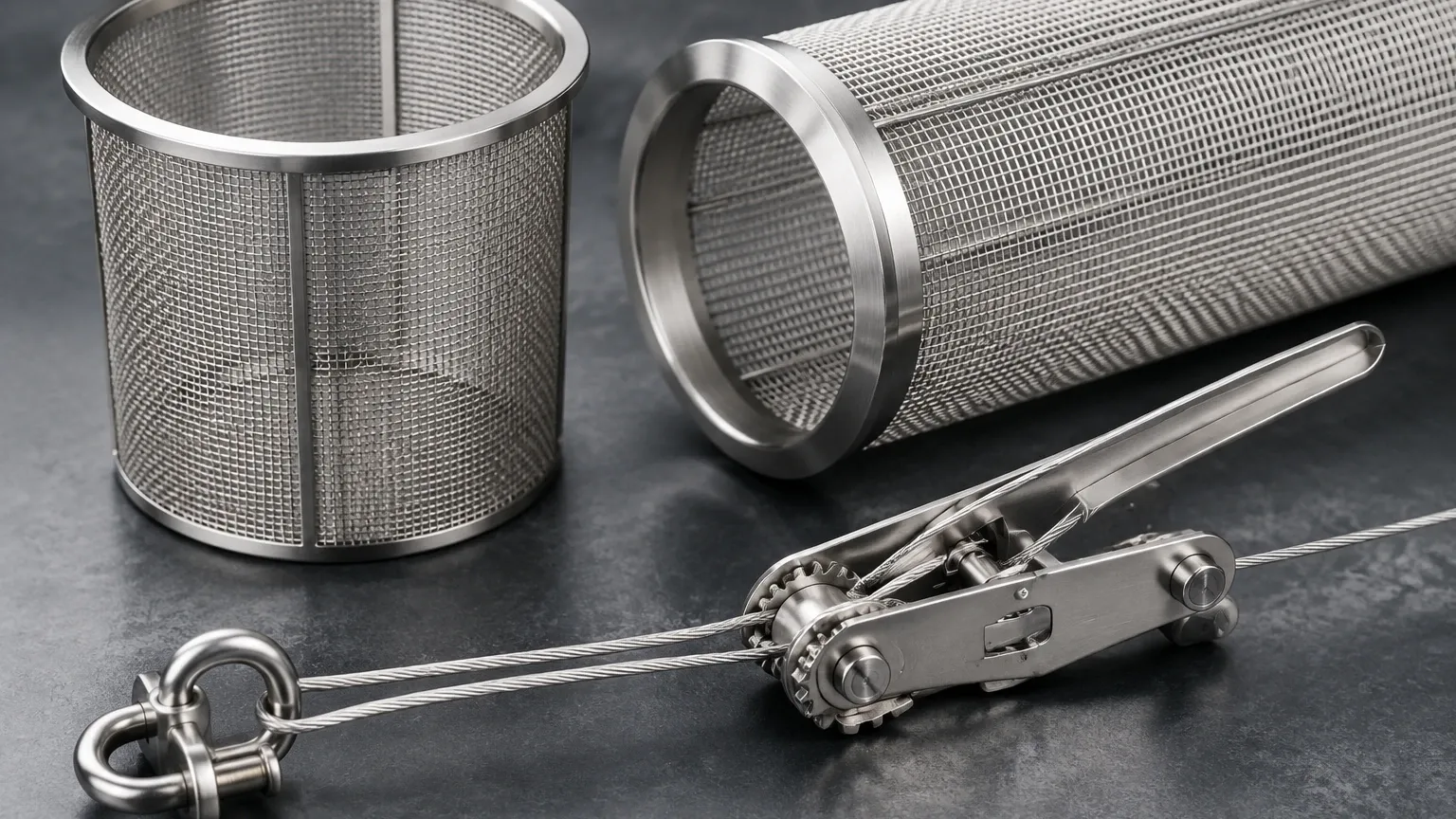
Ratchet Strainers Wire Tensioners
In the realm of industrial wire mesh applications and structural support systems, maintaining precise tension is not merely a matter of aesthetics; it is a critical engineering requirement. Ratchet strainers wire tensioners serve as the mechanical backbone for ensuring that wire-based assemblies—ranging from architectural mesh screens to industrial support frameworks—remain taut and functional under varying loads and environmental conditions. For engineers and procurement specialists, understanding the technical nuances of these components is essential for ensuring the longevity and reliability of the broader systems they support, including complex Strainers & Baskets used in industrial filtration.
The Mechanical Principles of Ratchet Strainers
A ratchet strainer is a mechanical device designed to take up slack in a wire or cable and lock it into place using a ratchet and pawl mechanism. The assembly typically consists of a frame, a rotating spindle (or bobbin), and a spring-loaded pawl that engages with a gear.
When the spindle is turned—usually with a specialized wrench or handle—the wire is wound around the bobbin, increasing tension. The teeth of the gear are angled such that the spindle can rotate in one direction (the tightening direction) while the pawl prevents it from rotating backward. This mechanical advantage allows operators to apply significant tensile force with minimal manual effort. In industrial settings, where high-tensile stainless steel wire is common, the precision of this mechanism determines the stability of the entire installation.
Material Selection and Corrosion Resistance
In the B2B sector, particularly within chemical processing, marine, and wastewater treatment industries, material selection is the primary factor in determining the total cost of ownership. Ratchet strainers wire tensioners are frequently exposed to corrosive elements, necessitating high-grade materials.
1. AISI 304 Stainless Steel: This is the standard for many industrial applications, providing excellent strength and good corrosion resistance. It is suitable for indoor environments or outdoor applications where exposure to chlorides is minimal.
2. AISI 316 Stainless Steel: For more demanding environments, such as chemical plants or coastal installations, 316 stainless steel is preferred. The addition of molybdenum enhances resistance to pitting and crevice corrosion, ensuring that the ratchet mechanism does not seize over time.
3. Galvanized Steel: While more cost-effective for temporary or less critical structures, galvanized components are susceptible to zinc depletion and eventual oxidation, which can compromise the mechanical integrity of the tensioning system.
As a manufacturer specializing in stainless steel solutions, Kaifil emphasizes the use of high-performance alloys to match the durability requirements of industrial filtration components and support structures.
Engineering Considerations for Industrial Wire Tensioning
When integrating ratchet strainers wire tensioners into a project, engineers must calculate several variables to ensure system safety and performance.
Tensile Load Requirements
The tensioner must be rated for the maximum expected load of the wire. This includes the static tension required to keep the wire straight and the dynamic loads introduced by wind, vibration, or thermal expansion. Over-tensioning can lead to wire breakage or structural deformation of the anchor points, while under-tensioning results in sagging, which can interfere with the operation of nearby equipment or the efficiency of filtration media.
Wire Gauge Compatibility
The spindle of the ratchet strainer must be sized appropriately for the wire diameter. If the spindle is too small for a heavy-gauge wire, the wire may not wrap cleanly, leading to overlapping and uneven stress distribution. Conversely, a spindle designed for heavy cable may not provide enough grip for fine-gauge wires used in precision mesh applications.
Thermal Expansion and Contraction
In outdoor or high-temperature industrial environments, metal wires expand and contract. A rigid tensioning system without periodic adjustment can fail during extreme temperature shifts. Ratchet strainers allow for easy re-tensioning, making them superior to permanent crimping methods in dynamic environments.
Integration with Industrial Strainers & Baskets
While ratchet strainers are often viewed as standalone hardware, their role in the broader context of industrial filtration is significant. In large-scale filtration systems, wire mesh must often be supported by external frameworks or internal skeletons to prevent collapse under high pressure.
In custom Strainers & Baskets design, the integrity of the mesh is paramount. If a large basket uses a wire-wrap reinforcement, the tension of that wrap must be uniform to ensure the mesh remains flush against the support structure. While the ratchet strainer itself may be used in the structural installation of these units—such as securing filtration panels in a large open-channel flow—the principle of tensioning remains a core concept in maintaining the filtration accuracy and structural durability that Kaifil products are known for.
Common Risks in Wire Tensioning Systems
Failure to properly specify or install ratchet strainers wire tensioners can lead to several industrial risks:
* Mechanical Seizure: In low-quality tensioners, the pawl or gear may corrode and seize, making it impossible to adjust the tension. This is particularly problematic in maintenance cycles where wires must be slackened for cleaning or component replacement.
* Stress Corrosion Cracking (SCC): In high-stress applications involving stainless steel, SCC can occur if the material is not properly treated or if the environment contains specific corrosive agents like chlorides at elevated temperatures.
* Vibration Loosening: In environments with heavy machinery, constant vibration can cause inferior ratchet mechanisms to slip if the pawl spring tension is insufficient.
To mitigate these risks, it is vital to source components from manufacturers who understand the metallurgical and mechanical demands of industrial applications.
Selection Criteria for Procurement Teams
When evaluating ratchet strainers wire tensioners for a B2B purchase, procurement teams should look beyond the unit price and consider the following technical specifications:
1. Load Rating: Confirm the break strength and recommended working load limit (WLL).
2. Locking Mechanism Reliability: Ensure the pawl is robust and the spring is made of a non-corrosive material (like 316 stainless) to prevent failure.
3. Ease of Operation: The design should allow for adjustment using standard industrial tools, reducing the need for specialized equipment on-site.
4. Manufacturer Documentation: Professional suppliers should provide material certifications (MTRs) and technical drawings to confirm that the components meet the project's engineering standards.
Installation and Maintenance Best Practices
Proper installation is key to the performance of ratchet strainers wire tensioners. The tensioner should be positioned at a point in the wire run that is easily accessible for future adjustments. It is generally recommended to install the tensioner near an end post or anchor point to minimize the amount of wire that must be pulled through intermediate supports.
Maintenance Checklist:
* Visual Inspection: Check for signs of wire fraying at the spindle.
* Lubrication: In non-food-grade environments, a light application of marine-grade lubricant on the ratchet gear can prevent wear.
* Tension Check: Use a tension gauge to verify that the wire remains within the specified range, especially after the first 48 hours of installation (to account for initial wire stretch).
Conclusion: Why Precision Matters
Ratchet strainers wire tensioners are small components that play a massive role in the structural and operational success of industrial systems. Whether they are used to support architectural elements or to provide the necessary tension for industrial wire mesh frameworks, their quality directly impacts the safety and efficiency of the installation.
For organizations requiring high-performance filtration and wire mesh solutions, partnering with a manufacturer like Kaifil ensures that every component—from the smallest tensioner to the largest custom Strainers & Baskets—is engineered for durability and precision. By focusing on material integrity and mechanical reliability, engineers can build systems that withstand the rigors of demanding industrial environments while minimizing long-term maintenance costs.