


Ringlock Strainers
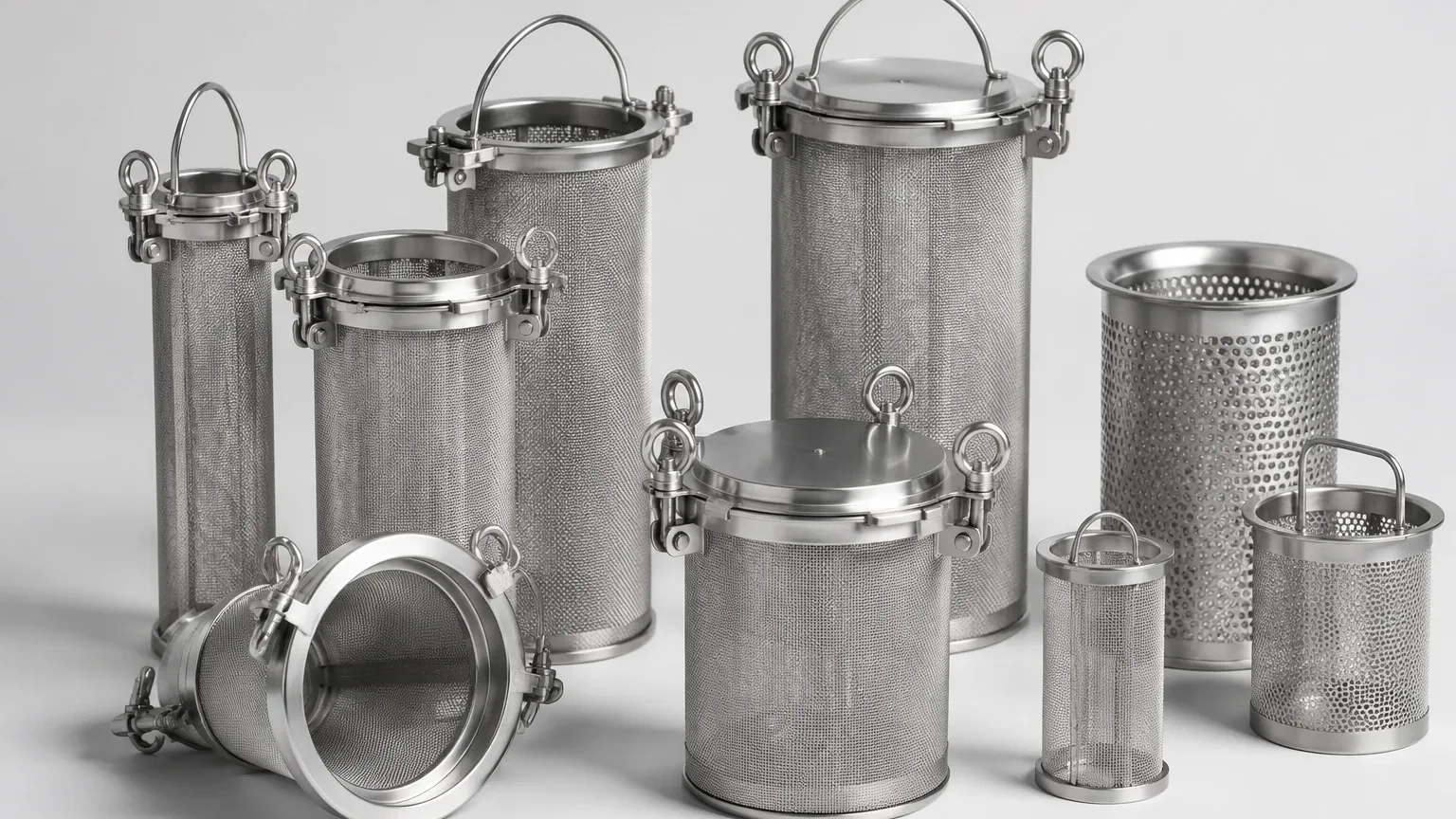
In industrial fluid handling and process engineering, the selection of filtration components is a critical decision that impacts system uptime, product purity, and equipment longevity. Among the various configurations available, ringlock strainers have emerged as a preferred solution for high-demand environments. These specialized Strainers & Baskets are engineered to provide a secure, high-pressure seal while allowing for rapid access during maintenance cycles. Understanding the technical nuances of these components is essential for engineers and purchasing teams tasked with optimizing chemical processing, hydraulic systems, or food and beverage production lines.
The Engineering Principles of Ringlock Strainers
The defining characteristic of ringlock strainers is their closure mechanism. Unlike traditional bolted-cover strainers that require the sequential loosening and tightening of multiple heavy bolts, a ringlock design utilizes a heavy-duty locking ring. This ring typically features a threaded or cam-action engagement that exerts uniform circumferential pressure on the housing lid and gasket.
From an engineering perspective, this design addresses several common failure points in industrial filtration. First, it ensures even gasket compression, which is often difficult to achieve with manual bolting where uneven torque can lead to localized seal failure. Second, the mechanical advantage provided by the ring allows for a high-pressure rating without the bulk and weight of massive flange assemblies. In systems where space is constrained and maintenance windows are narrow, the efficiency of the ringlock mechanism translates directly into reduced labor costs and minimized process downtime.
Material Science in Stainless Steel Filtration
For industrial applications, the material of construction is the primary determinant of a strainer’s service life. Ringlock strainers are predominantly manufactured from high-grade stainless steel, such as SS304, SS316, or SS316L. The choice between these grades depends on the chemical composition of the process fluid and the environmental conditions of the facility.
* SS304: Suitable for general-purpose applications, including water treatment and non-corrosive industrial fluids. It offers excellent structural strength and basic corrosion resistance.
* SS316/316L: The addition of molybdenum provides enhanced resistance to chlorides and pitting. This makes SS316 the standard for pharmaceutical, chemical, and marine applications where the process fluid or cleaning agents are more aggressive.
Beyond the housing, the internal basket—the core of the filtration system—must be engineered to withstand the differential pressure (ΔP) that occurs as contaminants accumulate. High-quality Strainers & Baskets often utilize a combination of perforated metal for structural support and fine wire mesh for precise particle retention. The welding techniques used in construction, such as TIG or plasma welding, must ensure smooth transitions to prevent bacterial growth in food-grade applications and to eliminate weak points where fatigue cracks could initiate.
Evaluating Filtration Performance: Micron Ratings and Flow Dynamics
Selecting the correct filtration media for ringlock strainers requires a deep understanding of micron ratings and flow dynamics. The "micron rating" refers to the size of the particles the strainer is designed to trap. However, engineers must distinguish between nominal and absolute ratings.
* Nominal Rating: An approximate value indicating the strainer's ability to retain a majority of particles of a specific size. It is often used for coarse filtration or pre-filtering.
* Absolute Rating: A precise measurement indicating that 99.9% or more of particles above a certain size will be captured. This is critical in pharmaceutical or precision chemical processes where even trace contaminants can ruin a batch.
Flow dynamics also play a vital role. Every strainer introduces a pressure drop into the system. As fluid passes through the mesh, friction and turbulence cause a loss of energy. This is measured as the "clean pressure drop." As the basket fills with debris, the "dirty pressure drop" increases. If the differential pressure exceeds the structural limits of the basket, it may collapse, leading to downstream contamination. Engineers should aim for an Open Area Ratio (OAR) of at least 4:1 or higher, meaning the total area of the holes in the strainer basket is four times the cross-sectional area of the inlet pipe. This ensures low initial pressure drop and longer intervals between cleanings.
Operational Advantages: Why Engineers Choose Ringlock Closures
The primary operational advantage of ringlock strainers is the speed of maintenance. In a continuous process environment, every minute a system is offline for filter cleaning represents lost revenue. The ringlock design allows a single operator to open the housing, replace or clean the basket, and reseal the unit in a fraction of the time required for a multi-bolt flange.
Furthermore, ringlock strainers are often equipped with safety features that prevent the ring from being turned while the housing is under pressure. This is a critical safety consideration in hydraulic or high-temperature steam applications. The ergonomic design also reduces the risk of repetitive strain injuries for maintenance personnel and eliminates the need for specialized heavy-duty impact wrenches at every filtration station.
Identifying and Mitigating Common Filtration Risks
While ringlock strainers are robust, several risks must be managed to ensure reliable performance. One of the most common issues is bypass. This occurs when fluid leaks around the edge of the basket rather than passing through the mesh. To mitigate this, high-quality ringlock designs incorporate a precision-machined seat and a secondary seal (such as an O-ring or spring-loaded flange) that forces all fluid through the filtration media.
Another risk is material fatigue. In systems with pulsating flow or frequent pressure surges, the stainless steel mesh can experience work hardening and eventual cracking. Engineers should look for baskets that include internal reinforcements or "pleated" designs that increase the surface area and distribute the mechanical stress more effectively.
Corrosion is also a persistent threat, particularly in chemical processing. Even stainless steel can suffer from stress corrosion cracking (SCC) if the fluid chemistry is not properly matched to the alloy. Regular inspection of the ringlock threads and the locking mechanism is necessary to ensure that galling or chemical attack has not compromised the structural integrity of the closure.
Customization and Integration of Strainers & Baskets
No two industrial processes are identical, which is why customization is a hallmark of professional filtration solutions. When sourcing Strainers & Baskets, engineers should consider how the unit will integrate with existing piping. Options include:
* In-line vs. Offset Connections: Depending on the floor plan, an in-line design might be necessary for space savings, whereas an offset design might allow for easier basket removal.
* Connection Types: Flanged (ANSI, DIN, JIS), threaded (NPT, BSP), or sanitary tri-clamp connections must be specified to match the facility's standards.
* Heating Jackets: For high-viscosity fluids like resins or food oils, a steam or hot-water jacket may be required to maintain the fluid's temperature and flowability during filtration.
* Custom Mesh Layers: Some applications require a multi-stage approach within a single basket, using a coarse outer mesh to protect a fine inner mesh from large debris.
By working with a manufacturer capable of OEM customization, purchasing teams can ensure that the ringlock strainers they receive are optimized for their specific flow rates, pressure requirements, and space constraints.
Maintenance Strategies for Industrial Longevity
The total cost of ownership (TCO) of a filtration system is heavily influenced by maintenance practices. For ringlock strainers, a proactive maintenance schedule involves more than just emptying the basket.
1. Differential Pressure Monitoring: Installing gauges upstream and downstream of the strainer is the most effective way to determine when cleaning is required. Relying on a fixed time schedule often leads to either unnecessary downtime or excessive pressure drops that stress the system.
2. Cleaning Protocols: Depending on the contaminant, baskets may be cleaned using ultrasonic baths, chemical soaking, or high-pressure steam. It is vital to ensure that the cleaning method does not damage the fine wires of the mesh or the integrity of the welds.
3. Seal Replacement: O-rings and gaskets are wear items. Even if they appear intact, they should be replaced periodically based on the manufacturer’s recommendations, especially in applications involving thermal cycling or aggressive solvents.
4. Lubrication: The threads of the ringlock mechanism should be kept clean and lightly lubricated with a process-compatible grease to prevent galling and ensure ease of operation.
Technical Confirmation Checklist for Procurement
Before finalizing a purchase order for ringlock strainers, technical professionals should confirm the following data points with their supplier:
* Maximum Operating Pressure and Temperature: Ensure the housing and seals are rated for the system's peak conditions, including potential upset scenarios.
* Chemical Compatibility: Verify that the chosen stainless steel grade and gasket material (EPDM, Viton, PTFE, etc.) are resistant to the process fluid.
* Particle Size Distribution: Provide the supplier with data on the types of solids being removed to ensure the micron rating and mesh type are appropriate.
* Flow Rate Requirements: Confirm that the pressure drop at the required flow rate will not exceed the system's pump capacity.
* Compliance Standards: Check if the unit needs to meet specific industry standards such as ASME Section VIII, 3-A Sanitary Standards, or CE/PED certifications.
By focusing on these factual engineering boundaries, organizations can implement ringlock strainers that provide reliable, long-term service. These components are more than simple filters; they are precision-engineered tools that protect expensive downstream equipment like pumps, heat exchangers, and spray nozzles from the damaging effects of particulate contamination. For those seeking high-performance filtration components, exploring the full range of Strainers & Baskets is the first step toward a more efficient and reliable industrial process.
