


Roof Drain Strainers
In the context of industrial and commercial facility management, the integrity of a building's roofing system is paramount. One of the most critical, yet often overlooked, components of this system is the drainage infrastructure. Within this infrastructure, roof drain strainers serve as the primary defensive barrier, preventing debris from entering the internal piping system. For engineers and procurement professionals, selecting the correct Strainers & Baskets is not merely a matter of fitting a cap over a hole; it involves a complex evaluation of hydraulic capacity, material durability, and specific environmental challenges.
Industrial facilities often face unique drainage demands compared to residential structures. From chemical exposure in processing plants to the heavy particulate load in manufacturing environments, the performance of roof drain strainers directly impacts the structural longevity of the building. This article examines the technical considerations, material science, and engineering specifications required to select and maintain effective roof drainage filtration components.
The Critical Role of Strainers in Industrial Drainage Systems
The fundamental purpose of roof drain strainers is to facilitate the rapid evacuation of water while intercepting solids that could cause downstream blockages. In an industrial setting, a clogged drain is more than a maintenance nuisance; it is a structural risk. When water accumulates on a flat or low-slope roof—a phenomenon known as ponding—the weight can exceed the design load of the roof deck, leading to structural fatigue or catastrophic failure.
Effective filtration begins at the point of entry. By utilizing high-quality roof drain strainers, facilities can ensure that large debris, such as wind-blown packaging materials, organic matter, or gravel from the roof ballast, does not enter the conductor pipes. Once debris enters the internal plumbing, removal becomes significantly more expensive and labor-intensive, often requiring specialized hydro-jetting or mechanical snaking. Furthermore, in many industrial applications, the drainage system is integrated with water treatment or recovery systems, making the initial filtration step essential for protecting sensitive downstream equipment.
Material Science: Why Stainless Steel is the Standard for Industrial Roof Strainers
When specifying components for industrial use, material selection is the most significant factor in determining the total cost of ownership. While plastic, aluminum, and cast iron are common in lighter applications, stainless steel remains the preferred choice for demanding industrial environments.
Corrosion Resistance and Longevity
Stainless steel, particularly grades 304 and 316, offers superior resistance to atmospheric corrosion. In industrial zones where chemical emissions or high salinity (in coastal regions) are present, lower-grade materials will oxidize rapidly. Cast iron strainers often develop a layer of rust scale that can actually trap smaller debris, effectively reducing the flow rate over time. In contrast, stainless steel maintains a smooth surface finish, which helps prevent the adhesion of biological growth and mineral deposits.
Structural Integrity and Impact Resistance
Industrial roofs are frequently accessed for HVAC maintenance, solar panel servicing, or equipment inspections. Roof drain strainers must be able to withstand accidental impact or heavy snow loads without cracking. Stainless steel provides a high strength-to-weight ratio, ensuring that the dome or basket maintains its shape under pressure. This is particularly important for "vandal-proof" designs or areas where high-velocity wind may propel debris against the strainer.
Thermal Stability
Industrial roofs experience extreme temperature fluctuations. Stainless steel has a low coefficient of thermal expansion compared to many plastics, meaning it will not become brittle in freezing temperatures or warp under the intense heat of a summer sun. This stability ensures that the connection between the strainer and the drain body remains secure, preventing leaks at the roof-to-drain interface.
Design Variations: Dome vs. Flat Roof Drain Strainers
The geometry of a strainer is dictated by the specific requirements of the roof and the anticipated debris load. Engineers must choose between several primary configurations within the category of industrial filtration components.
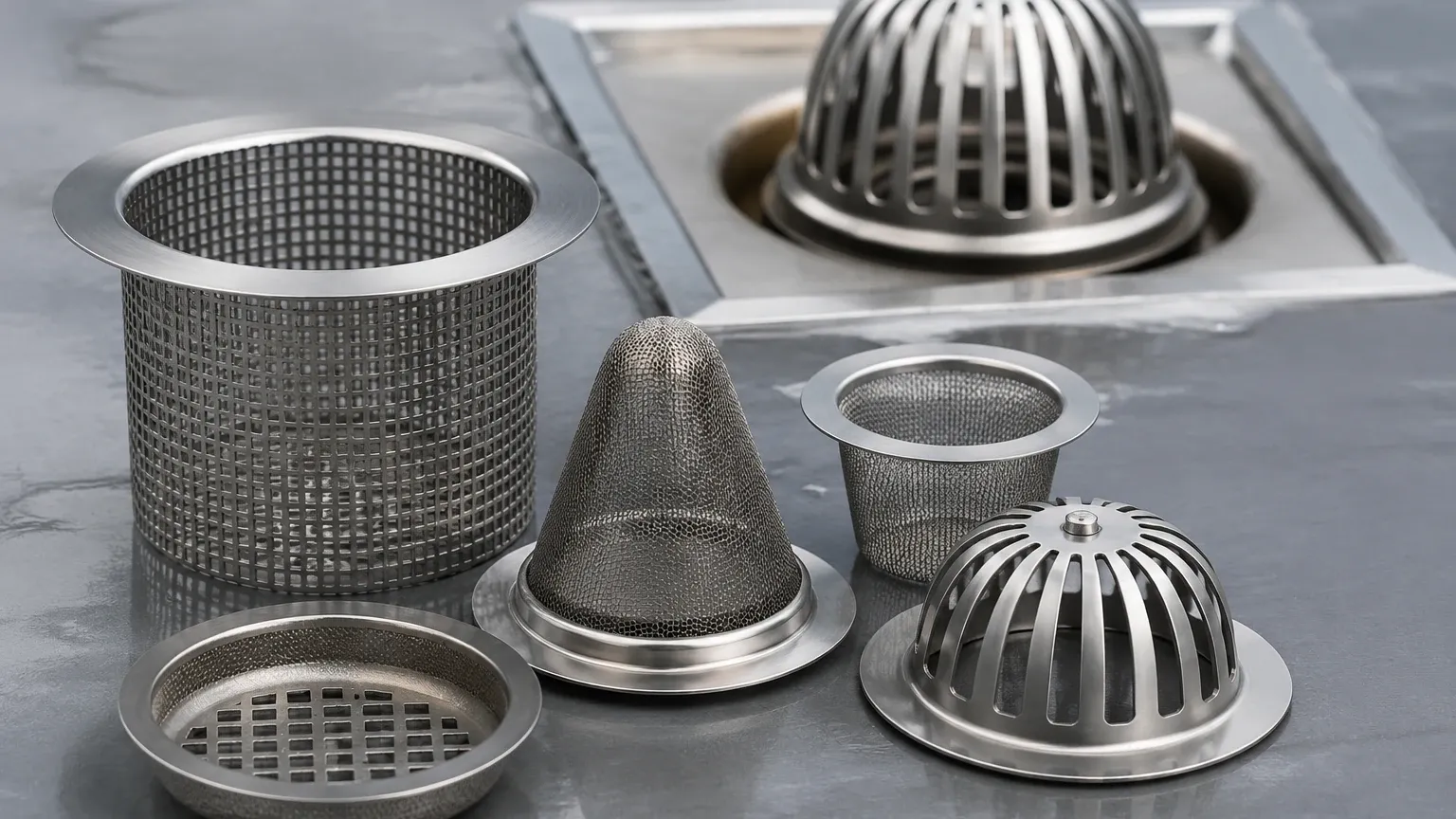
Dome Strainers
Dome-style roof drain strainers are the most common choice for general industrial roofs. The raised, hemispherical design provides a significantly larger surface area than the diameter of the drain pipe itself. This is a critical safety feature: even if the base of the dome becomes surrounded by leaves or silt, the upper portion of the dome remains open to allow water to flow. This "anti-clog" geometry is essential for facilities with high organic debris or those located in regions prone to heavy rainfall.
Flat and Low-Profile Strainers
Flat strainers are typically reserved for areas with pedestrian traffic or where the drain is located in a gutter or scupper with limited vertical clearance. While they offer a clean, flush appearance, they are more susceptible to clogging because the effective filtration area is limited to the horizontal plane. In these instances, engineers often specify a larger diameter flat strainer or a specialized wire mesh basket to compensate for the reduced surface area.
Custom Basket Strainers
For specialized industrial applications, standard off-the-shelf components may not suffice. Custom-manufactured baskets allow for specific mesh counts or perforated patterns tailored to the debris profile of the facility. For example, a facility that handles plastic pellets may require a finer mesh basket to prevent microplastics from entering the municipal storm sewer system. Kaifil specializes in these custom stainless steel solutions, providing the precision required for high-stakes industrial filtration.
Technical Specifications and Hydraulic Performance
From an engineering perspective, the most important metric for a roof drain strainer is its "Effective Open Area" (EOA). The EOA is the total square footage of the openings in the strainer through which water can pass.
Calculating Flow Capacity
The flow capacity of a drain is limited by either the pipe diameter or the strainer's EOA. A common engineering rule of thumb is that the EOA of the strainer should be at least 1.5 to 2 times the cross-sectional area of the drain pipe. This over-sizing accounts for the inevitable partial blockage that occurs during a storm. If the strainer is too restrictive, water will back up on the roof even if the internal piping is clear.
Mesh vs. Perforated Metal
The choice between a wire mesh and a perforated metal strainer depends on the required filtration accuracy.
- Wire Mesh: Offers a higher percentage of open area, which is ideal for maximizing flow. However, it can be more difficult to clean if fibrous debris becomes entangled in the weave.
- Perforated Metal: Provides a more rigid structure and is easier to scrape clean. It is often preferred for heavy-duty applications where the strainer may be subjected to mechanical stress.
Load Ratings
In areas where the roof functions as a terrace or a maintenance walkway, the strainer must meet specific load-bearing standards. Engineers should confirm whether the component is rated for "pedestrian" or "light vehicular" loads to prevent structural failure of the strainer under the weight of personnel or equipment carts.
Customization and OEM Considerations for Specialized Facilities
Many modern industrial facilities feature non-standard architectural designs or specialized processing requirements that necessitate custom filtration components. OEM (Original Equipment Manufacturer) capabilities are vital for engineers who need to integrate drainage solutions into proprietary equipment or unique building envelopes.
Customization options often include:
- Non-Standard Diameters: Matching the strainer to legacy piping systems or oversized industrial drains.
- Specific Alloy Requirements: Utilizing 316L stainless steel for enhanced chemical resistance in pharmaceutical or food processing wash-down areas.
- Integrated Gravel Stops: For roofs with heavy stone ballast, strainers can be manufactured with integrated gravel guards that prevent stones from migrating toward the drain while still allowing water to pass.
- Attachment Mechanisms: Custom bolt-hole patterns or friction-fit designs to ensure a secure installation on various types of drain bodies.
Working with a manufacturer like Kaifil allows technical teams to move beyond the limitations of standard catalogs. By providing detailed application requirements—such as flow rates, chemical exposure, and debris types—engineers can receive a tailored solution that optimizes performance and reduces long-term maintenance costs.
Maintenance, Durability, and Replacement Cycles
Even the most robust stainless steel roof drain strainers require a structured maintenance program. In industrial environments, the buildup of atmospheric soot, chemical residues, and biological matter can eventually compromise any filter.
Inspection Intervals
At a minimum, roof strainers should be inspected twice a year—typically in the spring and autumn. However, for facilities located near high-particulate industries or dense vegetation, quarterly inspections are recommended. After any major weather event, a visual check should be performed to ensure that the strainers have not been displaced or overwhelmed by debris.
Cleaning Procedures
One of the advantages of stainless steel Strainers & Baskets is the ease of cleaning. Debris can usually be removed manually or with a stiff-bristled brush. For oily or chemical residues, a mild detergent or specialized stainless steel cleaner can be used without damaging the material's protective oxide layer. It is important to avoid using carbon steel brushes or steel wool, as this can embed iron particles into the stainless steel, leading to localized "tea staining" or pitting corrosion.
Identifying the Need for Replacement
While stainless steel components are designed for decades of service, they are not indestructible. Procurement teams should look for the following signs that a replacement is necessary:
1. Mechanical Deformation: If the dome is crushed or the basket is warped, the seal against the drain body may be compromised, allowing debris to bypass the filter.
2. Pitting Corrosion: Small, deep holes in the metal, often caused by prolonged exposure to harsh chemicals or stagnant saline water.
3. Hardware Failure: If the mounting lugs or bolt holes are stripped or corroded, the strainer may become dislodged during a heavy storm, leading to a total system failure.
Conclusion: Selecting the Right Filtration Component
Roof drain strainers are a small but vital investment in the protection of industrial infrastructure. By prioritizing high-quality materials like stainless steel and ensuring that the design matches the specific hydraulic and environmental needs of the facility, engineers can prevent costly structural damage and plumbing emergencies.
When evaluating options, technical professionals should confirm the material grade, the effective open area, and the compatibility with existing drain bodies. For unique applications, seeking a custom manufacturing partner ensures that the filtration solution is perfectly aligned with the operational demands of the site. Through careful selection and proactive maintenance, these essential components provide reliable, long-term performance in even the most demanding industrial environments.
