


Sink Strainers Amazon
In the realm of industrial procurement and facility management, the search for "sink strainers amazon" often serves as a preliminary step for engineers and purchasing agents looking for immediate, off-the-shelf solutions. While retail platforms offer unparalleled convenience for residential or light commercial needs, industrial environments—such as chemical processing plants, pharmaceutical labs, and large-scale food production facilities—require a level of precision and durability that standard consumer products rarely meet.
For technical professionals, understanding the gap between a consumer-grade sink strainer and a high-performance industrial component is critical for maintaining system integrity and operational efficiency. This guide explores the technical considerations, material requirements, and engineering benchmarks necessary when evaluating Strainers & Baskets for professional applications.
The Technical Gap: Consumer vs. Industrial Grade
When a user searches for "sink strainers amazon," they are typically met with a vast array of products designed for domestic kitchens. These products focus on aesthetics and basic debris retention. However, in a B2B context, the demands placed on a strainer are significantly higher.
Material Composition and Thickness
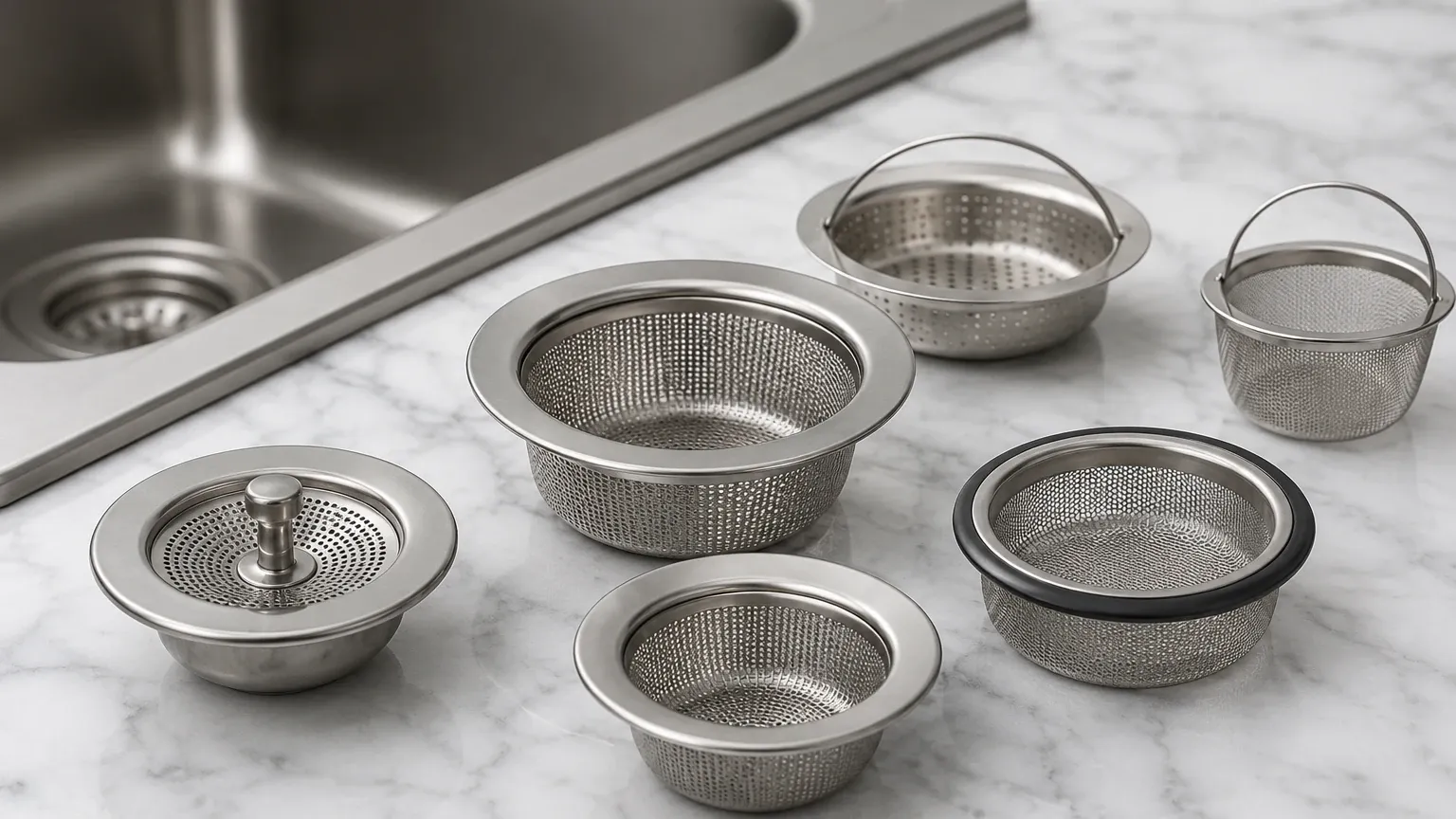
Consumer strainers found on retail platforms are often manufactured from thin-gauge stainless steel (typically 201 or 304 grade) with a thickness ranging from 0.5mm to 0.8mm. In contrast, industrial baskets and strainers are engineered using heavy-duty 304, 316, or 316L stainless steel, often with gauges exceeding 1.5mm to withstand high flow velocities and mechanical stress.
Structural Integrity
Industrial strainers must maintain their shape under pressure. While a domestic sink strainer only deals with gravity-fed drainage, industrial baskets may be integrated into pressurized systems or subjected to heavy sludge loads. Without reinforced rims, heavy-duty handles, and precision-welded seams, a standard retail strainer will likely buckle or fail, leading to downstream contamination or pump damage.
Engineering Considerations for Industrial Strainers & Baskets
For engineers, the selection process goes beyond simple dimensions. A professional filtration solution requires an analysis of several key technical factors that are rarely detailed in a standard retail listing.
1. Filtration Accuracy: Mesh vs. Perforation
Most products found via "sink strainers amazon" use a standard perforated pattern or a coarse mesh. In industrial applications, the level of filtration must be precisely matched to the process requirements.
* Perforated Plate: Ideal for coarse filtration and protecting pumps from large debris. Engineers must specify the hole diameter and the "open area" percentage to ensure the strainer does not create an excessive pressure drop.
* Wire Mesh: Used for finer filtration. Industrial wire mesh is categorized by mesh count (the number of openings per linear inch) and wire diameter. For high-precision needs, multi-layer sintered mesh may be required to provide both fine filtration and structural strength.
2. Flow Rate and Pressure Drop (Delta P)
Every strainer introduces a degree of resistance to the fluid flow. In industrial systems, an incorrectly sized strainer can cause a significant pressure drop, leading to cavitation in pumps or reduced throughput. Professional manufacturers provide flow coefficient (Cv) data and pressure drop curves, information that is almost never available for consumer-grade products.
3. Connection and Sealing
While a standard sink strainer relies on a simple flange or a rubber gasket designed for low-pressure PVC piping, industrial strainers may require specialized sealing surfaces. This includes machined flanges, O-ring grooves, or specific gasket materials like Viton, EPDM, or PTFE to ensure compatibility with aggressive chemicals or high temperatures.
Material Selection and Chemical Compatibility
One of the primary risks of relying on generic results for "sink strainers amazon" is the lack of certified material traceability. In industries like pharmaceutical manufacturing or food and beverage processing, material certification (MTR) is a non-negotiable requirement.
304 Stainless Steel
Suitable for general-purpose applications where corrosion resistance is needed but the environment is not overly aggressive. It is commonly used in water treatment and standard industrial drainage.
316 and 316L Stainless Steel
For environments involving chlorides (such as brine in food processing) or acidic chemicals, 316L is the industry standard. The addition of molybdenum provides superior pitting resistance. If the strainer requires extensive welding during customization, the low-carbon version (316L) is essential to prevent intergranular corrosion in the heat-affected zones.
Specialized Alloys
In extreme cases involving high-concentration acids or high-temperature steam, even 316L may be insufficient. Professional OEM manufacturers can provide strainers in Hastelloy, Monel, or Duplex stainless steel, materials that are virtually non-existent on consumer retail platforms.
The Risks of Retail Procurement in Industrial Settings
While the low price point of "sink strainers amazon" is attractive, the hidden costs of using non-industrial components can be substantial.
1. Premature Failure and Replacement Cycles
Consumer strainers are not designed for continuous 24/7 operation in harsh environments. Frequent replacements not only increase the cost of consumables but also lead to increased labor costs and potential downtime.
2. Contamination Risks
In food or pharmaceutical applications, a strainer that sheds metal slivers due to poor weld quality or develops rust due to inferior material grade can contaminate an entire production batch. The cost of a product recall far outweighs the savings gained from purchasing a retail-grade component.
3. Lack of Customization
Industrial sinks and tanks rarely follow standard residential dimensions. A common frustration with retail products is the "close enough" fit, which allows bypass—where fluid flows around the strainer rather than through it. Professional Strainers & Baskets are often custom-fabricated to the exact internal diameter and depth of the housing to ensure 100% filtration efficiency.
Evaluating Total Cost of Ownership (TCO)
When making a purchasing decision, engineering teams should look beyond the initial unit price. The Total Cost of Ownership for a filtration component includes:
* Initial Purchase Price: The cost of the unit.
* Installation Labor: The time required to fit and seal the component.
* Cleaning Efficiency: How easily the basket can be cleaned and returned to service. Industrial designs often feature "easy-clean" surfaces and handles designed for gloved hands.
* Durability: The expected lifespan of the component under operational stress.
* System Protection: The value of the downstream equipment (pumps, nozzles, heat exchangers) that the strainer is protecting.
By investing in a purpose-built industrial strainer, facilities often see a significant reduction in TCO over a 24-month period compared to the frequent replacement of retail-grade alternatives.
When to Move Beyond "Sink Strainers Amazon"
If your application involves any of the following, it is time to consult with an industrial filtration manufacturer rather than a retail platform:
1. High Temperature or Pressure: If the fluid exceeds 60°C or is under mechanical pressure.
2. Corrosive Chemicals: If the system handles cleaning agents, acids, or saline solutions.
3. Sanitary Requirements: If the application requires 3A, FDA, or high-polish finishes (e.g., Ra < 0.8 µm) to prevent bacterial growth.
4. Specific Micron Ratings: If you need to capture particles of a specific size (e.g., 50 microns) rather than just "large debris."
5. Custom Dimensions: If your equipment requires non-standard diameters, depths, or specialized mounting brackets.
Conclusion: Selecting a Reliable Filtration Partner
While "sink strainers amazon" may provide a quick fix for a breakroom sink, industrial processes demand a more rigorous approach to filtration. Selecting the right strainer or basket involves a deep understanding of fluid dynamics, material science, and the specific rigors of the application environment.
Working with a dedicated manufacturer like Kaifil allows engineers to access technical expertise that retail platforms cannot provide. From material selection and filtration accuracy to customized designs that fit unique equipment, a professional OEM partner ensures that your filtration components contribute to, rather than detract from, your facility's operational excellence. When the protection of multi-million dollar equipment and the quality of your end product are on the line, the transition from retail to industrial-grade Strainers & Baskets is a necessary step for any professional engineering team.
