


Strainer 150mm
In industrial fluid handling systems, the 150mm (DN150 or approximately 6-inch) strainer represents a critical threshold where flow volumes and mechanical stresses necessitate rigorous engineering. A strainer 150mm unit is typically deployed in large-scale piping systems to protect downstream equipment—such as pumps, flow meters, and heat exchangers—from particulate contamination. At this size, the selection of the correct housing design, internal basket configuration, and material grade becomes paramount to ensure system uptime and operational efficiency.
As a specialized manufacturer of stainless steel filtration solutions, Kaifil provides precision-engineered Strainers & Baskets designed to meet the demanding requirements of chemical processing, water treatment, and food production. Understanding the technical nuances of 150mm strainers is essential for engineers and procurement teams tasked with maintaining high-performance industrial circuits.
Technical Specifications and Design Variations
A strainer 150mm is not a singular product but a category defined by its nominal pipe size. The design chosen depends heavily on the installation footprint, the nature of the fluid, and the required maintenance frequency.
Y-Strainers (DN150)
Y-strainers are the most common choice for 150mm lines where the amount of debris is relatively low. Their compact, slanted design allows for installation in both horizontal and vertical pipelines. However, in a 150mm configuration, the "leg" of the Y-strainer can become quite heavy, requiring careful consideration of support structures and clearance for screen removal.
Basket Strainers (Simplex and Duplex)
For systems requiring higher dirt-holding capacity, basket strainers are the industry standard. A 150mm basket strainer features a vertical cylinder that houses a large-area basket.
* Simplex Strainers: Suitable for batch processes where the flow can be interrupted to clean the basket.
* Duplex Strainers: Essential for continuous 24/7 operations. These units consist of two 150mm strainer chambers connected by a diversion valve, allowing one side to be cleaned while the other remains in service.
T-Strainers and Fabricated Designs
In space-constrained environments or custom OEM applications, T-type strainers offer a right-angle or straight-through flow path. These are often fabricated from stainless steel pipes and flanges, allowing for greater customization of the inlet/outlet heights compared to cast units.
Material Selection for Industrial Durability
At the 150mm scale, the structural integrity of the strainer body and the internal mesh is tested by high flow velocities and potential pressure surges. Material selection must account for both chemical compatibility and mechanical wear.
Stainless Steel 304 vs. 316L
While 304 stainless steel is sufficient for many water treatment applications, 316L is the preferred choice for chemical processing and pharmaceutical environments. The addition of molybdenum in 316L provides superior resistance to pitting and crevice corrosion, particularly in chloride-rich environments. For high-purity applications, such as food and beverage, Kaifil offers electropolished finishes to ensure surfaces are smooth and easy to sanitize.
Reinforced Mesh Baskets
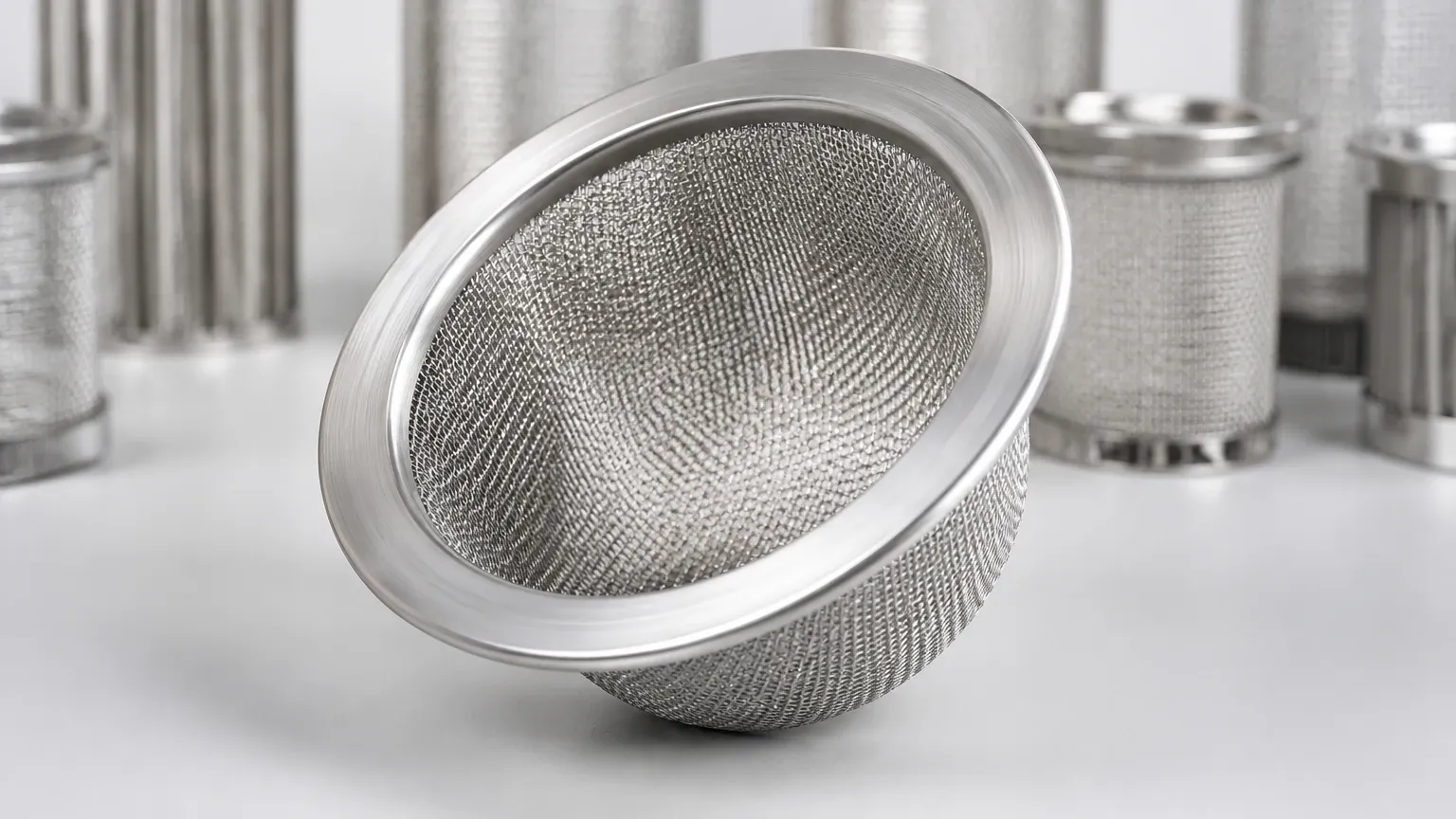
A 150mm basket faces significant differential pressure when it begins to clog. Standard wire mesh may collapse under these forces. High-quality Strainers & Baskets utilize a multi-layer construction: a fine inner stainless steel mesh for filtration accuracy, supported by a heavy-duty perforated metal outer cage. This design ensures the basket maintains its shape even during high-pressure cleaning cycles or unexpected debris surges.
Engineering Considerations: Flow and Pressure Drop
One of the most common mistakes in sizing a strainer 150mm is focusing solely on the pipe diameter rather than the fluid dynamics. The "clean pressure drop" is a vital metric for any engineering team.
The Cv Factor
The Flow Coefficient (Cv) represents the volume of water (in GPM) that will flow through the strainer with a 1 psi pressure drop. A well-designed 150mm strainer should maximize the open area ratio—the ratio of the total open area of the mesh to the cross-sectional area of the inlet pipe. Ideally, this ratio should be at least 6:1 or 8:1 to minimize frequency of cleaning and energy loss at the pump.
Viscosity Impacts
If the fluid is more viscous than water (e.g., heavy oils or syrups), the pressure drop across a 150mm strainer increases exponentially. In these cases, engineers must often upsize the strainer body or select a coarser mesh to prevent cavitation in downstream pumps.
Customization and OEM Capabilities
Standard off-the-shelf strainers often fail to meet the specific spatial or performance requirements of complex industrial skids. Customization is where technical expertise adds the most value.
Specialized Connection Types
While standard 150mm strainers often come with ANSI or DIN flanges, custom units can be manufactured with specialized connections, such as Tri-Clamp for sanitary applications or Victaulic grooves for rapid assembly in mining and construction sectors.
Monitoring and Instrumentation
To move from reactive to predictive maintenance, a strainer 150mm can be fitted with differential pressure (DP) ports. By installing a DP gauge or transmitter across the inlet and outlet, operators receive real-time alerts when the basket reaches its maximum debris capacity. This prevents "breakthrough," where high pressure forces contaminants through the mesh or damages the basket structure.
Lifting and Ergonomics
A stainless steel basket for a 150mm strainer can be heavy when filled with wet debris or sludge. Engineering considerations should include the addition of heavy-duty handles, lifting lugs, or even davit arms on the housing cover to ensure that maintenance staff can safely remove and clean the components without risking injury or equipment damage.
Maintenance and Operational Life Cycle
The longevity of a strainer 150mm depends on a disciplined maintenance regimen. Because these units handle significant volumes, a failure in the filtration element can lead to catastrophic downstream damage.
1. Regular Inspection: Gaskets and O-rings should be inspected every time the strainer is opened. For 150mm units, EPDM, Viton, or PTFE seals are chosen based on temperature and chemical exposure.
2. Cleaning Protocols: Stainless steel baskets should be cleaned using methods that do not compromise the wire mesh. High-pressure water or ultrasonic cleaning is effective, while abrasive wire brushes should be avoided as they can create burrs or damage the precision weave of the mesh.
3. Replacement Cycles: Even the most durable stainless steel baskets have a fatigue life. If a 150mm strainer is subjected to frequent pressure cycling or water hammer, the mesh should be inspected for signs of work hardening or wire breakage.
Common Risks in Large-Diameter Filtration
When specifying a strainer 150mm, engineers must be aware of several common pitfalls:
* Undersizing the Mesh: Selecting a mesh that is too fine for the application will lead to rapid clogging and excessive downtime. It is often better to use a two-stage filtration approach—a coarse 150mm strainer followed by a finer cartridge filter—rather than attempting to achieve high-precision filtration in a single large basket.
* Ignoring Material Compatibility: Using carbon steel strainers in systems with corrosive fluids to save on initial costs often leads to higher total cost of ownership due to rust contamination and housing failure.
* Inadequate Bypass Planning: In critical systems, failing to install a bypass line or a duplex strainer 150mm means the entire process must stop for a simple cleaning task, leading to significant production losses.
Conclusion: Selecting the Right Solution
A strainer 150mm is a cornerstone of industrial fluid management. Whether it is a Y-strainer protecting a cooling tower or a custom-fabricated duplex basket strainer in a chemical plant, the quality of the internal components determines the reliability of the entire system.
By focusing on high-grade stainless steel construction, optimized flow dynamics, and reinforced basket designs, Kaifil ensures that every Strainers & Baskets solution provides the durability required for heavy-duty service. When selecting a 150mm unit, engineers should prioritize manufacturers who offer technical transparency regarding pressure drop data, material certifications, and customization options to ensure the product aligns perfectly with the application's operational parameters.
