


Strainer 2.5 Inch
In industrial fluid handling, the selection of filtration components is a critical engineering decision that impacts the longevity of downstream equipment, the purity of the end product, and the overall efficiency of the system. A strainer 2.5 inch (DN65) is a standard size utilized across diverse sectors, including chemical processing, food and beverage production, and pharmaceutical manufacturing. These components serve as the primary line of defense against particulate contamination, ensuring that pumps, valves, and heat exchangers remain free from debris that could cause mechanical failure or process interruptions.
Selecting the appropriate Strainers & Baskets requires a deep understanding of fluid dynamics, material compatibility, and the specific requirements of the application. This guide provides a technical overview of the engineering considerations, performance metrics, and maintenance protocols associated with 2.5-inch industrial strainers.
The Role of 2.5-Inch Strainers in Industrial Piping Systems
A strainer 2.5 inch is typically integrated into piping systems where flow rates are moderate to high, but where space or weight constraints may preclude larger 3-inch or 4-inch assemblies. The 2.5-inch nominal pipe size (NPS) is frequently found in secondary process lines, CIP (Clean-in-Place) systems, and specialized chemical dosing units.
The primary function of these strainers is the mechanical removal of solids from a flowing liquid or gas. By utilizing a perforated metal or woven wire mesh element, the strainer traps particles larger than the specified opening size. This protection is vital for high-precision components such as spray nozzles, which can become clogged by even minor amounts of particulate matter, or centrifugal pumps, where larger debris can damage impellers and seals.
Technical Comparison: Y-Strainers vs. Basket Strainers for 2.5-Inch Lines
When specifying a strainer 2.5 inch, engineers must choose between different configurations based on the system's operational parameters. The two most common designs are the Y-strainer and the basket (or Simplex) strainer.
Y-Strainers
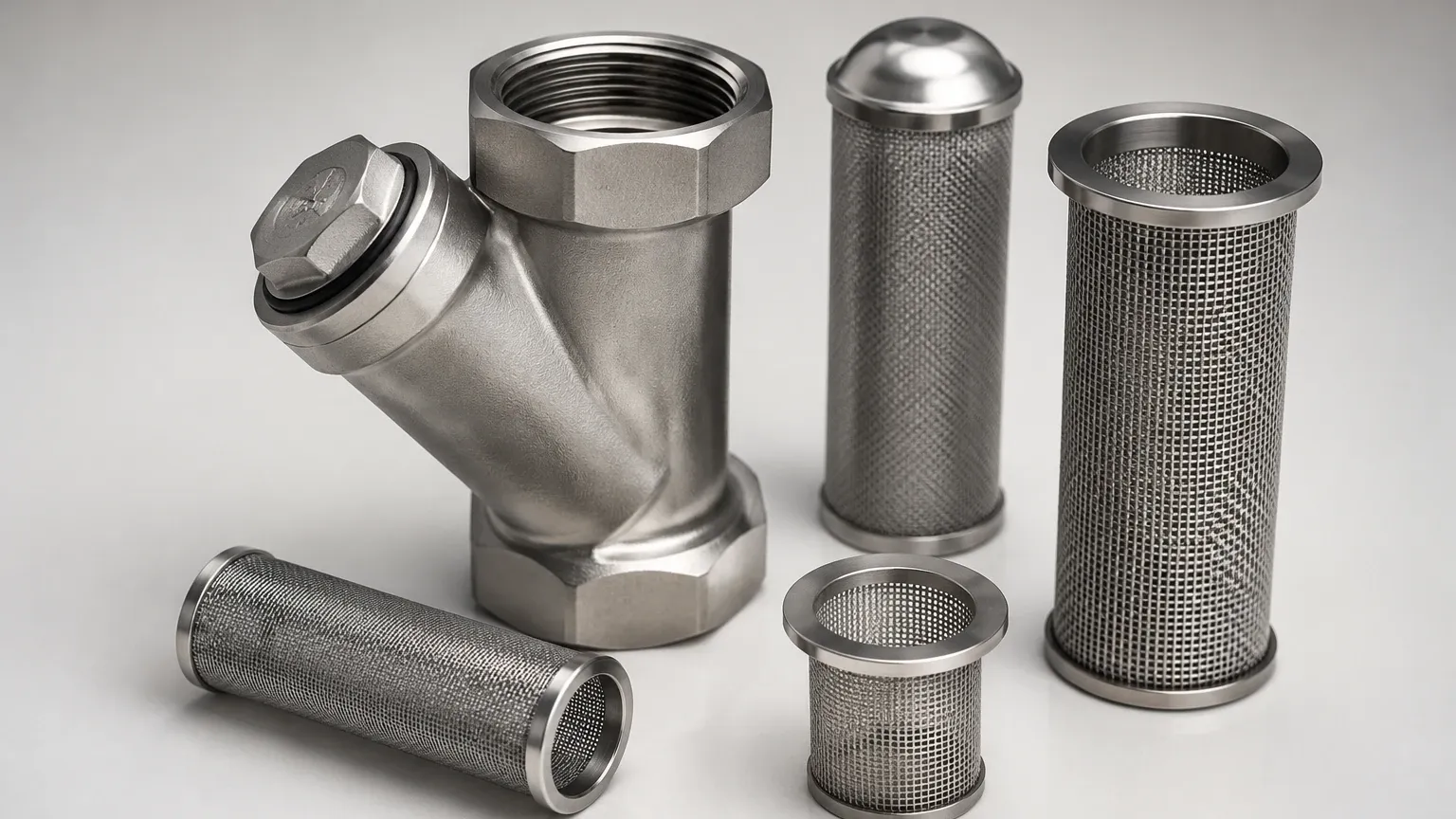
Y-strainers are characterized by their compact, cylindrical shape and are often the preferred choice for high-pressure steam, gas, or liquid applications. In a 2.5-inch configuration, Y-strainers offer a lower initial cost and a smaller footprint. However, they typically have a smaller dirt-holding capacity compared to basket designs. They are best suited for applications where the amount of debris is minimal, or where the process can be easily shut down for cleaning.
Basket Strainers
For applications requiring higher flow rates and a larger capacity for solids retention, basket-style Strainers & Baskets are the industry standard. A 2.5-inch basket strainer features a vertically oriented chamber that houses a removable basket. This design provides a significantly larger surface area than a Y-strainer of the same size, resulting in a lower pressure drop and longer intervals between cleaning cycles. Basket strainers are particularly effective in liquid systems where heavy particulate loading is expected.
Material Selection and Engineering Standards
The material of construction for a strainer 2.5 inch is dictated by the chemical properties of the fluid, the operating temperature, and the required pressure rating. Stainless steel is the predominant choice for high-performance industrial filtration due to its superior corrosion resistance and mechanical strength.
1. Stainless Steel 304: This is the most common grade used for general-purpose industrial applications. It offers excellent resistance to atmospheric corrosion and is suitable for most water treatment and food-grade applications.
2. Stainless Steel 316/316L: For more aggressive environments, such as those involving chlorides, acids, or high-salinity fluids, SS 316 is preferred. The addition of molybdenum enhances its resistance to pitting and crevice corrosion, making it the standard for the chemical and pharmaceutical industries.
3. Specialty Alloys: In extreme cases involving highly corrosive chemicals or cryogenic temperatures, alloys such as Monel, Hastelloy, or Duplex stainless steel may be required to ensure the structural integrity of the strainer housing and the internal mesh.
Beyond the housing, the selection of gasket and seal materials (such as EPDM, Viton, or PTFE) must be verified against the fluid's chemical compatibility to prevent leaks and process contamination.
Key Performance Metrics: Pressure Drop and Flow Capacity
One of the most critical factors in sizing a strainer 2.5 inch is the "Clean Pressure Drop" (Delta P). Every filtration component introduces a degree of resistance to the flow. Engineers must calculate the allowable pressure drop to ensure that the system's pump can maintain the required flow rate even as the strainer begins to collect debris.
The flow coefficient (Cv) of a 2.5-inch strainer indicates the volume of water (in GPM) that will flow through the strainer with a pressure drop of 1 psi. A higher Cv value generally indicates a more efficient design with less resistance. Factors influencing the pressure drop include:
* Viscosity of the Fluid: Higher viscosity liquids (like oils or syrups) result in a higher pressure drop across the mesh.
* Mesh Open Area: The ratio of the open area of the mesh to the total area. A finer mesh (smaller openings) will naturally create more resistance than a coarse mesh.
* Velocity: As the flow velocity through the 2.5-inch pipe increases, the pressure drop increases exponentially.
It is standard engineering practice to size a strainer so that the initial pressure drop does not exceed 2 psi when the basket is clean. This provides sufficient headroom for the strainer to accumulate particulates before reaching the maximum allowable pressure drop (typically 5-10 psi), at which point cleaning is required.
Selecting the Correct Mesh and Micron Rating
The effectiveness of a strainer 2.5 inch is defined by its internal filtration element. This element is usually a combination of a perforated metal support and a fine woven wire mesh. The choice of mesh size depends on the size of the smallest particle that needs to be removed.
* Coarse Filtration: Perforated baskets with 1/16" to 1/4" holes are used for removing large debris like scale, welding slag, or stones.
* Fine Filtration: Woven wire mesh liners can achieve much finer filtration, measured in microns (µm). For example, a 100-mesh screen will trap particles larger than approximately 150 microns.
When specifying the mesh for Strainers & Baskets, it is important not to "over-filter." Selecting a mesh that is significantly finer than necessary will lead to rapid clogging and excessive maintenance without providing additional protection to the system. The general rule is to select a mesh size that is slightly smaller than the smallest orifice or clearance in the downstream equipment.
Maintenance Protocols and Operational Longevity
The total cost of ownership for a strainer 2.5 inch is heavily influenced by its maintenance requirements. Unlike disposable filters, industrial strainers are designed to be cleaned and reused, making them a cost-effective long-term solution.
Cleaning Cycles
Maintenance frequency is determined by monitoring the differential pressure across the strainer. Installing pressure gauges on both the inlet and outlet sides of the 2.5-inch line allows operators to see exactly when the basket is becoming restricted. Automated systems may include a differential pressure switch that triggers an alarm or initiates a backwash cycle.
Safe Removal and Cleaning
For a 2.5-inch basket strainer, the process involves depressurizing the line, opening the top cover (often secured by swing bolts for quick access), and removing the basket. The basket should be cleaned using a soft brush or high-pressure air/water, taking care not to damage the delicate wire mesh. If the mesh is torn or the basket is deformed, it must be replaced immediately to prevent bypass, where unfiltered fluid escapes around the edges of the element.
Customization and OEM Solutions for Specialized Applications
Standard off-the-shelf strainers may not meet the rigorous demands of every industrial process. Customization is often required to address specific engineering challenges. For a strainer 2.5 inch, customization options may include:
* Custom Flange Configurations: While ANSI flanges are standard, some systems may require DIN, JIS, or sanitary tri-clamp connections to match existing piping.
* Reinforced Baskets: For high-pressure differential applications, the internal basket can be reinforced with heavy-duty perforated plate to prevent collapsing.
* Magnetic Inserts: In metalworking or hydraulic applications, magnetic rods can be added to the basket to capture fine ferrous particles that might otherwise pass through the mesh.
* Heating Jackets: For fluids that solidify at room temperature (like bitumen or certain food products), a steam or hot water jacket can be integrated into the strainer housing to maintain fluid temperature.
By working with a manufacturer that specializes in custom stainless steel filtration, engineers can ensure that their 2.5-inch strainer is optimized for the specific chemical, thermal, and mechanical stresses of their application. Reliable manufacturing focuses on precision tolerances and high-quality welding, ensuring that the filtration component performs consistently throughout its service life.
In conclusion, the strainer 2.5 inch is a versatile and essential component in industrial fluid systems. By carefully evaluating material compatibility, pressure drop requirements, and filtration accuracy, purchasing teams and engineers can select a solution that protects critical infrastructure and maintains process integrity. Whether implementing a standard Y-strainer or a custom-engineered basket assembly, the focus should remain on durability, ease of maintenance, and technical compliance with industry standards.
