


Strainer 5 Inch
In industrial fluid handling, the selection of filtration components is a critical engineering decision that impacts the longevity of downstream equipment and the purity of the final product. A strainer 5 inch assembly is a standard yet pivotal component in piping systems that require a balance between high flow capacity and effective particulate removal. These units are typically installed in 5-inch nominal pipe size (NPS) lines to protect pumps, meters, control valves, and heat exchangers from damage caused by scale, weld beads, or other foreign debris.
Selecting the correct Strainers & Baskets involves more than just matching the pipe diameter. Engineers must evaluate the housing design, the internal element's filtration surface area, material compatibility, and the specific hydraulic demands of the application. As a specialized manufacturer, Kaifil provides customized stainless steel filtration solutions designed to meet the rigorous standards of the chemical, pharmaceutical, and food and beverage industries.
Understanding the Role of a 5-Inch Strainer in Industrial Systems
A 5-inch strainer serves as a primary line of defense in medium-to-heavy industrial processes. At this pipe size, flow rates can be substantial, often ranging from 200 to 600 gallons per minute (GPM) depending on the fluid velocity and viscosity. The primary function of the strainer 5 inch unit is to mechanically remove solids from the liquid or gas stream via a perforated plate or wire mesh screen.
In industrial environments, these strainers are ubiquitous in cooling water systems, fuel oil lines, and chemical processing plants. Because a 5-inch line represents a significant investment in infrastructure, the strainer must be robust enough to withstand the system's operating pressure and temperature while offering a low enough pressure drop to maintain process efficiency. The choice between a temporary "start-up" strainer and a permanent housing depends on whether the debris is a one-time occurrence (like construction debris) or a constant byproduct of the process.
Design Configurations: Comparing Strainers & Baskets for 5-Inch Lines
When specifying a strainer 5 inch component, engineers generally choose between two primary configurations: Y-strainers and basket (Simplex or Duplex) strainers. Each has distinct advantages based on the installation environment and maintenance requirements.
Y-Strainers
As the name suggests, Y-strainers feature a "Y" shaped body. They are most effective in high-pressure applications where the amount of debris to be removed is relatively small. In a 5-inch configuration, Y-strainers are often preferred for steam or gas lines because their compact design can handle higher pressures more economically than basket types. They can be installed horizontally or vertically (downward flow), providing flexibility in tight mechanical rooms.
Basket Strainers
For liquid applications with heavier debris loading, basket-style Strainers & Baskets are the industry standard. The 5-inch basket strainer features a larger internal chamber, allowing for a greater dirt-holding capacity. This results in longer intervals between cleaning cycles. Furthermore, the basket is usually accessed from the top, making it easier for maintenance teams to remove and clean without draining the entire piping section. For processes that cannot be shut down for cleaning, a Duplex strainer—which consists of two 5-inch basket strainers connected by a diverting valve—is required to ensure continuous flow.
Material Selection for Durability and Compliance
The material of construction for a strainer 5 inch unit is perhaps the most critical factor in ensuring long-term reliability. Industrial environments often involve corrosive fluids, high temperatures, or strict sanitary requirements.
1. Stainless Steel 304: This is the standard choice for general industrial applications. It offers excellent strength and good corrosion resistance for water, oils, and mild chemicals. It is a cost-effective solution for many 5-inch piping systems.
2. Stainless Steel 316/316L: For more aggressive environments, such as those found in chemical processing or marine applications, 316 stainless steel is preferred due to its molybdenum content, which provides superior resistance to pitting and chloride corrosion. In the pharmaceutical and food industries, 316L (low carbon) is used to prevent sensitization during welding and to meet FDA compliance standards.
3. Specialty Alloys: In highly specialized cases involving extreme acids or high-temperature oxidation, alloys like Hastelloy or Monel may be used for the internal mesh or the entire housing.
At Kaifil, the focus on precision manufacturing ensures that the stainless steel used in every strainer 5 inch component is of the highest grade, with full traceability to meet industry-specific certifications.
Hydraulic Performance and Pressure Drop Considerations
One of the most common mistakes in filter selection is ignoring the "clean pressure drop." Every strainer 5 inch unit introduces a restriction in the flow path. Engineers must calculate the pressure drop ($ΔP$) to ensure the system pump has sufficient head to overcome the resistance.
The pressure drop is influenced by:
* The Viscosity of the Fluid: Thicker fluids like heavy oils require larger perforation sizes or larger housings to maintain flow.
* The Mesh or Perforation Size: A finer mesh (higher micron rating) increases resistance. For a 5-inch line, it is essential to balance the need for fine filtration with the risk of rapid clogging.
* The Open Area Ratio (OAR): This is the ratio of the total open area of the strainer screen to the internal cross-sectional area of the 5-inch pipe. A high-quality industrial strainer should have an OAR of at least 6:1. This ensures that even as the strainer begins to collect debris, the pressure drop does not spike immediately.
By analyzing the Flow Coefficient (Cv), which indicates the GPM of water that will pass through the strainer with a 1 PSI pressure drop, engineers can accurately size their 5-inch filtration units for optimal performance.
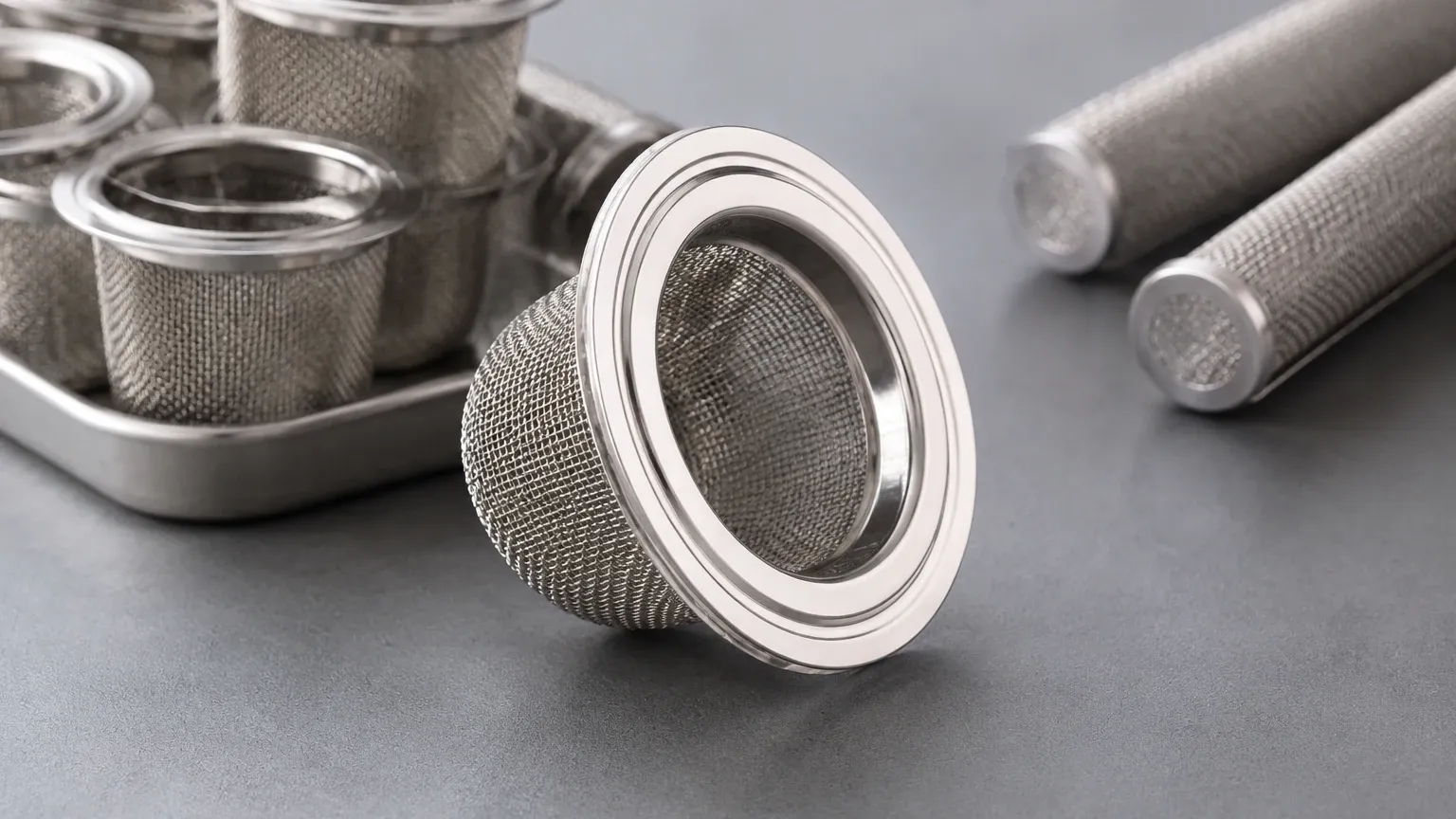
Customization Options for a Strainer 5 Inch Assembly
Off-the-shelf solutions often fail to meet the specific nuances of a complex industrial process. Customization is where manufacturers like Kaifil provide the most value. When ordering a strainer 5 inch, several parameters can be tailored:
* End Connections: While flanged connections (ANSI, DIN, or JIS) are standard for 5-inch lines, custom requirements might include NPT threaded ends, socket weld, or sanitary tri-clamp fittings for the food and beverage sector.
* Filtration Media: The internal element can be a simple perforated plate (ranging from 1/32" to 1/2" holes) or a multi-layered wire mesh for finer filtration down to 5 microns. Reinforcing the mesh with a heavier perforated metal backup is common for high-pressure differential applications to prevent the screen from collapsing.
* Magnetic Inserts: For systems where fine iron or steel particles are present (such as in hydraulic systems or lubricating oil lines), magnetic rods can be added to the basket to capture sub-micron metallic debris that might pass through the mesh.
* Special Coatings: In some instances, the stainless steel housing may be electropolished to reduce surface roughness, which is critical in preventing bacterial growth in pharmaceutical applications.
Installation and Maintenance Best Practices
To ensure the longevity of a strainer 5 inch installation, proper orientation and maintenance protocols are mandatory.
Installation Orientation
For horizontal pipelines, the "leg" of a Y-strainer or the bowl of a basket strainer must point downward. This allows gravity to assist in trapping the debris in the collection area. In vertical lines, flow must be downward so that the debris is captured by the screen and does not fall back into the upstream pipe when the flow stops.
Monitoring and Cleaning
Engineers should always install differential pressure gauges across the strainer. A significant increase in $ΔP$ indicates that the basket is full and requires cleaning. For a 5-inch line, a typical cleaning threshold is reached when the pressure drop increases by 5-10 PSI over the clean state.
During maintenance, the use of "blow-down" valves on Y-strainers can allow for some cleaning without opening the unit. However, for a thorough cleaning of a basket strainer 5 inch, the system must be depressurized, the cover removed, and the basket rinsed. Using a high-pressure water jet or ultrasonic cleaning is recommended for fine wire mesh elements to ensure all trapped particles are removed from the weave.
Total Cost of Ownership and Selection Criteria
When evaluating the cost of a strainer 5 inch, the initial purchase price is only one component. Technical professionals must consider the Total Cost of Ownership (TCO), which includes:
* Maintenance Labor: How quickly can the basket be changed? Quick-opening covers (like swing-bolt designs) can save hours of labor compared to standard bolted covers.
* Replacement Cycles: A high-quality stainless steel basket from a reliable manufacturer will last significantly longer than a low-grade alternative that may suffer from fatigue or corrosion.
* Energy Costs: A poorly designed strainer with a high pressure drop forces the system pump to work harder, leading to increased electricity consumption over the life of the plant.
* Downstream Protection: The cost of a 5-inch strainer is negligible compared to the cost of repairing a high-speed centrifugal pump or replacing a damaged control valve seat.
Procurement Checklist: What Engineers Must Confirm
Before finalizing a purchase for Strainers & Baskets, the following data points should be confirmed with the manufacturer:
1. Operating Pressure and Temperature: Ensure the housing and gaskets (EPDM, PTFE, or Viton) are rated for the maximum system conditions.
2. Micron/Mesh Requirement: Determine the largest particle size that the downstream equipment can safely tolerate.
3. Flow Rate (Minimum, Normal, Maximum): This determines if a 5-inch size is sufficient or if a larger housing with 5-inch reducers is needed to lower the velocity.
4. Fluid Properties: Confirm the specific gravity and viscosity, as these heavily influence the pressure drop.
5. Space Constraints: Verify the face-to-face dimensions and the clearance required to remove the basket for cleaning.
By focusing on these technical details, engineering and purchasing teams can ensure they select a strainer 5 inch solution that provides reliable, long-term performance. Kaifil’s expertise in custom stainless steel filtration ensures that every component is engineered for the specific demands of the application, providing peace of mind and process stability in the most challenging industrial environments.
