


Strainer 5
In industrial fluid handling, the selection of filtration components is dictated by the intersection of flow volume, pressure requirements, and the specific nature of the media being processed. The term "strainer 5" typically refers to a 5-inch nominal pipe size (NPS) filtration unit, a critical component in mid-to-large scale industrial piping systems. These units serve as the primary line of defense for downstream equipment, such as centrifugal pumps, flow meters, and heat exchangers, by removing coarse particles and debris that could cause mechanical failure or process contamination.
For engineers and procurement professionals, a 5-inch strainer represents a significant investment in system integrity. Choosing the correct configuration—whether it be a basket, Y-type, or a custom-fabricated duplex system—requires a deep understanding of the hydraulic dynamics and material science involved. As a specialized manufacturer of stainless steel filtration solutions, Kaifil provides the engineering expertise necessary to navigate these technical requirements, ensuring that every Strainers & Baskets installation meets the rigorous demands of modern industrial environments.
Understanding the Strainer 5 Specification in Industrial Systems
A 5-inch strainer is designed to integrate into piping systems where flow rates are substantial, often ranging from 300 to 800 gallons per minute (GPM) depending on the allowable pressure drop and fluid viscosity. At this scale, the physical forces exerted on the strainer body and the internal element are significant. Unlike smaller 1-inch or 2-inch units, a strainer 5 must account for higher structural stresses and the potential for water hammer or surge pressures.
The nominal 5-inch diameter refers to the inlet and outlet connection sizes. In most industrial applications, these are flanged connections following ANSI, DIN, or JIS standards. The internal volume of a 5-inch basket strainer is considerably larger than its Y-type counterpart, providing a greater holding capacity for solids. This is a vital consideration in applications like raw water intake or chemical processing where the particulate load may be high, and frequent downtime for cleaning is not permissible.
Material Selection for 5-Inch Filtration Components
Material integrity is the cornerstone of effective industrial filtration. For a strainer 5, the choice of housing and element material determines the unit’s lifespan and its resistance to corrosion, erosion, and thermal cycling. Kaifil specializes in the fabrication of high-grade stainless steel components, primarily focusing on SS304 and SS316L.
Stainless Steel 304 vs. 316L
Stainless Steel 304 is the standard for many industrial water and hydraulic applications due to its excellent mechanical properties and cost-effectiveness. However, in environments involving chlorides, acids, or high-temperature chemical reactions, SS316L is the preferred choice. The addition of molybdenum in SS316L provides superior resistance to pitting and crevice corrosion, which is essential for the longevity of a 5-inch strainer used in marine or pharmaceutical environments.
Specialized Alloys and Coatings
In extreme cases, such as highly corrosive chemical processing or high-temperature steam service, even standard stainless steels may require additional treatment. Passivation is a standard procedure at Kaifil to ensure the removal of exogenous iron from the surface, enhancing the natural chromium oxide protective layer. For specialized OEM requirements, we also evaluate the use of Duplex stainless steels, which offer higher yield strength and even greater corrosion resistance for the most demanding 5-inch strainer applications.
Basket vs. Y-Strainer Configurations for 5-Inch Lines
The geometry of the strainer housing significantly impacts the system's hydraulic efficiency. When specifying a strainer 5, engineers must choose between the Y-pattern and the Basket (Simplex or Duplex) pattern.
The Y-Strainer
Y-strainers are characterized by their compact, angular design. They are typically used in high-pressure steam or gas lines where the amount of debris is minimal. In a 5-inch line, a Y-strainer is often chosen for its space-saving profile and its ability to be installed in both horizontal and vertical orientations. However, the debris-holding capacity of a Y-type strainer 5 is lower than that of a basket type, and the pressure drop increases more rapidly as the screen becomes clogged.
The Basket Strainer
Basket strainers are the workhorse of liquid filtration. A 5-inch basket strainer features a vertical chamber that houses a removable basket. This design allows for a much larger "open area ratio" (OAR)—the ratio of the total open area of the mesh to the cross-sectional area of the inlet pipe. A high OAR ensures a lower initial pressure drop and longer intervals between cleanings. For continuous processes where flow cannot be interrupted, a 5-inch Duplex basket strainer is used, allowing one side to be cleaned while the other remains in operation.
Engineering the Flow: Pressure Drop and Efficiency
One of the most critical metrics in selecting a strainer 5 is the clean pressure drop ($ΔP$). Every component in a piping system introduces resistance, and an oversized or poorly designed strainer can lead to pump cavitation or reduced system efficiency.
The flow coefficient ($C_v$) is the standard measure used to calculate the pressure drop across a strainer. For a 5-inch unit, the $C_v$ value will vary based on the internal basket design and the mesh size. A coarse 1/8-inch perforated basket will have a much higher $C_v$ (and thus a lower pressure drop) than a fine 100-mesh lined basket.
Engineers must also consider the "clogged pressure drop." It is a common industry standard to design systems based on a strainer being 50% clogged. If the pressure drop exceeds the system's allowable limits at this stage, it may be necessary to upsize the strainer or select a high-capacity basket design. Kaifil’s engineering team assists in these calculations to ensure that the Strainers & Baskets selected are perfectly matched to the system's hydraulic profile.
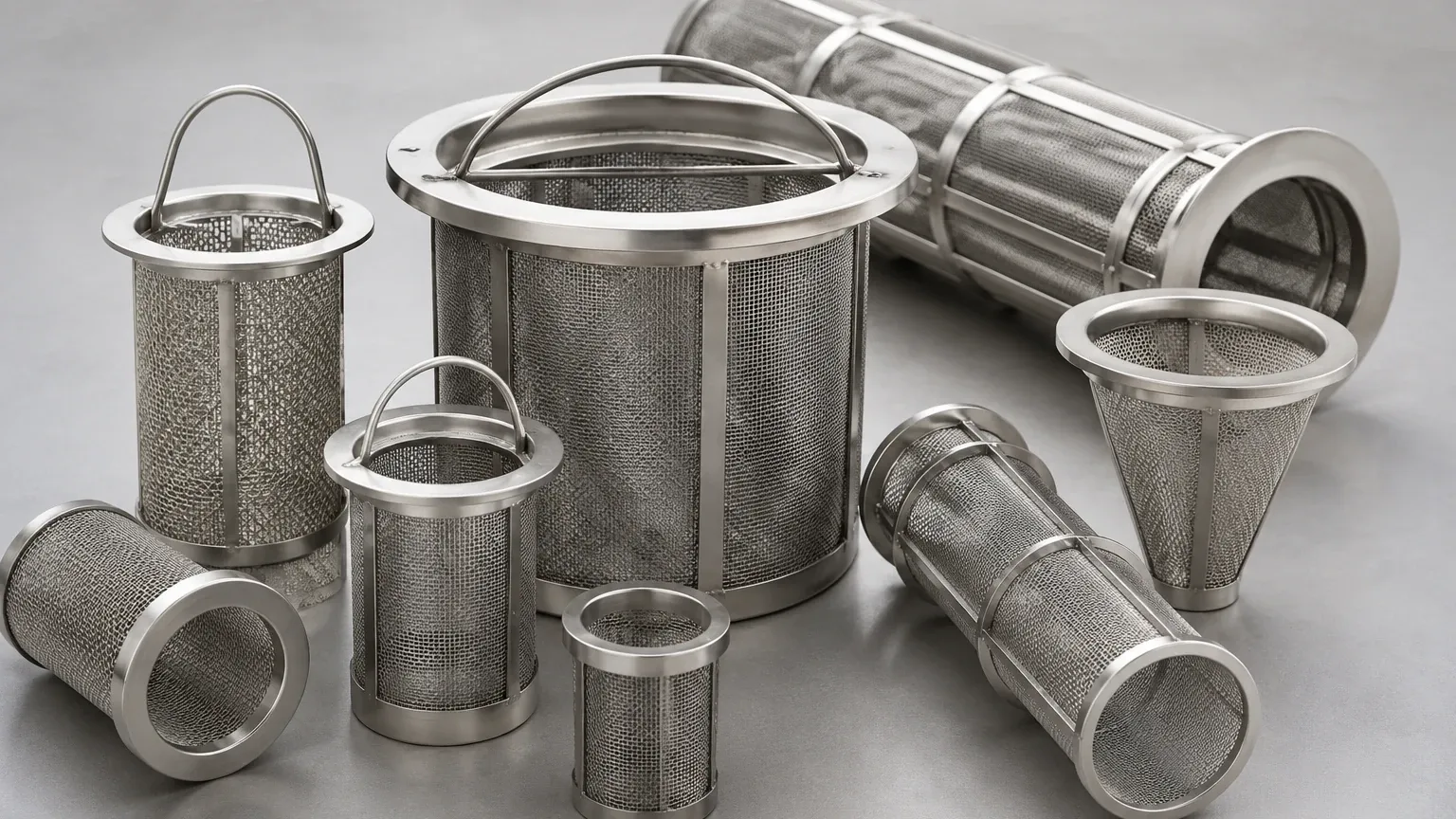
Customization and OEM Solutions for Large-Scale Strainers
Off-the-shelf filtration products often fail to meet the specific nuances of specialized industrial processes. This is where Kaifil’s OEM and customization capabilities become essential. For a 5-inch strainer, customization can involve several technical layers:
1. Mesh and Perforation Combinations: We can manufacture multi-layered baskets that combine a heavy-duty perforated metal support with a fine wire mesh liner. This provides the structural strength needed to withstand high differential pressures while achieving filtration accuracy down to the micron level.
2. Housing Modifications: Standard 5-inch strainers may not fit into existing piping layouts. We offer customized face-to-face dimensions, specialized nozzle orientations, and additional ports for differential pressure gauges or vent valves.
3. Sanitary Requirements: For the food, beverage, and pharmaceutical industries, a strainer 5 must meet strict sanitary standards. This includes internal surface finishes (Ra < 0.8 μm), electropolishing, and the use of FDA-approved gaskets (EPDM, PTFE, or Viton).
4. Reinforced Baskets: In applications involving high-viscosity fluids or high-velocity flows, standard baskets may collapse. Kaifil designs reinforced baskets with internal ribs or external shrouds to ensure structural integrity under extreme loads.
Maintenance Protocols and Operational Longevity
The total cost of ownership for a strainer 5 is heavily influenced by its maintenance requirements. A well-maintained strainer can last for decades, whereas a neglected one can become a point of failure for the entire plant.
Differential Pressure Monitoring
The most effective way to manage a 5-inch strainer is through differential pressure ($ΔP$) monitoring. By installing gauges on the inlet and outlet, operators can see exactly when the basket is reaching its capacity. It is generally recommended to clean or replace the basket when the $ΔP$ reaches 5-10 psi above the clean pressure drop.
Cleaning Procedures
Stainless steel baskets are designed for reuse. For a strainer 5, cleaning often involves removing the basket and using high-pressure water or ultrasonic cleaning to dislodge trapped particles. In the chemical industry, chemical soaking may be required to remove scale or organic buildup. It is vital to inspect the basket for any signs of wire mesh fatigue or bypass during every cleaning cycle.
Gasket and Seal Replacement
The integrity of the strainer cover seal is paramount, especially in pressurized systems. During every maintenance interval, the gaskets should be inspected for compression set or chemical degradation. Using the correct gasket material for the specific fluid handled—whether it be oil, steam, or aggressive chemicals—prevents leaks and ensures safety.
Key Considerations for Procurement and Integration
When preparing to purchase a strainer 5, engineers should confirm several key technical parameters to ensure the product is fit for purpose:
* Design Pressure and Temperature: Ensure the housing and seals are rated for the maximum possible excursions in the system.
* Filtration Grade: Define the particle size that must be removed. Over-filtering (using a mesh that is too fine) leads to excessive maintenance, while under-filtering risks downstream damage.
* Corrosion Allowance: In carbon steel systems, a corrosion allowance is often required. In stainless steel systems, focus on the specific alloy grade (e.g., 316L for saltwater).
* Compliance Standards: Does the unit need to meet ASME Section VIII, PED, or specific sanitary standards like 3-A or EHEDG?
By addressing these factors, purchasing teams can avoid the common pitfalls of industrial filtration procurement. Kaifil’s commitment to quality and technical precision ensures that every 5-inch strainer we produce provides reliable, long-term performance in the most demanding environments. For those seeking high-performance filtration components, we invite you to Review product options and application support to find the ideal solution for your specific industrial needs.
