


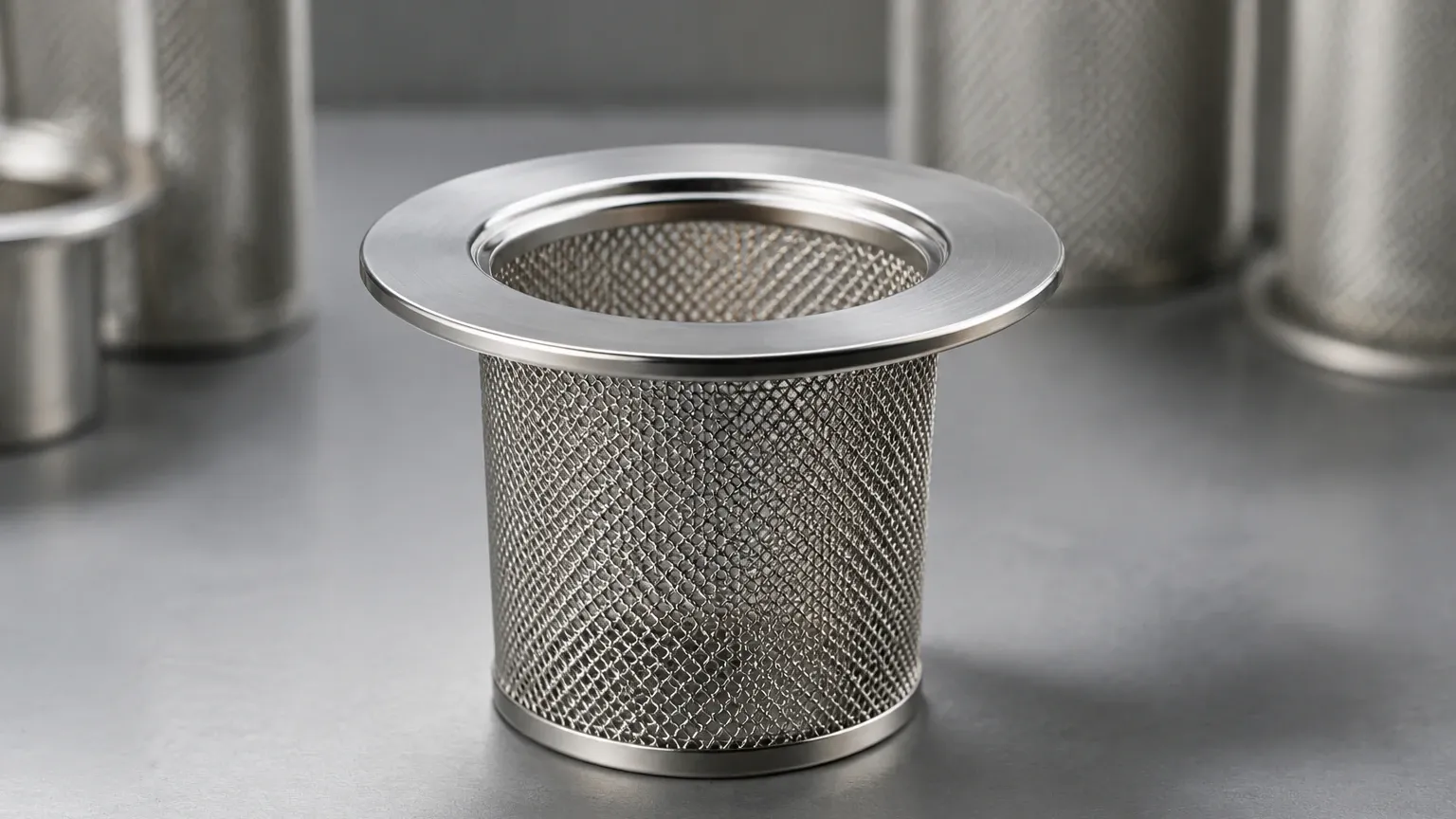
Strainer 75mm
In industrial fluid handling, the selection of filtration components is a critical engineering decision that impacts the longevity of downstream equipment, such as pumps, flow meters, and control valves. A strainer 75mm (often corresponding to DN80 or 3-inch piping standards depending on the specific industrial context) serves as a primary defense mechanism against particulate contamination. These components are designed to remove large-scale debris, scale, and foreign matter from liquid or gas streams through a mechanical barrier, typically constructed from high-grade stainless steel wire mesh or perforated plate.
For engineers and procurement specialists, understanding the technical nuances of a strainer 75mm is essential for optimizing system performance and minimizing pressure drop. Whether integrated into a hydraulic circuit, a chemical processing line, or a food production facility, the choice of strainer design and material directly correlates to the total cost of ownership and operational uptime.
Understanding the Role of a Strainer 75mm in Industrial Systems
The 75mm specification usually refers to the nominal diameter of the inlet and outlet ports. In the context of Strainers & Baskets, this size is a common standard for medium-flow applications where the volume of fluid requires a larger surface area than standard 1-inch or 2-inch filters can provide without excessive pressure loss.
The primary function of these units is "coarse filtration." Unlike fine membrane filters that capture sub-micron particles, a strainer 75mm is intended to capture larger solids—ranging from 50 microns to several millimeters—that could otherwise cause mechanical wear or blockages. By installing these units upstream of sensitive equipment, facilities can prevent catastrophic failures and extend the maintenance intervals of more expensive filtration stages.
Technical Specifications and Design Variations
When specifying a strainer 75mm, engineers must choose between several structural configurations, each suited to different flow characteristics and maintenance requirements. The most common designs include Y-strainers and basket (simplex) strainers.
Y-Strainer Configuration
In a Y-strainer, the filter element is housed in a leg that branches off the main flow path at an angle. This design is compact and ideal for high-pressure applications where space is limited. It is most effective for fluids with low concentrations of solids. In a 75mm Y-strainer, the flow path is relatively direct, but the debris collection capacity is smaller compared to basket designs. These are frequently used in steam, gas, and liquid lines where cleaning is required less frequently.
Basket Strainer Configuration
Basket strainers, or Simplex strainers, feature a vertical chamber that houses a removable basket-shaped filter element. For a 75mm line, a basket strainer offers a significantly larger filtration surface area than a Y-type. This results in a lower initial pressure drop and a higher dirt-holding capacity. Because the basket is accessed from the top, maintenance is generally easier, making this the preferred choice for liquid systems with higher particulate loading.
Material Selection and Chemical Compatibility
The durability of a strainer 75mm is largely determined by its metallurgy and the quality of its internal mesh. As a specialist in stainless steel filtration, Kaifil emphasizes the use of corrosion-resistant alloys to ensure performance in demanding environments.
1. Stainless Steel 304: Suitable for general industrial use, water treatment, and mildly corrosive environments. It provides excellent structural integrity and is cost-effective for standard applications.
2. Stainless Steel 316/316L: The industry standard for chemical processing, pharmaceutical manufacturing, and marine environments. The addition of molybdenum enhances resistance to pitting and crevice corrosion, particularly in chloride-rich or acidic fluids.
3. Specialty Alloys: For extreme conditions involving high temperatures or highly aggressive chemicals, custom strainers may be fabricated from Hastelloy or Monel, though 316L remains the most versatile choice for the majority of B2B filtration needs.
Beyond the housing, the mesh material must be selected based on the specific gravity, viscosity, and chemical nature of the fluid. Kaifil’s expertise in precision metal filter components ensures that the wire mesh within the 75mm housing is woven to exact tolerances, preventing bypass and ensuring consistent particle retention.
Engineering Metrics: Flow Rate and Pressure Drop
A critical factor in the selection of a strainer 75mm is the Clean Pressure Drop (ΔP). Every filtration element introduces resistance to the flow. If the strainer is undersized or the mesh is too fine for the application, the resulting pressure drop can starve downstream pumps or cause cavitation.
Engineers should evaluate the $C_v$ value (flow coefficient) of the strainer. For a 75mm unit, the $C_v$ indicates the volume of water (in gallons per minute) that will flow through the strainer with a pressure drop of 1 psi. A higher $C_v$ value generally indicates a more efficient design with less internal restriction.
When calculating the required size, it is recommended to aim for a "Ratio of Free Area" (RFA) of at least 6:1. This means the open area of the strainer mesh should be six times the cross-sectional area of the 75mm inlet pipe. This ratio ensures that even as the strainer begins to collect debris, the pressure drop remains within acceptable limits before cleaning is required.
Customization and OEM Integration
Standard off-the-shelf strainers may not always meet the specific geometric or performance requirements of a specialized industrial machine. This is where custom manufacturing becomes vital. A strainer 75mm can be customized in several ways to fit specific OEM requirements:
* Connection Types: While flanged connections (ANSI, DIN, or JIS) are standard for 75mm lines, threaded (NPT/BSP) or sanitary tri-clamp connections may be required for specific industries like food and beverage.
* Multi-Layer Mesh: For applications requiring both structural strength and fine filtration, a custom basket can be manufactured using a perforated metal support layer lined with a fine stainless steel wire cloth.
* Magnetic Inserts: In hydraulic or machining applications, magnetic rods can be added to the center of the 75mm basket to capture fine ferrous particles that might otherwise pass through the mesh.
* Differential Pressure Taps: Custom housings can include ports for pressure gauges, allowing operators to monitor the clogging level in real-time and schedule maintenance proactively.
Kaifil provides comprehensive OEM services, working from technical drawings or performance specifications to develop Strainers & Baskets that integrate seamlessly into existing systems.
Installation and Maintenance Best Practices
To ensure the long-term reliability of a strainer 75mm, proper installation and a rigorous maintenance schedule are required.
Installation Considerations
* Orientation: Y-strainers must be installed with the "leg" pointing downward to ensure debris is collected by gravity. In horizontal lines, the leg should ideally be in the 4 o'clock or 8 o'clock position if the fluid is a liquid to prevent air pockets, or strictly downward for steam. Basket strainers must be installed horizontally with the cover facing upward.
* Flow Direction: Most 75mm strainers have a flow arrow cast or etched onto the body. Reversing the flow can result in the collapse of the filter element, as baskets and Y-elements are designed to withstand pressure from a specific direction (usually inside-out for baskets).
* Accessibility: Ensure there is sufficient clearance to remove the basket or screen. For a 75mm unit, this may require 200mm to 300mm of vertical or diagonal space.
Maintenance and Cleaning
Maintenance frequency is dictated by the cleanliness of the process fluid. A common mistake is waiting for a noticeable drop in system performance before cleaning the strainer. Instead, facilities should monitor the differential pressure. Once the ΔP increases by 5-10 psi over the clean reading, the strainer should be serviced.
Cleaning a stainless steel 75mm strainer usually involves removing the element and using a high-pressure water jet or ultrasonic cleaning bath. It is important to inspect the gaskets or O-rings during every cleaning cycle. Common materials like EPDM, Viton, or PTFE should be replaced if they show signs of compression set or chemical degradation to prevent external leaks.
Conclusion: Selecting the Right Partner for Filtration
The selection of a strainer 75mm is more than a commodity purchase; it is an investment in the reliability of an industrial process. By focusing on high-quality materials, precise engineering of the mesh, and a design that balances flow efficiency with particle retention, engineers can significantly reduce downtime and repair costs.
Kaifil’s commitment to manufacturing excellence ensures that every strainer and basket meets the rigorous demands of modern industry. From material selection and filtration accuracy to customized designs, providing dependable filtration components is at the core of our manufacturing philosophy. For those seeking reliable, high-performance solutions, exploring the technical range of Strainers & Baskets is the first step toward optimized industrial filtration.
