


Strainer Bag
In industrial liquid filtration, the efficiency of a process often hinges on the selection of the correct media to capture contaminants while maintaining flow rates. While many high-precision applications utilize permanent metal elements, the strainer bag remains a cornerstone for high-volume, cost-effective solids removal. Designed to fit within a pressure vessel or a gravity-fed system, these bags act as the primary barrier against particulate matter, ranging from coarse debris to microscopic impurities.
For engineers and procurement specialists, understanding the technical nuances of a strainer bag is essential for optimizing system performance and reducing downtime. These components are rarely used in isolation; they require a robust structural foundation, typically provided by high-quality Strainers & Baskets, to withstand the differential pressures encountered during operation. This article examines the engineering principles, material selections, and operational considerations necessary for selecting and maintaining industrial strainer bags.
Technical Fundamentals: Surface vs. Depth Filtration
When evaluating a strainer bag, the first technical distinction to make is between surface filtration and depth filtration. This choice is dictated by the nature of the contaminant and the required filtration accuracy.
Mesh Bags (Surface Filtration)
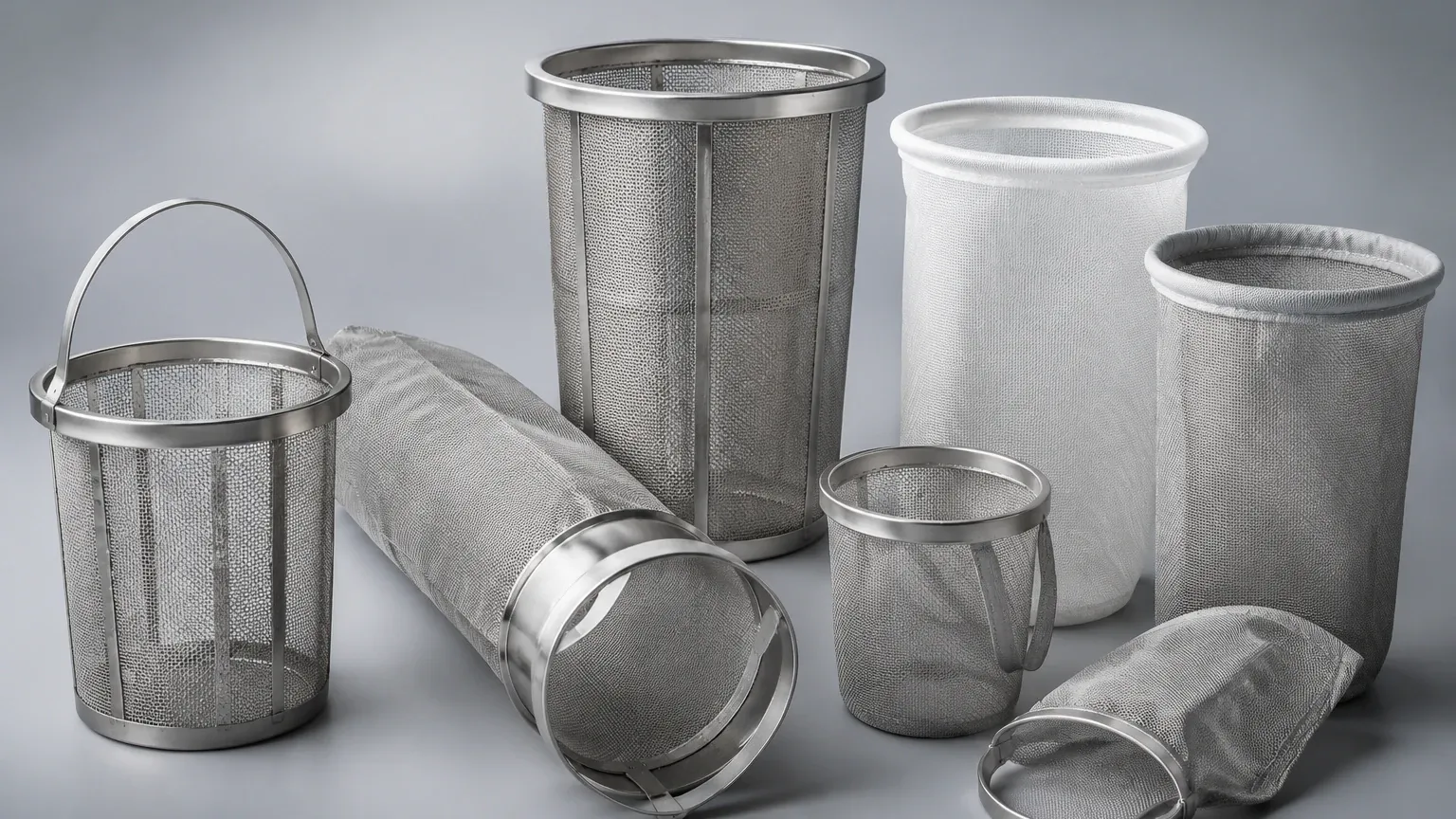
Mesh strainer bags are typically constructed from monofilament or multifilament yarns, often made of nylon or polyester. In some high-temperature or chemically aggressive environments, stainless steel wire mesh is used. Surface filtration works by trapping particles larger than the pore size on the surface of the media. This is ideal for applications where the particle size distribution is relatively uniform and the goal is to remove specific, larger solids. The advantage of mesh is its predictable pore size and the ability, in some cases, to be cleaned and reused.
Felt Bags (Depth Filtration)
Felt bags utilize a non-woven fiber matrix to create a three-dimensional filtration path. As the fluid passes through the needle-felt material, particles are trapped throughout the thickness of the bag. This depth filtration mechanism allows for a higher solids-loading capacity compared to mesh, making it suitable for fluids with a wide range of particle sizes or deformable contaminants like gels. However, felt bags are generally disposable and cannot be effectively cleaned once the internal matrix is saturated.
The Critical Interface: Bags and Support Baskets
A strainer bag is a flexible component that lacks the structural integrity to withstand high fluid pressure on its own. It must be supported by a rigid internal structure. The relationship between the bag and the Strainers & Baskets is the most critical factor in preventing mechanical failure.
If the bag does not fit perfectly within the support basket, several issues can occur:
1. Bypass: If the top seal (the ring or flange) does not seat correctly against the basket or the housing rim, unfiltered fluid will bypass the media entirely.
2. Structural Rupture: If there is a gap between the bag and the basket wall, the fluid pressure will cause the bag material to stretch into the gap. Eventually, the tensile strength of the fabric is exceeded, leading to a burst.
3. Premature Blinding: Uneven support can lead to localized high-velocity zones, where one area of the bag becomes clogged much faster than the rest, reducing the overall service life.
Kaifil specializes in manufacturing the precision stainless steel baskets required to ensure these bags perform at their theoretical limits. Proper engineering of the basket’s perforation pattern and surface finish is essential to ensure maximum flow area while providing continuous support to the fabric.
Material Selection and Chemical Compatibility
Material science plays a pivotal role in the longevity of a strainer bag. Engineers must cross-reference the fluid’s chemical composition and operating temperature with the properties of the filter media. Common materials include:
* Polypropylene: Excellent for most acids and alkalis, but limited by a lower temperature threshold (typically around 90°C/194°F). It is widely used in water treatment and general chemical processing.
* Polyester: Offers higher temperature resistance (up to 150°C/302°F) and good resistance to solvents, though it is susceptible to hydrolysis in the presence of high-temperature steam or strong bases.
* Nylon: Highly resistant to solvents and hydrocarbons, making it a standard choice for the automotive and petrochemical industries. However, it is prone to swelling in water-based applications.
* Stainless Steel (304/316L): Used when the application involves extreme temperatures, high pressures, or when a permanent, cleanable solution is required. Stainless steel mesh bags are often integrated directly into the design of custom Strainers & Baskets.
Performance Metrics: Micron Ratings and Efficiency
Selecting the correct micron rating is a balance between the required fluid cleanliness and the desired interval between bag changes.
Nominal vs. Absolute Ratings
Most fabric strainer bags are "nominally" rated, meaning they will trap a high percentage (typically 60% to 80%) of particles at the specified micron size. For applications requiring 99% or higher efficiency, "absolute" rated bags or high-efficiency pleated cartridges are necessary. It is a common engineering mistake to specify a micron rating that is too fine for the application, which leads to excessive pressure drops and frequent, unnecessary maintenance cycles.
Flow Rate and Viscosity
The flow rate through a strainer bag is inversely proportional to the viscosity of the fluid. High-viscosity liquids, such as resins or heavy oils, require a larger filtration surface area to maintain a manageable pressure drop. When designing a system, engineers must calculate the "Clean Pressure Drop" (ΔP) to ensure the pump capacity is sufficient to handle the resistance of the bag as it begins to load with contaminants.
Engineering Considerations for Custom Applications
Standard off-the-shelf strainer bags may not suffice for specialized industrial processes. Customization is often required in the following areas:
* Seal Design: Beyond standard plastic or steel rings, some applications require specialized flanges or "Sentinel" style seals that use pressure-activated lips to ensure zero-bypass performance.
* Multi-Layered Construction: For complex fluids, a bag can be engineered with multiple layers of varying densities. This "graded density" approach allows the outer layers to catch large debris while the inner layers perform fine filtration, significantly extending the bag's life.
* Anti-Static Features: In the chemical and solvent industries, the movement of fluid through synthetic fibers can generate static electricity. Integrating conductive fibers or grounding tabs is a critical safety requirement to prevent combustion.
Maintenance, Monitoring, and Replacement Cycles
The total cost of ownership for a filtration system is heavily influenced by how the strainer bags are managed. Relying on a fixed time schedule for replacement is often inefficient. Instead, systems should be monitored using differential pressure gauges.
When to Replace
A general rule of thumb in industrial filtration is to replace the strainer bag when the differential pressure reaches 15–20 PSI (1.0–1.4 bar). Operating beyond this point risks forcing contaminants through the media (desorption) or causing the bag to rupture.
Handling and Installation
Technicians must ensure that the bag is fully seated at the bottom of the support basket before the housing is closed. Any folds or bunches in the material can create stress points. Furthermore, when removing a spent bag, it is important to inspect the internal support basket for signs of corrosion or mechanical wear, as a damaged basket will inevitably lead to the failure of the next bag installed.
Conclusion: Selecting a Reliable Filtration Partner
Choosing the right strainer bag involves more than just matching a micron rating to a pipe size. It requires a comprehensive understanding of fluid dynamics, material compatibility, and the mechanical relationship between the media and its housing. By focusing on high-quality structural components, such as precision-engineered Strainers & Baskets, industrial operators can ensure that their filtration systems remain reliable, efficient, and cost-effective.
Kaifil provides the technical expertise and manufacturing capabilities necessary to develop customized filtration solutions. Whether you are dealing with high-temperature chemical processing or sensitive food and beverage production, our focus on durable stainless steel components ensures that your filtration media—including the humble strainer bag—performs at its peak potential. For technical consultation on basket designs or custom filtration requirements, reviewing the available engineering options is the first step toward an optimized process.
