


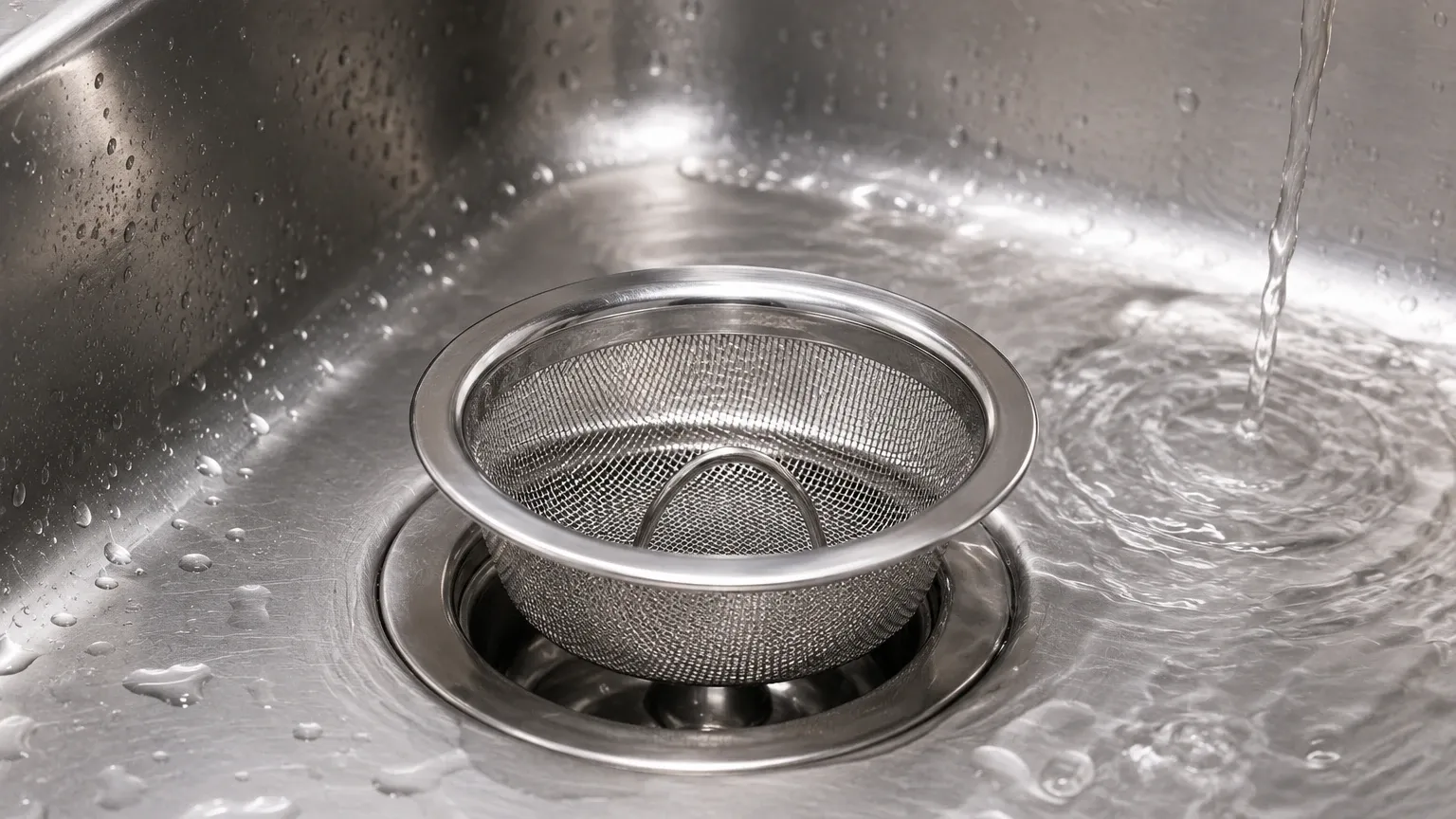
Strainer Basket in Sink
In industrial, commercial, and laboratory environments, the humble strainer basket in sink applications serves as a critical primary filtration stage. While often overlooked, the selection of high-quality Strainers & Baskets is essential for protecting downstream plumbing, preventing costly blockages, and ensuring compliance with hygiene and safety standards. For engineers and facility managers, understanding the technical nuances of these components—from material grade to flow dynamics—is the difference between a seamless operation and frequent maintenance downtime.
Industrial sink strainers are designed to handle significantly higher volumes of debris, more aggressive cleaning chemicals, and more frequent usage cycles than residential counterparts. This guide explores the engineering considerations, material requirements, and selection criteria necessary for choosing the right filtration solution for demanding professional environments.
The Role of Industrial Strainer Baskets in Process Environments
A professional-grade strainer basket in sink systems acts as a mechanical barrier. Its primary function is to capture solid particles while allowing liquid waste to pass through into the drainage or reclamation system. In sectors such as food processing, pharmaceuticals, and chemical manufacturing, these baskets prevent large contaminants from entering grease traps, interceptors, or sensitive wastewater treatment equipment.
The effectiveness of a strainer is measured by its ability to balance filtration accuracy with flow rate. If the mesh or perforation is too fine, the sink will drain slowly, leading to standing water and potential hygiene risks. If the openings are too large, debris can pass through, leading to pipe scaling or mechanical failure in downstream pumps. Kaifil specializes in manufacturing precision components that meet these specific industrial tolerances.
Material Selection: Why Stainless Steel is the Industrial Standard
When specifying a strainer basket in sink for industrial use, material selection is the most significant factor influencing longevity and performance. Stainless steel is the preferred medium due to its inherent resistance to corrosion, temperature fluctuations, and mechanical stress.
Type 304 Stainless Steel
Grade 304 is the standard for most commercial kitchen and general industrial applications. It offers excellent resistance to oxidation and is easy to sanitize. It is suitable for environments where the strainer will be exposed to water and mild cleaning agents.
Type 316 Stainless Steel
For more demanding environments, such as chemical processing plants, laboratories, or coastal facilities, Grade 316 stainless steel is required. The addition of molybdenum provides superior resistance to chlorides and pitting corrosion. This is essential when the sink is used to dispose of saline solutions or acidic process byproducts.
Durability and Sanitation
Unlike plastic or low-grade alloy strainers, stainless steel components do not harbor bacteria in surface scratches and can withstand high-pressure steam cleaning or harsh chemical sterilization without degrading. This makes them indispensable in pharmaceutical and food-grade applications where cross-contamination must be eliminated.
Design Considerations: Mesh vs. Perforation
The geometry of the filtration media determines the strainer's performance profile. Engineers must choose between perforated metal and wire mesh based on the nature of the solids being captured.
Perforated Metal Baskets
Perforated baskets are typically used for heavy-duty applications where large, heavy debris is common. They are structurally robust and less likely to deform under the weight of collected solids. Common hole patterns include round, square, or staggered arrangements. The "open area" percentage is a key metric here; a higher open area facilitates faster drainage but may reduce the structural integrity of the basket if not properly engineered.
Wire Mesh Baskets
For finer filtration, a strainer basket in sink may utilize stainless steel wire mesh. Mesh allows for much smaller aperture sizes, making it ideal for capturing coffee grounds, fine chemical precipitates, or small food particles. Kaifil’s expertise in wire mesh filtration ensures that these baskets are constructed with reinforced frames to prevent the mesh from tearing or pulling away from the rim under load.
Hybrid Designs
In many industrial contexts, a hybrid design is utilized—a perforated metal outer shell for strength with a fine wire mesh liner for filtration precision. This provides the durability required for industrial handling while maintaining high filtration efficiency.
Evaluating Flow Capacity and Filtration Efficiency
One of the most common mistakes in procuring Strainers & Baskets is failing to account for the "blinding" effect. As debris accumulates, the effective open area of the strainer decreases, which can lead to rapid overflow.
Calculating Open Area
Engineers should look for a strainer that provides an open area at least 2 to 3 times the cross-sectional area of the drain pipe. This safety margin ensures that even when the basket is 50% full, the sink can still drain at its rated capacity.
Flow Dynamics
The shape of the basket also influences flow. A deep, tapered basket provides more surface area for filtration than a shallow, flat-bottomed one. In high-flow industrial sinks, deep-drawn baskets are often preferred to maximize the time between cleaning cycles.
Customization and OEM Solutions for Specialized Systems
Standard off-the-shelf strainers often fail to meet the specific requirements of custom industrial equipment. Customization allows engineers to tailor the strainer basket in sink to the exact dimensions and chemical profiles of their process.
Custom Dimensions and Flanges
Industrial sinks often feature non-standard drain diameters or depths. Custom manufacturing ensures a precision fit, preventing "bypass"—where liquid and debris flow around the edges of the strainer rather than through it. Precision-engineered flanges and gaskets are critical for maintaining a leak-proof seal.
Handle and Lifting Mechanisms
In large-scale operations, ergonomics and safety are paramount. Custom baskets can be fitted with fixed handles, folding bails, or even specialized attachment points for mechanical lifting tools. This is particularly important when the captured debris is heavy or hazardous to touch.
Reinforced Structures
For applications involving high-velocity discharge or heavy solid loads, baskets can be reinforced with internal ribs or external support cages. This prevents the strainer from collapsing into the drainpipe, a failure mode that can cause catastrophic plumbing damage.
Maintenance, Durability, and Operational Risks
The total reliability of a filtration system depends on a consistent maintenance schedule. A neglected strainer basket in sink can lead to several operational risks:
1. Biofilm Accumulation: In food and pharmaceutical sectors, organic matter trapped in the strainer can become a breeding ground for bacteria if not cleaned daily.
2. Structural Fatigue: Repeatedly knocking a basket against a bin to empty it can lead to weld failure. High-quality TIG-welded stainless steel strainers are designed to withstand this mechanical shock.
3. Chemical Degradation: Even stainless steel can succumb to corrosion if exposed to incompatible chemicals for extended periods without rinsing. Confirming chemical compatibility during the procurement phase is essential.
Cleaning Cycles
Industrial strainers should be inspected at the end of every shift. For high-load environments, self-cleaning or dual-basket systems (where one can be cleaned while the other is in use) may be necessary to maintain continuous operation.
Procurement and Total Cost of Ownership
When evaluating the cost of a strainer basket in sink, purchasing teams should look beyond the initial unit price. The Total Cost of Ownership (TCO) includes the cost of replacement, the labor cost of cleaning, and the potential cost of system downtime due to clogs.
Investing in a high-quality, custom-engineered stainless steel strainer from a manufacturer like Kaifil often results in a lower TCO. These components are built to last years rather than months, reducing the frequency of procurement cycles and ensuring that downstream equipment remains protected.
Information to Confirm Before Ordering
Before contacting a manufacturer for a quote, engineers should have the following data ready:
* Drain Opening Diameter: Exact measurements are required for a bypass-free fit.
* Required Micron/Aperture Rating: Based on the smallest particle size that needs to be captured.
* Chemical Exposure: A list of all cleaning agents and process fluids that will contact the metal.
* Flow Rate Requirements: The maximum volume of liquid the sink must handle per minute.
* Load Weight: The estimated weight of the debris when the basket is full.
Conclusion
Selecting the appropriate strainer basket in sink is a fundamental engineering decision that impacts the efficiency and hygiene of industrial facilities. By focusing on high-grade materials, precise filtration metrics, and robust construction, organizations can protect their infrastructure and optimize their processes. Whether you require standard replacements or specialized OEM components, choosing a partner with deep expertise in stainless steel filtration ensures that your Strainers & Baskets will perform reliably in the most demanding environments.
