


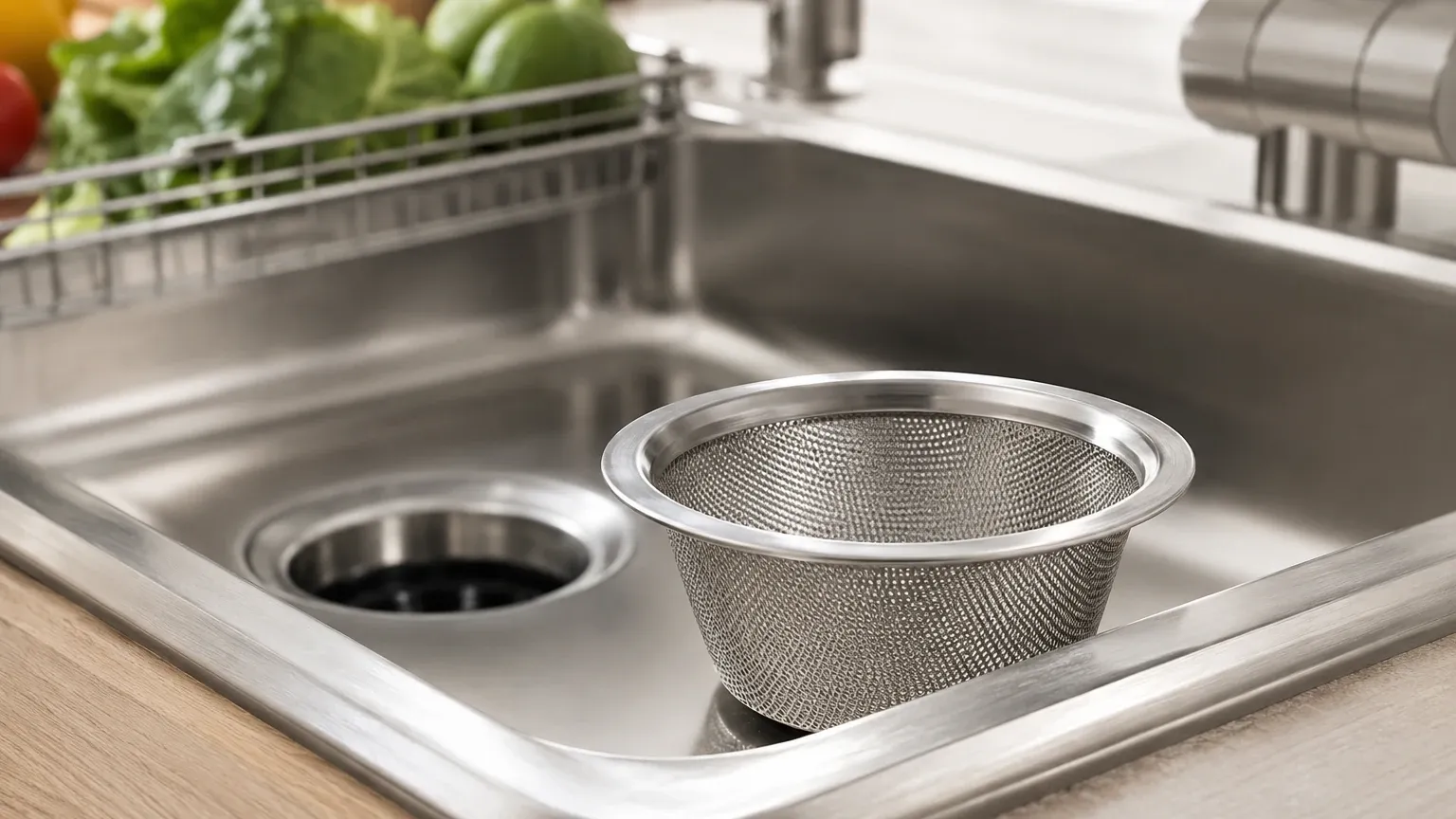
Strainer Basket Kitchen Sink
In the realm of commercial and industrial infrastructure, the drainage system is a critical component that ensures operational continuity and hygiene. At the heart of these systems, especially in environments such as commercial kitchens, food processing facilities, and laboratories, the strainer basket kitchen sink assembly serves as the primary line of defense against plumbing obstructions and environmental contamination. While residential applications focus on basic functionality, industrial-grade filtration components must meet rigorous engineering standards for durability, material integrity, and flow efficiency.
For engineers and procurement professionals, selecting the appropriate Strainers & Baskets involves more than simple dimensional matching. It requires a deep understanding of fluid dynamics, material resistance to corrosive cleaning agents, and the specific particle sizes encountered in the waste stream. This guide examines the technical nuances of industrial-grade strainer baskets, providing the factual foundation necessary for informed specification and purchasing.
The Role of Strainers & Baskets in Commercial and Industrial Drainage
In a B2B context, a strainer basket kitchen sink is not merely a household accessory but a precision-engineered filtration component. Its primary function is to allow the passage of liquids while capturing solid debris that could otherwise cause costly blockages in downstream piping or damage sensitive grease interceptors and wastewater treatment equipment.
Industrial environments subject these components to significantly higher stress than residential settings. High-volume flow rates, elevated water temperatures, and the presence of abrasive solids necessitate a robust construction. A failure in this component can lead to immediate operational downtime, health code violations in food service, or environmental non-compliance in chemical processing. Therefore, the design of the basket must balance the need for high-volume drainage with the requirement for effective particle retention.
Engineering Specifications for High-Performance Strainer Baskets
When evaluating a strainer basket kitchen sink for industrial use, several technical specifications must be considered to ensure the component is fit for purpose:
1. Open Area Ratio
The open area ratio is the percentage of the total basket surface area that consists of openings. A higher open area ratio reduces the pressure drop across the strainer and allows for higher flow rates. In industrial applications, maximizing this ratio is essential to prevent water backup during peak usage periods. Engineers typically look for designs that offer the maximum possible open area without compromising the structural integrity of the basket.
2. Perforation and Mesh Sizes
The size of the openings determines the filtration accuracy. For heavy-duty applications, perforated metal is often used for its structural strength. The hole diameter is selected based on the smallest solid particle that must be excluded from the drainage system. In some specialized laboratory or fine-processing applications, a secondary wire mesh lining may be integrated into the basket to capture finer particulates while maintaining the rigid support of the outer perforated shell.
3. Dimensional Precision
In industrial plumbing, tolerances are tight. A strainer basket must fit perfectly within the sink flange or drain body to prevent "bypass"—the phenomenon where debris escapes around the edges of the filter. Precision manufacturing ensures that the seating rim of the basket creates a reliable seal against the drain assembly, even under the weight of collected debris.
Material Selection: Why Stainless Steel Dominates Industrial Filtration
Material selection is perhaps the most critical factor in the longevity of a strainer basket kitchen sink. In commercial and industrial sectors, stainless steel is the industry standard due to its unique physical and chemical properties.
Corrosion Resistance
Industrial sinks are frequently exposed to harsh chemicals, including high-alkaline detergents, acidic food waste, and specialized sanitizers. Standard plastics or low-grade alloys can degrade quickly under these conditions. Type 304 stainless steel offers excellent resistance to most common chemicals, making it the baseline for industrial strainers. For more aggressive environments, such as those involving high salinity or specialized chemical processing, Type 316 stainless steel is preferred due to its added molybdenum content, which provides superior resistance to pitting and crevice corrosion.
Thermal Stability
Commercial dishwashing and industrial cleaning processes often involve water temperatures exceeding 180°F (82°C). Stainless steel maintains its structural integrity at these temperatures, whereas many polymers may warp or soften, leading to seal failure or basket deformation.
Hygiene and Cleanability
Stainless steel is non-porous and resists the growth of bacteria and biofilms. This is a non-negotiable requirement in the food and beverage and pharmaceutical industries. The smooth surface finish of a high-quality stainless steel strainer basket allows for easy cleaning and sterilization, ensuring that the component does not become a source of contamination.
Customization Options for Specialized Industrial Applications
Standard off-the-shelf solutions often fail to meet the specific needs of unique industrial processes. This is where custom manufacturing becomes essential. Companies like Kaifil specialize in providing tailored filtration solutions that address specific engineering challenges.
Custom Handle and Lifting Mechanisms
In deep-sump industrial sinks, retrieving a full strainer basket can be difficult. Custom designs may include extended handles, reinforced bails, or specialized grip points that allow operators to remove the basket safely and efficiently, even when wearing heavy protective gloves.
Integrated Sealing and Locking
Some industrial processes require the strainer to remain locked in place to prevent tampering or accidental displacement. Custom-engineered baskets can feature twist-lock mechanisms or weighted bases to ensure they remain seated during high-velocity discharge events.
Variable Filtration Stages
For applications involving a wide range of debris sizes, a dual-stage strainer basket may be employed. This involves a coarse outer basket to catch large items and a fine inner mesh to capture smaller sediments. This "filter-in-filter" design prevents the fine mesh from clogging prematurely, extending the time between maintenance cycles.
Maintenance and Durability: Optimizing the Lifecycle of Filtration Components
The total cost of ownership for a strainer basket kitchen sink is determined not just by the initial purchase price, but by its durability and the ease of maintenance. A high-quality component should last for years, even in demanding environments.
Cleaning Protocols
To maintain optimal flow rates, strainer baskets must be cleaned regularly. In an industrial setting, this often involves high-pressure spraying or ultrasonic cleaning. The basket must be robust enough to withstand these cleaning methods without losing its shape or compromising its filtration media.
Wear and Replacement Cycles
While stainless steel is exceptionally durable, the mechanical action of debris and constant handling will eventually lead to wear. Engineers should establish a routine inspection schedule to check for signs of fatigue, such as cracked welds or distorted rims. Using high-quality OEM components ensures that replacements will fit perfectly and perform identically to the original parts, maintaining the integrity of the entire filtration system.
Selecting the Right Strainers & Baskets for Your Project
Selecting the correct filtration component requires a systematic approach. Purchasing teams and engineers should confirm the following data points before finalizing a specification:
1. Flow Rate Requirements: What is the maximum volume of liquid the drain must handle per minute? This will dictate the required open area of the basket.
2. Debris Profile: What is the nature of the solids being captured? Are they soft food particles, hard metallic shavings, or fine chemical precipitates? This determines the hole size and whether a wire mesh lining is necessary.
3. Chemical Exposure: What cleaning agents or process chemicals will come into contact with the basket? This determines whether 304 or 316 stainless steel is required.
4. Physical Dimensions: Beyond the flange diameter, what is the depth of the drain housing? A basket that is too shallow may not have enough capacity, while one that is too deep may interfere with the drain's plumbing configuration.
By focusing on these technical criteria rather than just price, facilities can avoid the hidden costs of plumbing repairs and operational delays. Investing in professional-grade Strainers & Baskets ensures that the drainage system remains a reliable part of the facility's infrastructure, rather than a point of failure.
Conclusion
The strainer basket kitchen sink is a fundamental yet often overlooked component of industrial and commercial plumbing systems. When viewed through the lens of engineering and facility management, it is clear that material quality, precision manufacturing, and application-specific design are paramount. By selecting high-performance stainless steel components and considering the unique demands of the environment, organizations can ensure efficient waste management, protect their plumbing infrastructure, and maintain the highest standards of operational hygiene.
