


Strainer Basket Nearby
In industrial fluid handling and processing, the integrity of a filtration system often hinges on the performance of its internal components. When a system failure occurs or a maintenance schedule demands an immediate replacement, the search for a strainer basket nearby becomes a priority for plant engineers and procurement officers. However, in a B2B context, "nearby" refers not just to physical proximity, but to the accessibility of technical expertise, rapid manufacturing lead times, and the availability of high-specification components that meet exact OEM requirements.
Industrial Strainers & Baskets are critical for protecting downstream equipment such as pumps, valves, and heat exchangers from particulate contamination. Selecting the right replacement requires a deep understanding of material science, fluid dynamics, and mechanical design. This guide explores the technical considerations necessary when sourcing strainer baskets and how to evaluate suppliers based on engineering merit rather than simple geographic location.
The Technical Role of Strainer Baskets in Industrial Systems
A strainer basket is a removable, high-capacity filter element designed to capture solids from a liquid stream. Unlike simple inline strainers, basket strainers offer a larger surface area, allowing for higher dirt-holding capacity and lower pressure drops. This makes them ideal for applications involving high flow rates or fluids with a high concentration of contaminants.
From an engineering perspective, the strainer basket serves two primary functions: protection and purification. In chemical processing, for instance, a basket may be used to remove catalyst fines that could otherwise damage sensitive instrumentation. In the food and beverage industry, stainless steel baskets ensure that the final product remains free of process-related debris while adhering to strict hygienic standards. Because these components are subjected to constant hydraulic pressure and potential chemical erosion, their construction must be robust and precise.
Evaluating Material Selection for Durability
When searching for a strainer basket nearby, the first technical hurdle is material compatibility. Most industrial applications require stainless steel due to its corrosion resistance and structural integrity. The two most common grades utilized are SS304 and SS316L.
SS304 Stainless Steel
SS304 is the standard choice for general industrial applications, including water treatment and hydraulic systems. It provides excellent strength and good corrosion resistance in non-acidic environments. For many engineers, SS304 offers a cost-effective balance between performance and longevity.
SS316L Stainless Steel
In more demanding environments, such as pharmaceutical manufacturing or chemical processing involving chlorides, SS316L is the preferred material. The addition of molybdenum enhances its resistance to pitting and crevice corrosion. Furthermore, the "L" designation indicates low carbon content, which minimizes carbide precipitation during welding, ensuring the structural integrity of the basket's seams and handles.
Beyond the base metal, engineers must also consider the type of filtration media used within the basket. This typically involves a perforated metal support structure lined with a fine wire mesh. The choice of mesh weave—such as plain weave, twilled weave, or Dutch weave—will determine the filtration accuracy and the basket’s ability to withstand backwashing or high-pressure cleaning cycles.
The "Nearby" Dilemma: Local Stock vs. Custom Engineering
The impulse to find a strainer basket nearby is often driven by the need to minimize downtime. However, off-the-shelf components from local general hardware distributors rarely meet the rigorous standards of specialized industrial processes. There are several risks associated with choosing a generic local replacement:
1. Dimensional Incompatibility: Even a few millimeters of deviation in the flange diameter or the basket height can lead to bypass. If the basket does not seat perfectly within the housing, unfiltered fluid will escape around the edges, defeating the purpose of the strainer.
2. Structural Weakness: Standard baskets may lack the reinforcement necessary for high-viscosity fluids or high-pressure differentials. Under stress, a poorly constructed basket can collapse, sending metal fragments downstream into expensive machinery.
3. Material Certification Issues: Critical industries like oil and gas or pharmaceuticals require full traceability of materials. Local, non-specialized suppliers may not provide the necessary Mill Test Reports (MTRs) or compliance certifications (such as FDA or ASME standards).
For these reasons, technical professionals often look for manufacturers who can provide rapid custom fabrication. A manufacturer with advanced OEM capabilities can replicate an existing basket's dimensions and performance characteristics while potentially improving upon the original design to extend the service life.
Critical Engineering Metrics: Pressure Drop and Flow Rate
One of the most important factors in selecting Strainers & Baskets is the clean pressure drop (ΔP). Every filter element introduces a degree of resistance to the flow. If the resistance is too high, it can lead to cavitation in pumps and reduced system efficiency.
The pressure drop is influenced by the "open area ratio" of the basket. This is the ratio of the total area of the holes in the basket to the cross-sectional area of the inlet pipe. A common engineering rule of thumb is to maintain an open area ratio of at least 6:1 or 8:1 for heavy-duty applications. This ensures that even as the basket begins to fill with debris, the system can maintain an acceptable flow rate before requiring a cleaning cycle.
Engineers must also account for the viscosity of the fluid. Highly viscous liquids, such as heavy oils or syrups, require larger perforations or specialized mesh structures to prevent excessive pressure buildup. When consulting with a manufacturer, providing the specific gravity and viscosity of the process fluid is essential for accurate sizing.
Customization and OEM Compatibility
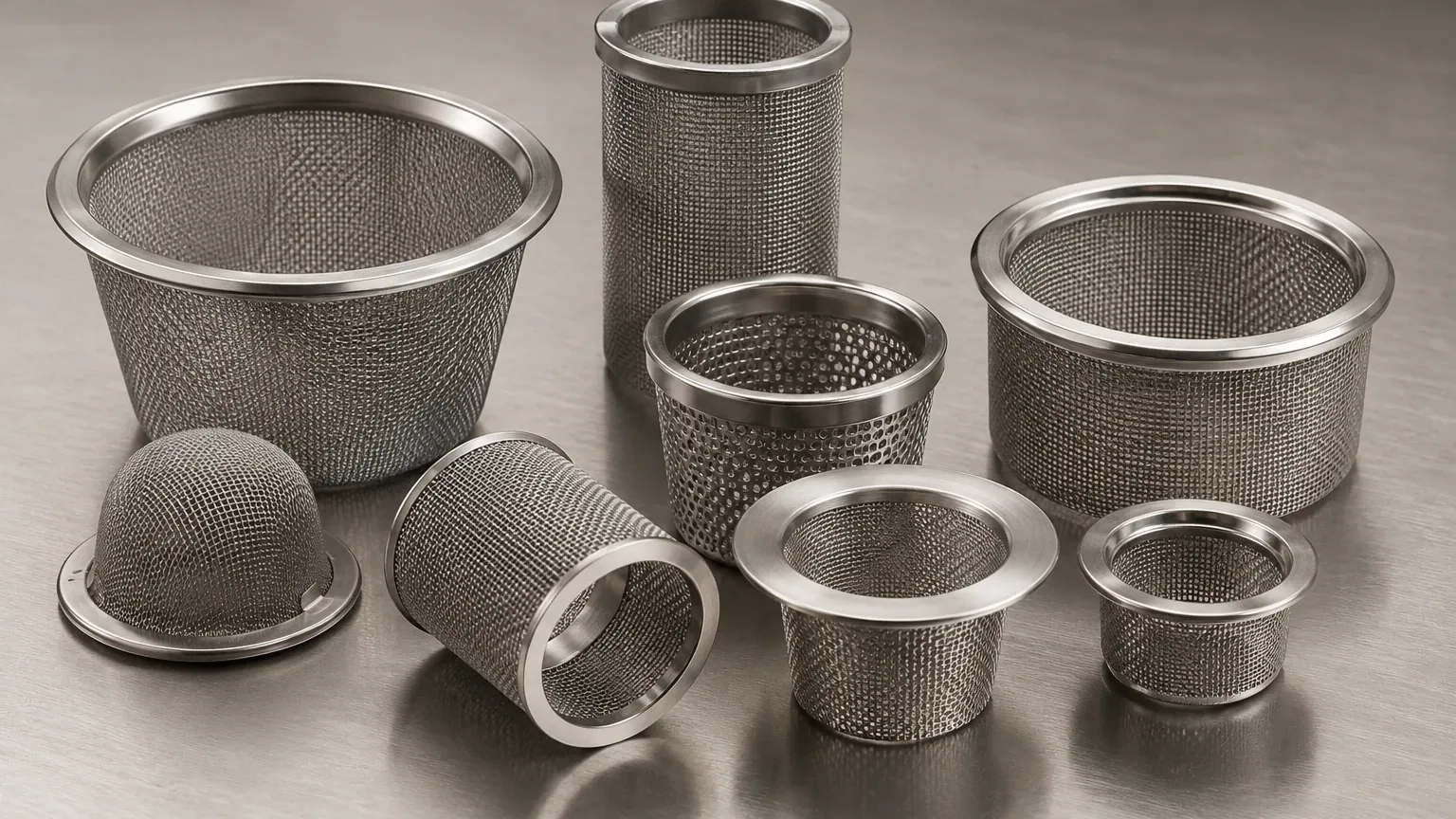
Industrial filtration housings come in a vast array of proprietary designs. Whether the system utilizes a Simplex, Duplex, or Automatic Self-Cleaning strainer, the internal basket must be tailored to the specific housing. Customization options often include:
* Handle Designs: From standard bail handles to heavy-duty lifting lugs or pleated tops, the handle must allow for easy removal while not obstructing the flow or interfering with the housing lid.
* Reinforcement Strips: For high-pressure applications, longitudinal or circumferential reinforcement strips can be added to the perforated plate to prevent deformation.
* Magnetic Inserts: In metalworking or hydraulic applications, magnetic rods can be integrated into the basket to capture fine ferrous particles that might pass through the mesh.
* Multi-Layer Construction: Sintered mesh or multi-layered wire cloth can be used to provide fine filtration (down to 5 microns) while maintaining the mechanical strength of a much coarser screen.
By working with a specialist manufacturer, engineers can ensure that the "nearby" solution is actually a long-term fix rather than a temporary patch. Custom-engineered baskets are designed to fit the existing housing perfectly, eliminating the risk of bypass and ensuring consistent performance.
Maintenance Protocols and Replacement Cycles
Finding a strainer basket nearby is only half the battle; maintaining it is equally vital for operational continuity. Most industrial strainers are equipped with pressure gauges at the inlet and outlet. A significant increase in the differential pressure indicates that the basket is reaching its holding capacity and needs to be cleaned or replaced.
Cleaning Procedures
Stainless steel baskets are generally reusable. Cleaning methods vary depending on the contaminant. For large particulates, a simple high-pressure water wash may suffice. For sticky or chemically bonded residues, ultrasonic cleaning or chemical baths may be required. It is crucial to inspect the mesh for signs of fraying or "blinding" (permanent clogging of the pores) after each cleaning cycle.
When to Replace
Despite their durability, strainer baskets are wear items. Fatigue from pressure pulsations, erosion from abrasive particles, and chemical thinning of the wire mesh eventually necessitate replacement. Keeping a stock of critical spares—sourced from a reliable manufacturer—is the best way to avoid the frantic search for a replacement when a failure occurs.
Conclusion: Selecting the Right Partner
While the search for a strainer basket nearby may begin with a need for speed, the final selection should be based on technical proficiency and quality assurance. For engineers in the chemical, pharmaceutical, and food industries, the cost of a filtration failure far outweighs the savings of a cheaper, local alternative.
By focusing on manufacturers who specialize in stainless steel Strainers & Baskets, procurement teams can access components that are engineered for specific flow conditions, chemical environments, and filtration accuracies. Whether you require a standard perforated basket for a water intake line or a custom-designed sintered mesh element for a high-purity process, the emphasis must remain on precision, durability, and a deep understanding of industrial filtration principles. Choosing a partner with a proven track record in OEM manufacturing ensures that your filtration system remains a reliable asset rather than a point of failure.
