


Strainer Basket Price
In industrial filtration, the procurement of high-quality components is a balance between operational reliability and budgetary constraints. When evaluating a strainer basket price, engineers and purchasing managers must look beyond the initial invoice. The cost of a strainer basket is a reflection of its material composition, engineering precision, structural integrity, and the specific demands of the application it serves. In sectors ranging from chemical processing to food and beverage production, a failure to account for these variables can lead to premature component failure, increased maintenance downtime, and higher long-term operational costs.
Understanding the factors that influence the pricing of Strainers & Baskets is essential for making informed technical decisions. This guide explores the technical drivers of cost, the impact of material selection, and how design specifications dictate the final price of industrial filtration components.
Material Selection and Its Primary Influence on Cost
The most significant driver of a strainer basket price is the raw material used in its construction. Industrial environments often involve corrosive fluids, high temperatures, or strict hygienic requirements, necessitating the use of stainless steel or specialized alloys.
Stainless Steel Grades: 304 vs. 316L
Stainless steel 304 is the standard choice for general-purpose applications where moisture is present but chemical corrosion is minimal. It provides a cost-effective solution for water treatment or basic industrial cooling systems. However, for applications involving chlorides, acids, or high-salinity environments, stainless steel 316 or 316L (low carbon) is required. The addition of molybdenum in 316L significantly improves corrosion resistance but increases the material cost by approximately 20% to 40% compared to 304.
Exotic Alloys and High-Performance Materials
In extreme environments, such as petrochemical processing or concentrated chemical handling, even 316L may be insufficient. Materials like Monel, Hastelloy, or Duplex stainless steel are used to prevent pitting and stress-corrosion cracking. These materials can increase the price of a strainer basket by several multiples due to both the raw material cost and the specialized welding techniques required to fabricate them.
Filtration Media and Precision Engineering
The type of filtration media used within the basket—whether it is perforated metal, woven wire mesh, or a combination of both—dictates the complexity of the manufacturing process and, consequently, the price.
Perforated Metal Baskets
Simple perforated baskets are generally the most economical. They are used for coarse filtration where the goal is to remove large debris (typically 1mm or larger). The price for these is determined by the thickness of the plate and the hole pattern. Thicker plates provide more durability but require more energy and specialized tooling to perforate and form.
Woven Wire Mesh Liners
When finer filtration is required (measured in microns), a woven wire mesh is lined inside or outside the perforated support. The finer the mesh (the higher the mesh count), the more expensive the media becomes. Precision mesh requires higher-grade wire and tighter weaving tolerances. Furthermore, the labor involved in precisely fitting and welding fine mesh to a structural frame adds to the strainer basket price.
Multi-Layer Sintered Mesh
For high-pressure applications or environments where the filter must undergo frequent high-pressure backwashing, sintered mesh may be used. Sintering bonds multiple layers of mesh together through heat and pressure, creating a rigid, high-strength material. While this significantly increases the initial price, it provides a level of durability and precision that standard mesh cannot match.
Structural Design and Customization Factors
Standard off-the-shelf strainer baskets are priced for mass production. However, most industrial applications require some level of customization to fit existing housings or to meet specific flow rate requirements. Customization is a key factor in the final quotation.
Dimensional Complexity
The physical size of the basket—its diameter and length—directly correlates with material volume. However, the ratio of diameter to length can also impact price. Extremely long or narrow baskets require specialized jigs and more intensive labor to ensure they remain straight and concentric during the welding process.
Reinforcement and Burst Pressure Requirements
In high-viscosity or high-flow systems, the differential pressure across the basket can be substantial. To prevent the basket from collapsing (bursting), engineers add reinforcement bands, heavy-duty support cages, or thicker bottom plates. Each added structural element increases the material weight and the number of weld points, which are reflected in the strainer basket price.
Connection and Handle Types
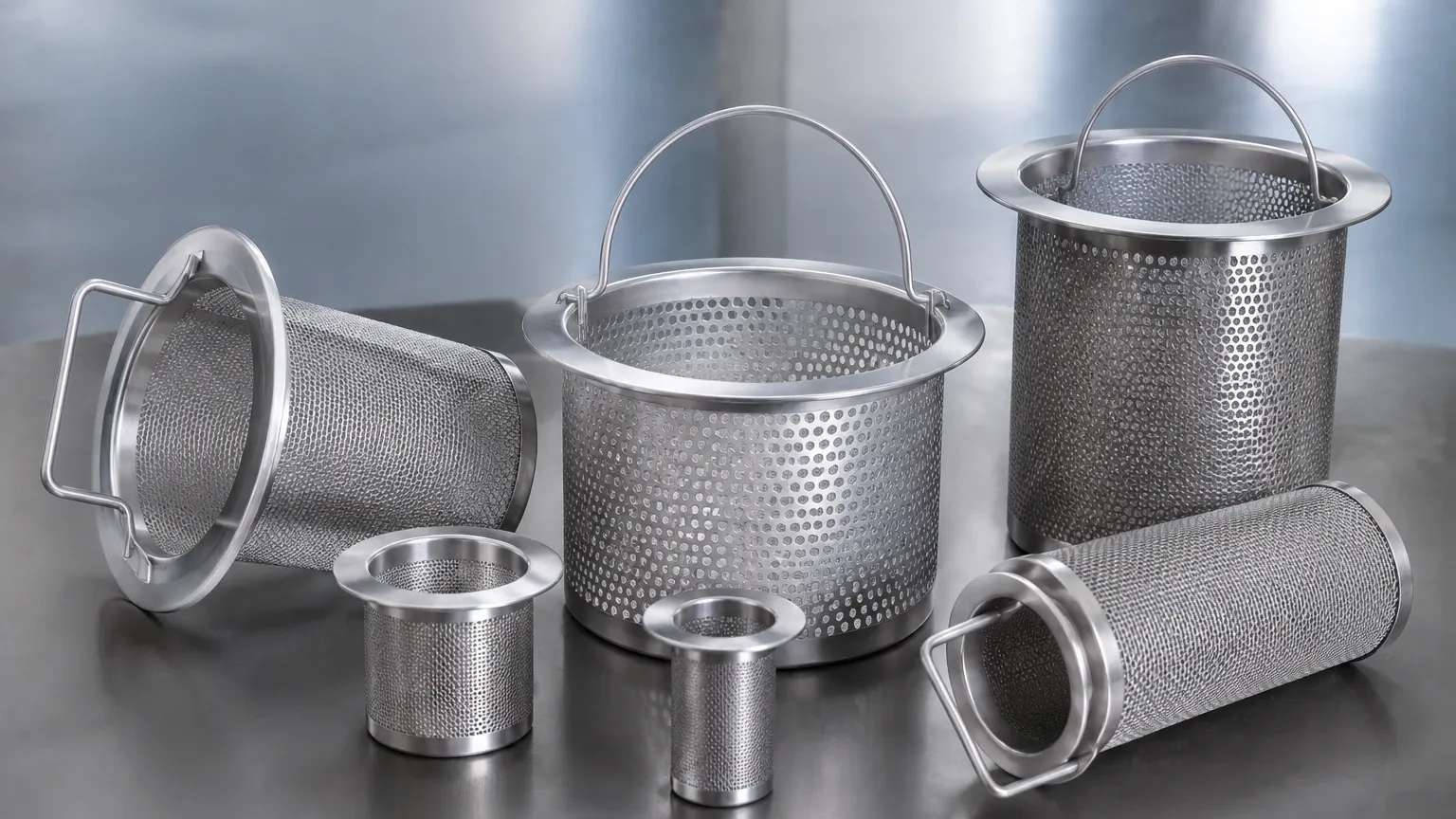
How the basket is handled and secured within the strainer housing also impacts cost. Standard wire handles are inexpensive, but heavy-duty flat-bar handles, slanted handles for easy removal, or specialized locking mechanisms require additional fabrication time. Similarly, the type of flange or seal interface at the top of the basket must be machined to precise tolerances to ensure no bypass occurs.
Manufacturing Standards and Quality Assurance
The quality of the manufacturing process ensures that the strainer basket performs as specified throughout its service life. High-quality fabrication often involves higher upfront costs but prevents catastrophic failures.
Welding Integrity
Industrial strainer baskets must withstand constant vibration and pressure fluctuations. High-quality TIG (Tungsten Inert Gas) or plasma welding ensures deep penetration and clean joints that do not harbor bacteria or become points of corrosion. Automated welding can reduce costs for high-volume orders, but custom baskets often require manual welding by certified technicians, which influences the price.
Surface Finishing and Treatments
In the pharmaceutical and food industries, the surface finish of the stainless steel is critical. Standard pickling and passivation (to remove free iron and improve the oxide layer) are common. However, if a mirror finish or electropolishing is required to achieve a specific Ra (Roughness Average) value, the price will increase. Electropolishing not only improves hygiene but also makes the basket easier to clean, which can reduce long-term maintenance costs.
Documentation and Certification
For many B2B buyers, the documentation is as important as the hardware. Material Test Reports (MTRs), certificates of conformance, and pressure test reports add administrative and laboratory costs to the project. When comparing a strainer basket price, it is vital to confirm if these certifications are included or available as add-ons.
Total Cost of Ownership: Beyond the Initial Invoice
When engineers evaluate a strainer basket price, the most experienced professionals focus on the Total Cost of Ownership (TCO). A low-cost basket that fails prematurely or requires excessive cleaning can be far more expensive than a premium-engineered solution.
1. Cleaning Efficiency: A basket designed with a high open-area ratio will have a lower pressure drop and longer run times between cleaning cycles. This reduces labor costs and process downtime.
2. Durability: A robustly constructed basket may last five years, whereas a cheaper, thinner alternative might collapse under a pressure surge within six months. The cost of the replacement basket, plus the shipping and the risk of downstream equipment damage, far outweighs the initial savings.
3. Filtration Accuracy: If a basket is not manufactured to precise tolerances, "bypass" can occur, where unfiltered fluid escapes around the edges. This can damage sensitive pumps, valves, or nozzles downstream, leading to expensive repairs.
How to Request an Accurate Strainer Basket Quote
To receive a competitive and accurate strainer basket price, it is essential to provide the manufacturer with a detailed specification. This prevents "over-engineering" (which wastes money) or "under-engineering" (which leads to failure).
When contacting a supplier for Strainers & Baskets, ensure you have the following information ready:
* Material Grade: Specify 304, 316L, or other alloys based on the chemical compatibility of your fluid.
* Dimensions: Provide the outside diameter (OD), total length, and flange/collar thickness.
* Filtration Requirement: Define the micron rating or the hole size/pitch for perforated metal.
* Operating Conditions: Note the maximum operating pressure, temperature, and the maximum allowable differential pressure (PSID).
* Flow Direction: Indicate if the flow is from the inside out or outside in, as this determines where the reinforcement should be placed.
* Quantity: Unit prices typically drop significantly as the order volume increases due to the distribution of setup and engineering costs.
By focusing on these technical parameters, procurement teams can ensure they are comparing "apples to apples" when reviewing quotes. A transparent strainer basket price should reflect a commitment to quality materials and engineering expertise, ensuring that the component serves its purpose reliably in the most demanding industrial environments.
