


Strainer Basket Sink
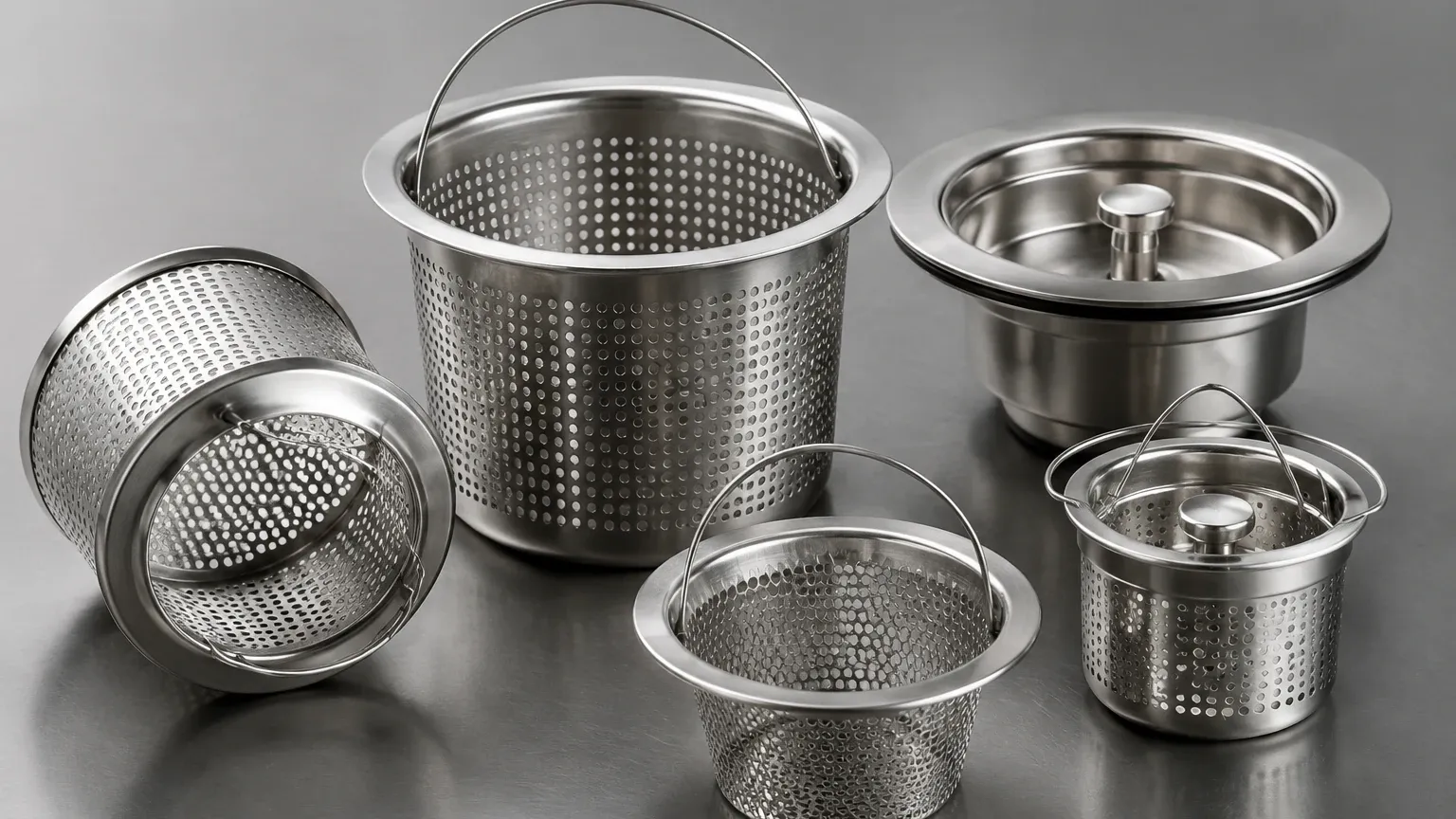
In industrial fluid management and processing environments, the term "strainer basket sink" refers to a critical primary filtration component designed to capture large solids and debris at drainage points, collection basins, or intake reservoirs. Unlike domestic counterparts, industrial-grade strainer baskets are engineered to withstand corrosive chemicals, high flow rates, and rigorous cleaning cycles. For engineers and facility managers, selecting the correct basket configuration is essential to protecting downstream pumps, valves, and heat exchangers from damage caused by particulate contamination.
As a professional manufacturer of custom stainless steel filtration solutions, Kaifil provides a wide range of Strainers & Baskets designed for demanding industrial applications. Understanding the technical nuances of material selection, filtration precision, and structural design is the first step in optimizing a system's operational efficiency.
The Role of Strainer Baskets in Industrial Fluid Systems
The primary function of a strainer basket sink assembly in an industrial setting is to act as a mechanical barrier. Whether integrated into a floor drain in a food processing plant or a collection basin in a chemical refinery, these components serve several vital roles:
1. Equipment Protection: By removing large solids, strainer baskets prevent impellers in centrifugal pumps from clogging or eroding. They also protect sensitive instrumentation from mechanical interference.
2. Process Integrity: In pharmaceutical and food industries, ensuring that large contaminants do not enter the main process stream is critical for maintaining product quality and safety standards.
3. Waste Management: Capturing solids at the source simplifies the treatment of wastewater, reducing the load on secondary and tertiary filtration systems.
4. Operational Continuity: High-capacity baskets allow for longer intervals between cleanings, minimizing downtime in continuous production lines.
Engineering Material Selection: SS304 vs. SS316L
Material durability is the most significant factor in the longevity of a strainer basket sink. Industrial environments often involve exposure to harsh cleaning agents, acidic or alkaline process fluids, and varying temperatures. Kaifil specializes in stainless steel construction due to its inherent strength and resistance to oxidation.
Stainless Steel 304
This is the standard grade for general industrial use. It offers excellent corrosion resistance and is cost-effective for applications involving water treatment, hydraulic oils, and mild chemical processing. However, it may be susceptible to pitting in high-chloride environments.
Stainless Steel 316L
For more aggressive environments, such as chemical processing plants or marine applications, SS316L is preferred. The addition of molybdenum enhances its resistance to chloride-induced pitting and crevice corrosion. Furthermore, the "L" (low carbon) designation ensures that the material maintains its corrosion resistance after welding, which is crucial for custom-fabricated baskets.
Specialized Coatings and Alloys
In specific cases where standard stainless steel is insufficient, engineers may specify electropolishing to improve the surface finish, reducing the risk of bacterial growth in sanitary applications. Other alloys may be considered for extreme temperature or highly specialized chemical resistance.
Filtration Precision and Structural Design
A strainer basket sink is typically composed of a perforated metal body, often lined with a finer wire mesh to achieve the desired filtration rating. The engineering of these layers must balance filtration efficiency with flow capacity.
Perforated Support
The outer structure of the basket is usually made from perforated stainless steel plate. The hole size and staggered pattern are calculated to provide maximum structural integrity while maintaining a high open area percentage. This ensures that the basket can withstand the weight of captured debris and the pressure of the fluid flow without collapsing.
Wire Mesh Liners
When finer filtration is required, a wire mesh liner is sintered or welded to the interior of the perforated basket. This allows for filtration ratings ranging from several millimeters down to 20 microns. Engineers must consider the "effective filtration area"—the total surface area available for fluid to pass through—to prevent excessive pressure drops across the strainer.
Flow Dynamics and Pressure Drop
The "clean pressure drop" is the initial resistance to flow caused by the strainer. As the basket fills with debris, the pressure drop increases. Designing a strainer basket sink with a high ratio of basket area to pipe area (typically 6:1 or higher) ensures that the system remains efficient even as the basket accumulates solids.
Customization for Specific Industrial Applications
Standard off-the-shelf solutions rarely meet the specific geometric and functional requirements of complex industrial systems. Customization is often necessary to ensure a perfect fit within existing sink or basin architectures.
Dimensional Accuracy
Custom manufacturing allows for precise control over the diameter, depth, and flange dimensions of the basket. This ensures a tight seal within the housing, preventing "bypass," where fluid flows around the basket rather than through it.
Handle and Lifting Mechanisms
In large-scale industrial basins, the weight of a full strainer basket can be significant. Custom designs can include heavy-duty handles, lifting lugs for overhead cranes, or ergonomic grips to facilitate safe and efficient removal during maintenance cycles.
Reinforcement and Support Ribs
For high-pressure applications or systems with turbulent flow, internal or external reinforcement ribs can be added to the basket. These prevent the mesh from deforming or tearing under mechanical stress.
Application-Specific Considerations
Different industries have unique requirements for their strainer basket sink installations. Understanding these nuances helps in selecting the right configuration from the Strainers & Baskets category.
Food and Beverage Industry
In this sector, hygiene is paramount. Baskets must be designed with smooth surfaces and radiused corners to prevent food particles from becoming trapped, which could lead to microbial growth. Materials must be FDA-compliant, and welds must be ground smooth (sanitary finish).
Pharmaceutical and Biotech
These applications often require high-precision filtration and documented material traceability. Electropolished SS316L is the standard here to ensure the highest level of cleanliness and corrosion resistance against aggressive CIP (Clean-In-Place) chemicals.
Chemical and Petrochemical
Chemical compatibility is the primary concern. The strainer must be able to withstand the specific pH levels and temperatures of the process fluid. Often, heavy-duty perforated plates are used to handle the high density of chemical sludges.
Water Treatment and Desalination
Large-scale water intake systems use strainer baskets to protect pumps from sand, shells, and aquatic debris. In desalination plants, the high salt content necessitates the use of high-grade stainless steel or specialized duplex alloys to prevent rapid corrosion.
Maintenance, Cleaning, and Total Cost of Ownership
While the initial purchase price of a strainer basket sink is an important factor, the total cost of ownership (TCO) is determined by its durability and ease of maintenance. A well-engineered stainless steel basket can last for years, whereas lower-quality alternatives may require frequent replacement.
Cleaning Cycles
Establishing a regular cleaning schedule based on pressure differential readings is essential. If a basket is left to clog completely, the resulting pressure can cause the basket to rupture or damage the pump. Many industrial systems utilize a "duplex" strainer arrangement, allowing one basket to be cleaned while the other remains in service.
Replacement Indicators
Signs that a strainer basket needs replacement include visible deformation of the mesh, broken welds, or persistent clogging that cannot be removed by standard cleaning methods. Regular inspection of the basket's structural integrity prevents catastrophic failures.
Sustainability Benefits
Choosing a reusable stainless steel strainer basket sink over disposable filter bags or cartridges significantly reduces waste and long-term operational costs. Stainless steel is also 100% recyclable, aligning with corporate sustainability goals.
Key Technical Questions for Procurement
Before finalizing a purchase for industrial Strainers & Baskets, engineering and purchasing teams should confirm the following details with the manufacturer:
* What is the maximum flow rate the basket must accommodate? This determines the required open area and basket size.
* What is the nature of the solids being captured? (e.g., abrasive, fibrous, sticky, or sharp). This influences the choice of mesh type and wire diameter.
* What are the chemical properties and temperature of the fluid? This dictates the grade of stainless steel and any necessary coatings.
* Is there a specific micron rating required? Balancing filtration fineness with the frequency of cleaning is a critical trade-off.
* Are there space constraints? Custom designs can often accommodate shallow or narrow installation points where standard baskets would not fit.
Conclusion
The industrial strainer basket sink is a fundamental component in maintaining the health and efficiency of fluid processing systems. By focusing on high-quality materials like SS304 and SS316L, and opting for customized engineering that matches specific application needs, facilities can ensure reliable protection for their downstream equipment. Kaifil’s expertise in manufacturing durable, precision-engineered Strainers & Baskets provides the technical foundation needed for demanding industrial environments, from food production to chemical refining. Investing in the right filtration solution today prevents costly repairs and unscheduled downtime tomorrow.
