


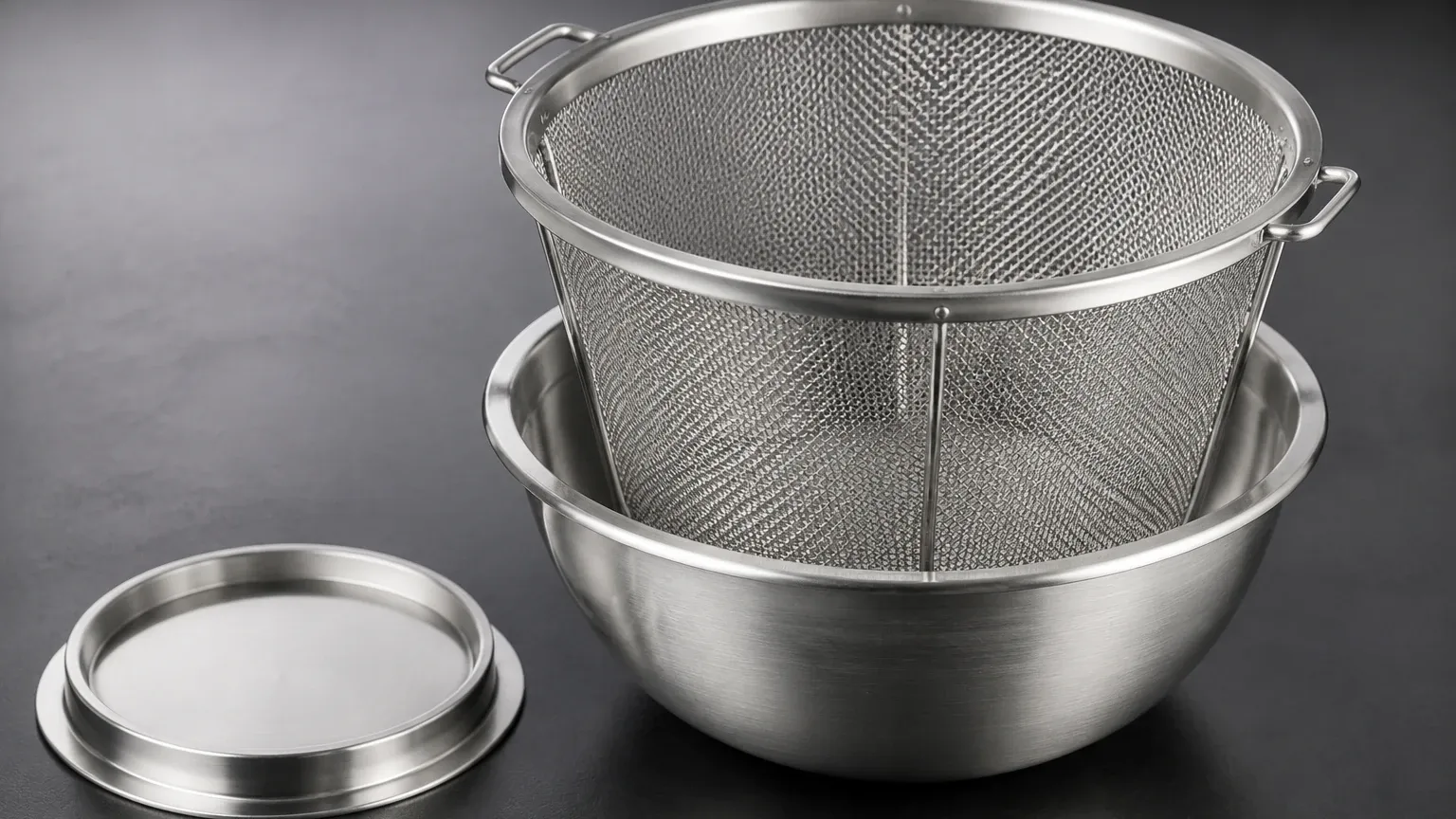
Strainer Basket with Bowl
In industrial fluid handling, the efficiency of a process often depends on the initial stages of debris removal and particle separation. A strainer basket with bowl configuration represents a critical component in protecting downstream equipment such as pumps, valves, and heat exchangers from damage caused by suspended solids. As a specialized manufacturer of stainless steel filtration solutions, Kaifil provides precision-engineered Strainers & Baskets designed to meet the rigorous demands of chemical processing, food and beverage production, and hydraulic systems.
This article examines the technical specifications, engineering considerations, and selection criteria for strainer baskets and their associated housings, providing engineers and procurement teams with the data necessary for informed decision-making.
Understanding the Role of Strainer Baskets in Industrial Filtration
Industrial strainers are essentially coarse filters used to remove larger particles from a liquid stream. Unlike fine membrane filters, which operate in the sub-micron range, a strainer basket with bowl is typically utilized for primary filtration or "scalping." The primary objective is to ensure that the fluid reaching sensitive components is free of contaminants that could cause mechanical wear, clogging, or process contamination.
In a typical installation, the strainer basket is housed within a vessel or "bowl." The fluid enters the inlet, passes through the mesh or perforated walls of the basket, and exits through the outlet. The solids are retained within the basket, while the bowl serves as the pressure vessel and the collection point for heavier debris that may settle out of the flow. This design is particularly effective in high-flow applications where the volume of solids would quickly overwhelm a standard inline filter.
Design and Material Specifications for High-Performance Baskets
The performance of a strainer basket is dictated by its construction materials and the geometry of its filtration media. For industrial applications, stainless steel is the industry standard due to its mechanical strength and resistance to corrosion.
Material Selection: SS304 vs. SS316
The choice between Stainless Steel 304 and 316 is often the first decision an engineer must make. SS304 is suitable for general-purpose applications, including water treatment and some food processing environments. However, in environments involving chlorides, high temperatures, or aggressive chemicals, SS316 (or SS316L) is preferred due to the addition of molybdenum, which significantly enhances pitting and crevice corrosion resistance.
Filtration Media Types
1. Perforated Metal: These baskets are constructed from heavy-gauge sheets with punched holes. They provide excellent structural integrity and are used for removing large debris. The open area percentage is a critical metric here, as it determines the initial pressure drop.
2. Wire Mesh: For finer filtration requirements, a wire mesh lining is added to a perforated support basket. This allows for precise micron ratings while maintaining the strength required to withstand high differential pressures.
3. Wedge Wire: In applications involving high-viscosity fluids or where backwashing is required, wedge wire (V-wire) baskets offer superior non-clogging characteristics and high mechanical strength.
The Engineering Significance of the Bowl Housing and Sump
The term "bowl" in a strainer assembly refers to the lower portion of the housing that contains the basket. The design of this bowl is just as important as the basket itself for several reasons:
Sump Capacity and Debris Collection
The bowl provides a sump area where heavier solids can settle without immediately blinding the filtration surface of the basket. A larger bowl volume allows for longer intervals between cleaning cycles, which is a key factor in reducing the total cost of ownership (TCO) by minimizing labor and downtime.
Sealing Mechanisms
To prevent bypass—where unfiltered fluid escapes around the edges of the basket—the interface between the basket and the bowl must be perfectly sealed. This is typically achieved through a machined seat and the use of O-rings or gaskets made from materials like Viton, EPDM, or PTFE, depending on the chemical compatibility and temperature of the process fluid.
Flow Dynamics
The internal geometry of the bowl affects the flow velocity and turbulence. Engineers must ensure that the bowl is sized correctly to prevent excessive velocity at the inlet, which can lead to erosion of the basket mesh or "jetting" effects that push contaminants through the media.
Evaluating Hydraulic Performance and Pressure Drop
One of the most critical factors in selecting a strainer basket with bowl is the clean pressure drop ($ΔP$). Every filtration component introduces resistance to the flow. If the $ΔP$ is too high, it can lead to cavitation in pumps or insufficient flow to downstream processes.
The 6:1 Ratio Rule
A common engineering guideline for industrial strainers is the ratio of the net free area of the basket to the cross-sectional area of the inlet pipe. A high-quality strainer basket with bowl should ideally offer a ratio of at least 6:1. This ensures that even as the basket begins to collect debris, there is sufficient open area to maintain a low pressure drop for an extended period.
Viscosity Considerations
The viscosity of the fluid significantly impacts the pressure drop. For high-viscosity liquids, such as oils or syrups, the mesh size and the overall dimensions of the bowl must be increased to compensate for the higher resistance. Engineers should always calculate the pressure drop based on the maximum expected viscosity and flow rate of the system.
Selection Criteria for Demanding Industrial Applications
When specifying a strainer basket with bowl, technical professionals should evaluate the following parameters to ensure system reliability:
* Micron Rating vs. Particle Size Distribution: It is essential to select a mesh size that is small enough to protect downstream equipment but large enough to avoid premature clogging. Over-filtering (selecting a mesh that is too fine) leads to excessive maintenance costs.
* Operating Pressure and Temperature: The bowl must be rated for the maximum system pressure, including potential surges. Temperature fluctuations can also affect the integrity of seals and the structural strength of the stainless steel.
* Chemical Compatibility: Beyond the stainless steel grade, the compatibility of all wetted parts—including gaskets and specialized coatings—must be verified against the process fluid.
* Customization Requirements: Many industrial systems have unique space constraints or connection requirements (e.g., NPT, Flanged, or Sanitary Tri-Clamp). Working with a manufacturer like Kaifil allows for the development of customized Strainers & Baskets that fit specific installation footprints.
Maintenance, Cleaning, and Replacement Protocols
The longevity of a strainer basket with bowl is directly tied to the maintenance regime. Because these are typically "permanent" filtration elements, they are designed to be cleaned and reused.
Monitoring Differential Pressure
Systems should be equipped with differential pressure gauges. A common practice is to clean the basket when the $ΔP$ reaches a predetermined limit (often 5-10 psi above the clean pressure drop). Waiting too long can result in the basket collapsing under the weight of the debris and the force of the fluid.
Cleaning Procedures
* Manual Cleaning: The bowl is depressurized, the cover is removed, and the basket is lifted out. For stainless steel baskets, ultrasonic cleaning or high-pressure water jets are often effective at removing lodged particles.
* Bypass Lines: To maintain continuous operation during cleaning, many engineers specify a duplex strainer arrangement, where two bowls are connected by a diverter valve, allowing one side to be cleaned while the other remains in service.
When to Replace
While stainless steel baskets are durable, they are not infinite. Signs that a basket needs replacement include visible deformation of the support cage, fraying or breaking of the wire mesh, or a permanent increase in the "clean" pressure drop, indicating that the mesh is blinded by fine particles that cannot be removed by standard cleaning methods.
Conclusion
The strainer basket with bowl is a foundational element in industrial fluid management. By selecting the appropriate materials, understanding the hydraulic impact of the design, and implementing a robust maintenance schedule, engineers can significantly enhance the reliability of their process lines. Kaifil remains committed to providing high-performance, customized filtration components that solve the complex challenges of modern industry. Whether for a new installation or the optimization of an existing system, focusing on the technical nuances of basket and bowl design ensures long-term operational success.
