


Strainer Handle
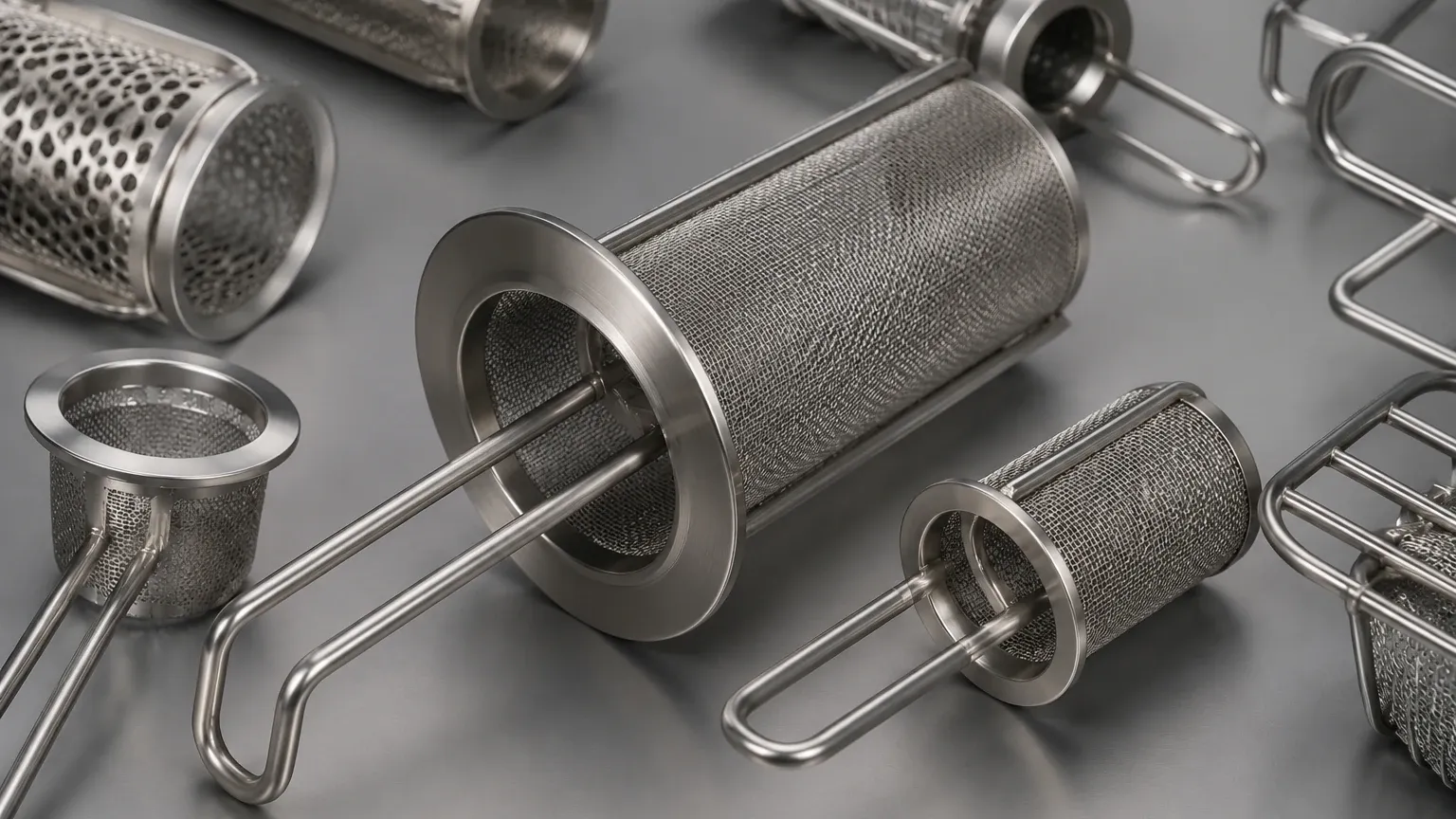
In industrial filtration systems, the efficiency of a process often depends on the smallest engineering details. While the primary focus of filtration design is typically on micron ratings, flow rates, and pressure drops, the mechanical interface between the operator and the filtration equipment is equally critical. The strainer handle is a fundamental component of industrial Strainers & Baskets, serving as the primary point of contact for maintenance, removal, and installation.
For engineers and procurement teams in the chemical, pharmaceutical, and food processing industries, understanding the nuances of handle design, material selection, and structural integrity is essential. A poorly designed handle can lead to extended downtime, safety hazards, and even catastrophic failure of the filtration unit if the handle shears off during extraction. This guide examines the technical specifications and engineering considerations required to select and specify the correct strainer handle for demanding industrial environments.
The Functional Role of Handles in Industrial Strainer Systems
The primary function of a strainer handle is to facilitate the safe and efficient removal of the filter basket from its housing. In many industrial applications, strainers are used to capture large volumes of solids, which can significantly increase the weight of the basket over time.
Extraction and Seating
When a strainer basket becomes blinded or reaches its dirt-holding capacity, the differential pressure across the mesh increases. This pressure can sometimes "wedge" the basket into the housing body or against the seals. The strainer handle must provide sufficient leverage for the operator to break this seal and lift the basket vertically. Conversely, during installation, the handle ensures the basket is properly seated and aligned within the housing to prevent bypass.
Orientation and Alignment
In certain complex filtration housings, the basket must be oriented in a specific direction to align with inlet and outlet ports. Handles are often designed with asymmetrical features or locking pins that ensure the basket can only be inserted in the correct orientation. This prevents operational errors that could lead to unfiltered fluid bypassing the system.
Engineering Variations of the Strainer Handle
Different applications require different handle geometries. The choice of design depends on the clearance available within the housing, the weight of the debris being collected, and the frequency of maintenance cycles.
1. Bail Handles (Swinging Handles)
The bail handle is perhaps the most common design for industrial baskets. It consists of a semi-circular wire or bar that is hinged to the top ring of the basket.
* Advantages: It can be folded down when the housing lid is closed, requiring minimal vertical clearance. It provides a centered lifting point, which helps maintain the basket's vertical alignment during extraction.
* Considerations: The pivot points must be robustly welded or pinned to prevent failure under high loads.
2. Fixed Cross-Bar Handles
Fixed handles are welded directly across the diameter of the basket's top ring. These are common in smaller strainers or where the housing lid provides enough internal headspace.
* Advantages: They offer maximum structural rigidity and have no moving parts that can wear out or trap contaminants.
* Considerations: They can obstruct the flow slightly and may interfere with certain types of lid-closure mechanisms if not sized correctly.
3. Dual Side Handles
For very large or heavy-duty Strainers & Baskets, a single central handle may not be sufficient. Dual handles located on opposite sides of the rim allow for two-person lifting or the use of mechanical hoists.
* Advantages: Distributed load-bearing and improved stability for high-volume baskets.
* Considerations: Requires a larger housing diameter to accommodate the handles without restricting flow.
4. Slotted and Locking Handles
In high-vibration environments or systems with significant backpressure, handles may include slots or locking tabs that interface with the housing lid. This ensures the basket remains firmly seated even during hydraulic surges.
Material Selection and Corrosion Resistance
Because the strainer handle is often exposed to the same harsh process fluids as the filter media, material compatibility is paramount. Kaifil specializes in stainless steel solutions, which are preferred in industrial B2B contexts for several reasons.
Stainless Steel Grades
* Grade 304: Suitable for general industrial use, water treatment, and less aggressive chemical environments. It offers excellent strength and cost-effectiveness.
* Grade 316L: The standard for pharmaceutical, food and beverage, and marine applications. The addition of molybdenum provides superior resistance to chlorides and pitting corrosion. The "L" (low carbon) designation is critical for handle attachment, as it prevents carbide precipitation during welding, ensuring the joint remains corrosion-resistant.
Surface Finishes
In the pharmaceutical and food industries, the strainer handle must meet strict hygienic standards. This often requires a specific surface roughness (Ra value). Electropolishing is frequently used to remove surface imperfections where bacteria could gather, ensuring the handle is as easy to clean as the filter mesh itself.
Structural Integrity and Load-Bearing Capacity
A common failure point in custom-made strainers is the weld between the handle and the basket frame. Engineers must calculate the maximum potential weight of the basket when fully loaded with wet debris and apply a significant safety factor (typically 3:1 or 4:1).
Welding Techniques
At Kaifil, advanced welding techniques such as TIG (Tungsten Inert Gas) or spot welding are used depending on the material thickness. For heavy-duty baskets, the handle is often reinforced with gussets or welded to a thickened top ring rather than directly to the thin wire mesh. This distributes the stress across a larger surface area, preventing the mesh from tearing when the basket is pulled.
Stress Analysis
In high-pressure applications, the handle may also act as a hold-down device. When the housing lid is closed, it may exert downward pressure on the handle to compress the basket's O-ring or gasket. In these cases, the handle must be engineered to withstand compressive forces without deforming, as deformation would lead to a loss of seal integrity.
Operational Safety and Ergonomic Considerations
Ergonomics play a vital role in reducing workplace injuries and improving maintenance efficiency. A strainer handle that is too thin can cause hand strain or make it difficult for an operator wearing heavy industrial gloves to get a secure grip.
Grip Diameter and Clearance
For manual extraction, the handle diameter should typically be between 8mm and 12mm to provide a comfortable grip. Furthermore, there must be adequate "knuckle clearance" between the handle and the top of the debris or the basket rim. If the handle is too low, the operator's hand may come into contact with the process fluid or sharp debris.
Heat Resistance
In applications involving high-temperature fluids (e.g., hot oil or steam-jacketed systems), the handle can become extremely hot. While stainless steel has relatively low thermal conductivity compared to other metals, extended handles or specialized insulated grips may be required to protect operators during the change-out process.
Customization and Specification for OEM Applications
When sourcing Strainers & Baskets, providing the manufacturer with detailed handle specifications is as important as the mesh size. For OEM applications, customization allows the filtration component to integrate seamlessly into a proprietary machine design.
Information to Confirm Before Ordering
When consulting with a manufacturer like Kaifil, engineers should be prepared to confirm the following regarding the handle design:
1. Maximum Load: What is the estimated weight of the basket when blinded and saturated with fluid?
2. Clearance Constraints: What is the distance between the top of the basket and the bottom of the housing lid?
3. Chemical Exposure: Will the handle be submerged in corrosive fluids, or only exposed to vapors?
4. Lifting Method: Will the basket be lifted manually, or is a hook-eye required for an overhead crane?
5. Regulatory Compliance: Does the handle need to meet FDA, 3A, or other industry-specific hygienic standards?
Maintenance and Inspection Cycles
The strainer handle should be part of a regular industrial inspection routine. Over time, repeated stress and vibration can lead to work-hardening of the metal or fatigue cracks at the weld points.
* Visual Inspection: Check for signs of bending, pitting corrosion, or cracked welds.
* Functional Test: For bail handles, ensure the pivot points move freely and are not seized by debris or scale buildup.
* Replacement: If a handle shows signs of structural compromise, the entire basket should be repaired or replaced. Attempting to lift a heavy, blinded basket with a compromised handle poses a significant safety risk to personnel and could result in the basket falling back into the housing, potentially damaging the internal surfaces.
Conclusion
The strainer handle is a critical component that bridges the gap between filtration performance and operational safety. By selecting the appropriate design, material, and structural reinforcement, industrial facilities can ensure that their Strainers & Baskets are easy to maintain and built to withstand the rigors of heavy-duty use. Whether for a standard water treatment plant or a high-purity pharmaceutical line, the engineering of the handle is a key factor in the total cost of ownership and the long-term reliability of the filtration system. Kaifil’s expertise in custom stainless steel fabrication ensures that every detail, including the handle, is optimized for the specific demands of the application.
