


Strainer Home Depot
In the procurement cycle for industrial components, engineers and maintenance managers often face the decision between immediate availability and specialized performance. A common starting point for basic hardware is a search for a strainer home depot offers, which typically leads to consumer-grade or light-commercial plumbing solutions. While retail outlets provide accessible options for residential sink drains, garden hose attachments, or basic pool maintenance, industrial process environments demand a significantly higher level of engineering precision and material integrity.
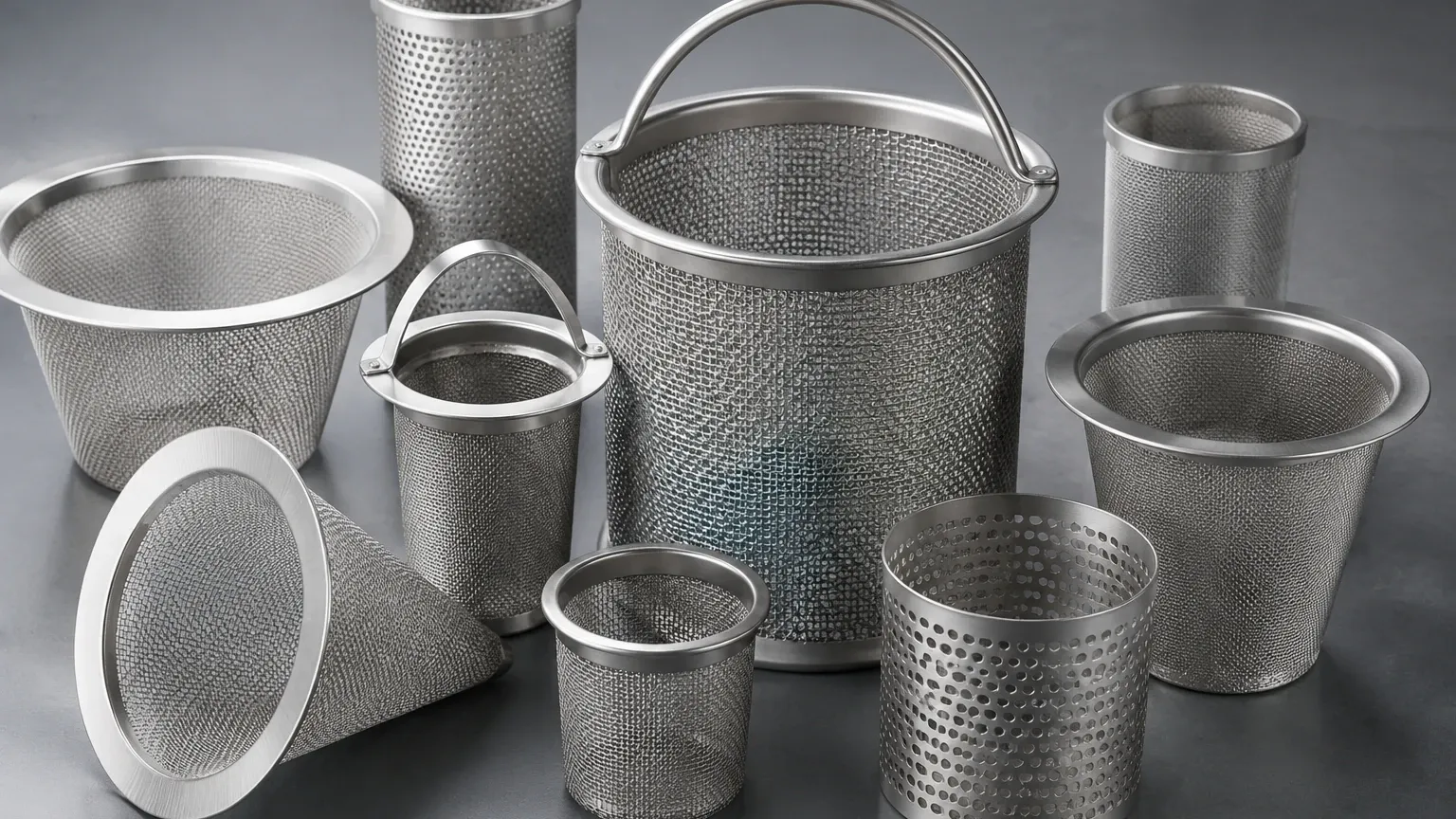
For critical applications in chemical processing, food and beverage production, and hydraulic systems, the transition from a retail-grade component to professional Strainers & Baskets is essential. Industrial-grade filtration components are designed to withstand high pressures, corrosive environments, and specific particle retention requirements that off-the-shelf retail products cannot meet. Understanding the technical distinctions between these categories is vital for ensuring system longevity and operational safety.
The Technical Gap Between Retail and Industrial Filtration
When searching for a strainer home depot provides, the results are generally limited to standard sizes and materials suited for low-pressure domestic water systems. These products are often manufactured using thin-gauge stainless steel or polymers, which lack the structural reinforcement necessary for industrial flow rates.
In contrast, industrial strainers and baskets are engineered as pressure-vessel components. They must account for the "delta P" (differential pressure) that occurs as debris accumulates. A retail strainer might collapse or bypass under the force of an industrial pump, leading to downstream equipment failure. Professional filtration solutions utilize heavy-duty perforated metals and precision-woven wire mesh, often reinforced with internal or external support cages to maintain structural integrity under extreme conditions.
Furthermore, industrial applications require documented material traceability. While a retail product may be labeled as "stainless steel," industrial projects often require specific grades such as SS316L or exotic alloys like Monel or Hastelloy to resist chemical attack. Professional manufacturers provide Material Test Reports (MTRs) and certificates of conformance, which are rarely available for consumer-level products found in big-box retail stores.
Material Selection: Why Stainless Steel Grades Matter
Material science is the foundation of effective filtration. A standard strainer home depot stocks is typically made from 304-grade stainless steel or even lower-grade alloys suitable for tap water. However, in B2B sectors like pharmaceutical or chemical processing, the choice of material is a critical engineering decision.
1. Corrosion Resistance: SS316L contains molybdenum, which provides superior resistance to chlorides and acidic environments compared to the SS304 found in retail products. In marine or chemical applications, using a lower-grade strainer can lead to pitting and stress corrosion cracking.
2. Thermal Stability: Industrial processes often involve high-temperature fluids. Professional strainers are designed to maintain their mechanical properties at temperatures that would cause consumer-grade seals or thin-walled baskets to warp or fail.
3. Sanitary Standards: In the food and beverage industry, the surface finish of the strainer is as important as the material itself. Industrial baskets can be electropolished to achieve a specific Ra (Roughness Average) value, preventing bacterial growth and ensuring compliance with FDA or 3-A sanitary standards—features not found in retail plumbing hardware.
Evaluating Filtration Efficiency in Strainers & Baskets
One of the primary limitations of a strainer home depot search is the lack of precision in filtration ratings. Consumer products are often rated by "mesh size" in a very general sense, whereas industrial filtration requires a detailed understanding of micron ratings and open area ratios.
Micron vs. Mesh
In the industrial context, the distinction between mesh and micron is fundamental. Mesh refers to the number of openings per linear inch, while micron refers to the actual size of the particles that can pass through the medium. A professional manufacturer can customize the weave pattern—such as plain weave, twilled weave, or Dutch weave—to achieve a specific absolute or nominal filtration rating. This level of precision ensures that sensitive downstream components, such as high-pressure nozzles or heat exchangers, are protected from specific particle sizes.
Open Area Ratio (OAR)
The efficiency of a strainer is also determined by its Open Area Ratio. This is the ratio of the total area of the holes to the total area of the basket. A higher OAR results in a lower initial pressure drop and a longer interval between cleanings. Industrial baskets are often designed with a 6:1 or 8:1 ratio (area of the basket to the area of the pipe inlet), whereas retail strainers may have a much lower ratio, leading to frequent clogging and restricted flow.
Structural Integrity and Pressure Ratings
Industrial systems operate under dynamic loads, including water hammer, vibration, and thermal expansion. A strainer home depot solution is designed for static, low-pressure environments. If installed in a high-pressure hydraulic line or a steam system, the lack of structural reinforcement can lead to catastrophic failure.
Professional Strainers & Baskets are constructed with several layers of support:
* Perforated Backing: A heavy-gauge perforated metal plate provides the primary structural strength.
* Fine Mesh Lining: A precision wire mesh is bonded or welded to the backing to provide the actual filtration.
* Reinforced Seams: Unlike the crimped or lightly spot-welded seams of retail products, industrial baskets feature full longitudinal and circumferential welds to prevent bypass.
These design elements ensure that the strainer can withstand the full system pressure even when the basket is 50% or 75% clogged with debris. This safety margin is a requirement for industrial risk management and OSHA compliance.
Customization Options for OEM Applications
One of the most significant advantages of working with a professional manufacturer over a retail outlet like Home Depot is the ability to customize the component to the specific geometry of the machine. Industrial equipment often has unique space constraints or unconventional flow paths that standard off-the-shelf strainers cannot accommodate.
Customization options include:
* Flange and Connection Types: Integration of ANSI, DIN, or JIS flanges, or specialized threaded connections.
* Handle Configurations: Slant handles, lift-out bails, or threaded pull-tabs for easy removal in cramped spaces.
* Multi-Stage Filtration: Baskets that incorporate multiple layers of different mesh sizes to capture both large debris and fine particulates in a single pass.
* Magnetic Inserts: The addition of magnetic rods to capture ferrous particles that might be smaller than the mesh size, common in hydraulic and lubrication systems.
For an OEM (Original Equipment Manufacturer), having a bespoke strainer means the component is an integral part of the machine's design, optimized for both performance and ease of maintenance.
Maintenance and Longevity: The B2B Perspective
The total cost of ownership (TCO) is a critical metric for industrial purchasing. While a strainer home depot offers might have a lower initial purchase price, its lifecycle cost is often much higher due to frequent replacements and potential downtime.
Industrial strainers are designed for "cleanable" service. The high-quality stainless steel construction allows for repeated ultrasonic cleaning, high-pressure washing, or chemical stripping without degrading the filtration media. In many industrial settings, a single high-quality basket can last for years, whereas a retail-grade equivalent might need to be discarded after a few cleaning cycles due to mesh fatigue or frame distortion.
Replacement Cycles and Monitoring
In a professional setting, the replacement cycle is usually dictated by differential pressure monitoring. When the pressure drop across the strainer reaches a predetermined limit, the basket is removed and cleaned. Industrial strainers often include ports for differential pressure gauges, a feature absent in consumer-grade hardware. This data-driven approach to maintenance prevents unnecessary downtime and ensures the system always operates within its design parameters.
Conclusion: Making an Informed Procurement Decision
While a search for a strainer home depot provides a quick fix for domestic or light-duty tasks, it is rarely the correct path for industrial engineering requirements. The complexities of fluid dynamics, material compatibility, and structural safety demand a more specialized approach.
By selecting professional-grade Strainers & Baskets, engineers ensure that their systems are protected by components designed specifically for the rigors of the industrial environment. Whether it is a custom-designed basket for a new chemical reactor or a high-performance replacement for a hydraulic power unit, the investment in precision-engineered filtration pays dividends in reduced maintenance, increased equipment lifespan, and operational reliability. When the cost of a single hour of downtime can exceed the price of the filtration system itself, the choice of a professional manufacturer becomes the only logical engineering decision.
