


Strainer Kitz
In industrial fluid handling and piping systems, the integrity of downstream equipment such as pumps, control valves, and flow meters depends heavily on the efficiency of mechanical filtration. Engineers and procurement professionals often look toward established industry standards and brands when selecting components for these systems. The term "strainer kitz" frequently appears in technical specifications, referring to the high-quality strainers manufactured by the Kitz Corporation, a global leader in valve and strainer production. Understanding the technical nuances of these components, as well as the broader category of industrial filtration, is essential for maintaining system longevity and operational efficiency.
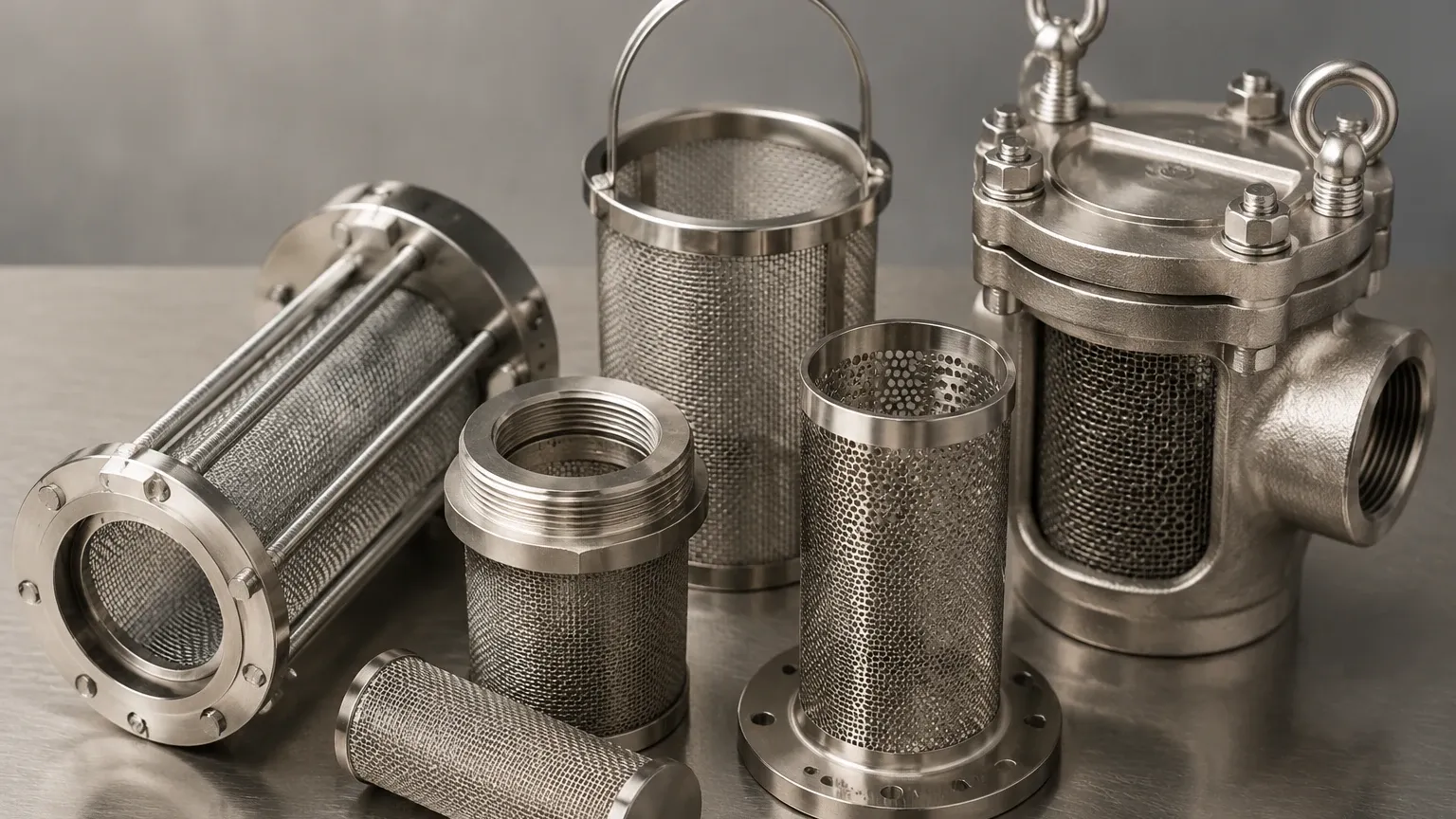
Industrial strainers serve as the primary line of defense against particulate matter. Whether the medium is steam, water, oil, or chemical solvents, the presence of scale, rust, or debris can lead to catastrophic equipment failure or significant downtime. This guide explores the engineering considerations, material selections, and performance expectations associated with high-performance Strainers & Baskets, providing the technical context necessary for informed decision-making in B2B procurement.
Understanding the Role of Strainer Kitz in Industrial Piping Systems
A strainer is a pipe fitting through which liquid or gas is passed for purification, filtering, or separation from solid matter. In the context of a strainer kitz, the focus is typically on Y-type and U-type (bucket) configurations designed to meet rigorous international standards such as ASME, API, and JIS. These components are strategically placed upstream of sensitive equipment to capture solids that could otherwise erode valve seats, clog cooling channels, or damage pump impellers.
Kitz strainers are recognized for their robust casting quality and precise machining. However, the performance of any strainer is only as good as its internal element—the screen or basket. While the housing provides the pressure-containing boundary, the internal mesh determines the filtration accuracy and flow characteristics. For engineers, the challenge lies in balancing the need for fine filtration with the requirement for low pressure drop. A strainer that is too restrictive will increase energy costs and risk cavitation in pumps, while one that is too coarse will fail to protect downstream assets.
Types of Strainers and Their Technical Applications
Selecting the correct configuration is the first step in engineering a reliable filtration solution. The two most common designs found in industrial environments are Y-strainers and basket strainers.
Y-Strainers
The Y-strainer is the most common choice for pressurized lines, particularly for steam and gas applications. Its compact shape allows for installation in both horizontal and vertical pipelines, provided the "leg" of the Y points downward to collect debris. Because the holding capacity of a Y-strainer is relatively small compared to a basket strainer, it is best suited for applications where the amount of particulate matter is low. In a strainer kitz catalog, Y-strainers are often available in various materials, including ductile iron for utility lines and stainless steel for corrosive environments.
Basket (U-Type) Strainers
Basket strainers, or bucket strainers, are designed for liquid applications where high flow rates and higher dirt-holding capacities are required. These units are typically installed in horizontal lines and feature a top-opening design that allows for easy removal of the basket for cleaning. Because the basket has a larger surface area than a Y-type screen, the pressure drop across the unit is significantly lower. This makes them ideal for suction-side pump protection and high-viscosity fluid handling.
Duplex Strainers
For systems that cannot be shut down for maintenance, duplex strainers are employed. These consist of two separate strainer chambers connected by a diverting valve. When one basket becomes clogged, the flow is diverted to the clean chamber, allowing the operator to service the dirty basket without interrupting the process. This is a critical requirement in chemical processing and power generation plants.
Key Engineering Criteria for Selecting Strainers & Baskets
When specifying Strainers & Baskets, engineers must look beyond the brand name and evaluate specific performance metrics. The following criteria are fundamental to ensuring the selected component meets the application's demands.
Filtration Accuracy: Mesh vs. Perforation
The internal element of a strainer can be a perforated plate, a wire mesh, or a combination of both. Perforated plates are typically used for coarse filtration (removing large stones or welding slag), with hole sizes ranging from 1/32" to 1/2". For finer filtration, a stainless steel wire mesh is lined inside the perforated basket.
Mesh size refers to the number of openings per linear inch. For example, a 40-mesh screen has 40 openings per inch. It is vital to confirm the "open area ratio," which is the ratio of the total area of the holes to the area of the inlet pipe. A high-quality strainer should have an open area ratio of at least 3:1 or 4:1 to ensure that the unit does not become a bottleneck in the system.
Pressure Drop (Delta P)
Every strainer introduces a degree of resistance to the flow. The pressure drop increases as the strainer collects debris. Engineers use the Flow Coefficient (Cv) to calculate the expected pressure drop at a given flow rate. If the initial pressure drop is too high, it indicates that the strainer is undersized or the mesh is too fine for the application. Monitoring the differential pressure across the strainer is the most effective way to determine when cleaning is required.
Material Compatibility and Pressure Ratings
Material selection is dictated by the fluid's chemical properties and the system's operating temperature and pressure. Common materials include:
* Cast Iron/Ductile Iron: Cost-effective for water and non-corrosive oil services.
* Carbon Steel (WCB): Suitable for high-temperature and high-pressure steam and hydrocarbon service.
* Stainless Steel (CF8/CF8M): Essential for pharmaceutical, food and beverage, and corrosive chemical applications.
In a strainer kitz specification, you will often find pressure ratings like Class 150, 300, or 600, or JIS 10K/20K. These must align with the piping system's overall rating to ensure safety and compliance with local regulations.
Evaluating Performance and Durability in Harsh Environments
In industries such as chemical processing or offshore oil and gas, strainers are subjected to extreme conditions. The durability of the strainer basket is paramount. A common failure mode in industrial filtration is the collapse of the mesh due to high differential pressure. This often happens when a strainer is neglected and the debris buildup creates a "plug" that the system pressure eventually pushes through the screen.
To prevent this, high-performance baskets are often reinforced with heavy-duty perforated metal backing or internal supports. Furthermore, in corrosive environments, the choice of stainless steel grade (e.g., 304 vs. 316L) can determine whether the strainer lasts for decades or fails within months due to pitting or stress corrosion cracking. 316L stainless steel, with its molybdenum content, offers superior resistance to chlorides, making it the preferred choice for marine and chemical applications.
Another factor is the sealing mechanism. Whether using a flat gasket or an O-ring, the seal must be compatible with the process fluid. For high-temperature steam, spiral wound gaskets are often required to maintain a leak-proof seal at the strainer cap.
Maintenance Protocols and Replacement Cycles
The total cost of ownership (TCO) for a strainer is heavily influenced by its maintenance requirements. A strainer that is difficult to clean or requires frequent part replacements will quickly become a liability.
Cleaning Procedures
For Y-strainers, a "blow-off" connection is often provided. By installing a valve on the strainer cap, operators can flush out accumulated debris without opening the strainer. However, this is only effective for loose, non-fibrous materials. For basket strainers, the process involves depressurizing the line, opening the cover, and manually cleaning the basket. It is recommended to have a spare basket on hand to minimize downtime during this process.
When to Replace the Basket
While the strainer housing can last the lifetime of the plant, the internal baskets are wear items. Signs that a basket needs replacement include:
* Visible Tearing or Fraying: Even a small hole in the mesh allows contaminants to pass through, defeating the purpose of the strainer.
* Permanent Deformation: If the basket shape is distorted, it may no longer seat correctly in the housing, leading to fluid bypass.
* Corrosion: Any sign of thinning metal or rust on a stainless steel element suggests that the material is not suitable for the process fluid.
Customization and OEM Support for Specialized Filtration Needs
While standard products like those in the strainer kitz range cover many industrial needs, certain applications require a customized approach. This is where specialized manufacturers like Kaifil provide significant value. Customization can involve non-standard dimensions to fit existing piping footprints, specialized materials like Monel or Hastelloy for highly aggressive fluids, or unique mesh configurations for specific particle size distributions.
OEM (Original Equipment Manufacturer) capabilities allow for the development of filtration components that are optimized for specific equipment. For instance, a pump manufacturer might require a custom-shaped suction strainer that fits within a tight enclosure while maintaining a specific flow profile. By working closely with a manufacturer that understands both the metallurgy and the fluid dynamics of filtration, engineers can achieve higher efficiency and better protection than off-the-shelf solutions might offer.
When sourcing Strainers & Baskets, it is essential to confirm the manufacturer's quality control processes. This includes material traceability (MTRs), pressure testing, and dimensional inspections. For critical applications, such as those in the pharmaceutical or food industries, ensuring that the materials meet FDA or 3A standards is non-negotiable.
Conclusion: Making Informed Procurement Decisions
Selecting the right industrial strainer involves more than just matching pipe sizes. Whether you are specifying a strainer kitz for a new project or looking for high-quality replacement baskets for an existing installation, the focus must remain on technical performance, material integrity, and ease of maintenance.
By understanding the differences between Y-type and basket configurations, calculating the required filtration accuracy, and considering the long-term effects of corrosion and pressure drop, engineering teams can significantly reduce the risk of equipment failure. In the demanding world of B2B industrial operations, the reliability of a simple strainer often stands as the difference between a smooth-running process and a costly environmental or mechanical incident. Investing in high-performance filtration components is not just a maintenance task; it is a fundamental strategy for operational excellence.
