


Strainers Amazon
In the modern procurement landscape, the convenience of digital marketplaces has significantly altered how businesses source components. For many maintenance, repair, and operations (MRO) professionals, a search for "strainers amazon" is often the first step when a replacement part is needed urgently. While consumer-facing platforms offer a vast array of generic products, the requirements for industrial filtration—particularly in chemical processing, pharmaceutical manufacturing, and food production—demand a level of precision and material integrity that goes beyond off-the-shelf retail options.
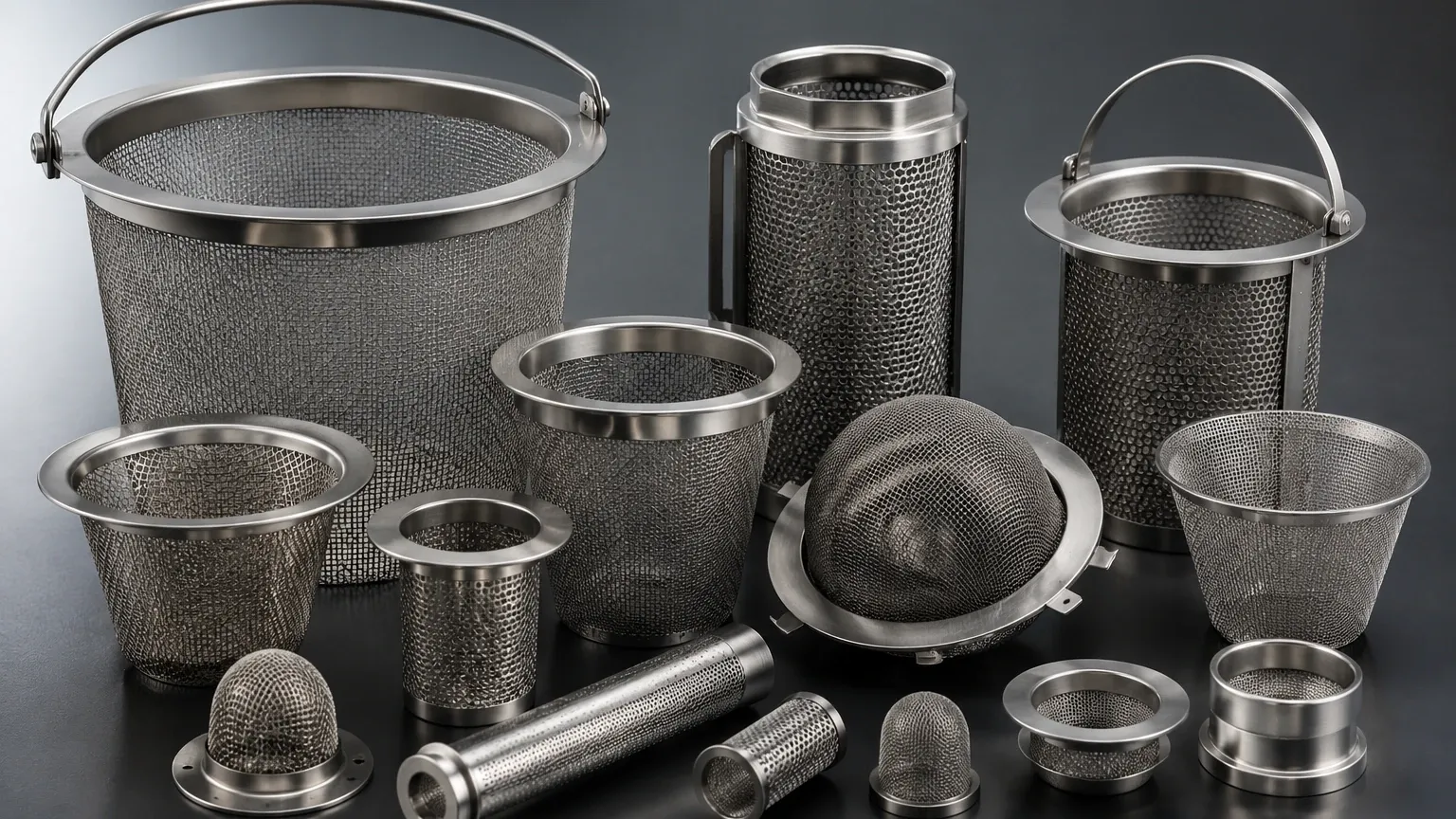
Industrial Strainers & Baskets are critical components designed to protect expensive downstream equipment, such as pumps, valves, and heat exchangers, from damage caused by particulate matter. Understanding the technical distinctions between a standard retail strainer and an engineered industrial component is essential for ensuring system longevity and process safety.
Understanding the Limitations of Generic Marketplace Strainers
When searching for strainers amazon, buyers are met with thousands of results ranging from kitchen tools to light-duty plumbing fittings. For a residential or light commercial application, these products may suffice. However, in a B2B industrial context, several critical factors are often missing from generic marketplace listings.
Material Traceability and Certification
In industries like pharmaceuticals or food and beverage, material traceability is non-negotiable. Industrial manufacturers like Kaifil provide Mill Test Reports (MTRs) that verify the exact chemical composition of the stainless steel used. Generic strainers found on mass-market platforms often lack this documentation, making it impossible to verify if the steel is truly 304 or 316 grade, or if it contains impurities that could lead to premature corrosion or batch contamination.
Pressure and Temperature Ratings
Industrial systems often operate under high pressures and extreme temperatures. A strainer designed for a home sink or a low-pressure irrigation system will fail catastrophically if placed in a high-pressure hydraulic line or a steam-jacketed processing pipe. Industrial-grade strainers are engineered with specific wall thicknesses and reinforcement structures to withstand these mechanical stresses.
Material Integrity: Why Stainless Steel Grades Matter
The primary reason engineers move beyond a simple search for strainers amazon and toward specialized manufacturers is the need for specific alloy performance. Stainless steel is the gold standard for industrial filtration due to its corrosion resistance and durability, but not all stainless steel is created equal.
1. Type 304 Stainless Steel: This is the most common grade, offering good corrosion resistance for water and mild chemical applications. It is suitable for many general industrial uses where cost-effectiveness is a priority.
2. Type 316 Stainless Steel: Containing molybdenum, 316 stainless steel provides superior resistance to chlorides and acids. This is the baseline requirement for marine environments, chemical processing, and pharmaceutical applications.
3. Type 316L Stainless Steel: The "L" stands for low carbon. This grade is essential for components that require welding, as it prevents carbide precipitation that can lead to intergranular corrosion at the weld sites.
Generic products often use "commercial grade" stainless steel, which may not meet the strict ASTM or ISO standards required for industrial reliability. For critical infrastructure, the risk of using an unverified material far outweighs the initial cost savings of a retail purchase.
Engineering Considerations for Industrial Strainers & Baskets
Selecting the right filtration component requires more than just matching a pipe diameter. Engineers must evaluate several performance metrics to ensure the strainer does not become a bottleneck or a point of failure in the system.
Filtration Accuracy and Micron Ratings
Filtration accuracy is defined by the size of the particles the strainer is designed to trap. This is usually measured in mesh size or microns. While a retail search for strainers amazon might offer "fine" or "coarse" mesh, industrial applications require precise micron ratings. Whether the process requires 5-micron precision or 500-micron protection for a large pump intake, the mesh must be uniform and securely bonded to the support structure.
Pressure Drop (Delta P)
Every strainer introduces a degree of resistance to the flow of fluid, known as pressure drop. If the open area of the strainer is too small, the pressure drop increases, forcing pumps to work harder and potentially leading to cavitation or system shutdown. Industrial Strainers & Baskets are designed with a high open-area ratio to minimize this resistance while maintaining structural integrity.
Flow Rate and Viscosity
The behavior of the fluid—whether it is water-thin or as viscous as honey—dictates the design of the basket. High-viscosity fluids require more robust support structures to prevent the mesh from collapsing under the weight of the moving fluid. Specialized manufacturers can calculate the necessary reinforcement needed for specific flow conditions, a service not available through a standard retail transaction.
Customization vs. Off-the-Shelf Solutions
One of the most significant advantages of working with an industrial manufacturer like Kaifil is the ability to customize filtration components. Off-the-shelf products found via strainers amazon are manufactured to fixed dimensions, which rarely account for the unique constraints of a custom-built industrial skid or an aging facility’s specialized piping.
Custom Dimensions and Fittings
Industrial strainers can be fabricated to fit existing housings perfectly. This includes custom flange types (ANSI, DIN, JIS), threaded connections (NPT, BSP), or even quick-disconnect fittings for rapid maintenance. Custom heights and diameters ensure that the basket utilizes the maximum available volume within the strainer housing, extending the time between cleaning cycles.
Specialized Mesh and Reinforcement
For demanding applications, a single layer of wire mesh may not be enough. Industrial baskets can be constructed with multiple layers, including a fine inner mesh for filtration and a heavy-duty outer perforated metal layer for structural support. This "sandwich" construction allows for high-precision filtration in high-pressure environments.
Total Cost of Ownership and Long-term Reliability
While the price point of products found through a search for strainers amazon may be lower initially, the Total Cost of Ownership (TCO) is often significantly higher for the industrial user. TCO includes the purchase price, installation costs, maintenance frequency, and the cost of potential downtime.
* Durability: An industrial-grade 316L stainless steel basket can last for years with proper cleaning. A lower-quality retail strainer may corrode or tear within months, requiring frequent replacements.
* System Protection: If a cheap strainer fails and allows debris to enter a high-precision pump, the repair costs can reach tens of thousands of dollars. The strainer is an insurance policy for the rest of the system; choosing a low-quality component compromises that insurance.
* Cleaning and Maintenance: Industrial baskets are designed for repeated cleaning. They can withstand high-pressure washing, ultrasonic cleaning, or chemical baths without losing their shape or filtration efficiency.
Selection Criteria for Industrial Filtration Components
Before finalizing a purchase, engineering and purchasing teams should confirm several technical specifications to ensure the component is fit for purpose. If these details are not clearly defined in a product listing, it is a signal that the product may not be suitable for industrial use.
1. Fluid Compatibility: Is the material resistant to the specific chemicals, oils, or gases in the system?
2. Solids Loading: How much debris is expected? This determines the required basket volume and the frequency of cleaning.
3. Maximum Operating Pressure: Does the strainer have a safety factor that exceeds the maximum system pressure?
4. Seal Requirements: Does the strainer basket require specialized gaskets or O-rings (Viton, EPDM, PTFE) to prevent bypass?
5. Compliance: Does the product meet industry-specific standards, such as FDA compliance for food contact or 3-A Sanitary Standards for dairy processing?
Conclusion: Making the Right Choice for Critical Infrastructure
While platforms like Amazon have revolutionized the way we buy consumer goods, the complexities of industrial filtration require a more technical approach. A search for strainers amazon might solve a temporary problem in a non-critical environment, but for the engineers and facility managers responsible for the uptime of a processing plant, specialized Strainers & Baskets are the only viable solution.
By partnering with a manufacturer like Kaifil, businesses gain access to engineering expertise, material traceability, and customized designs that ensure efficient, durable, and cost-effective filtration performance. In the world of industrial manufacturing, the cost of failure is too high to rely on anything less than precision-engineered components.
