


Strainers Ems
In industrial fluid handling, the integrity of downstream equipment such as pumps, valves, and instrumentation depends heavily on the effectiveness of primary filtration. The implementation of strainers ems (Engineered Mesh Systems) and robust Strainers & Baskets represents a critical line of defense against particulate contamination. Unlike fine filtration systems designed to remove microscopic particles, industrial strainers focus on the removal of larger solids that can cause mechanical wear, clogging, or catastrophic failure in process piping.
For engineers and procurement professionals, selecting the correct strainer configuration requires a deep understanding of fluid dynamics, material compatibility, and the specific mechanical demands of the application. This guide examines the technical nuances of engineered mesh strainers, providing a factual framework for evaluating performance and durability in demanding B2B environments.
The Role of Strainers & Baskets in Industrial Systems
Industrial strainers are essentially specialized pressure vessels designed to remove solids from flowing liquids or gases. While the terms "filter" and "strainer" are often used interchangeably, the distinction lies in the particle size and the intent of the process. Strainers are typically used for coarse filtration—protecting equipment from debris like scale, rust, weld beads, and foreign matter.
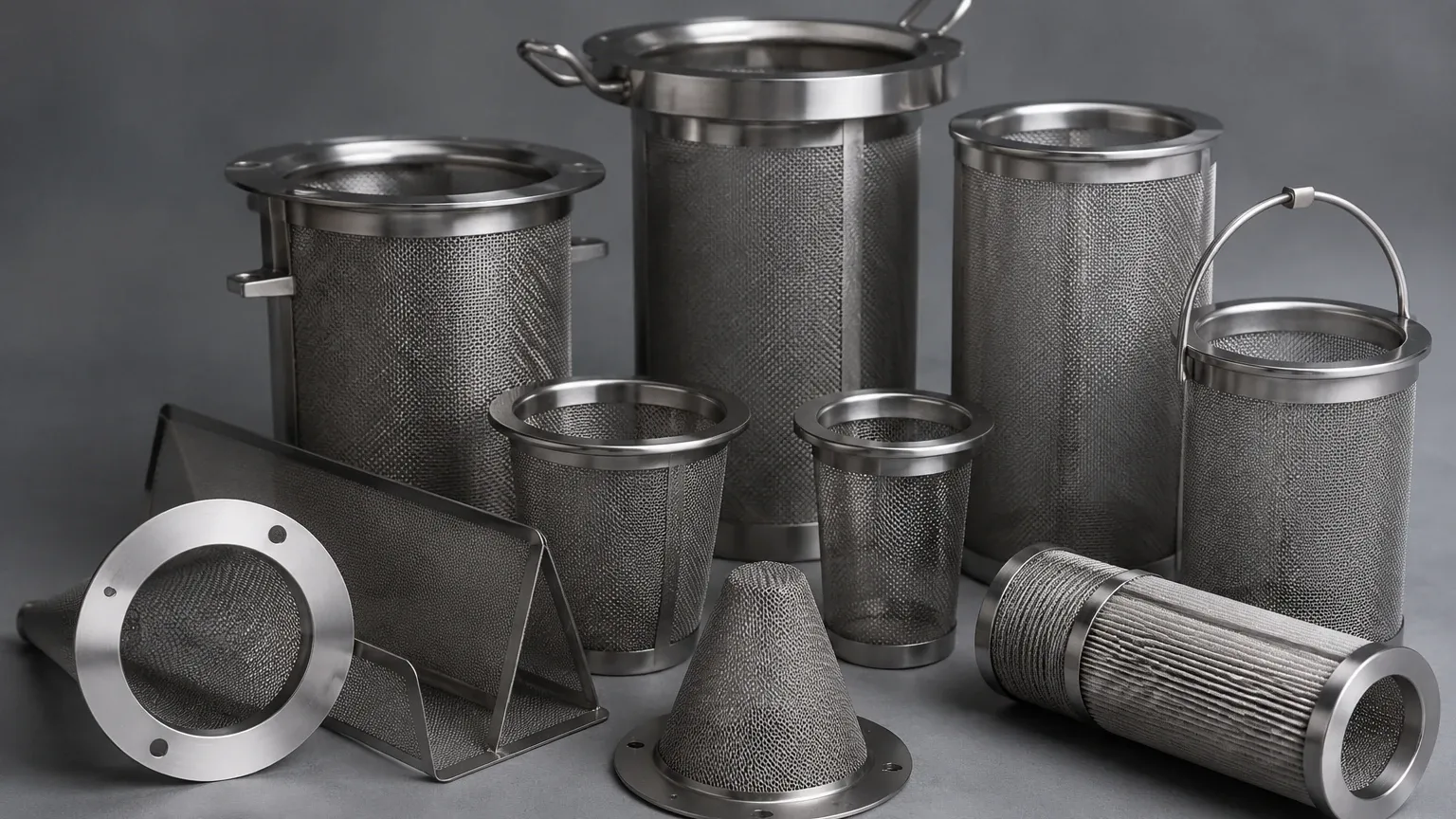
Strainers & Baskets are categorized by their configuration, most commonly Y-strainers, T-strainers, and basket (simplex or duplex) strainers. The choice between these depends on the allowable pressure drop, the frequency of cleaning required, and the orientation of the piping.
1. Simplex Basket Strainers: Used in systems where the flow can be interrupted for cleaning. They offer a larger surface area than Y-strainers, which results in a lower pressure drop and longer intervals between maintenance.
2. Duplex Basket Strainers: Essential for continuous-flow operations. They consist of two separate strainer chambers connected by a diverting valve, allowing one side to be cleaned while the other remains in service.
3. Y-Strainers: Typically used for steam, gas, or liquid applications where the amount of material to be removed is small, and where space is a constraint.
In the context of strainers ems, the focus shifts toward the engineered mesh components that reside within these housings. These components must be manufactured to precise tolerances to ensure that the "open area ratio"—the ratio of the total area of the holes to the total area of the mesh—is optimized for the specific flow rate of the system.
Technical Specifications and Material Selection
The performance of strainers ems is fundamentally tied to the materials used in their construction. In industrial settings, stainless steel is the preferred medium due to its mechanical strength and resistance to corrosion.
Grade 304 vs. 316L Stainless Steel
Most industrial baskets are fabricated from either Grade 304 or Grade 316L stainless steel. Grade 304 is suitable for general-purpose applications, providing excellent strength and basic corrosion resistance. However, in chemical processing or marine environments, Grade 316L is required. The addition of molybdenum in 316L enhances resistance to pitting and crevice corrosion, particularly in chloride-rich environments.
Mesh Count and Micron Rating
Engineers must specify the filtration degree based on the smallest particle that must be removed to protect downstream components. This is defined by either mesh count (the number of wires per linear inch) or micron rating (the size of the opening in micrometers).
* Coarse Mesh: Used for heavy debris removal (e.g., 20 mesh to 60 mesh).
* Fine Mesh: Used for protecting sensitive equipment (e.g., 100 mesh to 400 mesh).
When specifying strainers ems, it is vital to balance the micron rating with the flow requirements. A mesh that is too fine will clog rapidly, leading to excessive pressure drops and frequent downtime for cleaning.
Engineering Considerations for High-Performance Mesh Solutions
The structural integrity of the mesh within Strainers & Baskets is a common point of failure in high-pressure systems. To prevent the mesh from collapsing or bypassing, several engineering techniques are employed during the manufacturing of strainers ems.
Support Structures
Fine wire mesh lacks the structural rigidity to withstand high differential pressures. Consequently, high-performance baskets often feature a "multi-layer" construction. This typically involves a fine inner mesh layer for filtration, supported by a heavier perforated metal plate or a coarse outer mesh. This design ensures that the filtration media remains intact even under surging flow conditions.
Welding and Fabrication
Precision in welding is paramount. For stainless steel components, TIG (Tungsten Inert Gas) welding or plasma welding is often used to ensure clean, strong seams that do not introduce contaminants or weak spots. In pharmaceutical or food-grade applications, the welds must be ground smooth and passivated to prevent bacterial growth and ensure compliance with hygienic standards.
Open Area Ratio (OAR)
One of the most critical metrics for an engineer is the Open Area Ratio. A well-designed strainer basket should ideally have an open area at least four to six times the cross-sectional area of the inlet pipe. A high OAR minimizes the initial pressure drop and provides more storage capacity for debris, which directly impacts the service life of the component.
Hydraulic Performance: Pressure Drop and Flow Characteristics
Every strainer introduced into a piping system creates a restriction, resulting in a pressure drop (ΔP). For strainers ems, calculating the "clean pressure drop" is the first step in system design. If the initial ΔP is too high, the system's pump efficiency will decrease, and the risk of cavitation increases.
Several factors influence the pressure drop across Strainers & Baskets:
* Viscosity of the Fluid: Higher viscosity fluids require larger mesh openings or larger strainer housings to maintain acceptable flow rates.
* Specific Gravity: The density of the fluid affects the velocity and the resulting pressure loss.
* Contaminant Loading: As the strainer collects debris, the effective open area decreases, and the pressure drop increases exponentially. This is why monitoring differential pressure is a standard industrial practice.
In many engineered systems, the use of pleated mesh designs in strainers ems can significantly increase the available surface area without increasing the outer dimensions of the basket. Pleating allows for a much higher dirt-holding capacity, which is particularly beneficial in systems with high solids loading.
Integration of Strainers in Specialized Industrial Environments
Different industries impose unique requirements on the design and manufacture of filtration components.
Chemical Processing
In chemical plants, the primary concern is chemical compatibility. Strainers ems must be resistant to the specific acids, bases, or solvents being processed. Beyond material selection, the gaskets and seals used in the strainer housing must also be evaluated for chemical resistance (e.g., PTFE, Viton, or EPDM).
Food and Beverage
For food-grade applications, the focus is on "cleanability." Strainers must be designed without "dead zones" where product can stagnate and spoil. Stainless steel 316L with a high-quality surface finish (often measured in Ra) is standard. These components must often withstand CIP (Clean-In-Place) cycles involving high temperatures and caustic cleaning agents.
Oil and Gas
In the oil and gas sector, strainers are subjected to high pressures and abrasive particles. The baskets in these environments are often reinforced with heavy-duty perforated liners to withstand the mechanical stress of high-velocity slugs of liquid or gas.
Maintenance, Replacement Cycles, and Operational Longevity
The total cost of ownership (TCO) of Strainers & Baskets is determined not by the initial purchase price, but by the maintenance requirements and the service life of the internal mesh.
Differential Pressure Monitoring
To optimize maintenance, systems should be equipped with differential pressure gauges. A common rule of thumb is to clean or replace the strainer basket when the pressure drop reaches 10-15 psi over the clean pressure drop. Ignoring this can lead to mesh rupture, which allows contaminants to bypass the strainer and damage expensive downstream equipment.
Cleaning Protocols
For reusable strainers ems, the cleaning method is critical to maintaining performance.
* Manual Cleaning: Involves removing the basket and using a soft brush or high-pressure water. Care must be taken not to damage the fine mesh wires.
* Ultrasonic Cleaning: Highly effective for removing fine particles trapped within the wire intersections of the mesh.
* Chemical Cleaning: Used when the contaminants are organic or scale-based and cannot be removed mechanically.
Replacement Indicators
Even with regular cleaning, stainless steel mesh will eventually suffer from fatigue or permanent blinding (where particles become wedged so deeply they cannot be removed). Signs that a basket requires replacement include visible deformation of the mesh, broken wires, or a clean pressure drop that remains significantly higher than the original specification.
Customization and OEM Capabilities for Engineered Filtration
Many industrial applications cannot be served by off-the-shelf products. Customization is often necessary to fit existing piping footprints or to meet specific filtration targets. When sourcing strainers ems, working with a manufacturer that offers OEM capabilities is advantageous.
Customization options typically include:
* Bespoke Dimensions: Tailoring the height, diameter, and flange connections of the basket to fit non-standard housings.
* Variable Micron Ratings: Combining different layers of mesh to achieve a specific filtration profile.
* Reinforcement Options: Adding internal or external structural supports based on the expected differential pressure.
* Specialty Coatings: Applying coatings for additional abrasion resistance or to reduce the adhesion of sticky substances.
By collaborating with an experienced manufacturer, engineers can ensure that their Strainers & Baskets are optimized for both the fluid properties and the mechanical environment of their specific facility.
Conclusion
Selecting and maintaining strainers ems is a fundamental aspect of industrial process management. Whether the goal is protecting a high-pressure pump in a hydraulic system or ensuring the purity of a chemical batch, the engineering of the strainer basket is the determining factor in success. By focusing on material quality, structural design, and hydraulic efficiency, technical professionals can significantly reduce downtime and extend the life of their entire fluid handling system. Understanding the relationship between mesh geometry, pressure drop, and material science allows for informed decisions that balance performance with long-term operational reliability.
