


Strainers Large
In large-scale industrial fluid handling, the integrity of downstream equipment—such as pumps, valves, and heat exchangers—depends heavily on the efficiency of primary filtration components. Large strainers are the critical line of defense, designed to remove coarse particles and debris from high-volume flow streams. Unlike standard inline filters, large-scale strainers must balance massive flow capacities with structural durability and ease of maintenance.
For engineers and procurement professionals, selecting the appropriate Strainers & Baskets involves more than just matching pipe sizes. It requires a deep understanding of fluid dynamics, material compatibility, and the mechanical stresses inherent in high-pressure systems. This guide examines the technical considerations, design variations, and engineering standards that define high-performance large strainers.
The Engineering Significance of Large-Scale Strainers
Industrial processes in chemical plants, water treatment facilities, and power generation stations often involve piping systems with diameters exceeding 8 to 10 inches. In these environments, "strainers large" refers to heavy-duty components capable of handling thousands of gallons per minute (GPM) without causing excessive system backpressure.
The primary function of these large units is to protect expensive rotating equipment from catastrophic failure. A single piece of weld slag or a stray bolt moving through a high-velocity pipe can cause tens of thousands of dollars in damage to a pump impeller. Large strainers provide a collection point for these contaminants, trapping them in a removable basket or screen while allowing the fluid to pass through with minimal resistance.
From a design perspective, the size of the strainer body must be significantly larger than the pipe size to ensure a high "Open Area Ratio" (OAR). This ratio compares the total open area of the strainer holes to the internal cross-sectional area of the inlet pipe. For large-scale applications, an OAR of 6:1 or higher is often targeted to extend the time between cleaning cycles and maintain system efficiency.
Key Design Parameters for High-Volume Strainers & Baskets
When specifying large strainers, engineers must evaluate several design configurations to determine which best fits the physical layout and operational requirements of the facility. The most common types for large-diameter piping include:
Basket Strainers (Simplex and Duplex)
Basket strainers are the industry standard for large-scale liquid applications. They feature a top-loading design that allows for easy removal of the internal basket.
- Simplex Strainers: Used in systems where the flow can be temporarily shut down for cleaning.
- Duplex Strainers: These consist of two separate strainer chambers connected by a diverting valve. They are essential for continuous-flow processes where the system cannot be stopped. When one basket is full, the flow is diverted to the second chamber, allowing the first to be cleaned without interruption.
T-Type and Y-Type Strainers
While Y-strainers are common in smaller steam and gas lines, T-type strainers are often preferred for large-diameter liquid lines. T-strainers offer a more compact footprint than basket strainers and can be installed in both horizontal and vertical orientations. However, they typically have a smaller dirt-holding capacity than dedicated basket designs, making them more suitable for systems with lower contaminant loads.
Fabricated vs. Cast Construction
For very large sizes (typically 12 inches and above), fabricated strainers are often more practical than cast units. Fabricated strainers allow for greater customization of nozzle locations, vent and drain sizes, and overall dimensions. This flexibility is vital when retrofitting filtration solutions into existing plant layouts where space is at a premium.
Material Selection: Why Stainless Steel is the Standard
In industrial filtration, the choice of material is dictated by the chemical composition of the fluid, the operating temperature, and the required service life. Stainless steel remains the preferred material for large strainers due to its superior mechanical properties and corrosion resistance.
Grade 304 Stainless Steel
304 stainless steel is the most common choice for general industrial applications, including water treatment and non-corrosive chemical processing. It provides excellent strength and durability at a cost-effective price point. In large strainer applications, 304 is often used for the housing and the structural support of the internal baskets.
Grade 316 and 316L Stainless Steel
For more demanding environments, such as pharmaceutical manufacturing, food and beverage processing, or marine applications, 316 stainless steel is required. The addition of molybdenum enhances its resistance to pitting and crevice corrosion, particularly in chloride-rich environments. 316L (low carbon) is used when welding is required to prevent carbide precipitation, ensuring the structural integrity of the fabricated strainer body.
Specialized Alloys
In extreme cases involving highly acidic or alkaline fluids, specialized alloys like Monel, Hastelloy, or Duplex stainless steel may be employed. These materials ensure that the strainer does not become a point of failure in the system due to chemical degradation.
Evaluating Pressure Drop and Flow Capacity
One of the most critical technical aspects of selecting large strainers is the calculation of the "clean pressure drop" (ΔP). Every component added to a piping system introduces resistance. If the pressure drop across the strainer is too high, it can lead to cavitation in pumps, reduced flow rates, and increased energy consumption.
Engineers use the Flow Coefficient (Cv) to determine the pressure drop. The Cv value represents the volume of water (in GPM) that will flow through the strainer with a pressure drop of 1 psi. For large strainers, maximizing the Cv is essential. This is achieved through:
- Optimized Basket Design: Using perforated plates with high open-area percentages.
- Streamlined Internal Geometry: Reducing turbulence as the fluid enters and exits the strainer body.
- Proper Sizing: Ensuring the strainer body is appropriately scaled for the intended flow rate.
As the strainer traps debris, the pressure drop will naturally increase. It is standard practice to install differential pressure gauges across the inlet and outlet. This allows operators to monitor the "dirty pressure drop" and schedule cleaning before the flow is significantly restricted.
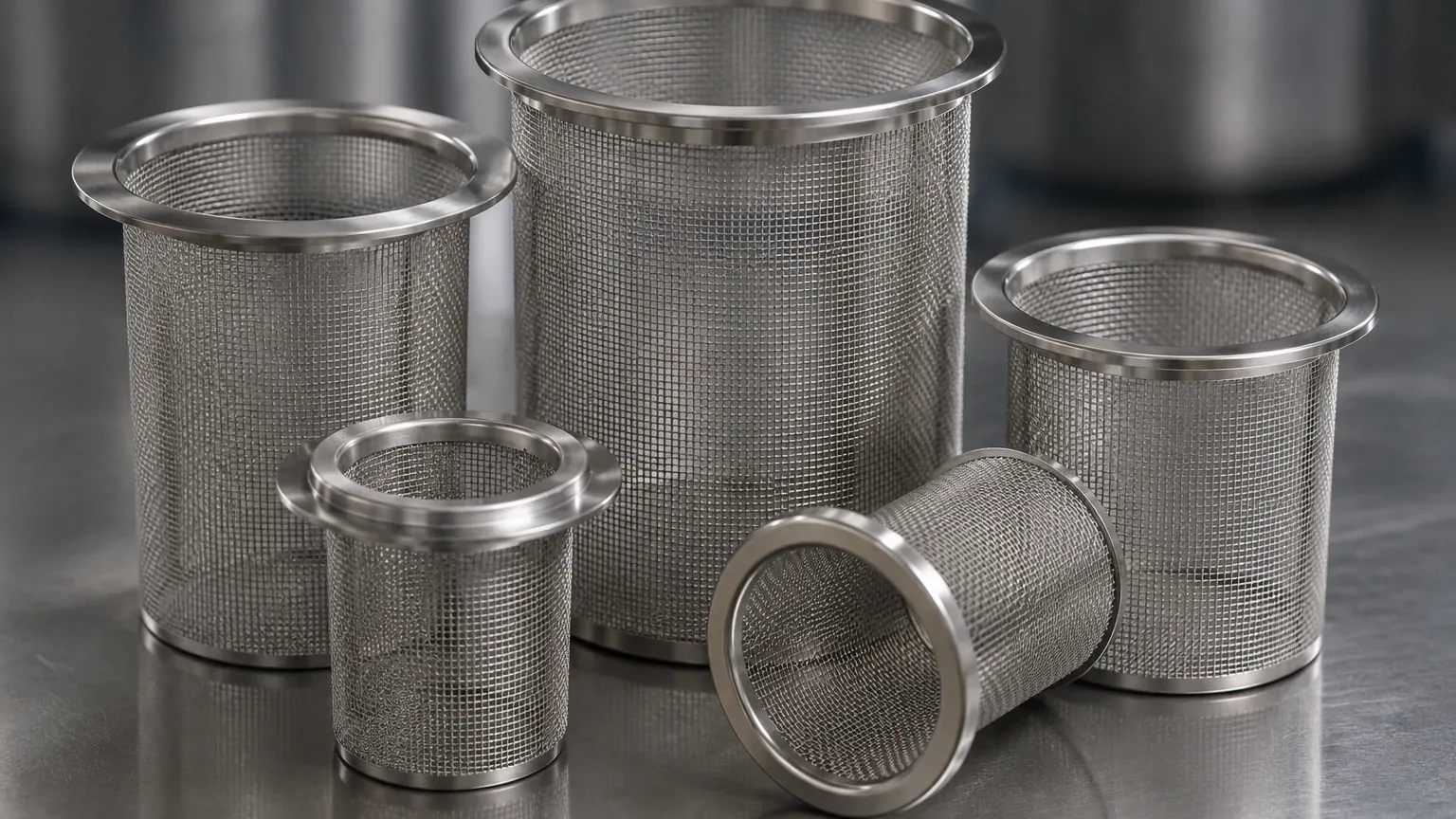
Customization Options for Specialized Industrial Applications
Standard off-the-shelf strainers often fail to meet the specific needs of complex industrial projects. Customization is where manufacturers like Kaifil provide significant value. When dealing with "strainers large," custom engineering can address several unique challenges:
1. Micron-Level Precision: While large strainers are typically used for coarse filtration, they can be lined with fine wire mesh to achieve specific micron ratings. This "dual-stage" basket provides the structural strength of a perforated plate with the fine filtration of a mesh screen.
2. Specialized Connections: Large systems may require non-standard flange ratings (e.g., ANSI 300# or 600#), DIN flanges, or custom weld-neck preparations.
3. Automated Blow-Down: For systems with high solids loading, automated valves can be added to the drain port to flush out debris without opening the strainer, reducing manual labor and downtime.
4. Heating Jackets: In applications involving high-viscosity fluids like resins or heavy oils, steam or electric heating jackets can be added to the strainer body to maintain fluid temperature and prevent clogging.
Maintenance Strategies for Extending Component Life
The total cost of ownership for large strainers is heavily influenced by maintenance requirements. A well-designed strainer should facilitate quick and safe cleaning. For large units, this often includes features such as:
- Davit Arms: Because the covers of large strainers can weigh hundreds of pounds, a davit arm or swing-bolt closure allows a single operator to safely lift and move the cover for basket access.
- Vent and Drain Ports: These are essential for safely depressurizing and draining the unit before maintenance, preventing chemical exposure or spills.
- Reinforced Baskets: In high-flow systems, the mechanical force of the fluid can cause standard baskets to collapse. Large strainers should utilize reinforced baskets with heavy-duty mesh or internal structural ribs to withstand high differential pressures.
Regular inspection of the gaskets and seals is also vital. In large-scale systems, even a minor leak can result in significant product loss or environmental hazards. Using high-quality elastomers (like Viton or EPDM) that are compatible with the process fluid ensures a long-lasting seal.
Conclusion: Selecting the Right Filtration Partner
Large-scale industrial filtration requires a partner that understands both the manufacturing complexities and the engineering realities of high-volume systems. When searching for Strainers & Baskets, it is important to confirm that the manufacturer can provide detailed material certifications, pressure test reports, and custom design support.
At Kaifil, we specialize in providing custom stainless steel filtration solutions that meet the rigorous demands of the chemical, food and beverage, and water treatment industries. By focusing on durability, precision, and performance, we help engineers optimize their systems and protect their most valuable assets. Whether you require a standard large-diameter basket strainer or a fully customized fabricated unit, our technical team is equipped to deliver solutions that balance flow efficiency with long-term reliability.
