


4 Wire Screen
In the field of industrial solid-liquid separation, the term 4 wire screen typically refers to a specific heavy-duty configuration of wedge wire, often characterized by a profile wire width of approximately 4.0mm. This robust specification is a cornerstone in industries where mechanical stress, abrasive materials, and high-volume flow rates demand more than standard woven mesh can provide. As a specialized component of Wedge Wire Screens, these profiles are engineered to offer a balance between structural rigidity and filtration precision.
For engineers and procurement professionals, selecting the correct wire profile is not merely a matter of sizing; it is a critical decision that influences the equipment's service life, maintenance frequency, and total cost of ownership. Understanding the technical nuances of the 4 wire profile within the broader context of wedge wire technology is essential for optimizing industrial processes.
The Engineering Logic of Wedge Wire Screens
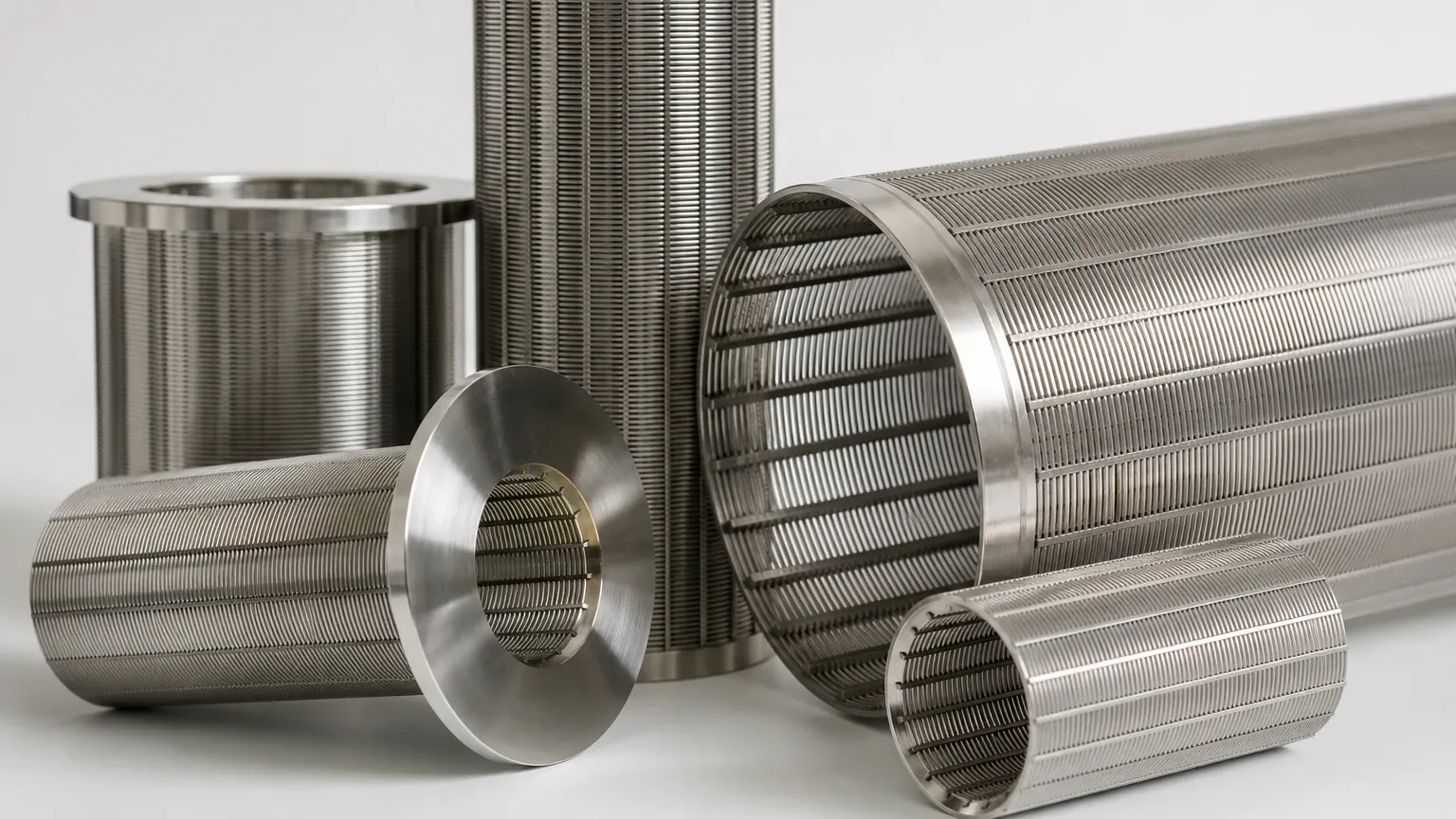
Wedge wire technology differs fundamentally from traditional wire cloth. While woven mesh relies on the interlacing of wires, wedge wire is constructed through a sophisticated resistance welding process. This process joins V-shaped profile wires to support rods at every intersection point.
The "4 wire" designation in this context usually highlights a profile wire with a significant cross-section. A larger profile width, such as 4mm, provides a deeper wear surface. This is particularly advantageous in applications involving high-velocity slurries or heavy aggregates, where thinner wires would succumb to erosion or mechanical deformation prematurely.
Non-Clogging V-Shaped Geometry
The defining feature of these screens is the V-shaped profile wire. The wire is positioned so that the widest part faces the incoming flow, creating a slot that widens inwardly. This geometry ensures that any particle capable of passing through the initial opening will continue through the screen without becoming wedged. In a 4 wire screen configuration, this non-clogging characteristic remains consistent even under the high pressures typical of heavy industrial filtration.
Technical Specifications and Material Selection
When specifying a 4 wire screen, material selection is the primary factor in determining chemical compatibility and longevity. Kaifil utilizes high-grade stainless steel to ensure performance in diverse environments.
1. AISI 304 Stainless Steel: The standard choice for general industrial applications, offering excellent mechanical properties and basic corrosion resistance. It is widely used in food processing and water treatment.
2. AISI 316L Stainless Steel: For environments involving chlorides or acidic conditions, 316L (low carbon) is preferred. The addition of molybdenum enhances pitting resistance, making it suitable for chemical processing and marine applications.
3. Duplex Stainless Steels: In extreme cases where both high mechanical strength and superior corrosion resistance are required (such as in oil and gas or desalination), duplex grades may be specified to complement the 4 wire profile's inherent strength.
Slot Size and Tolerance
The slot size—the distance between two adjacent profile wires—is the most critical dimension for filtration accuracy. In a 4 wire screen, slot widths can range from as small as 0.05mm to several millimeters. Precision manufacturing ensures that these tolerances are held strictly across the entire surface, preventing "leakage" of oversized particles that could compromise downstream equipment.
Structural Integrity and Load-Bearing Capacity
The choice of a 4mm profile wire (4 wire) is often driven by the need for mechanical durability. In heavy-duty screening, the screen must withstand:
* Hydrostatic Pressure: The weight and force of the fluid being filtered.
* Dynamic Loading: The impact of solids hitting the screen surface, common in mining and aggregate processing.
* Vibrational Stress: Many screens are used in vibrating separators where the material must resist fatigue failure at the weld points.
By using a larger profile wire, the section modulus of the screen is increased. This allows for wider spans between support rods without sacrificing the flatness or integrity of the screen surface. For engineers, this translates to a more robust component that requires fewer structural reinforcements within the filter housing.
Applications of 4 Wire Screen Configurations
Because of their durability, 4 wire screen profiles are utilized in some of the most demanding industrial sectors.
Mining and Mineral Processing
In coal and mineral processing, screens are subjected to constant abrasion from rocks and ores. The 4 wire profile provides a thick "wear zone." As the top of the wire gradually wears down over months of operation, the slot width remains relatively stable due to the steep angle of the V-profile, extending the effective life of the screen compared to thinner alternatives.
Pulp and Paper Industry
Pressure screens in pulp mills require components that can handle high flow rates and significant pressure differentials. The structural strength of a 4 wire screen ensures that the basket maintains its cylindrical geometry under the intense centrifugal forces and pressure pulses required to separate fibers from contaminants.
Water Intake and Treatment
Large-scale water intake screens, such as those used for power plants or municipal water works, must withstand the force of river or ocean currents while preventing debris and aquatic life from entering the system. The 4 wire profile offers the necessary impact resistance to survive debris strikes during flood conditions.
Performance Metrics: Open Area vs. Durability
A common challenge for engineers is the trade-off between open area and mechanical strength. The "open area" is the percentage of the screen surface that allows fluid to pass.
* Smaller Profiles: Offer higher open area and higher flow rates but lower mechanical strength.
* 4 Wire Profiles: Offer superior strength and wear life but may result in a lower open area if the slot width is small.
To optimize this, Kaifil's engineering team calculates the required flow velocity and pressure drop. By adjusting the spacing of the support rods and the specific dimensions of the 4 wire profile, it is possible to achieve a configuration that meets the flow requirements while ensuring the screen does not collapse under operational stress.
Customization and OEM Integration
No two industrial filtration applications are identical. While the 4 wire screen provides a robust foundation, customization is necessary for seamless integration into existing systems. Customization options include:
* Framing and Reinforcement: Adding U-sections, flat bars, or angle irons to the edges for secure mounting.
* Curvature: Rolling the screen into cylinders (for internal or external flow) or forming it into sieve bends (DSM screens) for gravity-fed separation.
* Surface Treatments: Electropolishing to reduce surface roughness and improve hygiene in food and pharmaceutical applications, or chrome plating for extreme abrasion resistance.
As a professional manufacturer, Kaifil works closely with OEM partners to develop Wedge Wire Screens that match specific equipment footprints, ensuring that the replacement cycle is predictable and the installation process is efficient.
Maintenance and Total Cost of Ownership
While the initial cost of a 4 wire screen may be higher than that of a standard woven wire mesh, the total cost of ownership is typically lower in industrial settings. The durability of the resistance-welded structure means fewer replacements and less downtime.
Cleaning Protocols
The smooth, V-shaped slots facilitate easy cleaning. In many systems, backwashing or automated scrapers are used to remove accumulated solids. The rigid nature of the 4 wire profile allows these scrapers to operate with high downward pressure without damaging the screen, a task that would destroy a flexible woven mesh.
Inspection and Replacement
Engineers should monitor the wear of the profile wires. In abrasive applications, once the profile height has been reduced by a certain percentage (usually defined by the manufacturer), the structural integrity may be compromised. Regular inspection of the weld points and slot consistency ensures that the screen is replaced before a catastrophic failure occurs.
Conclusion
The 4 wire screen represents a high-performance solution for industries that cannot afford the frequent failures associated with lighter-duty filtration media. By selecting a robust profile wire and combining it with precision-engineered slot widths, facilities can achieve reliable, long-term separation performance. Whether used in mining, chemical processing, or large-scale water treatment, these components provide the mechanical backbone necessary for efficient industrial operations. When evaluating filtration options, considering the specific profile wire dimensions—such as the 4 wire configuration—is a vital step in ensuring the longevity and efficiency of the entire filtration system.
