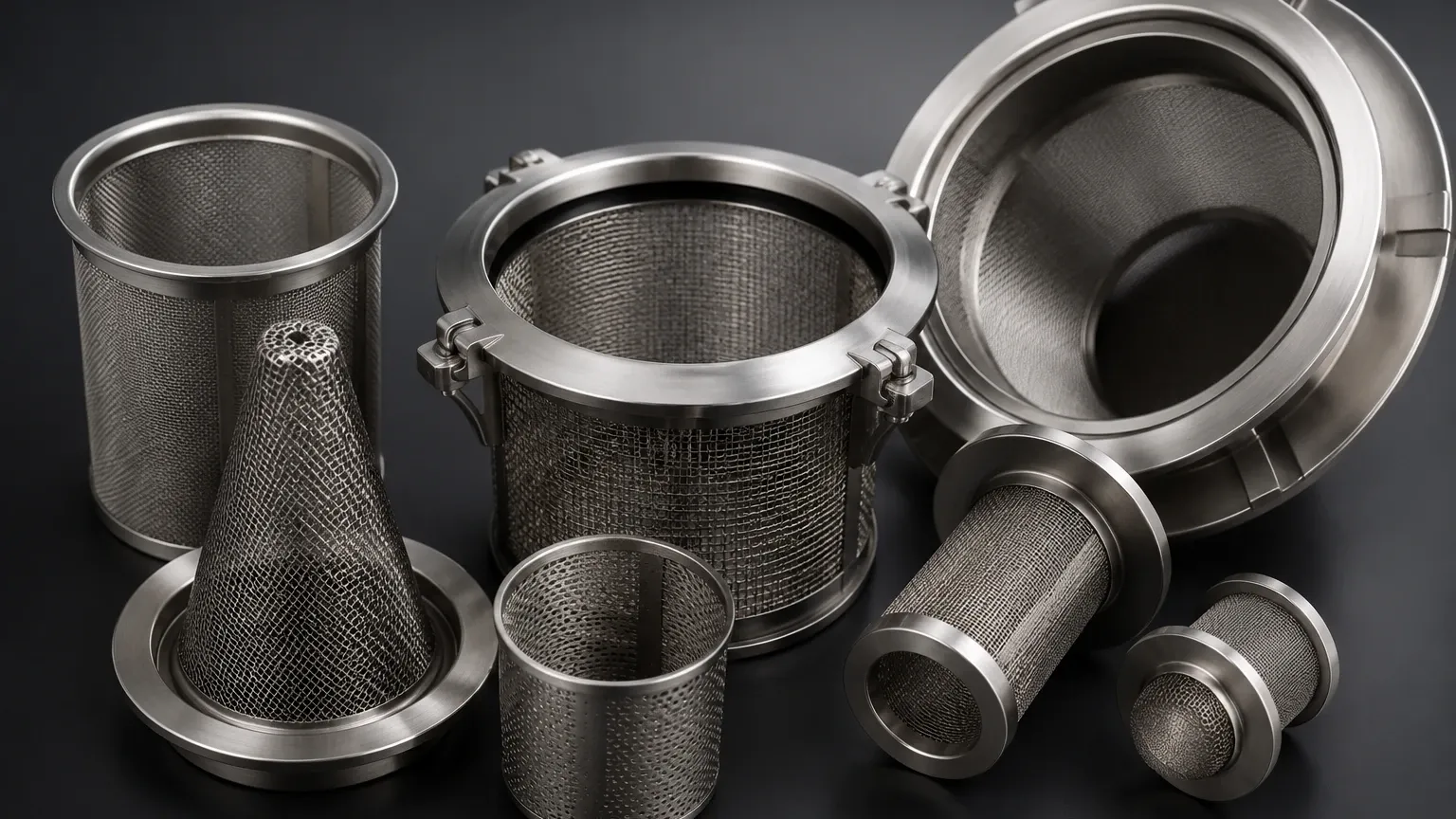
Viking Strainers
In the landscape of industrial fluid handling, the protection of rotating equipment is a primary engineering concern. Viking strainers, often integrated with positive displacement pump systems, serve as the first line of defense against particulate contamination that can lead to catastrophic mechanical failure, premature wear, and process downtime. These strainers are engineered to remove solids from liquids, ensuring that the fluid entering a pump or a sensitive process area meets the required cleanliness standards. For engineers and procurement specialists, understanding the technical nuances of these components—from material selection to hydraulic performance—is essential for optimizing system reliability.
The Functional Role of Strainers in Industrial Systems
Industrial strainers are essentially closed pressure vessels that utilize a screen or mesh element to intercept solid particles. Unlike filters, which are often designed to remove microscopic particles and are frequently disposed of after use, strainers are typically used for coarser filtration and feature cleanable, reusable elements. In applications involving Viking pumps or similar high-viscosity fluid movers, the strainer must be robust enough to handle the mechanical stresses of the flow while providing a low enough pressure drop to prevent pump cavitation.
Strainers & Baskets are critical in industries such as chemical processing, petroleum, food and beverage, and pharmaceuticals. In these environments, the cost of a single pump repair or an hour of lost production far outweighs the investment in a high-quality stainless steel strainer. The primary goal is to ensure that the internal clearances of the pump—often measured in thousandths of an inch—are not compromised by debris such as weld slag, pipe scale, or undissolved process solids.
Technical Design and Configuration
Viking strainers are most commonly found in simplex configurations, though duplex designs are utilized when continuous flow is required. The design of these units typically focuses on ease of maintenance and high-volume dirt-holding capacity.
Simplex Basket Strainers
A simplex strainer is used where the process can be shut down for a short period to clean or change the basket. A common design feature in this category is the "Lid-Ease" or quick-opening cover, which allows for tool-free access to the internal basket. This is particularly beneficial in applications where the fluid contains a high concentration of solids, necessitating frequent cleaning.
The Strainer Basket
The heart of the unit is the basket. It is usually constructed from perforated metal, which provides the structural strength, and may be lined with a finer wire mesh to achieve the desired filtration rating. The ratio of the open area of the basket to the cross-sectional area of the inlet pipe is a key performance metric. A high open-area ratio (typically 6:1 or higher) ensures that the strainer does not become a bottleneck in the system, even as it begins to collect debris.
Engineering Considerations: Viscosity and Flow Rate
When selecting or designing Viking strainers, engineers must account for the physical properties of the fluid. Because Viking pumps are frequently used for high-viscosity liquids—such as resins, chocolate, or heavy oils—the hydraulic behavior within the strainer changes significantly compared to water-like fluids.
1. Pressure Drop (ΔP): As viscosity increases, the pressure drop across the strainer increases exponentially. If the ΔP is too high, it can starve the pump of fluid, leading to cavitation and damage to the internal seals and gears. Engineers must size the strainer body and the basket mesh to ensure that the total pressure drop remains within the Net Positive Suction Head (NPSH) requirements of the pump.
2. Laminar vs. Turbulent Flow: In high-viscosity applications, the flow is often laminar. This affects how particles settle and how they interact with the mesh. A custom-engineered basket from a manufacturer like Kaifil can be optimized for these flow regimes, ensuring efficient capture without excessive resistance.
3. Mesh Selection: The choice between a 20-mesh screen and a 100-mesh screen depends on the pump’s internal tolerances. While a finer mesh provides better protection, it also clogs faster and creates a higher initial pressure drop. The engineering challenge lies in finding the balance between protection and process efficiency.
Material Selection and Durability
Material compatibility is a non-negotiable factor in B2B procurement of filtration components. For most industrial applications, stainless steel is the preferred material due to its mechanical strength and resistance to corrosion.
* 304 Stainless Steel: Suitable for general industrial use, providing good corrosion resistance at a cost-effective price point.
* 316L Stainless Steel: Essential for chemical processing, pharmaceutical, and food-grade applications. The addition of molybdenum and the lower carbon content provide superior resistance to pitting and crevice corrosion, especially in the presence of chlorides.
* Specialty Alloys: In highly aggressive environments involving strong acids or high temperatures, materials such as Monel or Hastelloy may be required for the strainer baskets to prevent premature degradation.
At Kaifil, the focus is on precision manufacturing of these components. By using advanced welding and fabrication techniques, the integrity of the basket is maintained even under high-pressure differentials, preventing the "blow-by" of contaminants that can occur if a basket deforms or fails.
Customization and OEM Solutions
Standard off-the-shelf strainers do not always meet the specific requirements of complex industrial systems. This is where custom manufacturing becomes a strategic advantage. OEM teams often require strainers that fit into tight spatial envelopes or that feature specific flange configurations (ANSI, DIN, or JIS).
Customization options often include:
* Modified Basket Geometry: Deep-draw baskets or pleated designs to increase surface area within a standard housing.
* Magnetic Inserts: Used to capture fine ferrous particles that might otherwise pass through a standard wire mesh.
* Heating Jackets: For fluids that solidify at room temperature (like bitumen or certain food products), a steam or thermal oil jacket around the strainer body keeps the fluid at the correct temperature for flow.
* Differential Pressure Taps: Pre-installed ports for gauges or sensors that allow for real-time monitoring of the strainer’s condition.
By working with a specialist manufacturer, engineering teams can ensure that their Strainers & Baskets are tailored to the exact chemistry and physics of their process, rather than forcing a standard product to fit a non-standard application.
Maintenance and Total Cost of Ownership
While the initial purchase price of a strainer is important, the total cost of ownership (TCO) is driven by maintenance efficiency and the durability of the internal components. A poorly designed strainer basket that requires frequent replacement or is difficult to clean will quickly become an operational burden.
Cleaning Protocols
Effective maintenance involves monitoring the differential pressure across the strainer. When the ΔP reaches a predetermined limit (usually 5-10 psi above the clean drop), the basket must be removed and cleaned. For stainless steel wire mesh, this often involves ultrasonic cleaning, high-pressure washing, or chemical baths, depending on the nature of the contaminant.
Replacement Cycles
Even high-quality stainless steel baskets eventually succumb to fatigue or mechanical wear. Regular inspection of the mesh-to-perforation welds and the seating surfaces is necessary. A compromised basket allows bypass, which defeats the entire purpose of the strainer. Keeping a stock of precision-manufactured replacement baskets ensures that maintenance can be performed quickly without waiting for long lead times.
Common Risks and Selection Pitfalls
Engineers often encounter several common pitfalls when specifying Viking strainers:
* Under-sizing for Viscosity: Failing to adjust flow calculations for high-viscosity fluids leads to excessive pressure drop.
* Incompatible Gasket Materials: The body gasket or O-ring must be compatible with the process fluid. A failure here leads to external leaks and potential safety hazards.
* Ignoring Structural Strength: In high-flow or high-pressure systems, a standard mesh basket may collapse if it becomes heavily loaded with debris. Specifying a reinforced perforated support is vital in these scenarios.
Conclusion
Viking strainers are a fundamental component in the reliability of industrial liquid handling systems. By selecting the appropriate materials, understanding the hydraulic impact of the fluid, and opting for precision-engineered baskets, facilities can significantly reduce the risk of equipment damage and process interruptions. Whether for a new installation or as a high-performance replacement for existing systems, the quality of the filtration element is the determining factor in the longevity of the pump and the purity of the final product. For technical teams, partnering with a manufacturer that understands these engineering boundaries is the most effective path to achieving optimized filtration performance.