


Vintage Wire Strainers
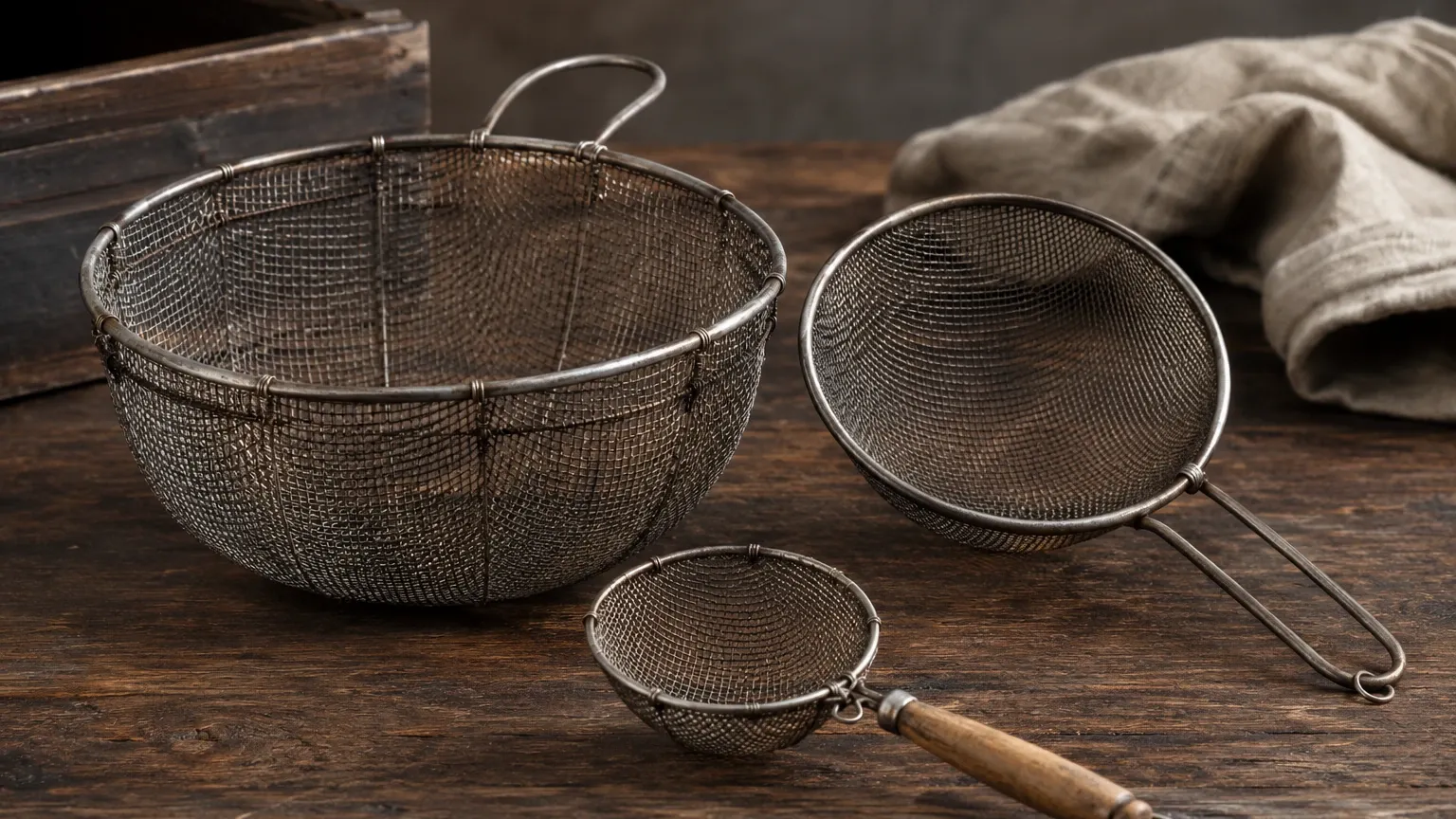
In the specialized field of industrial filtration, the term "vintage wire strainers" refers to legacy filtration components and traditional wire mesh configurations that have historically formed the backbone of fluid handling systems. While modern engineering has introduced advanced synthetic media and sintered metal technologies, many industrial facilities—particularly those in the chemical processing, hydraulic, and water treatment sectors—continue to rely on these established designs or require modern equivalents that match the dimensions of legacy equipment.
Understanding the technical nuances of vintage wire strainers is essential for maintenance engineers and procurement teams tasked with retrofitting older systems or maintaining the integrity of processes that were originally designed around specific flow characteristics. As industrial standards evolve toward higher purity and greater structural reliability, the transition from legacy components to high-performance Strainers & Baskets requires a deep understanding of material science, weave geometries, and mechanical durability.
The Historical Context of Vintage Wire Strainer Manufacturing
Historically, the production of wire strainers was a labor-intensive process that relied on mechanical looms and manual assembly. These vintage components were typically constructed from materials readily available during the mid-20th century, such as brass, copper, galvanized steel, and early iterations of stainless steel alloys. The manufacturing focus was primarily on coarse filtration and the protection of downstream equipment like pumps and valves from large debris.
In the "vintage" era of filtration, the plain weave was the dominant geometry. This simple over-and-under pattern provided a predictable aperture size but often lacked the structural stability required for high-pressure applications. Furthermore, the joining methods used in legacy designs—often involving mechanical crimping or soft soldering—presented long-term reliability issues. Modern industrial requirements have largely moved away from these methods in favor of precision welding and advanced metallurgical bonding, yet the fundamental design principles of the basket and cone strainer remain relevant in modern system architecture.
Engineering Challenges with Legacy Filtration Components
When evaluating vintage wire strainers still in active service, several engineering risks must be addressed to prevent system failure or product contamination. These challenges often stem from the limitations of the materials and fabrication techniques available at the time of the original installation.
Material Fatigue and Media Migration
One of the primary concerns with older wire strainers is the degradation of the wire itself. Over decades of service, exposure to cyclic pressure loads and corrosive media can lead to metal fatigue. In a vintage wire mesh, this often manifests as individual wires breaking away from the weave—a phenomenon known as media migration. These metal fragments can travel downstream, causing catastrophic damage to high-precision components such as flow meters, spray nozzles, or turbine blades.
Inconsistent Pore Size and Filtration Accuracy
Legacy manufacturing processes lacked the automated tensioning and optical inspection systems used today. Consequently, vintage wire strainers often exhibit variations in pore size across the filtration surface. In modern B2B environments where ISO standards and strict quality control are mandatory, such inconsistencies are unacceptable. A strainer with irregular apertures cannot guarantee the removal of particles at a specific micron rating, leading to unpredictable process outcomes.
Corrosion and Biofilm Accumulation
Older materials, such as galvanized steel or low-grade alloys, are prone to pitting and crevice corrosion. In the food and beverage or pharmaceutical industries, these corroded areas serve as harborages for bacteria and biofilm. Modern stainless steel Strainers & Baskets utilize materials like SUS 316L and specialized surface finishes (such as electropolishing) to eliminate these risks, whereas vintage components often require more frequent and aggressive sanitization that can further degrade the base metal.
Comparative Analysis: Vintage vs. Modern Weave Geometries
The efficiency of a wire strainer is largely determined by its weave pattern. Comparing vintage designs to modern engineering reveals significant advancements in how fluid dynamics are managed at the mesh level.
* Plain Weave (Legacy Standard): Characterized by a 1:1 ratio of warp and shute wires. While easy to manufacture, it has limited mechanical strength and a lower open area ratio compared to advanced weaves.
* Dutch Weave (Modern High-Performance): This weave utilizes larger diameter warp wires and smaller diameter shute wires driven closely together. This creates a much stronger, denser mesh that can handle higher differential pressures (ΔP) while providing finer filtration. Many modern replacements for vintage strainers now incorporate Dutch weave to improve durability.
* Twill Weave: In this configuration, each shute wire passes successively over and under two warp wires. This allows for a heavier wire diameter to be used for a given mesh count, providing superior strength for heavy-duty industrial baskets that must withstand significant debris loading.
By upgrading the weave geometry during the replacement of a vintage component, engineers can often achieve better flow rates and higher dirt-holding capacity within the same physical dimensions of the original housing.
Material Science Advancements in Industrial Filtration
The transition from vintage wire strainers to modern solutions is most evident in the evolution of metallurgy. Legacy systems often utilized materials that were "good enough" for the era but fall short of modern chemical compatibility requirements.
The Shift to Austenitic Stainless Steels
Today, SUS 304 and SUS 316L are the industry standards. SUS 316L, with its low carbon content and the addition of molybdenum, provides exceptional resistance to chloride-induced pitting. This is a critical upgrade for water treatment and chemical processing plants that may be replacing vintage strainers made of standard carbon steel or brass.
High-Nickel Alloys for Extreme Environments
For applications involving high temperatures or highly aggressive acids (such as sulfuric or hydrochloric acid), modern manufacturers can provide strainers in Hastelloy, Monel, or Inconel. These materials were rarely used in standard vintage wire strainers due to cost and fabrication difficulties. However, in a modern TCO (Total Cost of Ownership) analysis, the longevity provided by these high-performance alloys far outweighs the initial investment by reducing replacement frequency and preventing unplanned downtime.
Custom OEM Solutions for Retrofitting Legacy Systems
A common problem for maintenance teams is finding a replacement for a vintage wire strainer that fits into a non-standard or obsolete housing. Many older plants feature custom-built filtration vessels that do not conform to modern ASME or DIN standards. In these cases, off-the-shelf components are not an option.
Specialized manufacturers like Kaifil address this through custom OEM services. The process typically involves:
1. Reverse Engineering: Taking precise measurements of the existing vintage strainer, including flange thickness, bolt hole patterns, and overall height.
2. Structural Reinforcement: While maintaining the outer dimensions, the internal structure is often upgraded with perforated metal support cores or heavy-duty longitudinal ribs to prevent collapse under pressure surges.
3. Modern Sealing Interfaces: Replacing old-fashioned flat gaskets with modern O-ring grooves or machined seating surfaces to ensure a zero-bypass seal within the legacy housing.
This approach allows facilities to benefit from modern filtration technology without the prohibitive cost of replacing entire piping systems or pressure vessels.
Maintenance, Cleaning, and Total Cost of Ownership (TCO)
The operational cost of a filtration system is not just the purchase price of the strainer, but the ongoing expense of cleaning, maintenance, and energy consumption related to pressure drop. Vintage wire strainers often require more frequent cleaning because their simple weaves clog more easily and are harder to backwash effectively.
Ultrasonic Cleaning and Chemical Regeneration
Modern stainless steel Strainers & Baskets are designed to be compatible with ultrasonic cleaning tanks and aggressive chemical CIP (Clean-In-Place) cycles. Vintage components, particularly those with soldered joints or inferior metals, may be damaged by these modern cleaning methods. By upgrading to fully welded stainless steel constructions, plants can implement more efficient automated cleaning protocols.
Calculating the Economic Impact of Pressure Drop
A clogged or poorly designed vintage strainer increases the resistance in the fluid line, forcing pumps to work harder and consume more electricity. Modern designs focus on maximizing the "Open Area Ratio"—the percentage of the mesh that is actually open for flow. Even a 10% increase in open area can lead to significant energy savings over the lifespan of the component, making the replacement of vintage strainers a commercially sound decision for many industrial operators.
Conclusion: Navigating the Transition to Modern Standards
While vintage wire strainers served their purpose in the industrial landscape of the past, the demands of modern manufacturing require a more rigorous approach to filtration. Engineers must balance the need for historical compatibility with the necessity for modern performance, safety, and durability.
Whether the goal is to replicate a legacy design for a specialized piece of equipment or to upgrade an entire process line to meet new purity standards, the selection of Strainers & Baskets should be guided by technical data and material integrity. By moving away from the limitations of vintage fabrication and embracing advanced alloys and precision weave geometries, industrial facilities can ensure their filtration systems remain reliable, efficient, and compliant with the stringent requirements of today’s global markets.
