


Wye Strainers
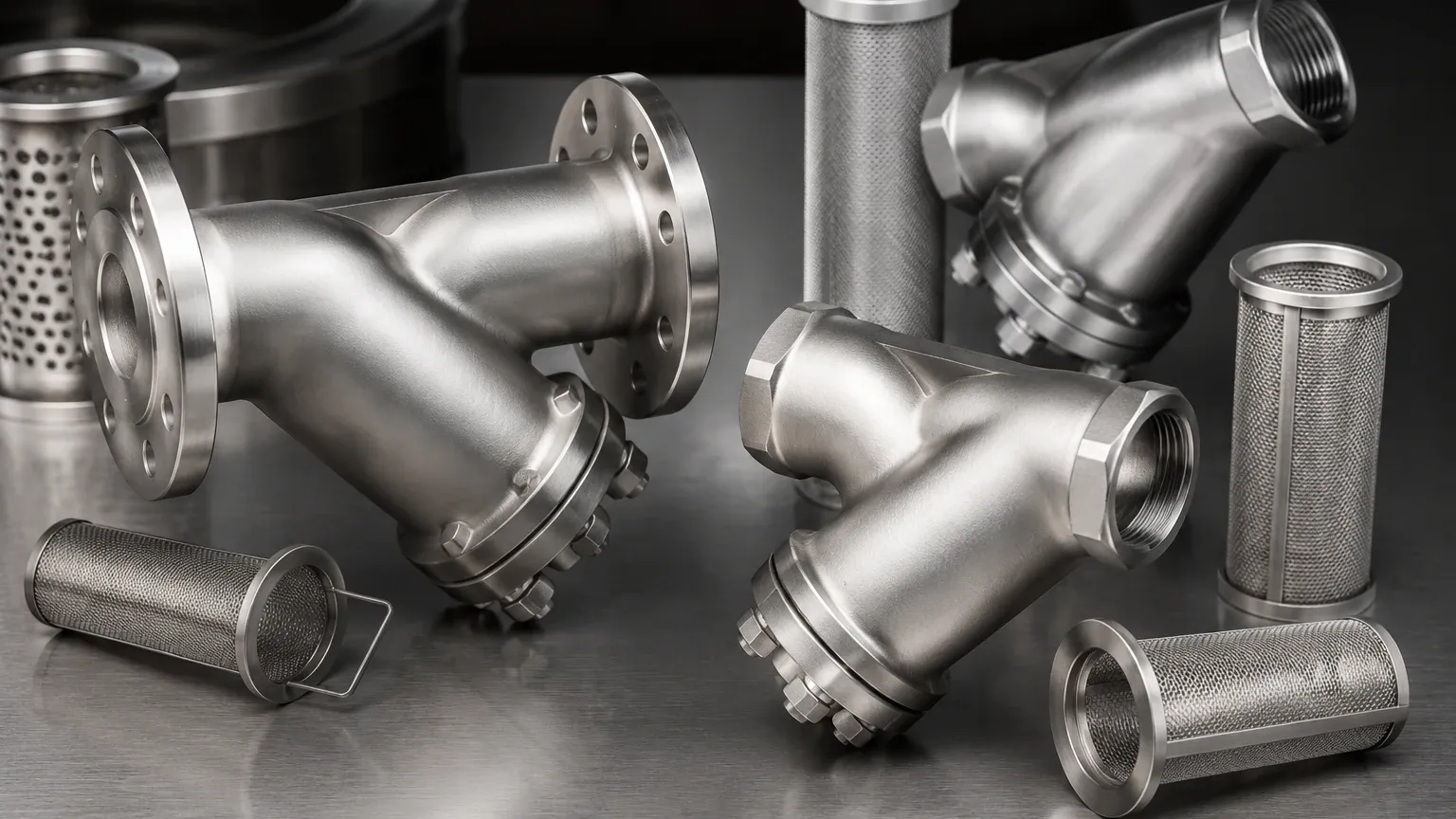
In industrial fluid handling, the integrity of downstream equipment—such as pumps, control valves, flow meters, and steam traps—depends heavily on the effective removal of entrained solids. Among the various mechanical tools used to achieve this, wye strainers (often referred to as Y-strainers) are perhaps the most versatile and widely utilized. Their name is derived from their geometric configuration, which resembles the letter "Y." This design allows for the extraction of particulates from a process stream with minimal disruption to flow and a relatively compact footprint.
As a specialized manufacturer of stainless steel filtration solutions, Kaifil recognizes that selecting the correct Strainers & Baskets involves more than simply matching a pipe size. It requires a deep understanding of fluid dynamics, material compatibility, and the specific mechanical stresses of the application. This guide examines the engineering principles behind wye strainers, their performance characteristics, and the critical evaluation criteria that technical professionals must consider during the procurement process.
The Engineering Logic of the Wye Configuration
The primary advantage of the wye strainer lies in its ability to be installed in either horizontal or vertical piping runs. In a horizontal installation, the "leg" of the Y—which houses the strainer element—must point downward. This ensures that the collected debris is trapped in the pocket and does not bypass the screen or fall back into the main pipe during low-flow conditions. In vertical installations, wye strainers are effective only when the fluid flow is downward, allowing gravity to assist in directing the debris into the collection chamber.
Compared to basket strainers, wye strainers generally have a smaller dirt-holding capacity. This makes them ideal for applications where the amount of particulate matter is relatively low, or where the strainer is intended to provide "insurance" protection for expensive equipment rather than acting as a primary filter for high-solids loading. Because they are often used in high-pressure systems (including steam, gas, and liquid lines), their structural integrity is paramount.
Material Selection and Corrosion Resistance
In industrial environments, the choice of material for both the housing and the internal screen is the most significant factor in determining the service life of the component. At Kaifil, we focus on high-grade stainless steel alloys due to their superior mechanical properties and resistance to chemical degradation.
Stainless Steel 304 vs. 316
While 304 stainless steel is suitable for many general-purpose industrial applications, 316 stainless steel is the preferred choice for chemical processing, pharmaceutical production, and marine environments. The addition of molybdenum in 316 stainless steel provides enhanced resistance to pitting and crevice corrosion, particularly in the presence of chlorides. For highly sensitive applications, such as those in the food and beverage industry, 316L (low carbon) may be specified to prevent intergranular corrosion after welding.
Structural Durability
The housing of a wye strainer must withstand not only the internal process pressure but also thermal expansion and contraction cycles. For high-pressure steam applications, the wall thickness and the quality of the casting or fabrication must meet stringent ASME standards. Engineers must ensure that the pressure-temperature rating of the strainer exceeds the maximum possible surge conditions of the system.
Technical Specifications: The Filtration Element
The performance of wye strainers is ultimately defined by the internal element, which can be a simple perforated plate or a more complex mesh-lined basket. Selecting the right opening size is a balance between protection and system efficiency.
Perforation and Mesh Sizes
Standard wye strainers often utilize perforated metal screens for coarse filtration (typically 1/16" to 1/4" holes). When finer filtration is required, a wire mesh liner is spot-welded or mechanically fastened inside the perforated cylinder. This provides the structural support needed to prevent the fine mesh from collapsing under high differential pressure.
* Coarse Filtration: Used for protecting pumps from large debris like scale, welding slag, or pebbles.
* Fine Filtration: Used for protecting sensitive instruments or nozzles, often reaching down to 40 microns or finer.
The Open Area Ratio (OAR)
One of the most overlooked metrics in strainer selection is the Open Area Ratio. This is the ratio of the total open area of the strainer screen to the internal cross-sectional area of the inlet pipe. A well-engineered wye strainer should typically offer an OAR of at least 3:1. A higher OAR results in a lower initial pressure drop and longer intervals between cleaning cycles. If the OAR is too low, the strainer acts as a bottleneck, causing excessive turbulence and potential cavitation in downstream pumps.
Evaluating Pressure Drop and Flow Efficiency
Every component added to a piping system introduces a pressure drop (Delta P). For engineers, calculating the expected pressure drop across wye strainers is critical to ensuring that the system's pump head is sufficient. The pressure drop is influenced by the fluid's viscosity, specific gravity, flow velocity, and the percentage of the screen that is currently clogged.
The Cv Factor
The flow coefficient (Cv) represents the volume of water at 60°F that will flow through the strainer with a 1 psi pressure drop. A higher Cv indicates lower resistance to flow. When selecting a strainer, engineers should request the Cv values for both the clean screen and the partially clogged state. In many industrial designs, it is standard practice to size the strainer so that the pressure drop does not exceed 2 psi under normal operating conditions with a clean screen.
Impact of Clogging
As particulates accumulate on the screen, the effective open area decreases, leading to an exponential increase in pressure drop. If the differential pressure exceeds the structural limit of the screen, the element may rupture, sending both the debris and pieces of the screen into the downstream equipment. Monitoring differential pressure via gauges installed upstream and downstream of the strainer is a recommended best practice for critical systems.
Installation and Orientation Requirements
Proper installation is essential for the functionality of wye strainers. Beyond the basic horizontal/vertical considerations, several engineering nuances must be addressed:
1. Clearance for Maintenance: There must be sufficient physical space to remove the strainer cap and pull out the screen for cleaning. In cramped piping skids, this is a frequent design oversight.
2. Blow-Off Connections: Most wye strainers feature a threaded or flanged hole in the cap. By installing a blow-off valve (also known as a drain valve) in this port, the operator can flush out the collected debris without shutting down the system or disassembling the strainer. This is particularly effective for removing loose sediment and scale.
3. Flow Direction: Wye strainers are unidirectional. An arrow is typically cast or etched into the body to indicate the required flow direction. Installing the strainer backward will result in the screen being unsupported by the internal housing, leading to immediate failure.
Maintenance Protocols and Longevity
The total cost of ownership for a strainer is determined more by its maintenance requirements than its initial purchase price. In systems with high solids loading, the labor costs associated with cleaning can be significant.
Cleaning Procedures
To clean a wye strainer without a blow-off valve, the system must be depressurized and drained. The cap is then removed, and the screen is extracted. It is vital to inspect the screen for signs of mechanical fatigue or corrosion during every cleaning cycle. If the mesh is frayed or the perforated metal is thinned, the element must be replaced immediately to prevent bypass.
Gasket and Seal Integrity
Every time the strainer cap is removed, the gasket or O-ring should be inspected. In high-temperature or chemical-rich environments, gaskets can become brittle or take a permanent set. Kaifil recommends maintaining a stock of replacement gaskets compatible with the process fluid (such as PTFE, EPDM, or Viton) to minimize downtime during maintenance windows.
Customization for Industrial Applications
Standard off-the-shelf wye strainers may not meet the requirements of specialized industrial processes. Customization is often necessary to address specific engineering challenges. Kaifil provides OEM and tailored filtration solutions that go beyond standard catalog items.
* High-Pressure Ratings: For hydraulic systems or high-pressure steam, strainers can be fabricated with reinforced bodies and heavy-duty bolted covers rather than threaded caps.
* Specialty Coatings: In highly corrosive environments where even stainless steel may struggle, internal linings or specialized surface treatments can be applied.
* Magnetic Inserts: For systems where fine metallic particles (such as iron filings) are a concern, magnetic rods can be installed within the wye leg to capture sub-micron ferrous debris that might otherwise pass through the mesh.
Conclusion: Selection Checklist for Engineers
Before finalizing the specification for wye strainers, purchasing teams and engineers should confirm the following data points to ensure long-term reliability:
* Fluid Properties: Confirm viscosity, temperature, and chemical composition to select the correct stainless steel grade and seal material.
* Maximum Flow Rate: Ensure the Cv value of the strainer allows for the required flow without excessive pressure drop.
* Particulate Size: Define the smallest particle that must be removed to protect downstream equipment, and select the mesh size accordingly.
* Connection Type: Determine if flanged, threaded (NPT/BSP), or socket-weld connections are most appropriate for the piping system's pressure and leak-prevention requirements.
* Maintenance Strategy: Decide if a blow-off valve is necessary for on-line cleaning or if manual screen removal is feasible.
By focusing on these technical parameters, organizations can optimize their filtration performance and significantly reduce the risk of equipment failure. For complex applications requiring precise filtration accuracy and durable construction, partnering with a manufacturer that understands the nuances of stainless steel fabrication is essential. Review product options and application support to find the specific configuration that meets your industrial requirements.
